











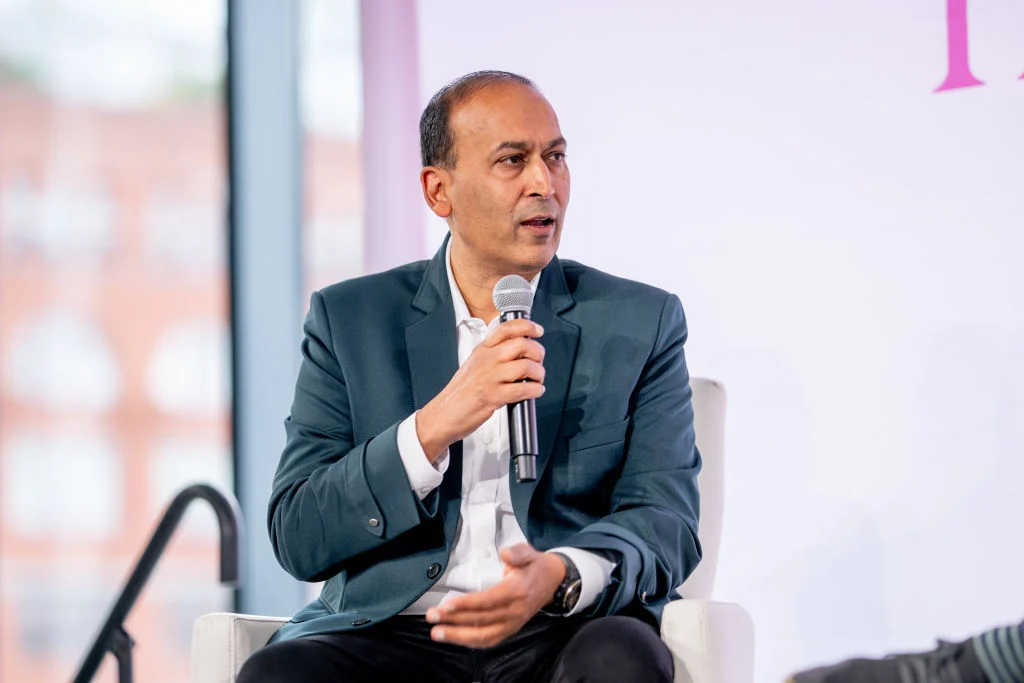
The landscape of social commerce and fashion resale underwent a significant shift on Monday, August 11, 2025, as Poshmark Inc. officially announced that its founder and long-time Chief Executive Officer, Manish Chandra, will step down from his leadership role. Chandra, who has been the face of the company since its inception in 2011, will be succeeded by Namsun Kim, an experienced executive who has served as the company’s executive chairman since April 2024. The transition marks the end of an era for the Silicon Valley-born marketplace and signals a new chapter under the stewardship of its parent company, the South Korean internet conglomerate Naver Corporation.
While Chandra is relinquishing the CEO title, he will remain an active participant in the company’s long-term strategy by transitioning to a seat on the Poshmark Board of Directors. This move ensures that the founder’s vision remains tethered to the company’s governance even as daily operations shift to a new leadership team. The appointment of Namsun Kim, who also serves as the president of investments at Naver, suggests a strategic pivot toward deeper integration with Naver’s technological ecosystem and a renewed focus on global financial scaling.
The Evolution of a Resale Giant: From Garage to Global Market
To understand the weight of this leadership change, one must look back at the trajectory Manish Chandra set for Poshmark nearly fifteen years ago. Founded in 2011 in a Silicon Valley garage, Poshmark was built on the then-novel premise that e-commerce could be social. Alongside co-founders Tracy Sun, Gautam Golwala, and Chetan Pungaliya, Chandra envisioned a platform where the act of buying and selling clothing was secondary to the community interactions driving those transactions.
Under Chandra’s leadership, Poshmark grew from a niche iPhone app for fashionistas into a massive marketplace boasting over 150 million users across the United States, Canada, Australia, and India. The platform’s "social commerce" model—which encourages users to follow each other, "like" items, and host virtual "Posh Parties"—distinguished it from more transactional competitors like eBay or Amazon.
Chandra’s tenure was marked by several high-stakes milestones. In January 2021, at the height of the e-commerce boom fueled by the COVID-19 pandemic, Poshmark went public on the Nasdaq. The IPO initially valued the company at over $3 billion, with shares more than doubling on their first day of trading. However, like many pandemic-era darlings, the company faced headwinds as consumer behavior shifted back to brick-and-mortar retail and Apple’s privacy changes impacted digital advertising. This volatility eventually led to the company’s $1.2 billion acquisition by Naver in October 2022, a move that took the company private once again and provided it with the resources of a global tech titan.
A Chronology of Leadership and Corporate Transformation
The transition announced this week is the culmination of a multi-year evolution of Poshmark’s corporate structure. The following timeline outlines the pivotal moments that led to the current leadership change:
- 2011: Poshmark is founded in Menlo Park, California, focusing on a community-centric approach to the secondhand fashion market.
- 2017–2019: The company expands its categories beyond women’s fashion to include men’s, kids’, home goods, and beauty, significantly broadening its total addressable market.
- January 2021: Poshmark debuts on the Nasdaq (POSH), raising $277 million in its initial public offering.
- October 2022: Naver Corporation announces its intent to acquire Poshmark for $17.90 per share in an all-cash deal valued at approximately $1.2 billion. The deal is positioned as a way to combine Poshmark’s social graph with Naver’s advanced search and AI technologies.
- January 2023: The acquisition by Naver is officially completed. Manish Chandra remains CEO, reporting to Naver’s executive leadership.
- April 2025: Namsun Kim is appointed as Executive Chairman of Poshmark, beginning a formal transition period alongside Chandra.
- August 11, 2025: Manish Chandra officially announces his departure as CEO, with Namsun Kim assuming the role.
The New Leadership: Who is Namsun Kim?
Namsun Kim enters the CEO role not as an outsider, but as a strategic architect of Poshmark’s recent history. As the President of Investments at Naver, Kim played a critical role in the 2022 acquisition. His background is deeply rooted in finance and strategic growth, having served in high-level roles at global investment firms before joining Naver.
Since being named Executive Chairman in April, Kim has reportedly been working closely with Chandra to understand the nuances of the Poshmark community and its operational hurdles. Chandra noted in his announcement that the transition has been carefully planned for months to ensure stability for both employees and the millions of "Poshers" who rely on the platform for their livelihoods.
Kim’s appointment is widely viewed by industry analysts as a move to prioritize operational efficiency and technological synergy. Naver, often referred to as the "Google of South Korea," possesses world-class expertise in artificial intelligence, image recognition, and live-streaming technology. Under Kim’s leadership, Poshmark is expected to accelerate the implementation of these technologies to improve search relevancy, seller tools, and the overall user experience.
Supporting Data: The State of the Resale Economy
The leadership change at Poshmark comes at a critical juncture for the broader "recommerce" industry. According to the 2024 ThredUp Resale Report, the global secondhand apparel market is projected to reach $350 billion by 2028, growing three times faster than the overall apparel market. This growth is driven by Gen Z and Millennial consumers who prioritize sustainability and value.
However, the sector remains highly competitive. Poshmark faces stiff competition from specialized platforms like Depop (owned by Etsy), luxury-focused sites like The RealReal, and circular economy stalwarts like Vinted and eBay. To maintain its market share, Poshmark must navigate several industry-wide challenges:
- Logistics and Fees: Rising shipping costs and payment processing fees have pressured margins for both platforms and individual sellers.
- Authentication and Trust: As the volume of high-end resale items increases, the need for robust AI-driven authentication tools becomes paramount to prevent the sale of counterfeit goods.
- User Retention: Maintaining the "social" aspect of the app while streamlining the path to purchase is a delicate balance that requires constant platform innovation.
Data from market research firms suggests that while Poshmark has a highly engaged user base—with users spending an average of 25 to 30 minutes per day on the app—it must convert that engagement into higher Gross Merchandise Value (GMV) to satisfy its parent company’s growth targets.
Official Statements and Community Sentiment
In a heartfelt email sent to the Poshmark community on Monday, Manish Chandra reflected on his journey and expressed confidence in his successor. "Leading this company has been the greatest honor of my professional life," Chandra wrote. "Every success we’ve achieved, every challenge we’ve overcome, has been because of you. It’s been the privilege of a lifetime witnessing each of you grow, and it has truly inspired me every single day."
Chandra’s departure was met with a mix of nostalgia and curiosity from the platform’s veteran sellers. Many "Power Sellers"—individuals who have built six-figure businesses on the app—credited Chandra’s accessible leadership style for the platform’s success. Chandra was known for attending "Poshfest," the company’s annual developer and seller conference, where he frequently interacted directly with users to gather feedback.
Namsun Kim, in a brief statement following the announcement, emphasized his commitment to the platform’s core values. He noted that his primary objective would be to "empower the community with better tools" while leveraging Naver’s technological backbone to "unlock new levels of growth and innovation."
Analysis: Implications for the Future of Poshmark
The transition from a founder-led company to one led by a parent-company executive is a common stage in the lifecycle of successful startups. For Poshmark, this shift likely signals a move away from the "growth at all costs" mentality of its early venture-backed days toward a focus on long-term profitability and technical integration.
1. Technological Integration:
Under Namsun Kim, users can expect to see a more aggressive rollout of Naver’s AI technologies. This could include "Smart Lens" features that allow buyers to find items by uploading a photo, or AI-generated descriptions for sellers to speed up the listing process. Naver’s expertise in live-streaming (via its VLIVE technology) could also bolster "Posh Shows," the platform’s live shopping feature that has become a major revenue driver in recent years.
2. Global Expansion:
With Naver’s international footprint, Poshmark may look to expand more aggressively into Asian markets, where social commerce is already a dominant form of retail. While Poshmark’s previous international expansions have been measured, Kim’s investment background suggests a more calculated, data-driven approach to entering new territories.
3. Financial Discipline:
As an executive from the investment side of Naver, Kim is expected to scrutinize the company’s cost structure. This may lead to changes in fee structures or a more streamlined corporate headcount as the company seeks to prove its value as a subsidiary.
4. Maintaining the "Soul" of the Brand:
The biggest risk in this transition is the potential loss of the "community feel" that Chandra worked so hard to cultivate. Professionalizing the platform and focusing on AI-driven efficiency can sometimes alienate the hobbyist sellers who provide the unique inventory that draws buyers to Poshmark in the first place. Kim’s challenge will be to modernize the engine without losing the heart of the community.
Conclusion
Manish Chandra’s exit as CEO marks a defining moment in the history of Silicon Valley’s fashion tech scene. He leaves behind a company that fundamentally changed how a generation thinks about their closets and their consumption habits. As Namsun Kim takes the helm, the focus shifts from building a community to scaling an ecosystem. With the backing of Naver and a massive, loyal user base, Poshmark is well-positioned to remain a dominant force in the $350 billion resale market, provided it can successfully marry its social roots with the high-tech demands of a new era in global e-commerce.