










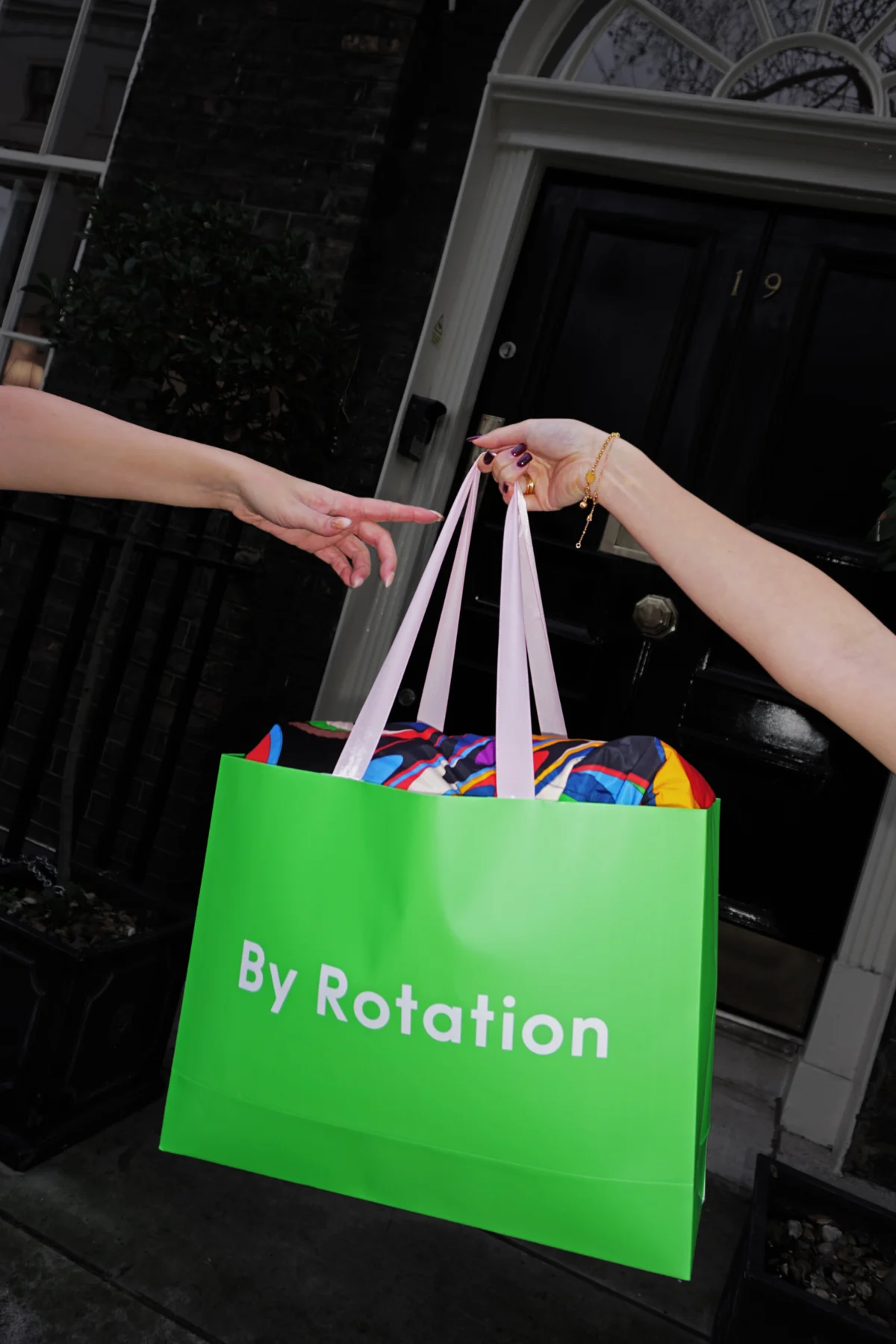
The United Kingdom’s leading peer-to-peer fashion rental platform, By Rotation, has officially announced a strategic partnership with global ride-sharing and delivery giant Uber to address the logistical challenges of the circular fashion economy. This collaboration, which is set to run through May 31, introduces a high-speed delivery solution for users across the U.K., allowing them to rent designer outfits and receive them via Uber’s courier network within 60 minutes. While the service is available for the platform’s entire catalog, the initiative specifically targets the growing demand for ski and winter sports apparel, a category notorious for its high price points and bulky physical dimensions.
Under the terms of the agreement, By Rotation users who opt for local rentals within their neighborhoods can select the Uber delivery option at checkout. To incentivize the adoption of this new "on-demand" rental model, the partnership includes a 10% discount on the delivery service, which is automatically applied through a dedicated pop-up banner on the app’s interface. This move marks a significant evolution in the fashion rental space, transitioning from traditional postal or courier services that often take several days to a hyper-local, rapid-response model that mimics the convenience of traditional e-commerce.
The Rise of the Emergency Economy and Sartorial Panic
The partnership is a direct response to shifting consumer behaviors within the rental market. Data provided by By Rotation indicates that approximately 25% of all rental requests are made within 48 hours of an event. This phenomenon, described by By Rotation founder and CEO Eshita Kabra-Davies as the "emergency economy," often leads to what she terms "sartorial panic." In these moments, consumers who realize they lack a suitable outfit for an upcoming engagement frequently resort to "panic purchases" from fast-fashion retailers. These impulse buys are often high-volume, low-quality garments that contribute significantly to textile waste.
By integrating Uber’s logistics network, By Rotation aims to eliminate the primary friction point—time—that prevents consumers from choosing a sustainable rental over a new purchase. For the 30% of ski-gear renters on the platform who seek same-day pickup, the ability to have heavy salopettes, designer puffer jackets, and technical gear delivered to their doorstep within an hour removes the physical burden of transporting bulky items across urban centers. This "last-mile" solution is designed to make "slow fashion" as convenient as its "fast fashion" counterparts.
Chronology of By Rotation’s Strategic Growth
Since its inception in 2019, By Rotation has consistently sought out creative partnerships to expand its market reach and utility. The collaboration with Uber follows a successful 2024 partnership with Airbnb, which focused on providing curated wedding guest outfits for travelers attending destination ceremonies. That initiative recognized the logistical difficulty of packing high-value, delicate formal wear for international travel, offering a solution that met consumers at their point of need.
The timeline of By Rotation’s expansion reflects a steady trajectory toward becoming a global "shared wardrobe":
- October 2019: Eshita Kabra-Davies launches By Rotation as a side project in the U.K., inspired by a trip to her native Rajasthan where she witnessed the environmental impact of textile waste.
- 2020–2021: The platform experiences rapid growth during the pandemic as consumers become more conscious of their spending and environmental footprint.
- April 2022: The company secures a $3 million seed funding round led by Redrice Ventures to fuel international expansion and technological upgrades.
- 2023: The platform officially launches in New York City, marking its first major step into the North American market.
- Late 2024: The partnership with Airbnb is established, linking the sharing economy of housing with that of fashion.
- Early 2025: The Uber partnership is unveiled, focusing on the winter sports season and hyper-local logistics.
The Economic and Environmental Case for Shared Ski Wear
The focus on ski gear is a calculated business move based on European tourism trends and the current cultural status of "Apres-ski" fashion. According to industry data from Ski Area Management, the number of U.K. skiers increased by 7% last season. However, the cost of entry for the sport remains high. A high-quality ski outfit can easily cost upwards of £1,000, yet the average casual skier may only use the gear for one week a year.
Furthermore, the environmental impact of the fashion industry is well-documented; it is responsible for approximately 10% of global carbon emissions and 20% of global wastewater. Ski apparel, often made from complex synthetic materials and waterproof coatings, is particularly difficult to recycle. By facilitating the rental of these items through a rapid delivery network, the By Rotation and Uber partnership encourages a circular model where high-quality technical gear is utilized by multiple users throughout the season rather than sitting idle in closets or ending up in landfills.
Integration with Uber’s Diversification Strategy
For Uber, the partnership represents a continued push into the "Uber Direct" and "Uber Connect" sectors, which focus on white-label delivery services for retailers and peer-to-peer package delivery. As the ride-sharing market reaches maturity in major urban hubs like London, Uber has aggressively diversified into logistics.
By acting as the fulfillment arm for a peer-to-peer marketplace, Uber demonstrates the versatility of its gig-economy workforce. The "Uber Courier" service utilized in this partnership allows for a seamless handover between the "lender" (the person owning the clothes) and the "renter," with the Uber driver acting as the middleman. This eliminates the need for the two parties to coordinate a physical meeting, which has historically been a barrier to the growth of peer-to-peer sharing platforms.
Community Impact and Financial Empowerment
Beyond the environmental and logistical benefits, By Rotation has highlighted the socio-economic impact of its platform. The company currently boasts over 1 million users, including high-profile figures such as singer-songwriter Ellie Goulding and various fashion influencers. The total value of the inventory managed on the platform exceeds $100 million.
Kabra-Davies has emphasized that the platform serves as a source of significant supplemental income for its lenders. In one notable case cited by the CEO, a top lender used her earnings from renting out her wardrobe to fund her IVF journey, which ultimately led to a successful surrogacy. This narrative underscores the company’s mission to transform clothing from a depreciating asset into a financial tool for its community members.
Market Analysis and Future Implications
The partnership between By Rotation and Uber is likely to set a precedent for other players in the circular economy. As Gen Z and Millennial consumers continue to prioritize sustainability and "access over ownership," the demand for rental services is projected to grow. However, the "convenience gap" has remained the greatest challenge for the rental industry. By closing this gap with 60-minute delivery, By Rotation is positioning itself to compete directly with the instant gratification offered by Amazon and ultra-fast fashion entities like Shein or Temu.
Industry analysts suggest that this collaboration could lead to a permanent shift in how urban logistics are handled for high-value secondary markets. If successful, the model could be expanded to other categories such as electronics, home tools, or luxury handbags, further solidifying the "sharing economy" as a staple of modern urban living.
Looking Ahead: Global Ambitions
With successful operations in the U.K. and a growing presence in New York, By Rotation is currently eyeing the United Arab Emirates (UAE) as its next major market. The ambition, according to Kabra-Davies, is to mirror Uber’s global footprint. "Our ambition, like Uber’s, is global," she stated. "We want to make the ‘rotating wardrobe’ the default mode of consumption everywhere."
As the May 31 deadline for the Uber partnership approaches, the company will likely evaluate data on delivery times, user satisfaction, and the reduction in "panic purchases" to determine if the high-speed delivery model will become a permanent fixture of the app. For now, the collaboration stands as a bold experiment in merging sustainability with the relentless pace of modern consumerism, proving that "slow fashion" does not necessarily have to be slow in its delivery.