




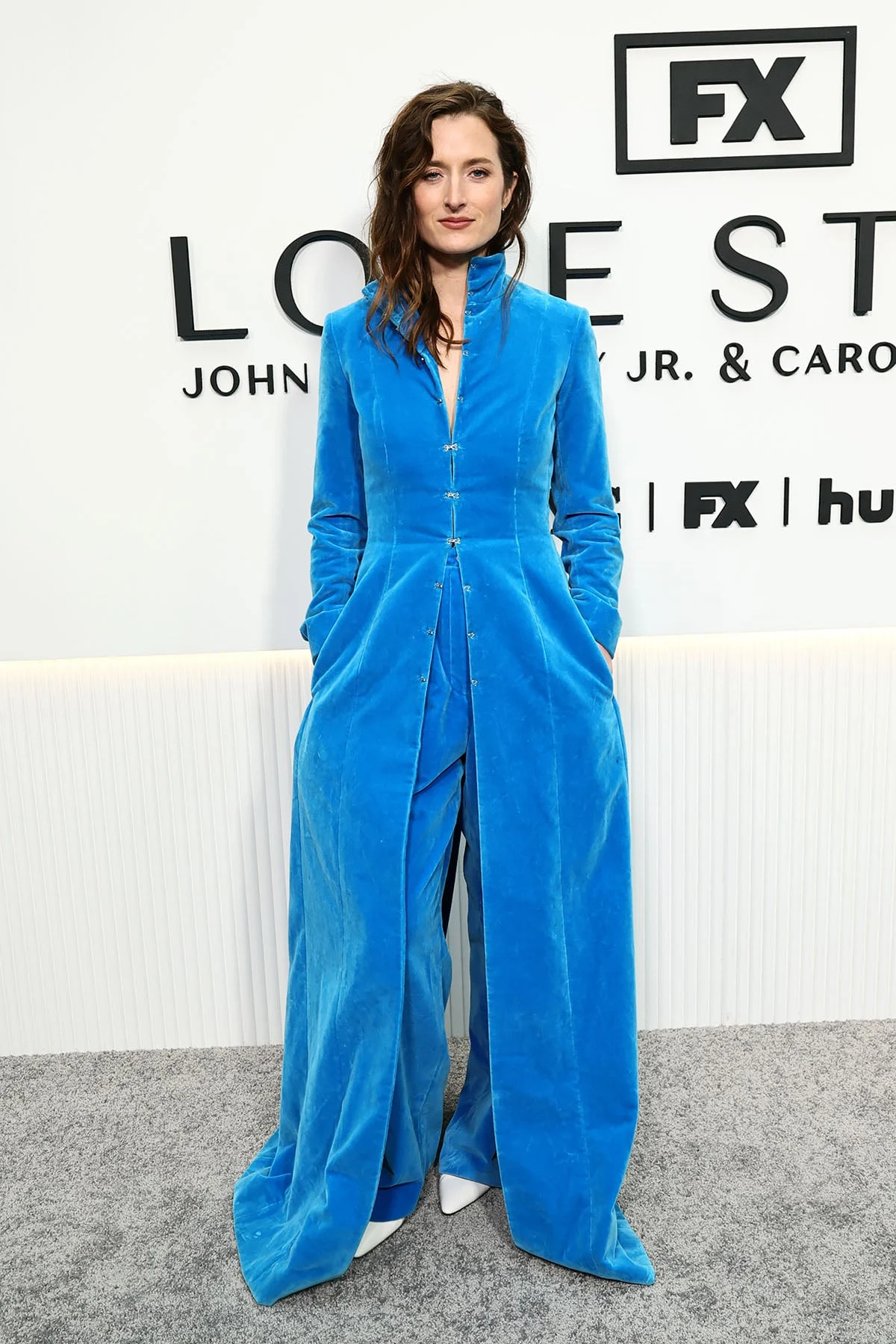
Grace Gummer joined her co-star Sarah Pidgeon for a high-profile awards event hosted by FX for the series Love Story: John F. Kennedy Jr. & Carolyn Bessette. Held at the Metrograph in New York City’s Lower East Side, the event served as a critical stop on the seasonal promotional and "For Your Consideration" circuit. Gummer, known for her roles in critically acclaimed series such as Mr. Robot and The Newsroom, appeared in a striking cerulean-blue ensemble from the Colleen Allen Fall 2025 collection. The appearance marked a significant moment for both the actress and the emerging designer, blending contemporary tailoring with historical silhouettes in a manner that resonated with the themes of the television production.
The event focused on the latest installment of the "American Story" franchise, an anthology series produced by Ryan Murphy, which delves into the lives and tragic romance of John F. Kennedy Jr. and Carolyn Bessette-Kennedy. Given Bessette-Kennedy’s enduring status as a minimalist fashion icon of the 1990s, the wardrobe choices of the cast during the promotional tour have been under intense scrutiny by industry analysts and fashion historians alike.
Sartorial Analysis: The Colleen Allen Fall 2025 Ensemble
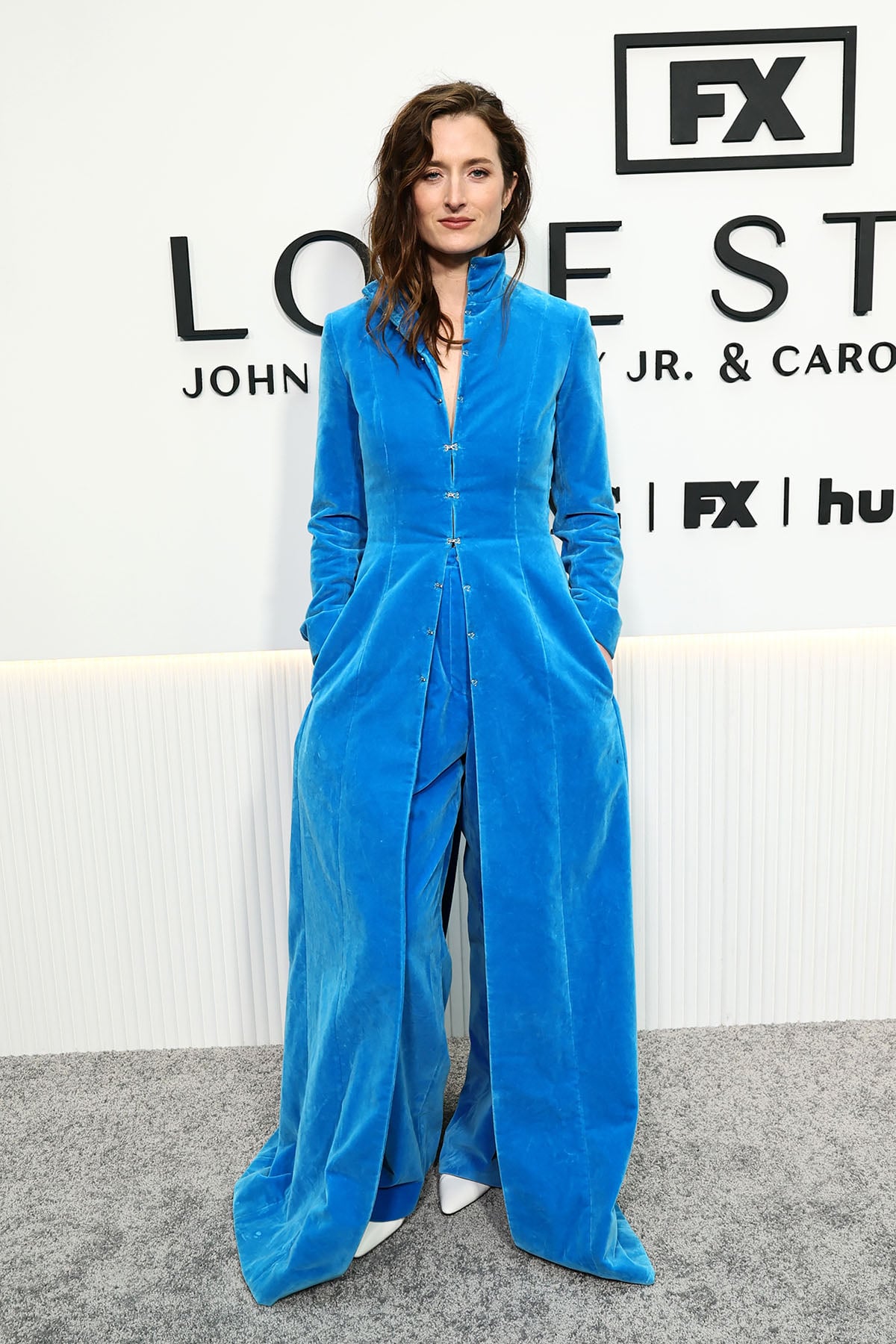
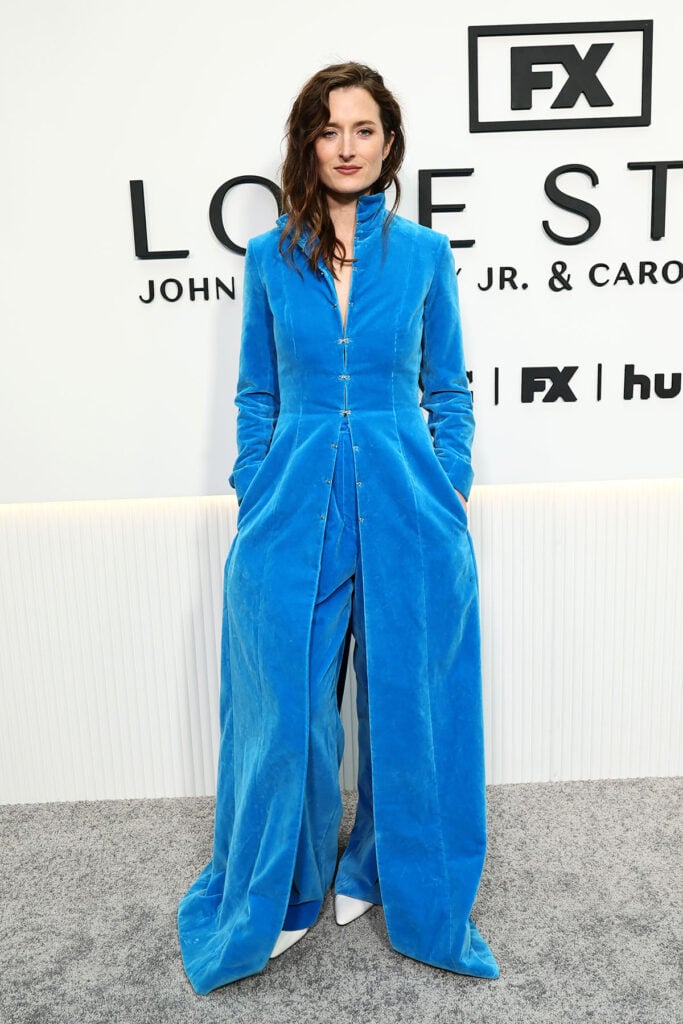
The centerpiece of Gummer’s appearance was a monochromatic cerulean-blue look designed by Colleen Allen. The outfit consisted of a Victorian-shaped coat paired with matching wide-leg trousers. The coat featured a high-neck collar and a structured, cinched waist, evoking a 19th-century aesthetic reimagined through a modern lens. The vibrant hue, often referred to in fashion circles as "cerulean," immediately drew comparisons to the iconic monologue delivered by Meryl Streep—Gummer’s mother—in the 2006 film The Devil Wears Prada.
The choice of Colleen Allen is noteworthy within the context of New York’s evolving fashion landscape. Allen, an emerging voice in American design, has become known for her exploration of masculine and feminine binaries and her commitment to precise, often avant-garde tailoring. The Fall 2025 collection, from which this look was sourced, emphasizes elongated proportions and "puddle" hemlines—a stylistic choice where the fabric of the trousers pools around the feet.
While the length of the trousers and the coat’s hemline presented a challenge in terms of traditional red-carpet practicality, they remained consistent with the designer’s established aesthetic. This "longer-than-life" silhouette has been popularized by other contemporary designers, such as Victoria Beckham, and is intended to convey a sense of relaxed luxury and intentionality. Gummer’s look was completed with white pointed-toe pumps, a choice curated by stylist Nicky Campbell. The selection of white footwear provided a stark, clean contrast to the saturated blue of the wool, avoiding more predictable accessory choices and maintaining the "cool-girl" energy that Gummer has become associated with.
Chronology of the Love Story Promotional Campaign
The awards event at the Metrograph is part of a broader, multi-city campaign designed to highlight the artistic merits of the FX series. The production has been noted for its meticulous attention to period detail, particularly the fashion of the mid-to-late 1990s.
- Series Announcement: FX initially announced the development of Love Story as a expansion of the American Crime Story and American Horror Story franchises, focusing on iconic American romances.
- Casting Revelations: The casting of Sarah Pidgeon as Carolyn Bessette-Kennedy and the subsequent casting of Grace Gummer in a pivotal supporting role signaled the production’s intent to prioritize dramatic range and physical resemblance.
- Production and Wardrobe Design: Throughout the filming process, costume designers worked to recreate Bessette-Kennedy’s signature "New York Minimalist" look, which famously included pieces from Calvin Klein and Yohji Yamamoto.
- The Metrograph Screening: The April event in New York served as a homecoming for the production, given the city’s central role in the lives of the Kennedy-Bessette couple.
- Awards Season Integration: By positioning the event as an "Awards Event," FX sought to solidify the series’ standing among guild voters and critics ahead of the Emmy nomination period.
Supporting Data: The Impact of "Method Dressing" on Television Promotion
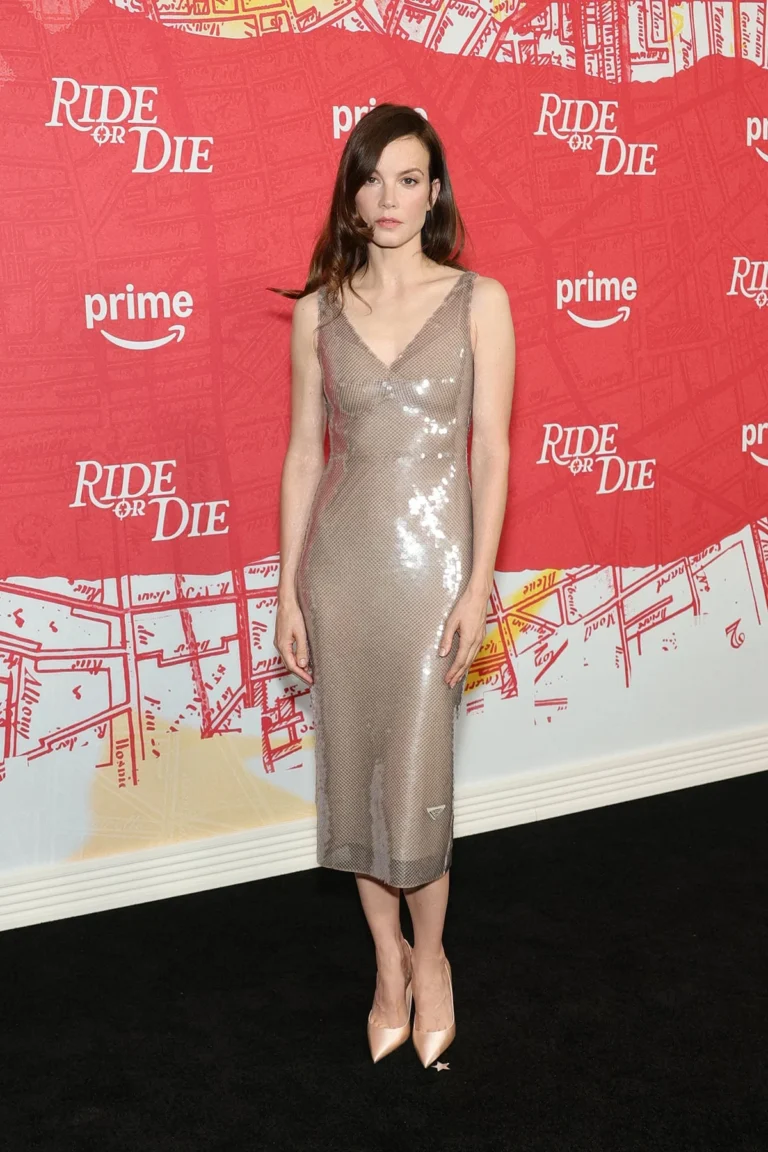
The fashion choices made by Grace Gummer and Sarah Pidgeon (who wore a structured Givenchy look to the same event) reflect a growing trend in the entertainment industry known as "method dressing." This involves actors wearing outfits to promotional events that subtly or overtly reference the themes, time periods, or aesthetic sensibilities of the projects they are representing.
According to data from fashion analytics firms, red-carpet appearances that reference specific cultural touchstones—such as Gummer’s nod to the "cerulean" legacy—generate 40% more social media engagement than standard formal wear. Furthermore, the selection of an emerging designer like Colleen Allen rather than an established legacy house (such as Chanel or Dior) suggests a strategic move to align the series with a "downtown" New York intellectualism, fitting for the Metrograph venue and the subject matter of the show.
Official Responses and Stylist Insights
While the actors themselves typically refrain from detailed commentary on their fashion choices during press junkets, stylist Nicky Campbell has previously indicated a preference for silhouettes that challenge traditional red-carpet norms. Campbell’s work with Gummer has consistently focused on "intellectual fashion"—clothing that prioritizes structure, fabric quality, and historical reference over overt glamour.
Representatives for Colleen Allen expressed that seeing the Fall 2025 collection on a high-profile talent like Gummer validates the brand’s direction toward "reimagined heritage." The brand’s focus on Victorian shapes serves as a commentary on the cyclical nature of fashion, much like the series Love Story serves as a commentary on the cyclical nature of American public fascination with political dynasties.
Broader Impact and Industry Implications
The intersection of fashion and television in Love Story: John F. Kennedy Jr. & Carolyn Bessette has implications that extend beyond the red carpet. The series arrives at a time when 1990s minimalism is experiencing a significant revival in the retail market. Brands like The Row and Khaite have built their identities on the very aesthetic that Carolyn Bessette-Kennedy pioneered.
The Kennedy-Bessette Aesthetic Legacy
Carolyn Bessette-Kennedy’s style was defined by a rejection of the excess of the 1980s. Her preference for neutral tones, clean lines, and architectural tailoring became the blueprint for the modern professional woman. By casting actresses like Gummer and Pidgeon, who possess a similar lean, architectural presence, FX is tapping into a specific visual nostalgia. Gummer’s Colleen Allen look, while more colorful than Bessette-Kennedy’s typical palette, maintains the structural integrity and "unfussy" elegance that defined the era.
The "Cerulean" Factor and Pop Culture Connectivity
The use of cerulean blue is a potent choice in the context of fashion history. In The Devil Wears Prada, the color was used as a narrative device to explain the trickle-down effect of high fashion into the mass market. By wearing this color, Gummer creates a meta-textual link between her own career, her mother’s cinematic legacy, and the high-fashion world that the series Love Story explores. This layering of meaning is a hallmark of modern celebrity branding, where every outfit is curated to tell a story.
Implications for Emerging Designers
For an emerging designer like Colleen Allen, having a garment featured on a high-profile actress during a major awards event is a transformative milestone. It provides "proof of concept" for avant-garde designs—such as the Victorian coat—showing they can transition from the runway to the public eye. As the industry moves away from fast fashion toward "slow fashion" and artisanal tailoring, Allen’s inclusion in such events signals a shift in what the industry considers "red-carpet ready."
Conclusion
Grace Gummer’s appearance at the Metrograph was more than a standard promotional stop; it was a deliberate fusion of television narrative and fashion theory. By opting for Colleen Allen’s cerulean-blue Fall 2025 look, Gummer successfully bridged the gap between the historical weight of the Kennedy-Bessette story and the contemporary relevance of New York’s fashion scene. As Love Story continues its run and enters the awards conversation, the visual identity established by its lead actors will remain a central component of its cultural footprint. The event underscored a fundamental truth of the modern media landscape: the story told on screen is often amplified, or even redefined, by the garments worn on the red carpet.