








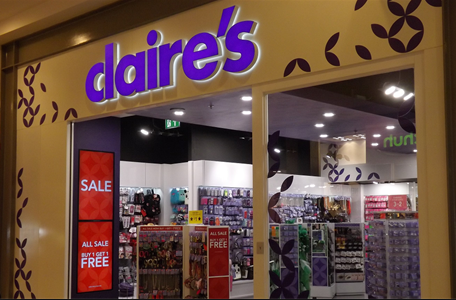
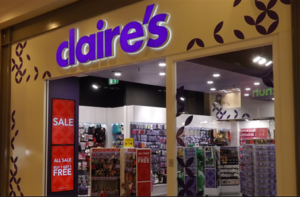
The UK and Ireland arm of high street accessories retailer Claire’s has today, April 27, 2026, officially ceased trading, a move that will result in the immediate closure of all 154 of its physical stores across both nations and the redundancy of approximately 1,300 employees. This decisive action marks the end of an era for a brand that has been a ubiquitous presence on high streets and in shopping centres for decades, synonymous with affordable fashion accessories, novelty items, and its iconic ear-piercing service for generations of young consumers. The closures reflect a culmination of sustained financial pressures, shifting consumer behaviours, and an increasingly challenging retail environment that has impacted numerous established brands.
The Retail Landscape and Claire’s History
Claire’s, originally founded in the United States in 1961, established itself as a global leader in fashion jewellery and accessories, particularly targeting pre-teen and teenage girls. Its expansion into the UK and Ireland saw it become a cornerstone of youth culture, offering a vast array of affordable items ranging from earrings and necklaces to hair accessories, makeup, and novelty gifts. The brand’s in-store ear piercing service, often a rite of passage for many young girls, contributed significantly to its unique identity and footfall. For decades, Claire’s stores were vibrant hubs of activity, capitalising on impulse purchases and the ever-changing trends in youth fashion.
However, the retail landscape has undergone a dramatic transformation in the 21st century. The rise of e-commerce, the proliferation of fast-fashion giants offering similar products at competitive price points, and the increasing influence of social media on consumer choices have profoundly reshaped shopping habits. Young consumers, Claire’s core demographic, are now more likely to discover and purchase accessories online, from direct-to-consumer brands, or from larger apparel retailers that have diversified their product offerings. Furthermore, the experiential aspect of retail, once a strength for Claire’s, has been increasingly challenged by more sophisticated and interactive offerings from competitors.
Globally, Claire’s has navigated a turbulent financial path. Its U.S. parent company filed for Chapter 11 bankruptcy protection in 2018, burdened by a significant debt load from a leveraged buyout. While it successfully emerged from bankruptcy later that year, shedding approximately $1.9 billion in debt, its international operations, including the UK and Ireland, have continued to face persistent headwinds. The structural issues of high street retail, including escalating business rates, rising operational costs, and declining physical footfall, compounded these internal challenges, making the UK and Ireland market particularly arduous for a speciality retailer like Claire’s.
A Timeline of Decline and Restructuring
The journey leading to today’s announcement has been protracted and marked by several attempts to adapt and survive. While specific details of the UK and Ireland arm’s financial struggles prior to 2026 remain commercially sensitive, industry observers have noted a consistent pattern of challenges for the brand.
Early 2020s: The advent of the global pandemic exacerbated existing issues. While non-essential retail closures impacted all high street brands, Claire’s, with its reliance on impulse buys and in-store services like ear piercing, was particularly vulnerable. Subsequent periods saw fluctuating consumer confidence and a general decrease in discretionary spending on non-essential items, especially those that could be easily replicated by cheaper alternatives or purchased online.
2023-2024: Reports of declining profitability and increasing operational costs within the UK and Ireland operations began to surface more frequently. Analysts pointed to a growing disconnect between Claire’s traditional store model and the evolving shopping habits of its target demographic. Efforts were reportedly made to modernise store layouts, enhance the online presence, and diversify product ranges, but these initiatives struggled to gain sufficient traction against the backdrop of broader economic pressures.
Late 2025: Speculation intensified regarding the future of Claire’s UK and Ireland. Unofficial reports indicated ongoing discussions with creditors and potential restructuring options. It is understood that various scenarios, including a Company Voluntary Arrangement (CVA) to reduce rent obligations or a search for new investment, were explored. However, the scale of the financial challenges proved too significant to overcome through these measures alone.
Early 2026: The formal appointment of administrators for Claire’s UK and Ireland operations became imminent. This step typically occurs when a company faces insolvency and requires independent oversight to manage its assets and liabilities, either to rescue the business or to wind down its operations in an orderly manner.
April 27, 2026: The administrators formally announced the cessation of trading for all UK and Ireland stores, confirming the immediate closure of 154 outlets and the redundancy of 1,300 employees. This decision reflects the conclusion that a viable path for continued physical retail operations in these markets could not be established.
The Broader Economic Context and Retail Trends
The closure of Claire’s UK and Ireland is not an isolated incident but rather a stark illustration of the profound shifts occurring across the retail sector. The past decade has witnessed an unprecedented wave of store closures and insolvencies among established high street names. Data from the Centre for Retail Research indicates that over 10,000 retail stores closed across the UK in 2025 alone, leading to tens of thousands of job losses. This trend is driven by a confluence of economic, technological, and sociological factors.
Economically, consumers in the UK and Ireland have faced persistent inflationary pressures, a significant cost-of-living crisis, and stagnating wage growth for several years leading up to 2026. This has inevitably led to a tightening of household budgets and a more cautious approach to discretionary spending, particularly on non-essential items like fashion accessories. Businesses, in turn, have grappled with increased energy costs, supply chain disruptions, and rising labour expenses, eroding profit margins.
Technologically, the exponential growth of e-commerce continues to redefine retail. Online sales now account for a substantial proportion of overall retail spending, with platforms offering convenience, wider product selections, and often more competitive pricing. For a brand like Claire’s, which traditionally relied on discovery and impulse purchases within a physical store, the shift to online presented a significant hurdle. While Claire’s did have an online presence, it struggled to replicate the spontaneous appeal and experiential value of its brick-and-mortar stores in a digital format, especially against competitors with more agile digital strategies and influencer marketing prowess.
Sociologically, consumer habits and preferences, particularly among younger demographics, are constantly evolving. The ‘tween’ and teenage market is highly sensitive to trends driven by social media platforms like TikTok and Instagram, which often favour direct-to-consumer brands or quick, cheap alternatives found on fast-fashion websites. The novelty and perceived value proposition of Claire’s, which once made it a unique destination, faced intense competition from a myriad of online and offline sources. Furthermore, the experience of "hanging out" in physical stores has been partly supplanted by digital social interactions, reducing footfall in traditional retail spaces.
Stakeholder Reactions and Official Statements
The news of Claire’s UK and Ireland cessation of trading has elicited a range of reactions from various stakeholders.
A spokesperson for the appointed administrators confirmed the difficult decision, stating: "Despite exhaustive efforts to explore all viable options for the future of Claire’s UK and Ireland operations, including potential restructuring and securing new investment, the prevailing market conditions and insurmountable financial challenges have regrettably led to this outcome. Our immediate priority is to support the 1,300 affected employees through this challenging period, ensuring they receive all necessary information and assistance regarding their redundancies and entitlements." The administrators emphasised that a structured wind-down process would commence immediately, focusing on liquidating remaining stock and settling creditor claims in accordance with legal requirements.
The parent company, Claire’s Holdings LLC, based in the United States, issued a statement acknowledging the cessation of its UK and Ireland physical retail operations. "This was an incredibly difficult decision, not taken lightly," the statement read. "The UK and Ireland markets have presented unique and persistent challenges that ultimately made continued physical store operations unsustainable. We extend our deepest gratitude to our dedicated employees in these regions for their hard work and commitment over the years. Our focus remains on the strength and growth of the Claire’s brand globally, including our successful e-commerce platforms and profitable operations in other international markets." The statement also indicated that the Claire’s brand would continue to explore alternative distribution models for the UK and Ireland, potentially through online channels or wholesale partnerships, but confirmed no immediate plans for a return to a physical store footprint.
Trade unions representing retail workers expressed profound disappointment and concern. A representative from Usdaw (Union of Shop, Distributive and Allied Workers) commented: "This is devastating news for 1,300 loyal employees and their families. Claire’s has been a fixture on our high streets for decades, and its closure underscores the urgent need for government intervention to support the struggling retail sector. We will be working closely with the administrators to ensure our members receive all the support and advice they need during this incredibly difficult time, including access to job search assistance and information on redundancy payments."
Retail industry bodies also weighed in, highlighting the broader implications. Helen Dickinson, Chief Executive of the British Retail Consortium, stated: "The closure of Claire’s UK and Ireland is another stark reminder of the intense pressures facing the high street. The current business rates system, coupled with rising operating costs and a slowdown in consumer spending, is creating an unsustainable environment for many retailers. We urge the government to consider comprehensive reforms to foster a more competitive and resilient retail ecosystem."
The Wider Repercussions for the High Street and Employment
The immediate and most direct impact of Claire’s closure will be felt by its 1,300 employees. Many of these individuals have dedicated years, if not decades, to the company, developing skills specific to retail operations, customer service, and product knowledge. Entering a competitive job market, particularly one still reeling from other retail insolvencies, will be a significant challenge. The emotional toll of job loss, coupled with financial uncertainty, will require substantial support from government agencies, employment services, and community organisations.
For the UK and Irish high streets, the closure of 154 Claire’s stores represents a further erosion of diversity and vibrancy. Each empty unit contributes to the growing problem of vacant retail spaces, which can deter footfall, reduce consumer confidence, and negatively impact surrounding businesses. Claire’s often occupied prime locations within shopping centres and high streets, and finding suitable tenants to fill these spaces, particularly for specialist retail, can be a lengthy and complex process. This contributes to the perception of a declining high street, which can have wider socio-economic consequences for local communities.
Symbolically, the demise of Claire’s in these markets marks the loss of an iconic brand that held sentimental value for many. For generations, a trip to Claire’s was a memorable experience, whether for a first ear piercing, a new accessory for a school disco, or a gift for a friend. Its disappearance underscores how quickly even well-established brands can succumb to the relentless pace of change in modern retail. It serves as a potent reminder to other retailers of the critical need for constant innovation, adaptability, and a clear understanding of evolving consumer expectations. Businesses that fail to integrate robust online strategies, offer unique experiential elements, or maintain a compelling value proposition risk falling behind.
Looking ahead, the Claire’s brand itself will continue its operations globally, with its robust e-commerce platform and physical stores thriving in other international markets where conditions are more favourable. However, for the UK and Ireland, its physical presence has concluded. The question remains whether the brand might eventually return in a different format, perhaps through wholesale partnerships with larger retailers or a purely online model, to reclaim a share of the accessories market. For now, its departure leaves a significant void and prompts further reflection on the future of physical retail in an increasingly digital and economically volatile world.
A Changing Retail Landscape
The cessation of Claire’s UK and Ireland operations, with its accompanying 1,300 job losses and 154 store closures, is more than just the end of a single retail chain; it is a significant indicator of the ongoing, profound transformation within the global retail sector. It highlights the unforgiving nature of a market grappling with economic headwinds, the relentless march of digital disruption, and the ever-shifting preferences of a new generation of consumers. While the nostalgia for an iconic brand may linger, its closure serves as a critical lesson for the industry: adapt, innovate, and connect with consumers in new and meaningful ways, or face the inevitable consequences of a changing retail landscape.