

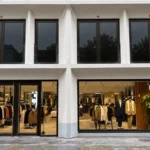




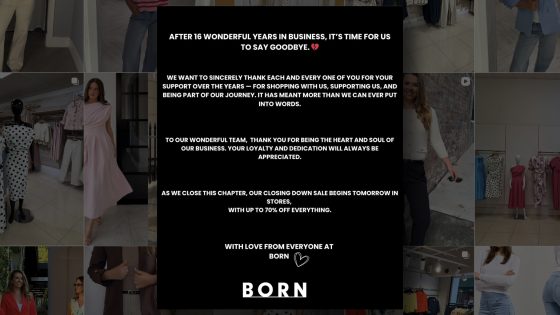
The Irish fashion chain Born Clothing has announced the closure of its 15 stores across the Republic of Ireland, leading to the loss of more than 100 jobs. The decision, revealed on April 27, 2026, marks the end of an era for a retailer that had been a fixture in the Irish high street for 16 years, grappling with an increasingly complex and challenging retail landscape. The closure underscores the significant pressures facing traditional brick-and-mortar fashion retailers, from escalating operational costs to intense competition from online giants and fast-fashion rivals.
A Legacy of 16 Years: Born Clothing’s Journey
Born Clothing first opened its doors in approximately 2010, establishing itself as a popular destination for affordable fashion for families across Ireland. Over its 16-year tenure, the chain cultivated a presence in key urban and suburban locations, offering a mix of casual wear, formal attire, and accessories designed to cater to a broad demographic. The company’s business model focused on accessible pricing and a rotating inventory, aiming to provide trendy options without the premium price tag. For many years, Born Clothing successfully navigated the post-recession recovery, leveraging its physical footprint to build customer loyalty through in-store experiences and community engagement. Its multiple outlets became familiar sights in shopping centres and town cores, contributing to local employment and consumer choice.
However, the retail sector has undergone a seismic shift in recent years, presenting unprecedented challenges to established chains. Born Clothing, like many of its peers, found itself caught between the rising tide of e-commerce and the structural difficulties of maintaining a large physical retail presence. The announcement of its closure, therefore, while a significant blow, is seen by many industry observers as a stark reminder of the brutal realities facing the modern retail industry.
The Shifting Sands of Irish Retail: A Broader Context
The closure of Born Clothing is not an isolated incident but rather symptomatic of deeper trends reshaping the retail sector in Ireland and globally. The past decade has witnessed a dramatic transformation in consumer behaviour, largely driven by digital acceleration. E-commerce penetration in Ireland has surged, with recent reports indicating that online sales now account for a substantial and growing proportion of total retail expenditure. This shift has fundamentally altered the competitive landscape, making it increasingly difficult for traditional retailers to compete solely on price or product range.
Moreover, operational costs for brick-and-mortar stores have continued to climb. Rent, rates, energy costs, and labour expenses represent significant overheads that online-only retailers do not bear to the same extent. The Irish commercial property market, while experiencing fluctuations, has generally maintained high rental values in prime retail locations, placing considerable strain on profitability margins. The increasing minimum wage and other employment-related costs, while beneficial for workers, add further pressure on businesses operating with tight margins in a competitive market.
The fashion segment, in particular, has been subject to intense disruption. The rise of ultra-fast fashion brands, often operating primarily online and leveraging sophisticated supply chains, has set new benchmarks for speed-to-market and aggressive pricing. These models make it challenging for traditional retailers to keep pace with rapidly changing trends and consumer expectations for instant gratification and constant newness. Furthermore, increased consumer awareness regarding sustainability and ethical production practices has added another layer of complexity, pushing retailers to invest in more responsible supply chains, which can often be more costly.
A Chronology of Pressures Leading to Closure
While Born Clothing enjoyed a period of growth and stability in its earlier years, the trajectory of its final years was likely marked by escalating challenges.
- 2010-2015: Establishment and Growth: Following its inception, Born Clothing capitalized on a market segment looking for value and variety as Ireland emerged from a recession. It expanded its store network, establishing its brand identity.
- 2016-2019: Emerging Digital Threat: As e-commerce began to gain significant traction, Born Clothing, like many high street retailers, likely started to feel the initial pinch. Investment in online presence became crucial, diverting resources from traditional operations. The growth of international online retailers intensified competition.
- 2020-2022: Pandemic Disruption and Aftermath: The COVID-19 pandemic delivered a severe blow to physical retail. Lockdowns forced store closures, accelerating the shift to online shopping. While government supports provided some temporary relief, the post-pandemic recovery saw a permanent change in shopping habits, with many consumers continuing their online purchasing patterns. Retailers faced the dual challenge of declining footfall and increased operational costs due to health and safety measures.
- 2023-2025: Economic Headwinds and Cost Increases: The period leading up to the closure was characterized by broader economic challenges, including inflationary pressures impacting consumer spending power and the rising cost of living. Energy prices soared, and supply chain disruptions increased the cost of goods. Coupled with persistent high street costs, these factors created an unsustainable operating environment for many mid-market fashion retailers. Analysts suggest that companies like Born Clothing, without the deep pockets of larger multinational corporations or the agile digital-first models of online pure-plays, found themselves increasingly squeezed.
- Early 2026: Final Review and Closure Decision: Faced with continued losses, declining footfall, and no clear path to sustainable profitability, the management and shareholders of Born Clothing would have undertaken a comprehensive review of their operations. The announcement on April 27, 2026, signals the culmination of this review, indicating that all viable options for continuation were exhausted. The decision to close all 15 stores simultaneously highlights the systemic nature of the challenges and the lack of a path to restructure or downsize effectively.
The Human Cost: Impact on Employees and Communities
The closure of Born Clothing carries a significant human toll, with over 100 employees facing redundancy. For these individuals and their families, the news brings immediate uncertainty and financial insecurity. Many staff members, particularly those in retail, often work in roles that are highly valued within their communities but can be vulnerable to economic shifts. The loss of employment affects not only their immediate livelihoods but also their sense of professional stability and future prospects.
Trade unions and employee support organisations are expected to step in to provide assistance to the affected workers, offering advice on redundancy entitlements, job searching, and retraining opportunities. The Irish government’s Department of Social Protection will likely activate its services to support those seeking new employment, including unemployment benefits and career guidance.
Beyond the direct employees, the closure will also ripple through the local economies where Born Clothing stores were located. Each store contributed to the vitality of its shopping centre or high street, drawing footfall and acting as an anchor tenant. Their departure leaves vacant units, which can diminish the overall appeal of a retail district, potentially impacting neighbouring businesses. Local suppliers, service providers, and cleaning contractors who worked with Born Clothing will also experience a loss of business. In smaller towns, the closure of a significant employer can have a more pronounced psychological and economic impact on community morale.
Industry Reactions and Expert Commentary
The news of Born Clothing’s closure has elicited reactions from various stakeholders within the Irish retail sector.
A spokesperson for Retail Ireland, the Ibec group that represents the retail sector, expressed deep regret over the announcement. "This is a sad day for the employees and customers of Born Clothing," the spokesperson stated. "It underscores the immense pressures facing traditional high street retailers in Ireland. The combination of rising operational costs, evolving consumer habits, and intense online competition is creating an extremely challenging environment. We continue to advocate for government policies that support the sustainability of our retail sector, which is a vital employer and contributor to local economies."
Independent retail analysts echoed these sentiments, highlighting the ongoing "retail shakeout." Dr. Eleanor O’Connell, a retail economy expert based in Dublin, commented, "Born Clothing’s closure is a stark illustration of the mid-market squeeze. Retailers in this segment often struggle to differentiate themselves against both discounters and premium brands, while also lacking the scale or agility to pivot effectively to digital-first models. The pace of change in consumer behaviour, coupled with macroeconomic headwinds, means that only the most adaptable and innovative retailers will survive and thrive."
Online forums and social media platforms have also seen an outpouring of reactions from former customers and employees, many expressing nostalgia for the brand and sadness at its demise. These sentiments highlight the emotional connection consumers often have with physical retail spaces and the role they play in daily life.
Government Response and Support Measures
In response to significant job losses, the Irish government is expected to announce measures to support the affected workers. The Minister for Enterprise, Trade and Employment, along with local government representatives, will likely issue statements expressing sympathy for the employees and outlining available support services. This typically includes access to training programmes through Skillnet Ireland, assistance with CV preparation and interview skills, and information on social welfare entitlements.
The government may also face calls from retail advocacy groups to review policies impacting the sector, such as commercial rates, planning regulations for town centres, and investment in digital infrastructure to help traditional businesses transition online. There is an ongoing debate about how to best preserve the vitality of town centres and high streets in an era of digital dominance, with proposals ranging from rate relief to urban regeneration projects.
The Broader Implications for the Irish High Street
The closure of Born Clothing serves as a potent symbol of the ongoing transformation of the Irish high street. While some retailers are adapting successfully by integrating online and offline experiences, investing in experiential retail, or focusing on niche markets, many traditional models are proving unsustainable.
This event contributes to a broader trend of retail consolidation and a shift in the physical retail landscape. We are likely to see more vacant units in shopping centres and town centres, prompting property owners and local authorities to rethink the purpose of these spaces. There is a growing movement towards repurposing retail units for residential use, leisure, or community services, moving away from a purely commercial focus.
The implications extend to the diversity of retail offerings. As mid-market chains struggle, the market may become increasingly polarized between discount retailers and high-end luxury brands, with fewer options in the middle ground. This could limit consumer choice and impact the accessibility of certain fashion segments for average consumers.
Looking Ahead: The Future of Fashion Retail
The future of fashion retail in Ireland will undoubtedly be characterized by continued innovation and adaptation. Retailers that succeed will likely be those that:
- Embrace Omnichannel Strategies: Seamlessly integrate online and offline channels, allowing customers to shop across platforms, whether it’s buying online and collecting in-store, or browsing in-store and ordering online for home delivery.
- Prioritise Customer Experience: Transform physical stores into experiential hubs that offer more than just transactional shopping. This could include personalized styling services, workshops, cafes, or interactive displays.
- Invest in Data and Technology: Utilize data analytics to understand customer preferences, optimize inventory, and personalize marketing efforts. Leverage technologies like AI for recommendations and virtual try-ons.
- Focus on Sustainability and Ethics: Increasingly, consumers are demanding transparency and responsible practices. Retailers that integrate sustainability into their core business model, from sourcing to supply chain and end-of-life product management, will gain a competitive edge.
- Develop Niche Offerings: Specialise in unique product categories, catering to specific demographics or offering highly curated collections to differentiate themselves from mass-market competitors.
Born Clothing’s closure is a poignant reminder of the relentless pace of change in the retail world. While it marks the end of a 16-year chapter for an Irish fashion chain and brings hardship to its employees, it also serves as a catalyst for ongoing reflection and adaptation within the broader retail industry, pushing remaining players to innovate and evolve to meet the demands of a new era. The challenge for Ireland’s retail sector now is to mitigate the impact of such closures while fostering an environment where new, sustainable retail models can emerge and thrive.