








The global technical textiles industry is standing on the precipice of a digital transformation as Roaches International, a prominent member of the British Textile Machinery Association (BTMA), prepares to unveil its groundbreaking Sentire evaluation system. Scheduled for its public debut at the Techtextil exhibition in Frankfurt from April 21 to 24, 2026, the Sentire system represents a pivotal shift in how the industry measures and communicates the "handle" or tactility of engineered fabrics. For decades, the technical textiles sector—which encompasses high-performance materials used in aerospace, medical devices, automotive safety, and protective clothing—has struggled with the inherent subjectivity of human touch. While technical specifications for tensile strength, flame retardancy, and moisture vapor transmission are easily quantified, the physical feel of a fabric has remained an elusive metric, often relying on the seasoned hands of specialists whose expertise is becoming increasingly scarce in a modernizing workforce.
The introduction of the Sentire system addresses a critical bottleneck in the global supply chain. In the production of technical textiles, fabric handle is not merely an aesthetic concern; it is a functional requirement. The stiffness of a carbon fiber reinforcement, the smoothness of a surgical drape, or the creasability of a parachute silk are performance-critical attributes. Historically, if a buyer in North America and a manufacturer in Southeast Asia disagreed on the "softness" of a batch, the resolution required the physical shipping of samples, leading to delays, increased carbon footprints, and significant financial losses due to rework. By translating tactile sensations into communicable, objective data, Roaches International aims to provide the industry with a "universal common language," effectively doing for fabric feel what the spectrophotometer did for color consistency forty years ago.
The Science of Tactility: Moving Beyond Subjective Assessment
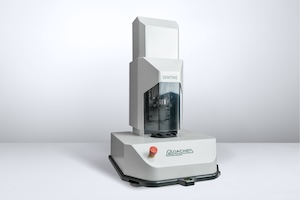
The challenge of quantifying fabric handle lies in the complexity of human perception. When a person touches a fabric, their brain processes a multitude of signals simultaneously: friction, resistance to bending, thermal conductivity, and surface topography. Seth Seagraves, Marketing Executive at Roaches International, notes that no two individuals describe these sensations identically. This lack of standardization has long been a source of friction in quality control. The Sentire system overcomes this by employing four precise test methods designed to mimic the mechanics of human touch. These methods do not just measure a single point of data; they analyze the fabric through the established principles of fabric physics to deliver a multi-dimensional "fingerprint" of the material.
The system evaluates four key pillars of tactility: softness, smoothness, creasability, and stiffness. By utilizing controlled mechanical interfaces, the Sentire system can detect minute variations in fabric finishing, the application of chemical coatings, or the degradative effects of repeated laundering. This level of precision is particularly vital for the technical textiles market, where a slight change in a coating’s viscosity could alter the friction coefficient of a material, potentially compromising its end-use performance. The data collected is not only reproducible but can be monitored in real-time during the production stages. This allows manufacturers to identify deviations from the standard early in the process, enabling immediate adjustments and minimizing the waste associated with sub-standard batches.
Academic Collaboration and the Leeds Connection
The development of the Sentire system was not an isolated industrial effort. Roaches International collaborated extensively with textile scientists at the University of Leeds, an institution renowned for its contributions to fiber science and textile engineering. This partnership ensured that the evaluation system was built upon a rigorous scientific foundation. The University of Leeds has a long history of developing methodologies for textile testing, and by integrating academic research with Roaches’ engineering expertise, the team was able to define tactile properties with a level of digital precision previously unseen in commercial testing equipment.
The resulting system functions similarly to digital color palettes or the Tog rating system used for thermal insulation. Just as a designer can specify a "Pantone" number to ensure a specific shade of blue is produced anywhere in the world, a textile engineer can now specify a "Sentire profile" for a fabric’s handle. This digital definition allows for the seamless transmission of quality standards across borders. In an era where digital twins and virtual prototyping are becoming industry norms, the ability to provide an objective tactile profile is a significant leap forward. It allows for the creation of a digital library of fabric characteristics that can be shared with stakeholders instantly, bypassing the logistical hurdles of physical sample distribution.
Contextualizing the Techtextil 2026 Launch
The choice of Techtextil Frankfurt as the launchpad for Sentire is highly strategic. Techtextil, held biennially alongside Texprocess, is the world’s leading trade fair for technical textiles and nonwovens. In 2024, the event hosted over 1,700 exhibitors from 53 countries and attracted 38,000 visitors. The 2026 edition is expected to see even higher engagement as the industry seeks solutions for the "twin transition" of green energy and digitalization. Within the halls of the Frankfurt Fair and Exhibition Centre, the Sentire system will be positioned among the most advanced manufacturing technologies in the world, from 3D-knitting machines to automated forensic inspection systems.
The event serves as a barometer for the health and direction of the global textile industry. Current market data suggests that the technical textiles sector is poised for significant growth, with a projected compound annual growth rate (CAGR) of approximately 4.5% through 2030. This growth is driven by the increasing demand for high-performance materials in the automotive industry (Mobiltech), the construction sector (Buildtech), and the healthcare industry (Medtech). As these sectors demand higher levels of precision and traceability, the need for standardized testing equipment like Sentire becomes a matter of economic necessity rather than just a technological luxury.
Economic Implications and Supply Chain Resiliency
The economic impact of standardized tactile measurement extends across the entire value chain. In the current landscape, the loss of seasoned specialists—the "master drapers" and quality controllers who could judge a fabric’s quality by touch alone—poses a significant risk to manufacturing consistency. As this workforce retires, the industry faces a "skills gap" that can only be bridged by automation and objective instrumentation. Sentire provides a hedge against this loss of human expertise by codifying the "expert touch" into a repeatable digital format.

Furthermore, the system contributes directly to the industry’s sustainability goals. The traditional "trial and error" method of fabric finishing is resource-intensive, often requiring multiple production runs and the shipping of physical samples across continents for approval. By providing actionable insights into how finishes and coatings affect handle in real-time, Sentire reduces the number of iterations required to reach a final product. This leads to a measurable reduction in water, chemical, and energy consumption. BTMA CEO Jason Kent emphasized this point, stating that the collective innovations of BTMA members at Techtextil, including Roaches International, are focused on creating a more "resilient and resource-efficient" sector. Kent noted that whether the innovation involves reducing yarn waste or refining testing efficiency, the ultimate goal is to ensure the long-term viability of technical textile manufacturing.
Analysis of Broader Industry Impact
The broader implications of the Sentire system suggest a future where the "feel" of a product can be integrated into the earliest stages of digital design. In the automotive sector, where the haptic feedback of interior upholstery is a key selling point, designers could use Sentire data to ensure that synthetic leather or recycled polymers meet the exact tactile expectations of luxury consumers. In the medical field, the system could be used to standardize the texture of compression garments to ensure they are both effective and comfortable for long-term patient wear.
The comparison made by Seth Seagraves to the spectrophotometer is particularly apt. Before the widespread adoption of digital color measurement, the textile industry suffered from constant disputes over color matching, leading to massive amounts of waste. Once color was digitized, the industry became faster, more efficient, and more globalized. Tactility is the "final frontier" of textile measurement. By conquering this subjective variable, Roaches International is not just launching a piece of testing equipment; it is enabling a new era of digital commerce for high-performance materials.
As the industry gathers in Frankfurt this April, the Sentire system will likely be viewed as a benchmark for the next generation of quality assurance. Its ability to provide a "tactile fingerprint" offers a solution to the modern challenges of labor shortages, sustainability mandates, and the need for hyper-efficient global communication. For the members of the BTMA and the wider technical textiles community, the move toward quantifiable standards is a necessary evolution, ensuring that the fabrics of the future perform exactly as they are intended, from the first touch to the final application.