






The global fashion industry, long under scrutiny for its profound environmental and social impact, is undergoing a significant transformation driven by increasing consumer awareness and demand for ethical practices. Within this evolving landscape, the specialized market for maternity and nursing apparel faces a unique set of challenges, necessitating innovative solutions that prioritize both the well-being of expectant and new parents and the health of the planet. While traditionally a difficult niche for finding sustainably and ethically produced garments, a growing number of brands are now offering high-quality, responsible choices that cater to the distinct needs of this demographic.
The Pervasive Impact of the Conventional Fashion Industry
To understand the imperative for sustainable maternity wear, it is crucial to first contextualize the broader fashion industry’s footprint. Conventional fashion production is a major contributor to global pollution and social injustice. Environmentally, the sector is notoriously resource-intensive. The cultivation of conventional cotton, for instance, often involves vast quantities of water and pesticides, leading to soil degradation and water contamination. Dyeing processes alone consume trillions of liters of water annually and discharge toxic chemicals into waterways, impacting ecosystems and human health. According to the United Nations Environment Programme, the fashion industry is responsible for 8-10% of global carbon emissions, exceeding the combined emissions of all international flights and maritime shipping. Furthermore, the prevalence of "fast fashion," characterized by rapid production cycles and low prices, has exacerbated the problem of textile waste. An estimated 92 million tons of textile waste are generated globally each year, with a significant portion ending up in landfills or being incinerated, releasing methane and other greenhouse gases.
Socially, the human cost of fast fashion is equally stark. Reports from various human rights organizations and labor watchdogs consistently reveal widespread exploitation in garment supply chains, particularly in countries with weaker labor protections. Issues such as poverty wages, excessive working hours, unsafe factory conditions, and the suppression of labor rights are common. Many garment workers, predominantly women, are trapped in cycles of poverty, unable to earn a living wage despite their arduous work. The pursuit of ever-lower production costs often comes at the direct expense of worker dignity and safety.
The Unique Demands of Maternity and Nursing Wear
Maternity and nursing clothing presents a distinct set of considerations within this complex industry. These garments are typically worn for a relatively short, transitional period—from a few months during pregnancy to a year or two postpartum for nursing. This inherently temporary utility raises critical questions about resource efficiency and potential waste. Traditional consumer behavior often involves purchasing new, specialized items for this phase, which are then quickly discarded, further contributing to textile waste streams.
Beyond the lifecycle, the functional requirements of maternity wear are stringent. Comfort is paramount, demanding soft, breathable, and adaptable fabrics that can accommodate a rapidly changing body shape. Support for a growing belly and breasts is essential. For nursing parents, discreet and convenient access for feeding is a key design element. Moreover, the proximity of these garments to sensitive skin, and the developing fetus or newborn, underscores the importance of materials free from harmful chemicals. While practicality is a driving factor, the desire for stylish clothing that helps maintain personal confidence and identity throughout pregnancy and postpartum remains a significant consumer need. The confluence of these specific demands with the broader ethical and environmental imperative creates a challenging but increasingly addressable market niche.
The Evolution of Ethical Maternity Solutions
The past decade has seen a discernible shift in consumer consciousness, with expectant and new parents increasingly seeking products that align with their values of sustainability and social responsibility. This evolving demand has spurred the emergence and growth of brands dedicated to producing ethical maternity and nursing wear. These companies are not merely offering larger sizes or basic functional garments; they are integrating responsible sourcing, sustainable manufacturing processes, and thoughtful design into their core business models. This response reflects a broader trend among informed consumers who wish to make purchasing decisions that contribute positively to the future their children will inherit.
The criteria defining an ethical and sustainable maternity brand typically include:
- Eco-Friendly Materials: Prioritizing natural, organic, or recycled fibers that minimize environmental impact, such as GOTS-certified organic cotton, linen, hemp, Tencel, Modal, or recycled polyester.
- Ethical Labor Practices: Ensuring fair wages, safe working conditions, and respect for worker rights throughout the supply chain, often verified through certifications like Fair Trade.
- Design for Longevity and Versatility: Creating garments that can be worn before, during, and after pregnancy, or featuring adjustable elements to extend their functional lifespan, thereby reducing the need for multiple purchases.
- Commitment to Circularity: Engaging in initiatives that promote resource efficiency, such as offering take-back programs, facilitating second-hand sales, or designing for recyclability.
- Transparency: Openly communicating about their supply chain, materials, and production processes to build consumer trust.
- Non-Toxic Production: Utilizing dyes and finishes that are free from harmful chemicals, protecting both the wearer and the environment.
Pioneering Brands in the Sustainable Maternity Sector
Several brands are leading this charge, demonstrating how comfort, style, and ethical production can coexist within maternity and nursing wear.
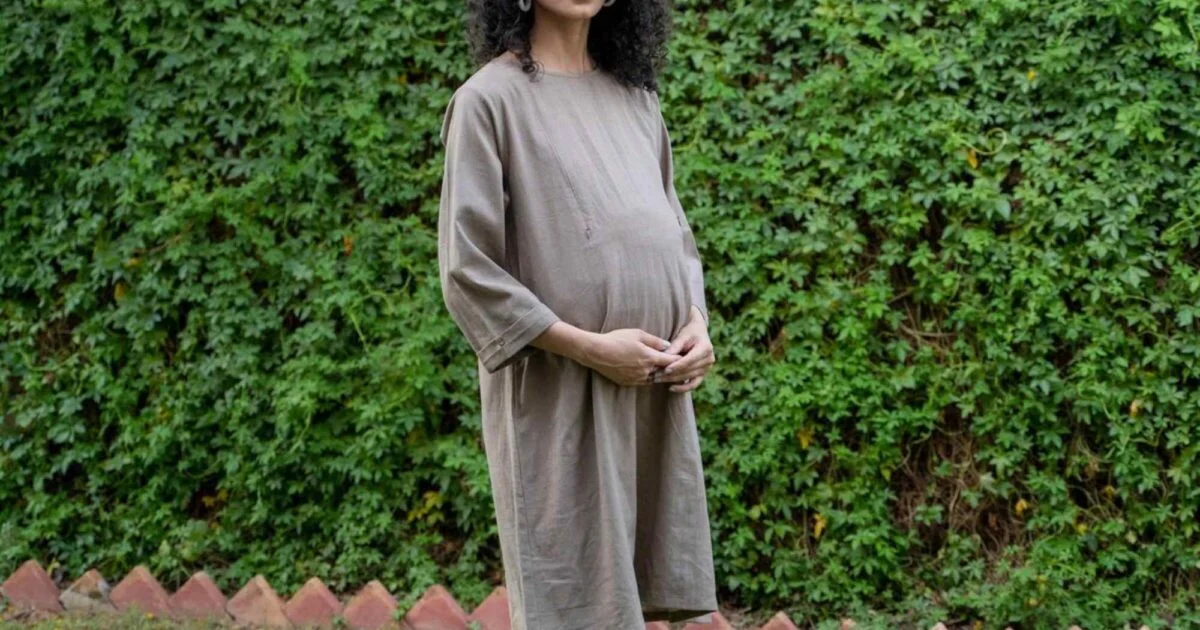
SeamsFriendly exemplifies an innovative approach by focusing on highly customizable, tailored pieces designed for diverse body types. Their commitment to lower-impact materials like organic cotton and linen forms the environmental bedrock of their offerings. A standout feature is their extensive customization options, allowing customers to specify neck styles, depths, sleeve lengths, garment lengths, and even fabric choices. This made-to-order model, accommodating a wide range of bust sizes (26-70 inches) and waist sizes (19-63 inches), including petite, regular, and tall heights, directly addresses the fluctuating needs of pregnant and postpartum bodies. The brand’s expansion into a children’s range further underscores its holistic approach to sustainable family dressing. By producing garments only when ordered, SeamsFriendly significantly reduces overproduction and textile waste, aligning with a demand-driven, sustainable manufacturing paradigm.
While not exclusively a maternity brand, Petit Pli offers a forward-thinking concept with profound implications for reducing textile waste. This award-winning brand designs children’s clothing engineered to "grow" with the wearer, leveraging aerospace innovation for durability and adaptability. This philosophy of creating long-lasting, versatile garments is highly pertinent to maternity wear, advocating for pieces that adapt to changing body shapes over time, thus extending their utility beyond a single phase.
For essential undergarments, Underprotection, a Danish brand, combines ethics with aesthetics. They craft underwear, loungewear, and swimwear from lower-impact materials such as organic cotton and recycled fabrics. Their commitment extends to packaging, which is entirely recycled or biodegradable. Crucially, Underprotection mandates certified factories, asserting that fair working conditions and wages are fundamental human rights. This dedication ensures that garments, vital for comfort during pregnancy and nursing, are produced without exploitation. Available in sizes XS-XL, their range caters to the changing body with comfort and ethical integrity.
Australia’s Sorella Organics offers certified organic sleepwear and a dedicated maternity range. Founder Anna McGregor, with a background in international human rights, ensures the use of Fairtrade certified cotton. This certification guarantees that strict social and environmental standards are met throughout the supply chain, benefiting cotton farmers and garment workers with fair prices, safe conditions, and community development. Their comfortable and ethically produced nightwear and maternity pieces offer peace of mind, available in sizes S-XL.
Q for Quinn provides sustainable, non-toxic, and eczema-friendly clothing for all ages, with essentials made from organic, responsibly sourced materials. This focus on skin-friendly, chemical-free fabrics is particularly relevant for maternity and nursing wear, where contact with sensitive skin is constant. Similarly, BJ’s PJs, based in Australia, specializes in minimal, comfortable lounge and sleepwear using lower-impact materials. The brand’s choice to manufacture locally significantly reduces transportation emissions and enhances supply chain traceability, showcasing a commitment to regional sustainability. BJ’s PJs offers an inclusive size range from XS to 4XL.
Addressing the often-overlooked category of intimates, Subset (Knickey), a US brand, excels with its organic cotton underwear sets. Produced in a Fairtrade certified factory, the brand ensures ethical labor practices. Furthermore, Subset pioneers circularity by partnering with an NYC non-profit to recycle old undergarments, transforming fibers into insulation and rug pads. This innovative take-back program allows consumers to responsibly dispose of old items while investing in new, ethically produced ones, available in sizes 2XS-4XL. Complementing this, Eco Intimates, another Australian brand, features organic cotton lingerie, intimates, and sleepwear, emphasizing natural materials for both body comfort and environmental consideration, with loungewear in XS-2XL and some lingerie up to 4XL.
Integrating Non-Maternity Brands for Versatile Wardrobes
Many ethical brands that do not explicitly offer maternity lines can still provide highly suitable and versatile options for pregnant and nursing individuals. Their foundational commitment to quality materials, thoughtful design, and often generous or adaptable silhouettes means their regular collections can accommodate a growing bump or facilitate nursing.
Christy Dawn, a US brand celebrated for its vintage-inspired women’s clothing and footwear, is a prime example. Locally made with surplus fabrics, their flowing dresses and relaxed-fit garments often naturally provide ample room for pregnancy. The brand’s high "Great" sustainability rating, combined with standard sizes XS-XL and dedicated extended and petite collections, positions it as an excellent choice for stylish, ethically made pieces that transition seamlessly from pregnancy through postpartum and beyond.
Indilisi creates clothing with a strong emphasis on heritage crafts and handweaving, utilizing surplus (deadstock) fabrics. Their dedication to authenticity and craftsmanship results in unique, comfortable garments, often with flexible or loose fits, which can easily adapt to a changing body shape. Similarly, Oobi, an Australian brand primarily known for children’s fashion, also offers women’s resort wear. Characterized by relaxed fits and the use of low-impact, non-toxic dyes, these pieces can serve as comfortable maternity wear. Oobi’s broader environmental commitments include using no animal products and opting for sea freight to reduce carbon emissions. The brand further supports circularity by having pre-loved items available through platforms like Retykle.
Seek Collective, a US brand, upholds transparency, authenticity, and sustainability through its thoughtfully made items. Collaborating with like-minded communities and artisans in India, they produce garments, often featuring relaxed or adjustable fits, that can comfortably accommodate a pregnant body. With most products available in XS-L and an extended sizing range up to 4XL, they cater to a diverse range of body shapes seeking ethically produced and versatile clothing.
Embracing the Circular Economy: Beyond New Purchases
While the emergence of ethical new maternity wear is crucial, a truly sustainable approach integrates circular economy principles to minimize overall environmental impact. This involves several strategies:
- Secondhand Market: Platforms like Retykle specialize in curated pre-loved maternity items, offering an accessible and affordable pathway to acquire high-quality garments without contributing to new production. This significantly extends the lifespan of clothing designed for a temporary phase.
- Borrowing and Swapping: Fostering community engagement through borrowing or swapping maternity clothes among friends and family is a highly effective, zero-cost, and zero-waste solution that maximizes resource utilization.
- Rental Services: An increasingly popular option, maternity rental services allow parents to wear specialized or designer pieces for the duration of their need without the long-term commitment or environmental footprint of ownership.
- Brand-Led Recycling Initiatives: Programs such as Subset’s underwear recycling demonstrate how brands can take responsibility for the entire lifecycle of their products, moving beyond the linear "take-make-dispose" model and fostering a closed-loop system for textile waste.
These collective approaches reduce the demand for new clothing, conserve valuable resources, and divert textiles from landfills, embodying a more responsible and holistic consumption model.
Future Implications and Industry Trajectory
The growing demand for ethical and sustainable maternity wear signals a broader, positive shift within the fashion industry. Though a niche, its expansion acts as a powerful catalyst, urging larger, more conventional brands to re-evaluate their supply chains, material sourcing, and labor practices. This trend is fostering innovation in material science, sustainable production techniques, and circular business models, including made-to-order, rental, and comprehensive recycling programs.
The implications are far-reaching: it drives increased transparency across the industry, empowering consumers with accessible, verified information about brand impact. This consumer empowerment, facilitated by platforms like Good On You, shifts market dynamics towards greater accountability. Moreover, the collective consumer demand for ethical products holds the potential to influence policy and regulatory frameworks, leading to the implementation of stricter environmental and labor standards across the entire fashion sector. Economically, it challenges the prevailing model of cheap, disposable fashion, redefining value to include quality, durability, and positive social and environmental impact, even if it entails a higher initial investment.
In conclusion, the journey to finding comfortable, stylish, and functional maternity and nursing wear no longer necessitates a compromise on ethical and environmental values. From brands offering innovative customizable designs and Fairtrade organic cotton basics to versatile options from non-maternity lines, conscious choices are becoming increasingly available. By supporting brands committed to people, planet, and animals, and by actively engaging in circular economy practices, parents can navigate this special phase with comfort, style, and a clear conscience, contributing to a more sustainable and equitable world for their children.
Editor’s note: Feature image via SeamsFriendly, all other images via brands mentioned. Good On You publishes the world’s most comprehensive ratings of fashion and beauty brands’ impact on people, the planet, and animals. We updated this article on 30 March 2026. Our editors frequently make updates to articles to ensure they’re up to date. We updated the guide and refreshed our selection of brands to ensure we’ve included those with recent ratings.