









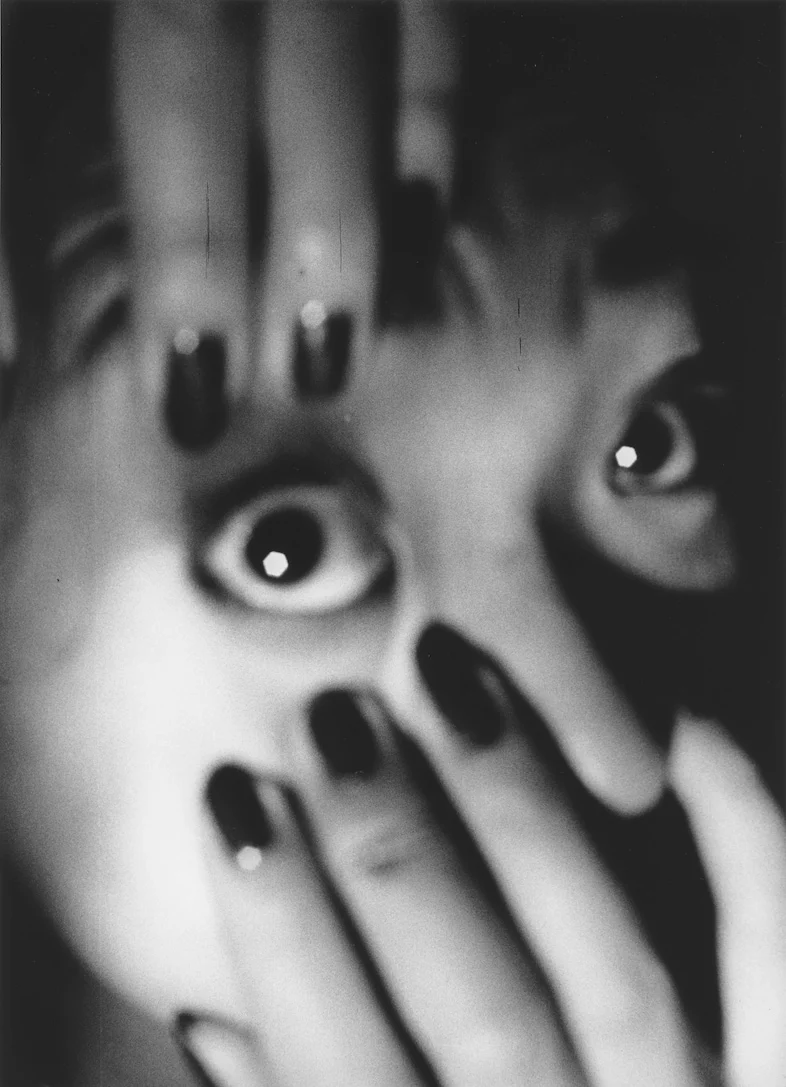
The concept of "edges" resonates deeply across human experience, conjuring images of peripheries, lives at the margins, moments of precariousness, or the brink of transformation. It suggests a tipping point, often without revealing what lies beyond the precipice. Yet, within this inherent uncertainty, there lies a profound opportunity for discovery, innovation, and the emergence of new realities and possibilities. This multifaceted interpretation forms the core of KYOTOGRAPHIE International Photography Festival’s 14th edition, set to unfold across Kyoto from April 18 to May 17, 2026. This year, the globally acclaimed festival will gather image-makers whose compelling and complex works directly engage with this potent theme.
A Festival Rooted in History and Innovation
Since its inception, KYOTOGRAPHIE has established itself as one of the world’s most exciting and respected photography festivals, celebrated for its innovative curation and its unique integration within Kyoto’s rich cultural landscape. Founded by Lucille Reyboz and Yusuke Nakanishi, the festival has consistently sought to bridge the past with the present, tradition with avant-garde, by staging exhibitions in both iconic historic institutions and unexpected non-traditional venues. For its 2026 iteration, the festival will once again transform spaces such as the venerable Hachiku-an building (the former Kawasaki Residence), the bustling Demachi Masugata Shopping Arcade, the serene Higashihonganji O-genkan temple, and the contemporary expanse of Kyoto Station, among others, into immersive galleries. This deliberate choice of venues creates a dialogue between the art and the city itself, offering visitors a distinctive journey through Kyoto’s tangible heritage while engaging with cutting-edge photographic narratives.
Unpacking the "Edge" Theme: Tension, Transition, and Transcendence
Founders Reyboz and Nakanishi articulate the profound scope of this year’s theme, stating, "KYOTOGRAPHIE 2026 explores the edge as a site of both tension and transition. We see radical approaches to photography alongside studies of urban decline, while documents of marginal communities intersect with ongoing issues of colonisation and territorial disputes." This statement underscores the festival’s commitment to showcasing photography not merely as an aesthetic pursuit but as a powerful tool for social commentary and critical inquiry. The "edge" here signifies not only geographical or social boundaries but also conceptual frontiers – the limits of perception, the boundaries of understanding, and the thresholds of societal change.
They further elaborate, "We also explore the transcendental force of nature, and see how reaching an edge can open up new ways of seeing, thinking, and creating – even in the face of the bleakest environmental, political, and personal turmoil. The edge is a place of uncertainty, yes, but also of possibility. A place where something ends to make way for something new." This holistic vision frames the "edge" as a dynamic zone where challenges and crises can paradoxically give rise to profound creativity and resilience. It invites viewers to contemplate environmental tipping points, the shifting sands of geopolitical power, and the deeply personal moments of transformation that define human existence. The curatorial approach thus aims to present a mosaic of perspectives that collectively illuminate the complex and often contradictory nature of boundaries, offering both a stark reflection of contemporary global issues and a beacon of hope for future possibilities.
KYOTOGRAPHIE’s Enduring Legacy: A Chronology of Impact
Established in 2013, KYOTOGRAPHIE has rapidly grown in stature, transforming Kyoto each spring into a global hub for photographic discourse. Over its 14-year history, the festival has consistently drawn hundreds of thousands of visitors annually, including international art enthusiasts, collectors, and industry professionals. Its unique model of integrating exhibitions into Kyoto’s diverse architectural fabric has not only revitalized historic sites but also brought contemporary art directly to local communities, fostering a deeper engagement with photography.
The festival’s impact extends beyond cultural enrichment; it generates significant economic activity for the city, supporting local businesses, tourism, and hospitality sectors. In previous years, visitor surveys have indicated a high satisfaction rate, with many attendees citing the festival as a primary reason for visiting Kyoto. This sustained success is a testament to the founders’ vision of creating a platform that is both artistically rigorous and deeply accessible, celebrating the power of photography to transcend cultural barriers and spark dialogue. KYOTOGRAPHIE’s commitment to showcasing both established masters and emerging talents, alongside its parallel KG+ program which supports independent artists and galleries, has solidified its reputation as a vital force in the global photography calendar. This year’s focus on "edges" continues this tradition, pushing artistic and thematic boundaries while reaffirming Kyoto’s role as a nexus for cultural exchange.
Spotlight on Featured Artists: Navigating the Edges of Vision
The 2026 edition of KYOTOGRAPHIE presents a stellar lineup of international and Japanese artists, each offering a distinct interpretation of the "edge" theme. Below, we delve into a few of the festival’s highly anticipated highlights.
DAIDŌ MORIYAMA: The Unpretentious Gaze from the Edge of Reality
Widely revered as Japan’s most influential and renowned photographer, Daidō Moriyama’s work has indelibly shaped the landscape of post-war Japanese avant-garde photography. Best known for his raw, grainy, and often blurry black-and-white street photography, Moriyama was a pivotal figure in the Provoke magazine movement, which challenged conventional photographic aesthetics in the late 1960s. His radical approach, often characterized by a snapshot aesthetic and a confrontational gaze, was influenced by American artists such as Andy Warhol’s embrace of everyday imagery and appropriation, William Klein’s raw and energetic street photography, and Jack Kerouac’s Beat Generation explorations of societal margins. Moriyama utilized photography not merely to document, but to critically examine the representations of reality, truth, fiction, memory, and history, often blurring the lines between these concepts.
His philosophical stance on his practice is encapsulated in his candid statement: "I don’t know if individual photographs contain ideas, worlds, history, humanity, beauty, ugliness or nothing at all. I actually do not really care. I just extract and record things around me, without any pretence.” Curator Thyago Nogueira elaborates on this, highlighting Moriyama’s "unpretentious approach to photography, his down-to-earth vision on the media, which led him to experiment so freely as opposed to the fine art tradition." This freedom from convention allowed Moriyama to capture the visceral energy and often unsettling realities of urban life, particularly in post-war Japan. His exhibition at KYOTOGRAPHIE promises to be "more than a traditional photography show," offering an unprecedented opportunity to "dive not only into Moriyama’s extraordinary body of work, but also into his mind, through his writings and reflections on the medium.” This immersive presentation will invite viewers to explore the "edges" of perception and understanding that Moriyama has consistently pushed throughout his illustrious career, revealing the profound depth within his seemingly unadorned vision.
LINDER STERLING: Cutting Through Dogma at the Feminist Edge
British artist Linder Sterling, celebrated for her radical, scalpel-sharp photo montages, describes her work as "rebellious, curious and forensic." Her distinctive practice, deeply influenced by punk, pop art, surrealism, and a touch of occultism, manifests as iconoclastic feminist visions. Through precise cutting and juxtaposition, she reconfigures and subverts prevailing ideas of women’s bodies, desire, consumerism, and domesticity. Her collages often present jarring, unsettling images—such as an iron placed over a woman’s head or mouths over breasts—forcing the viewer to confront societal norms and the objectification of women.
In a conversation with Dazed, Sterling illuminated the disruptive power of photomontage: "Sometimes it feels like a form of alchemy where something is greater than the sum of its parts. When you place an iron over a woman’s head and mouths over her breasts, the optic nerve struggles to work out what’s happening on that pictorial plane because we shouldn’t see a woman with a steamer on her head.” The act of cutting is central to her work, both literally and conceptually. She explains its historical and contemporary relevance: "Collage and photomontage emerged in the early 20th Century from a world in a state of flux. In times of such urgency, we need a medium that can literally cut through and offer imaginative alternatives to mainstream dogma.” Following her significant 2025 retrospective at London’s Hayward Gallery, her presentation at KYOTOGRAPHIE affirms her status as one of Britain’s most visionary and provocative artists. Her work, while drawing on historical references, continues to feel intensely modern, challenging the "edges" of representation and offering incisive commentary on gender politics and consumer culture. As Sterling notes, "To me, the past is ever present. Out of my respect for tradition, I am inspired to innovate with material and subject matter. I feel my work will resonate for precisely these reasons.”
ANTON CORBIJN: Defining the Edge of Music Iconography
Anton Corbijn, an eminent photographer, film director, and graphic designer, has indelibly shaped the visual landscape of contemporary music. His work, instantly recognizable for its stark black-and-white aesthetic and profound psychological depth, has become synonymous with some of the most iconic figures in music history. Corbijn’s journey into photography began as a personal escape: "My work exists because I saw music as an escape from my reality when I was a teenager, and that led, at age 17, to discovering that a camera could bring me closer to that world. Hence, all my initial photographs were of musicians.” While he later ventured successfully into film, fashion, and fine art, his enduring legacy remains his unforgettable portraits of musicians.
Over the past 50 years, Corbijn has collaborated with a pantheon of artists, from the ethereal Björk to the brooding Joy Division, the raw energy of Nirvana, the enigmatic Kate Bush, and the chameleon-like David Bowie. His photographs often capture an intimate vulnerability, revealing the human behind the persona, and have become defining images in popular culture. His selective retrospective at KYOTOGRAPHIE will showcase a curated selection of these iconic portraits alongside lesser-known but equally arresting images, tracing half a century of his distinctive portraiture practice. The exhibition underscores his consistent adherence to guiding principles: "A good photo would, in my opinion, touch three elements: it would say something about the subject, it would say something about the photographer, and it would show us an image that is new.” Corbijn’s ability to consistently deliver images that are both deeply personal and universally resonant positions him at the "edge" of celebrity portraiture, continually redefining how we see and understand musical icons.
THANDIWE MURIU: Weaving Identities at Cultural Edges
As KYOTOGRAPHIE’s African Artist in Residence, Thandiwe Muriu brings a vibrant and insightful perspective to the festival’s theme, exploring questions of identity, womanhood, societal roles, and the intricate effects of cultural forces through her distinctive images. Muriu’s work beautifully combines a deep reverence for Kenyan traditions and crafts with strong Afrofuturist elements, creating a visual language that is both timeless and forward-looking.
Deeply inspired by traditional African textiles, she masterfully uses these fabrics, with their bold geometric prints and vibrant colors, as both backdrop and canvas for her striking figures of women. These textiles often envelop her subjects, creating optical illusions that camouflage or accentuate, symbolizing the multifaceted layers of identity and belonging. In anticipation of her two presentations at KYOTOGRAPHIE, Muriu embarked on a unique creative journey, incorporating Japanese fabric and prints into her new body of work. This artistic fusion traces and articulates the fascinating connections between Kenyan and Japanese visual languages. During her residency, she immersed herself in the art of Japanese textile production traditions, particularly those related to the kimono. "My journey through Kyoto’s fabric landscape inspired me to create a body of work that intertwines the bold languages of both the kimono and the wax textile, to reflect on the expansive theme of belonging and one’s place in a community,” Muriu explains. “By using both textiles in a single image, I aim to recognise the experience of Afro-Asian (Blasian) women, whose identities naturally bridge two cultures to form a singular, unified presence. In this new work, I evoke a world where belonging is not granted by resemblance, but expanded by existence.” Her work powerfully addresses the "edges" of cultural identity, celebrating the beauty and strength found in hybridity and the expansion of belonging beyond traditional confines.
FEDERICO ESTOL: Empowering the Marginalized at Society’s Edge
Federico Estol’s impactful photographic series stands as a testament to the power of collaborative art for social transformation. His project focuses on the often-overlooked community of shoe shiners in La Paz, Bolivia, a group numbering over 3,000 workers who take to the city streets daily. These individuals operate on the extreme margins of society, vulnerable to discrimination and unprotected by formal workers’ rights. A poignant aspect of their daily lives is the wearing of disguises – often balaclavas or masks – to hide their identities due to the profound stigma associated with their profession.
Estol’s series, Shine Heroes, is a profound act of reframing. Collaborating directly with a group of shoe shiners and Hormigón Armado (Armed Concrete), a local initiative that produces a monthly newspaper to raise funds and awareness for these workers, Estol re-envisions these anonymous laborers as heroes. His powerful portraits strip away the anonymity imposed by societal prejudice and restore dignity to a disenfranchised community. "We continue to drive social transformation with these 60 workers – not only through the new visibility they’ve gained among citizens, but also in their daily income,” says Estol. “Our goal is to finally overcome the stigma in the city and take off the mask – to be seen as normal workers.” This project directly confronts the "edges" of social acceptance and economic inequality, using photography as a catalyst for advocacy and change. By giving voice and visibility to those pushed to the periphery, Estol’s work exemplifies how art can directly contribute to social justice and human rights, challenging the audience to look beyond preconceived notions and recognize the inherent worth of every individual.
Broader Impact and Enduring Legacy
KYOTOGRAPHIE 2026, with its compelling theme of "edges" and its diverse roster of artists, is poised to make a significant contribution to the global discourse on contemporary photography. The festival’s unique blend of historical reverence and cutting-edge artistic expression reinforces its role as a crucial platform for cultural exchange between Japan and the international art world. By presenting challenging and thought-provoking works in such a culturally rich setting, KYOTOGRAPHIE not only broadens artistic horizons but also encourages a deeper understanding of the complex social, political, and environmental issues defining our era. The festival’s enduring legacy lies in its capacity to inspire new perspectives, foster cross-cultural dialogue, and ultimately, to demonstrate the profound power of photography to illuminate the human condition, even – and especially – from the uncertain yet hopeful vantage point of the "edge."
KYOTOGRAPHIE runs from 18 April until 17 May 2026.