










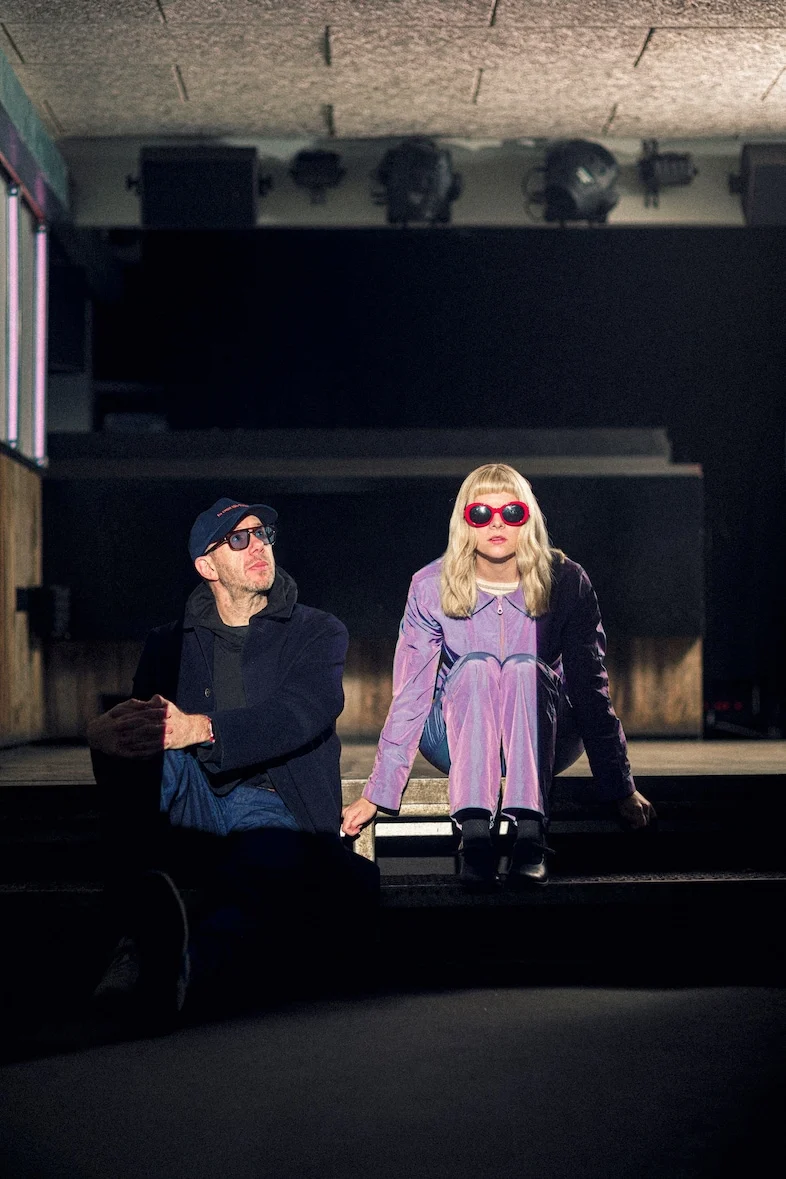
The landscape of contemporary music witnessed a compelling new confluence on April 17, 2024, with the release of Come Closer, the debut album from TOMORA. This highly anticipated project marks an unexpected yet deeply resonant collaboration between Tom Rowlands, one half of the seminal British electronic duo The Chemical Brothers, and the enigmatic Norwegian art-pop artist AURORA (Aurora Aksnes). Born from mutual artistic admiration and a burgeoning friendship, TOMORA represents more than just a musical fusion; it is a testament to the unifying power of sound and the boundless possibilities that emerge when established artists dare to venture beyond their familiar territories. The album, which has been met with significant intrigue, offers a fresh sonic palette, blending Rowlands’ iconic high-octane dance production with AURORA’s ethereal, theatrical vocals, all underpinned by a profound message of human connection.
The Illustrious Legacies Converge: A Tapestry of Influence
To fully appreciate the significance of TOMORA, one must first understand the formidable individual legacies that Tom Rowlands and AURORA bring to the table. The Chemical Brothers, comprising Rowlands and Ed Simons, emerged in the mid-1990s as pioneers of the "big beat" genre, redefining electronic music with their potent blend of breakbeats, distorted synths, and psychedelic rock sensibilities. Their debut album, Exit Planet Dust, released in 1996, immediately cemented their status as innovators, a mere 11 days after AURORA’s birth. Over nearly three decades, The Chemical Brothers have amassed an unparalleled discography, including critically acclaimed albums like Dig Your Own Hole (1997), Surrender (1999), and Push the Button (2005). Their influence is writ large across the 21st-century dance music spectrum, inspiring acts from the gritty French electro of Justice to the radio-ready house grooves of Disclosure, and more recently, the intricate breakbeats of Welsh duo Overmono. With six Grammy Awards under their belt for hits such such as "Do It Again," "Galvanize," and "Go," and a reputation for electrifying live performances that are often described as immersive audiovisual spectacles, The Chemical Brothers have consistently pushed the boundaries of electronic music, maintaining their relevance through continuous innovation and an unwavering commitment to sonic exploration.
On the other side of this artistic equation is AURORA, a distinctive voice in modern avant-pop. Hailing from Norway, Aksnes burst onto the global scene in the mid-2010s with her captivating blend of introspective lyricism, soaring vocals, and fantastical imagery. Her debut album, All My Demons Greeting Me as a Friend (2016), introduced a unique sound that was both vulnerable and powerful, quickly earning her a dedicated fanbase and critical acclaim. With five albums to her name, including A Different Kind of Human (Step 2) (2019) and The Gods We Can Touch (2022), AURORA has cultivated an enigmatic persona, known for her poetic storytelling and a vocal range that can shift from delicate whispers to anthemic crescendos. Her performances, often characterized by intricate choreography and a strong connection with her audience, have seen her grace stages as prestigious as Wembley Arena, solidifying her status as a compelling and singular force in contemporary pop music. Her work frequently explores themes of environmentalism, human connection, and the complexities of the emotional landscape, resonating deeply with a generation seeking authenticity and meaning.
The Unfolding Narrative: From Mutual Admiration to Collaborative Genesis
The seeds of TOMORA were sown through a series of serendipitous encounters and shared artistic appreciation, unfolding over nearly a decade. The initial exposure of each artist to the other’s work served as the catalyst. For AURORA, it was The Chemical Brothers’ evocative soundtrack to the 2011 thriller Hanna that first captured her imagination, immersing her in their distinctive sonic world. Conversely, Tom Rowlands found himself captivated by AURORA’s performance at Glastonbury in 2016, a set that reportedly left him profoundly impressed. He recalls his "jaw hitting the floor" upon witnessing her unique artistry on television, a moment that prompted him to reach out directly to her team.
This initial contact blossomed into a series of informal collaborations, with each artist lending their distinct talents to the other’s projects. Rowlands contributed to The Chemical Brothers’ funky 2019 hit "Eve Of Destruction," infusing it with his characteristic electronic prowess. In turn, AURORA provided her ethereal vocals to "My Body Is Not Mine," a dark-pop track released in 2024, showcasing her versatility within a different sonic context. These successful exchanges gradually fostered a deeper creative rapport, revealing a shared artistic language and a palpable synergy that transcended their individual styles. It became clear to both artists that their combined efforts were generating something distinct, something that merited its own dedicated space. The decision to formalize this union under the moniker TOMORA, a portmanteau of their names, was a natural progression, signifying the birth of a new artistic entity rather than merely a transient feature. This deliberate naming allowed them to carve out a fresh identity, free from the historical weight and expectations associated with their established careers.
A New Creative Horizon: The Philosophy Behind Come Closer
The motivations behind TOMORA and the creation of Come Closer are rooted in a desire for artistic liberation and the pursuit of unadulterated creative joy. AURORA describes the experience as "new oxygen into lungs," highlighting the revitalizing effect of this fresh endeavor. Tom Rowlands echoes this sentiment, articulating a need to escape the inherent pressures and expectations that come with decades of success in their respective "other lives." He explains, "I wanted to make music with AURORA, because it’s been invigorating and joyful when we’ve done it before. We give [each other] permission to try things that you may shy away from in another world." This mutual permission fostered an environment of experimentation and daring, where artistic risks could be taken without the scrutiny often associated with major projects.
The decision to "start from scratch" with TOMORA, rather than attempting to incorporate new elements within their existing blueprints, was a conscious choice aimed at maximizing creative freedom. Rowlands emphasizes the appeal of approaching something "with no past" and consequently "no future expectation," thereby removing any preconceived notions of what the music "should" be. This tabula rasa approach allowed for an organic evolution of sound, driven purely by the immediate spark of creation. AURORA further elaborates on this, noting that the enjoyment of writing "in service of a thing that exists" paled in comparison to the unbridled fun of creating without any "pre-decided idea." The formal naming of TOMORA, while defining the project, surprisingly enhanced this free-flowing creativity. AURORA recalls the moment they recognized, "Okay, this is a world with many multitudes, and this deserves its own name. We don’t need to gatekeep it anymore, we are ready for people to hear it if they want to." This realization, she notes, led to tracks like "In a Minute," which felt like a "real machine" written specifically "with TOMORA in mind, when it already existed," allowing them to become "really precise now, with this very free thing."
Despite a 26-year age gap, the friendship between Rowlands and AURORA has proven to be a cornerstone of their collaboration, characterized by a shared "ageless" spirit. AURORA dismisses the age difference as irrelevant, describing them both as "equally playful, still curious and very hungry for food, experiences, wine, humour – everything." Their bond extends beyond the studio, encompassing simple pleasures like "hanging out with a cat, watching figure skating," a shared passion highlighted by Rowlands’ mention of the Winter Olympics. This commonality in curiosity for life and music underscores the depth of their personal connection, which undoubtedly informs the authenticity of their creative partnership.
Thematic Resonance: ‘Come Closer’ as an Anthem for Connection
At its core, Come Closer is more than just an album; it is a profound statement on human connection in an increasingly fragmented world. AURORA describes the project as a "search for connection," a message she believes is deeply relevant in an era often characterized by individualism and fear of difference. She posits that while "new things are good for people, they can make people really scared." Her philosophy for TOMORA is to encourage people to "come a bit closer and see what’s truly in front of you," thereby making it "easy to love what you’re seeing and who or what you’re spending time with." This ethos, she explains, is "strangely as political as it is emotional," advocating for empathy and understanding over judgment and fear.
In a modern landscape dominated by self-focus and social media filters, TOMORA champions values of unity and exploration. AURORA emphasizes the power of music as a unique gathering force, unlike protests or expressions of hatred. "Music is the only place where people really gather in large groups… because this is fun, human and based on love. You instantly have a common thing." Rowlands draws a poignant parallel to his early experiences in the rave scene of 1989, recalling the "mad mix of people who you normally wouldn’t see all together." He cherishes that feeling of "bringing disparate people to share this same emotion at this one moment." This sentiment suggests a yearning for a return to collective experience, a sentiment that perhaps feels somewhat diminished in a contemporary dance music scene sometimes criticized for its focus on phones and filming over communal transcendence.
While acknowledging that things are "always in flux" and refraining from nostalgic idealization, Rowlands observes the shift in crowd dynamics. He notes that early raves fostered a more "disparate mix of people" because the phenomenon was new and undefined. The contemporary experience, however, can sometimes feel less inhibited when policies like strict no-phone rules are implemented, as he has observed recently. Both artists lament the pervasive culture of constant observation, which AURORA believes hinders people’s ability to grow up "more free, not observed." It is within this context that TOMORA seeks to provide an antidote. Rowlands concludes, "In TOMORA, we enjoy the idea of building this safe place where people are needed, and they’re welcome, to make this identifiable environment where you can come and lose your mind, connect with your fellow human and have an intense experience together."
The Sonic Architecture of Come Closer
Musically, Come Closer delivers precisely what one might expect from such a potent pairing, yet simultaneously defies easy categorization. The album seamlessly integrates Rowlands’ legendary prowess in crafting intricate, high-octane dance beats and expansive soundscapes with AURORA’s distinctive, often theatrical and larger-than-life vocal delivery. Tracks like "Somewhere Else" exemplify this synergy, emerging as an euphoric floor-filler that harnesses the kinetic energy of The Chemical Brothers while elevating it with AURORA’s soaring melodies. The title track, "Come Closer," conversely showcases a more cinematic storytelling approach, allowing AURORA’s lyrical depth and emotive performance to take center stage, enveloped by Rowlands’ atmospheric production.
The album’s sound is characterized by dynamic contrasts – moments of intense rhythmic drive give way to expansive, almost ambient passages, all held together by AURORA’s compelling vocal presence. Critical reception has largely highlighted the album’s refreshing originality, praising how the artists manage to maintain their individual identities while creating something wholly new. Reviews often commend the balance struck between the raw, driving force of electronic music and the delicate, expressive nature of art-pop, suggesting that Come Closer expands the boundaries of both genres. Early fan reactions on social media platforms and music forums have been overwhelmingly positive, with many expressing excitement over the unexpected combination and the fresh sound it offers. The album is charting well in several European countries, indicating a strong commercial as well as critical appeal.
Broader Impact and Future Implications
The emergence of TOMORA and the release of Come Closer carries significant implications for the individual careers of Tom Rowlands and AURORA, as well as for the broader music industry. For Rowlands, it demonstrates his continued artistic vitality and willingness to explore new creative avenues outside of The Chemical Brothers’ established framework. It reinforces his reputation as a visionary producer capable of adapting and innovating across diverse sonic landscapes. For AURORA, TOMORA offers an opportunity to expand her reach to a new audience, particularly within the electronic music sphere, while showcasing her versatility as a vocalist and songwriter. It solidifies her position as an artist who is not afraid to experiment and evolve.
Beyond individual careers, TOMORA could serve as a powerful exemplar for future collaborations, particularly between artists from seemingly disparate genres. It champions the idea that genuine artistic connection can transcend stylistic differences and age gaps, leading to truly groundbreaking work. In a music industry often driven by algorithms and genre pigeonholing, Come Closer stands as a testament to the organic, human-centric process of creation. Furthermore, the album’s core message of connection and unity resonates deeply in a world grappling with division, offering a musical balm that encourages empathy and understanding.
The prospect of live performances from TOMORA also presents an exciting possibility. Given The Chemical Brothers’ legendary live shows and AURORA’s captivating stage presence, a TOMORA tour could offer an immersive and transformative experience, bringing their shared vision of a "safe place" for collective transcendence to audiences worldwide. As Come Closer continues to find its audience, it not only enriches the musical landscape but also reaffirms the enduring power of artistic collaboration to inspire, unite, and ultimately, bring people a little bit closer.