








The global landscape of textile machinery and composite manufacturing witnessed a significant milestone in March 2026 as KARL MAYER, the Obertshausen-based market leader, solidified its strategic position at JEC World in Paris. As the premier international event for composite materials, JEC World 2026 served as the ideal stage for KARL MAYER to demonstrate its commitment to technological excellence and its role as a primary partner for industries ranging from aerospace and automotive to renewable energy and civil engineering. Between March 24 and March 26, the company engaged in a high-density schedule of technical consultations, partnership renewals, and the unveiling of manufacturing solutions designed to address the increasingly complex demands of the modern materials market.
Global Leadership and Strategic Networking in Paris
KARL MAYER’s presence at JEC World 2026 was defined by a dual focus on consolidating existing relationships and pioneering new market entries. As a global market leader in textile machinery manufacturing, the company utilized the exhibition to bridge the gap between raw textile production and high-performance composite application. The event, held at the Paris Nord Villepinte Exhibition Centre, attracted thousands of professionals from across the globe, providing a concentrated environment for KARL MAYER to showcase its machinery’s capabilities in processing glass, carbon, and aramid fibers.
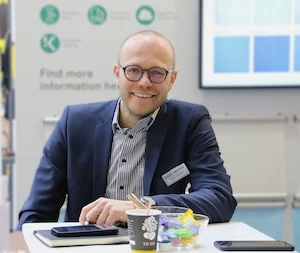
Throughout the three-day event, the KARL MAYER delegation, led by key executives and technical specialists, reported a high volume of traffic from both established Western manufacturers and emerging players from Asian and Middle Eastern markets. The focus was not merely on machine sales but on "reliable and competent partnership," a theme that resonated with visitors looking for long-term stability in a volatile global economy. By positioning itself as more than just an equipment provider, KARL MAYER highlighted its ability to offer end-to-end technical support, from initial fabric design to the optimization of the final composite part.
Navigating a Complex Global Economic Landscape
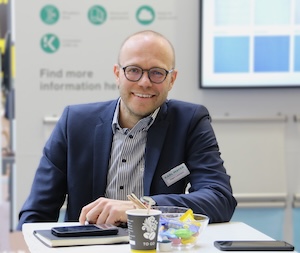
The 2026 edition of JEC World took place against a backdrop of significant geopolitical and economic shifts. Hagen Lotzmann, President of the KARL MAYER Business Unit Technical Textiles, noted that the current business climate is characterized by a "tense global atmosphere." In Western markets, particularly in Europe, many industrial players have exhibited a degree of investment caution. This hesitancy is largely attributed to fluctuating energy costs, supply chain recalibrations, and general economic uncertainty.
However, this caution in the West was contrasted by a surge in activity from other regions. The United States and Turkey maintained a formidable presence at the show, utilizing large joint pavilions to demonstrate their growing manufacturing capacities and desire for technological independence. Perhaps most notable was the massive showing from the Chinese composite value chain. From carbon fiber producers to specialized end-users, Chinese firms demonstrated that they have evolved beyond low-cost production, now competing directly in the high-tech segments of the industry. This shift has placed immense competitive pressure on all market participants, necessitating a move toward high-efficiency, high-innovation solutions—a niche that KARL MAYER is uniquely positioned to fill.
The Pultrusion Revolution: Transforming Construction and Solar Energy
One of the most significant highlights of KARL MAYER’s showcase was the introduction of novel applications for pultrusion technology. Pultrusion is a continuous process for manufacturing composite profiles with a constant cross-section. Traditionally, these profiles have relied on simple fiber reinforcements, but KARL MAYER has disrupted this field by integrating non-crimp fabrics (NCF) produced on its multiaxial warp knitting machines.
The use of multiaxial fabrics allows for the creation of complex chamber structures within pultruded profiles. These structures offer superior mechanical properties, such as high torsional stiffness and multi-directional strength, which are difficult to achieve with conventional roving-based pultrusion. During the exhibition, the KARL MAYER booth featured various pultrusion profiles that sparked intense interest from the construction and energy sectors.
Specific applications discussed included:
- Solar Panel Frames: As the global transition to renewable energy accelerates, the demand for durable, lightweight, and corrosion-resistant materials has skyrocketed. Composite frames for solar panels offer a maintenance-free alternative to aluminum, particularly in harsh coastal or industrial environments.
- Infrastructure and Construction: The industry is increasingly looking toward "corrosion-free" reinforcements. Pultruded profiles using KARL MAYER’s NCF technology provide support structures for buildings and bridges that are lighter than steel and immune to the rust that plagues traditional reinforced concrete.
Technical Specifications and the Role of Non-Crimp Fabrics
The technical advantage of KARL MAYER’s approach lies in the precision of its warp knitting technology. Non-crimp fabrics are characterized by straight fiber layers that are held together by a thin knitting thread. Because the load-bearing fibers are not crimped (unlike in traditional woven fabrics), they can absorb mechanical stress more efficiently.
In the pultrusion process, these fabrics are impregnated with resin and pulled through a heated die. The ability of KARL MAYER’s machinery to produce fabrics with precise fiber angles (0°, 90°, and various bias angles) means that engineers can "tune" the pultruded profile to meet specific load requirements. This level of customization is essential for the "complex chamber structures" mentioned by Hagen Lotzmann, which require consistent wall thickness and exact fiber placement to maintain structural integrity.
The Surge of Carbon Fiber in Modern Mobility and Aerospace
Beyond pultrusion, JEC World 2026 highlighted a renewed and growing interest in carbon fiber applications. Carbon fiber reinforced plastics (CFRP) are no longer reserved for elite aerospace projects; they are moving rapidly into mass-market mobility sectors. KARL MAYER’s COP MAX 5 machine stood out as a focal point for visitors interested in carbon reinforcements.
The COP MAX 5 is a multiaxial warp knitting machine specifically engineered for the high-speed production of NCFs from carbon or glass fibers. Its ability to handle fragile carbon tows with minimal friction ensures that the high-performance properties of the fiber are preserved throughout the textile manufacturing process.
The mobility sector is driving this demand through two primary avenues:
- Automotive Electrification: As electric vehicles (EVs) become the standard, manufacturers are seeking ways to offset the weight of heavy battery packs. CFRP is being used extensively for battery housings and underfloor structures, providing high impact resistance and thermal stability while keeping the vehicle’s overall weight low.
- The Drone Industry: A "completely new field of application" identified at the show is the rapid expansion of the drone and Unmanned Aerial Vehicle (UAV) sector. Whether for logistics, agricultural monitoring, or defense, drones require an extreme strength-to-weight ratio, making carbon fiber NCFs the material of choice for airframes and rotor blades.
A Chronology of Innovation and Strategic Milestones
The success at JEC World 2026 is the result of a multi-year strategic roadmap implemented by KARL MAYER. To understand the company’s current position, one must look at the timeline of its development in the technical textiles sector:
- 2020-2022: KARL MAYER focused on digitalizing its machinery, introducing the KM.ON platform to allow for remote monitoring and optimization of warp knitting processes, which became vital during global travel restrictions.
- 2023-2024: The company intensified its R&D into sustainable fiber processing, including the use of recycled carbon fibers and natural fibers like flax and hemp, aligning with the "Green Deal" initiatives in Europe.
- 2025: Development of the "New Generation" pultrusion fabric technology was finalized, moving from laboratory testing to industrial-scale viability.
- March 2026: The official market launch of these applications at JEC World Paris, marking the transition from a machinery manufacturer to a provider of "innovative application perspectives."
Comparative Market Analysis: The Rise of Emerging Manufacturing Hubs
Data gathered during JEC World 2026 suggests a shift in the global composite market’s center of gravity. While the European market remains the hub for high-end research and aerospace certification, the manufacturing volume is increasingly being contested by Turkey and the United States.
Turkey has positioned itself as a "bridge" between East and West, leveraging its strong textile heritage to become a powerhouse in technical textiles. Its joint booth at Paris showcased a vertically integrated approach, where domestic fiber production is immediately converted into textiles and finished parts.
Meanwhile, the United States is seeing a resurgence in domestic composite manufacturing, fueled by government incentives for renewable energy and domestic semiconductor production (which requires high-purity composite cleanroom environments). KARL MAYER’s ability to supply high-precision machinery to these growing hubs ensures that even as the geography of manufacturing changes, the underlying technology remains German-engineered.
Future Horizons: Techtextil and the Obertshausen Innovation Center
The momentum generated in Paris is set to continue throughout 2026. KARL MAYER announced two major upcoming events that will allow industry partners to dive deeper into the technologies showcased at JEC World.
First, the company will have a significant presence at Techtextil 2026 in Frankfurt. Located at Booth 12.0/B79, KARL MAYER will demonstrate the live production of technical textiles and offer a more granular look at the machinery behind the pultrusion and carbon fiber applications.
Concurrent with Techtextil, KARL MAYER is hosting the Opening Week of its new TEXTILE INNOVATION CENTER at its headquarters in Obertshausen. This state-of-the-art facility is designed to be a collaborative space where customers can work alongside KARL MAYER engineers to develop new fabric structures and test them on the latest machinery. The center represents a multi-million euro investment in the future of the industry, signaling KARL MAYER’s belief that innovation is the only sustainable response to global competitive pressure.
Conclusion: The Strategic Path Forward
As JEC World 2026 concluded, the consensus among industry analysts was that KARL MAYER has successfully navigated a period of global uncertainty by doubling down on specialized, high-value applications. By identifying pultrusion and drone construction as key growth drivers, the company has provided its customers with a roadmap to remain competitive in a crowded market.
The move toward integrated solutions—where the machine manufacturer provides the technical blueprint for the end product—marks a new era for KARL MAYER. As Hagen Lotzmann emphasized, the goal is to provide "new perspectives" to customers who are currently facing intense pressure to innovate. With the upcoming opening of the Textile Innovation Center and the ongoing success of the COP MAX series, KARL MAYER remains the cornerstone of the technical textile and composite reinforcement industry, driving the transition toward a lighter, stronger, and more sustainable industrial future.