





Sustainable fashion activism, once a thriving digital movement, is confronting a harsh new reality as the social media platforms that fueled its rise now appear to actively diminish its reach. From the powerful #WhoMadeMyClothes campaign to the nascent deinfluencing trend, the movement successfully organized, campaigned, and significantly expanded its audience on platforms that, for a time, seemed to reward its message. However, as these digital arenas pivot sharply towards e-commerce and rapid-fire content, creators, activists, and small ethical brands are reporting a drastic collapse in visibility, grappling with what many are calling "algorithmic abandonment." This shift raises critical questions about the efficacy of digital activism when the very infrastructure it relies on is designed for consumption, not conscientious critique.
The Digital Dawn: How Social Media Empowered Sustainable Fashion
For over a decade, social media served as an indispensable engine for the sustainable fashion movement. In its earlier iterations, particularly from the late 2000s through the mid-2010s, platforms like Instagram and nascent YouTube provided a relatively level playing field for diverse voices. Content creators and grassroots organizations found unprecedented opportunities to bypass traditional media gatekeepers, directly connecting with audiences passionate about ethical consumption and environmental impact. This era was characterized by a greater emphasis on chronological feeds and community building, allowing niche topics to gain traction organically.
A pivotal moment for the movement was the tragic Rana Plaza factory collapse in Bangladesh in April 2013. This disaster, which killed over 1,100 garment workers and injured thousands more, starkly exposed the human cost of the fast fashion industry. In its wake, Fashion Revolution was founded, launching the iconic #WhoMadeMyClothes campaign. This hashtag-driven initiative exploded across social media, reaching billions of people globally and forcing brands to confront their opaque supply chains. Orsola de Castro, co-founder of Fashion Revolution, attests to the profound impact: "The impact of social media, in terms of activism over the past 10 years, has been huge." She goes further, stating that the global fashion movement became "entirely based on online activism," generating not just awareness but tangible pressure that encouraged legislative lobbying and significantly impacted supply chain transparency.
Beyond major campaigns, social media fostered a vibrant community around sustainable fashion. Digital creators shared tips on mending, thrifting, and capsule wardrobes. Independent ethical brands found an affordable way to market their products directly to conscious consumers, fostering a sense of connection and shared values. The deinfluencing trend of 2023, where users actively discouraged purchases, and the 2024 "underconsumption" movement, which championed quality over quantity, further illustrated the public’s desire for content that challenged rampant consumerism. While these trends garnered significant engagement (e.g., #deinfluencing with 98,300 TikTok posts and 30,500 Instagram posts; #underconsumption with 48,500 and 20,600 posts respectively), their reach remained dwarfed by the sheer volume of fast fashion content, hinting at a systemic imbalance.
Algorithmic Abandonment: Small Brands on the Brink
The landscape has dramatically shifted, and the very platforms that once amplified these messages now seem to actively suppress them. The most recent casualty in this algorithmic upheaval is Osei-Duro, a 16-year-old Ghanaian slow fashion brand that recently announced its closure. While acknowledging the multifarious pressures facing ethical labels—including changing tariffs, fierce competition from ultra-fast fashion, rising production costs, and tightening consumer budgets—Osei-Duro explicitly cited "algorithm abandonment" in its farewell Instagram post as a primary factor in its demise. This poignant statement underscores a growing crisis for small, values-driven businesses whose survival depends on digital visibility.
This phenomenon is not isolated to brands. Digital creators who once dedicated their online presence to sustainable fashion are also feeling the squeeze. Danni Duncan, a New Zealand creator who advocated for sustainable fashion between 2018 and 2022, observed a significant decline in engagement. "I definitely noticed that engagement on that content slowed down considerably," she recounts, noting that audiences grew "fatigued" by the conversation, perceiving it as inaccessible or less "glamorous." Since pivoting her content away from sustainable fashion, Duncan has reported significant growth in both engagement and follower count, a stark indicator of the algorithms’ current preferences.
The data further corroborates this trend. While #Sustainability boasts an impressive 21.7 million posts on Instagram and 830,900 on TikTok, a deeper analysis reveals a concerning truth about who is driving these conversations. Dr. Katia Dayan Vladimirova, an academic researcher specializing in fashion consumption and sustainability, conducted a comprehensive 2023 literature review. Her study meticulously analyzed the 50,000 most-liked Instagram posts tagged with ‘sustainable fashion,’ accumulating over 11 million likes. The findings were unequivocal: "The loudest voices speaking about sustainable fashion were actually H&M and Reliance." This revelation is particularly jarring, as H&M, a Swedish fast fashion conglomerate, reported $24.7 billion USD in net sales in 2024, and Reliance is India’s largest producer of polyester—materials and business models fundamentally at odds with genuine sustainability. Vladimirova clarifies that most of these posts originated from influencers paid to advertise these brands, concluding, "Even though it was said through the accounts of influencers, it’s a brand that was behind this communication… It’s a way to manipulate public opinion." This tactic, often termed greenwashing, allows fast fashion giants to co-opt the sustainability narrative, further saturating feeds and drowning out authentic voices.
The Evolution of Social Media: From Connection to Commerce
The current social media landscape is drastically different from even five years ago. What began as platforms for connection and sharing has rapidly morphed into sophisticated, commerce-driven ecosystems. This shift hasn’t been a single "flip-switch" moment but rather a complex amalgamation of societal, financial, political, and cultural factors, with algorithmic recalibration serving as the most visible symptom.
The timeline of social media’s evolution reveals a clear trajectory towards monetization. In the early 2010s, platforms generally prioritized user-generated content and a more organic, chronological feed. The mid-2010s saw the introduction of more complex algorithms, initially aimed at personalizing user experience but gradually becoming optimized for engagement metrics that ultimately served advertising revenue. By the late 2010s and into the present, the pivot towards e-commerce became aggressive and undeniable. The meteoric rise of TikTok, with its short-form, highly addictive video format, accelerated this trend, pushing other platforms like Instagram to adopt similar features. The integration of "shopper-tainment" features such as TikTok Shop and Instagram Shopping has blurred the lines between social interaction and direct retail, transforming platforms into virtual malls.
This "enshittification," a term popularized by author Cory Doctorow, describes the process by which online platforms degrade their service to users to extract more value from advertisers and creators, ultimately making the platform less useful for everyone but the owners. Social media platforms, initially appearing to foster free speech and dissent, have increasingly restricted messaging that challenges the status quo. Orsola de Castro laments, "I think that all messaging that questions the status quo has been restricted… The glory of early social media was that [Big Tech] hadn’t quite cottoned on to how powerful it could be as an instrument for dissent… Despite the fact that there is so much talk about free speech, social media is absolutely doing the opposite. It is impeding free speech."
Moreover, the global political and social climate adds another layer of complexity. We’ve witnessed shifts towards conservatism in global governments, the mainstreaming of far-right commentators, and increasing regulatory scrutiny on tech companies. From Meta’s news ban in Canada to ongoing threats of TikTok bans in the US and social media restrictions for minors in Australia, the environment for unfettered digital discourse is increasingly turbulent. These external pressures, combined with an internal drive for profit, have reshaped what kind of content thrives.
Fast Fashion’s Algorithmic Advantage
The inherent design of modern algorithms heavily favors content that aligns with speed, volume, and shoppability—precisely the characteristics of the ultra-fast fashion industry. Consider the sheer dominance of fast fashion hashtags: #haul boasts 18.2 million posts on TikTok, #unboxing has 16 million, #Shein 8.6 million, #Zara 3.5 million, and #Temu 2.1 million. These numbers, which are constantly escalating, dwarf the engagement seen on sustainable fashion topics. This disparity highlights a critical issue: the algorithms are not neutral arbiters of content; they are engineered to keep users scrolling and, crucially, buying.
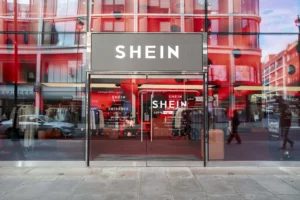
The business models of ultra-fast fashion giants like Shein and Temu are perfectly symbiotic with these algorithmic preferences. Their production lines operate with "lightning-fast, hyper-personalized algorithms" that respond in real-time to trending online aesthetics. This means new products can go from concept to customer’s screen in days, fueled by a relentless stream of influencer-driven "haul" and "unboxing" videos that generate immediate demand. The gamification of their apps further blurs the line between shopping and entertainment, fostering impulsive purchases. Social media’s raison d’être, in this context, becomes delivering individually curated, shoppable content to maximize screen time and transaction volume. This "churn-and-burn" marketing tactic mirrors the disposable nature of fast fashion itself, creating a self-reinforcing cycle where platforms manufacture demand and brands supply cheap, abundant clothes.
Clare Press, sustainability communicator and host of The Wardrobe Crisis podcast, succinctly states the underlying problem: "If you’re not commercial, i.e., here to line Zuckerberg’s pockets, you’re devalued." This blunt assessment reflects the uncomfortable truth that platforms are now pure advertising mules. Meta, for instance, reportedly earned $16 billion USD in a single year from running ads for scams, underscoring a blatant disregard for ethical considerations in pursuit of profit. In this environment, concepts like sustainable fashion, mindful consumption, and ethical values—which inherently advocate for slowing down, researching, and consuming less—are fundamentally antithetical to the platforms’ core business model. As Dr. Vladimirova observes, "My informed, educated guess would be that [algorithms] don’t support [sustainability] keywords at all. It’s definitely much lower on the priority list than anything that has to do with product recommendations or selling, especially if the companies that are selling are paying substantial amounts for promotion… Nobody is paying for sustainability to be up on the agenda."
The Paradox of Digital Activism: Awareness vs. Action
The journey of sustainable fashion on social media illuminates a broader paradox of digital activism. While platforms proved incredibly effective at generating awareness, their design inherently struggles with fostering the kind of organized, sustained pressure required to enact fundamental industry change. Katherine Cross, in her 2024 book Log Off: Why Posting and Politics (Almost) Never Mix, argues that social media has always been better at creating content than driving collective action. Hashtag campaigns, while appearing collective, ultimately reward individual engagement, channeling energy into platform activity that primarily benefits the platforms themselves. Cross describes these digital spaces as "a ‘public square’ where real people can get hurt, but nothing ever really changes." This rings uncomfortably true for sustainable fashion, where online presence has grown exponentially, yet the industry’s environmental and ethical record has shown only glacial shifts.
For advocates, the effort now feels like the mythological task of Sisyphus, perpetually pushing a boulder uphill. Orsola de Castro describes it as being "stuck in this game, this merry-go-round, each trying to be the brightest light in order to be heard." She recently took to Instagram herself to voice her frustration over algorithmic deprioritization, advising her community to actively "game" the algorithm by seeking out and liking content from creators they wish to support. This advice—a workaround rather than a solution—reveals how much energy is now misdirected simply to maintain visibility within a system that was never designed to reward its message.
The uncomfortable truth is that social media’s most popular uses—the outfit-of-the-day posts, the haul videos, the unboxing content—are perfectly matched to what platforms do best: delivering surface-level, individual, entertaining content that maximizes scrolling. The challenge arises when these same platforms are asked to carry a message that fundamentally conflicts with their commercial imperative. Sustainable fashion isn’t just competing for algorithmic attention; it’s asking a commercial infrastructure to amplify a message about consuming less. At a certain point, the boulder was never going to stay at the top of the hill.
Beyond the Algorithm: Reimagining Sustainable Fashion’s Future
In light of these challenges, there’s a growing consensus that the future of sustainable fashion activism and ethical brand building must extend beyond the confines of current social media algorithms. Clare Press suggests that "fashion people are endlessly creative, and now we’re being called on to be creative about the method [and] channel, not just the content." She advocates for a return "back to the village," emphasizing offline engagement and smaller, more personal community interactions, such as "Stitch ‘n Bitch" get-togethers and clothes swaps.
Indeed, the most durable and impactful work in sustainable fashion has often occurred away from the platforms. Policy lobbying, meticulous supply chain investigations, and genuine community building—activities championed by organizations like Fashion Revolution—have always operated on principles of sustained effort and direct engagement, only using social media as a publicizing tool, not a primary driver. The lesson from Zohran Mamdani’s mayoral campaign in New York City, which employed a community-first, door-knocking strategy bolstered by social content for reach, offers a compelling model for other justice-oriented movements. This omnichannel approach positions social media as a support mechanism rather than the central engine.
However, for independent sustainable fashion brands, the decision to "opt out" or significantly de-emphasize social media is far more complex. Osei-Duro was not a hashtag campaign; it was a business, a livelihood built over 16 years that needed to reach customers and sell garments to remain solvent. For such brands, visibility isn’t a vanity metric; it’s a matter of economic survival. When platforms exert such control, effectively making "serfs of everyone," the luxury of decentering these platforms is often unattainable.
Until social media platforms are fundamentally redesigned to reward values beyond speed, volume, and immediate commercial transaction, the phenomenon of algorithmic abandonment will continue to claim sustainable fashion businesses that can least afford it. The movement must, therefore, strategize for resilience, building stronger foundations offline while navigating the treacherous, commerce-driven currents of the digital world with renewed awareness and diversified approaches.