










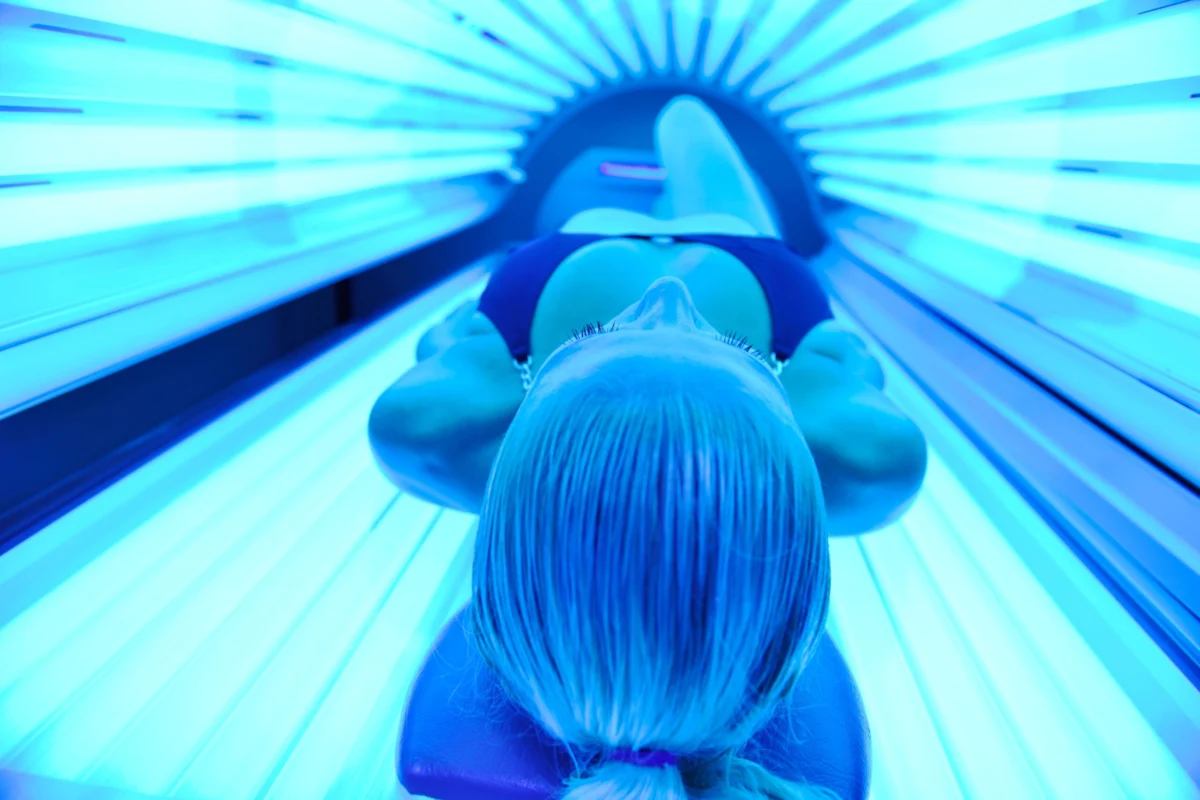
The Food and Drug Administration (FDA) has officially withdrawn a proposed rule that sought to ban American teenagers under the age of 18 from using indoor tanning beds. This decision, announced recently, marks a significant shift after the agency had initially put forth the restriction in 2015. The proposed ban was rooted in the well-established understanding of the severe health risks associated with the high-dose ultraviolet (UV) radiation emitted by these devices, primarily its strong link to skin cancer.
Background and Initial Proposal
The FDA’s initial proposal aimed to address a critical public health concern: the disproportionate vulnerability of young people to the carcinogenic effects of indoor tanning. For years, dermatologists and health organizations have warned that the UV light emitted from tanning beds, particularly UVA rays, significantly increases the risk of developing all types of skin cancer, including melanoma, basal cell carcinoma, and squamous cell carcinoma. The International Agency for Research on Cancer (IARC), a part of the World Health Organization, classifies UV-emitting tanning devices as Group 1 carcinogens, placing them in the same category as substances like tobacco smoke and asbestos.
The proposed rule, first introduced in 2015, was a proactive measure intended to safeguard the health of adolescents, whose skin is more susceptible to UV damage and who are more likely to develop long-term health consequences from early exposure. The rationale was straightforward: to prevent a lifetime of increased cancer risk by restricting access to a known carcinogen for a population segment with developing bodies and potentially less informed decision-making capabilities.
Withdrawal of the Proposed Rule and FDA’s Rationale
In a statement provided to Allure, an FDA spokesperson explained the agency’s decision to withdraw the proposed rule. The spokesperson indicated that the withdrawal was "in order to reconsider the best means for addressing the issues covered by the Proposed Rule and related issues regarding access to sunlamp products." This suggests a move towards a potentially different regulatory approach or a desire to gather further information and refine the strategy for mitigating the risks associated with indoor tanning.
The FDA’s decision followed an extensive public comment period, during which the agency received over 8,100 submissions. These comments reflected a diverse range of perspectives, encompassing the well-documented dangers of UV radiation and the particular susceptibility of young people, as well as arguments for personal autonomy, parental decision-making rights, and concerns about the economic impact on small businesses. The sheer volume and breadth of these comments likely necessitated a more thorough review and reconsideration by the agency.
Scientific Consensus and Expert Concerns
Despite the FDA’s withdrawal of the proposed ban, the scientific consensus on the dangers of indoor tanning remains unwavering. The agency itself acknowledged this in its statement, noting, "Withdrawal of the proposed restrictions does not mean that exposure to UV radiation does not cause skin cancer. It is well established that exposure to UV radiation (including through sunlamp products) can lead to skin cancer." However, the subsequent recommendation for users to "discuss the potential risks with their physician" has been criticized by health professionals as downplaying the certainty of these risks.
Leading dermatologists have expressed profound disappointment and concern over the FDA’s decision. Dr. Susan C. Taylor, MD, FAAD, President of the American Academy of Dermatology, issued a statement conveying the organization’s dismay. "Exposure to UV radiation from indoor tanning devices is associated with an increased risk of melanoma, as well as non-melanoma skin cancers, including squamous cell carcinoma and basal cell carcinoma," Dr. Taylor stated.
Further elaborating on the specific dangers, Dr. Dendy Engleman, MD, a board-certified dermatologist in New York City, highlighted a critical aspect of tanning bed technology. "They emit mostly UVA radiation and filter out the UVB that will burn you more readily—[tanning salons] don’t want you to burn, they want you to come back," Dr. Engleman explained. "But UVA radiation ages you more readily, breaks down collagen more readily, and it’s more oncogenic, meaning cancer-causing." This focus on UVA, which penetrates deeper into the skin and is more effectively linked to long-term damage and cancer, underscores the inherent risks.
Emerging Research on Tanning Bed Dangers
Recent scientific research has further amplified concerns about the dangers of indoor tanning. A study published late last year by Northwestern Medicine and the University of California, San Francisco, revealed that tanning bed usage is even more perilous than previously understood. While earlier estimates suggested that indoor tanners were approximately 75% more likely to develop melanoma than non-tanners, with a single session potentially increasing risk by 20%, this new research indicated that tanning bed usage can actually triple the risk of skin cancer—a staggering 200% increase.
The study’s methodology, which involved comparing 182 skin biopsies, demonstrated that UV radiation from tanning beds induces unique and more damaging DNA mutations than previously recognized. Dr. Mona Gohara, MD, a board-certified dermatologist and clinical professor at Yale School of Medicine, summarized the findings for Allure: "The takeaway is simple: Tanning beds don’t just age your skin, they biologically shift your cells toward cancer." This research provides a stark, molecular-level understanding of the harm caused by these devices.
Regulatory Landscape and Enforcement Challenges
Currently, there is no overarching federal ban prohibiting minors from using tanning beds. However, a patchwork of state-level regulations exists. Several states, including California, New York, Virginia, Illinois, and Texas, have implemented bans for minors. Other states, such as Alabama, Washington, and Oregon, have bans with exceptions requiring a doctor’s prescription, while states like Idaho, Michigan, and Utah mandate parental consent or supervision.
Despite these regulations, enforcement remains a significant challenge. Dr. Engleman noted from her experience, particularly in Southern states, that "tanning salons that should be asking for IDs and parental consent often aren’t." She added, "In a lot of states, high schoolers can just go tanning on the way home from school and their parents don’t even know." This lack of consistent oversight and enforcement leaves young people vulnerable.
Parental Concerns and the Burden of Prevention
The complexities of modern parenting are further compounded by the need to monitor and regulate potentially harmful activities like indoor tanning. Dr. Kavita Mariwalla, MD, a double board-certified dermatologist in Long Island, New York, expressed concern that the FDA’s withdrawal of the proposed ban sends a signal that the issue is not a priority. "When the FDA, the organization tasked with determining the safety of medications and devices for the United States, backs off this proposal, it gives two signals," she explained. "The first is that it’s not an important issue and the second is that tanning isn’t dangerous enough for the FDA to get involved—both could not be farther from the truth."
Dr. Mariwalla, a mother of three, observed that for many parents, "it’s hard to parent in 2026 and sometimes on the list of things you’re willing to go to battle on, tanning beds fall at the bottom." Similarly, Dr. Engleman, also a mother, drew parallels to the challenges of regulating smartphone and social media use. "It’s on us to sign Wait Til 8th pledges and protect our kids," she stated, emphasizing the desire for governmental bodies to provide stronger safeguards. "It would be great to have bans on the things we know for a fact are particularly dangerous for young people, to have a governing body with an emphasis on health helping us to keep our kids safe."
The Escalating Epidemic of Skin Cancer
The stakes in this debate are exceedingly high, as skin cancer continues to reach epidemic proportions in the United States. Dr. Mariwalla pointed out that despite ongoing educational efforts by dermatologists and advancements in medical treatment, the mortality rate for melanoma has remained stagnant for years. The American Cancer Society projects a significant increase in new melanoma cases for the upcoming year, further underscoring the urgency of preventative measures.
The impact of UV exposure before the age of 18 is particularly critical. UVA-heavy radiation experienced during adolescence can severely elevate the risk of developing skin cancer, including deadly melanoma, later in life. "Teen skin is particularly susceptible to ultraviolet damage," Dr. Mariwalla elaborated, noting the inherent sensitivity of adolescent skin structures.
Persistent Myths and the Need for Clear Guidance
Despite the overwhelming scientific evidence, pervasive myths surrounding tanning continue to influence public perception, especially among young people. Common misconceptions include the idea that tanning stimulates vitamin D production or that a "base tan" protects against sunburn. An American Academy of Dermatology (AAD) survey from 2025 indicated that "younger adults may not fully grasp the dangers—especially with the influence of social media trends that promote tanning." The proliferation of misinformation online, coupled with the FDA’s recent decision, creates a challenging environment for public health messaging.
Dr. Mariwalla concluded with a strong statement on the implications of the FDA’s action: "The [FDA’s] decision sends the wrong message—especially to young people—that tanning beds are safe, when they’re not," she stated. "The same way we do not want our teens to smoke, we do not want them to go to a tanning bed." The withdrawal of the proposed ban leaves a critical gap in federal regulation, placing a greater onus on parents, educators, and healthcare providers to counter the allure of indoor tanning and educate the public about its undeniable dangers.