








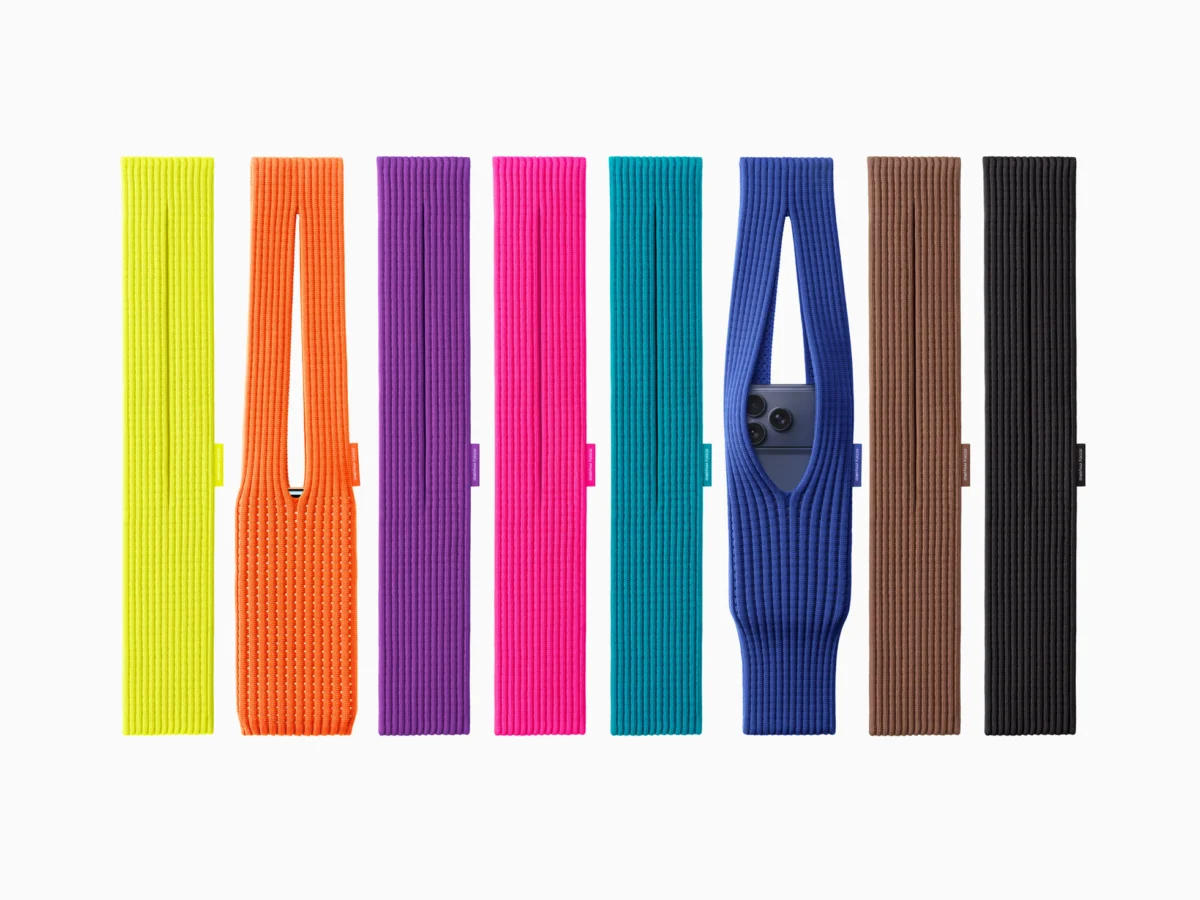
Apple has officially expanded its portfolio of luxury lifestyle accessories with the introduction of the iPhone Pocket, a high-end textile carrier designed in collaboration with the Issey Miyake label. The product, which draws heavily from the Japanese designer’s "A Piece of Cloth" (APOC) philosophy, represents a significant step in Apple’s ongoing efforts to position its hardware within the world of high fashion. Available in two distinct configurations, the iPhone Pocket retails for $149.95 for the "short" model and $229.95 for the "long" crossbody version. This launch follows a series of premium accessory releases from the Cupertino-based tech giant, including the much-discussed $19 polishing cloth and various Hermès-branded Apple Watch bands, signaling a continued interest in the intersection of utilitarian technology and luxury apparel.
Product Design and Technical Specifications
The iPhone Pocket is characterized by its minimalist construction, utilizing a single piece of fabric to form the entirety of the carrier. According to official product descriptions, the item features a ribbed mesh structure that mirrors the signature pleats for which the Issey Miyake brand is globally renowned. The textile is engineered to be highly elastic; when the phone is inserted, the fabric stretches, creating an open-weave effect that allows the user to view the device’s display through the mesh.
The "short" version of the iPhone Pocket is designed as a modular attachment, intended to be tied to larger bags or carried as a handheld accessory. It is launched in a variety of vibrant hues, including a "Short Lemon" yellow. The "long" version serves as a standalone crossbody sling, offering a hands-free carrying solution that aligns with contemporary streetwear trends. This model is more limited in its color palette, currently offered in three primary shades.
The manufacturing process leverages Issey Miyake’s APOC technology, a method first introduced in the late 1990s. This process uses computer-controlled knitting or weaving to create finished garments from a single thread, significantly reducing fabric waste and eliminating the need for traditional cutting and sewing. By adopting this method, Apple is highlighting a commitment to innovative manufacturing and industrial design that transcends typical consumer electronics.
The Historical Synergy Between Apple and Issey Miyake
The collaboration between the Issey Miyake label and Apple is rooted in a decades-long relationship between the late designer and Apple co-founder Steve Jobs. During the 1980s, Jobs visited Sony’s factories in Japan and was impressed by the uniforms designed by Miyake. Jobs initially attempted to implement a similar uniform policy at Apple, commissioning Miyake to design a vest for employees. While the proposal was rejected by Apple staff, the interaction sparked a personal friendship and a professional alignment between the two men.

This relationship eventually led to the creation of Jobs’ iconic personal uniform: the black mock-neck sweater. Miyake reportedly provided Jobs with approximately 100 of these garments, which became a symbol of the "think different" era of Apple. While Issey Miyake passed away in 2022, his design house continues to operate under his established principles of innovation and functionality. The iPhone Pocket serves as the first formal product collaboration between the two entities, though their aesthetic philosophies have been intertwined for over thirty years.
Market Context and the Rise of Luxury Tech Accessories
The release of the iPhone Pocket occurs within a broader market shift toward "tech-wear" and luxury hardware accessories. According to market research data from 2024, the global mobile phone protective cover market is projected to reach a valuation of over $35 billion by 2030, with a growing segment dedicated specifically to "premium" and "ultra-luxury" items. Brands like Bandolier and various high-fashion houses (such as Prada and Bottega Veneta) have already established a presence in the crossbody phone bag market, with prices often exceeding $500.
Apple’s entry into this space at the $150 to $230 price point positions the iPhone Pocket as an aspirational yet relatively accessible luxury item compared to top-tier fashion house offerings. It follows the precedent set by the Apple Watch Hermès collection, which combined Apple’s digital interface with traditional French leather craftsmanship. However, the iPhone Pocket is unique in that it focuses on textiles rather than leather, reflecting a modern shift toward sustainable and experimental materials.
Chronology of Apple’s High-End Accessory Strategy
Apple’s trajectory toward luxury lifestyle branding has been marked by several key product launches over the last decade:
- 2015: The launch of the Apple Watch Edition in 18-karat gold, retailing for up to $17,000, marked the company’s most aggressive move into the traditional luxury market.
- 2015: The partnership with Hermès was established, creating a permanent bridge between Silicon Valley and Parisian high fashion.
- 2021: The release of the $19 Apple Polishing Cloth. While widely parodied, the product sold out almost instantly, demonstrating the brand’s power to move simple peripheral items at premium margins.
- 2023: Apple announced the discontinuation of leather accessories in favor of "FineWoven" materials, citing environmental concerns.
- 2024: The launch of the official Apple Crossbody Strap ($59), laying the groundwork for more complex wearable carriers like the iPhone Pocket.
- 2025 (Current): The introduction of the Issey Miyake iPhone Pocket, emphasizing artisanal textile engineering.
Industry Reactions and Cultural Analysis
The announcement of the iPhone Pocket has garnered a mixed response from tech analysts and fashion critics. Industry experts note that the product is likely designed to capitalize on the "accessory for your accessory" trend. This cultural phenomenon has seen consumers spending significant sums on charms, mini-bags, and decorative attachments for their primary items—a trend exemplified by the popularity of "Labubu" monster charms and miniature tote bag keychains from brands like Telfar and Baggu.
"Apple is no longer just a hardware company; they are a legacy luxury brand," says Marcus Thorne, a senior retail analyst. "The iPhone Pocket isn’t about protecting a device; it’s about the visible association with a specific design heritage. By partnering with the Miyake label, Apple is signaling to a specific demographic of design-conscious consumers that their values align with the avant-garde."

Logically inferred statements from retail specialists suggest that the "Short" version of the Pocket may see higher sales volume due to its versatility as a bag charm, whereas the "Long" version targets the travel and festival-goer demographic. The use of the APOC concept also allows Apple to defend the high price point by highlighting the technical difficulty of the knit and the reduction of environmental impact through zero-waste manufacturing.
Broader Impact and Future Implications
The introduction of the iPhone Pocket suggests that Apple may be looking to diversify its revenue streams through "soft goods" that carry higher profit margins than hardware. As smartphone replacement cycles lengthen—with many users now keeping their devices for three to four years—high-margin accessories provide a way for Apple to maintain revenue growth between major hardware refreshes.
Furthermore, this collaboration sets a precedent for future partnerships with other legendary design houses. If the iPhone Pocket is commercially successful, it could lead to further "Apple x [Designer]" collaborations, potentially involving brands focused on sustainable materials or high-performance athletic wear.
For the consumer, the iPhone Pocket represents the blurring of lines between a communication device and a fashion statement. In an era where "Tap to Pay" and digital keys have reduced the need for traditional wallets and bags, the phone has become the singular essential item for modern urban life. By providing a specialized, high-design vessel for this device, Apple is acknowledging that for many users, the iPhone is the only "accessory" that truly matters.
Conclusion
While the price point of the iPhone Pocket may be a point of contention for the average consumer, its existence is a calculated move by Apple to maintain its status as a tastemaker in both technology and design. By leveraging the historical weight of Issey Miyake’s legacy and the technical sophistication of the APOC manufacturing process, Apple has created a product that functions as much as a piece of art as it does a utilitarian carrier. Whether the iPhone Pocket becomes a mainstay of the Apple Store or remains a limited-edition curiosity, it reinforces the company’s unique position as the only tech firm capable of commanding luxury fashion prices for a "piece of cloth."