

Artist Linn Phyllis Seeger, despite not driving herself, harbors a profound and intellectually rich fascination with automobiles, a preoccupation that forms the conceptual core of her latest solo exhibition, true idle, at Shipton Gallery. Opening on March 18 and running until April 4, 2026, the exhibition transforms the gallery space into a contemplative arena where the tangible mechanics of vehicular transport collide with the ethereal, often disorienting, navigation of the digital realm. This presentation follows Seeger’s 2024 film, The (Un)event (side c), which explored the virtual traffic patterns within Google Maps, further cementing her ongoing inquiry into the intersections of physical movement, digital infrastructure, and the contemporary human experience.
The Genesis of a Decade-Long Fascination
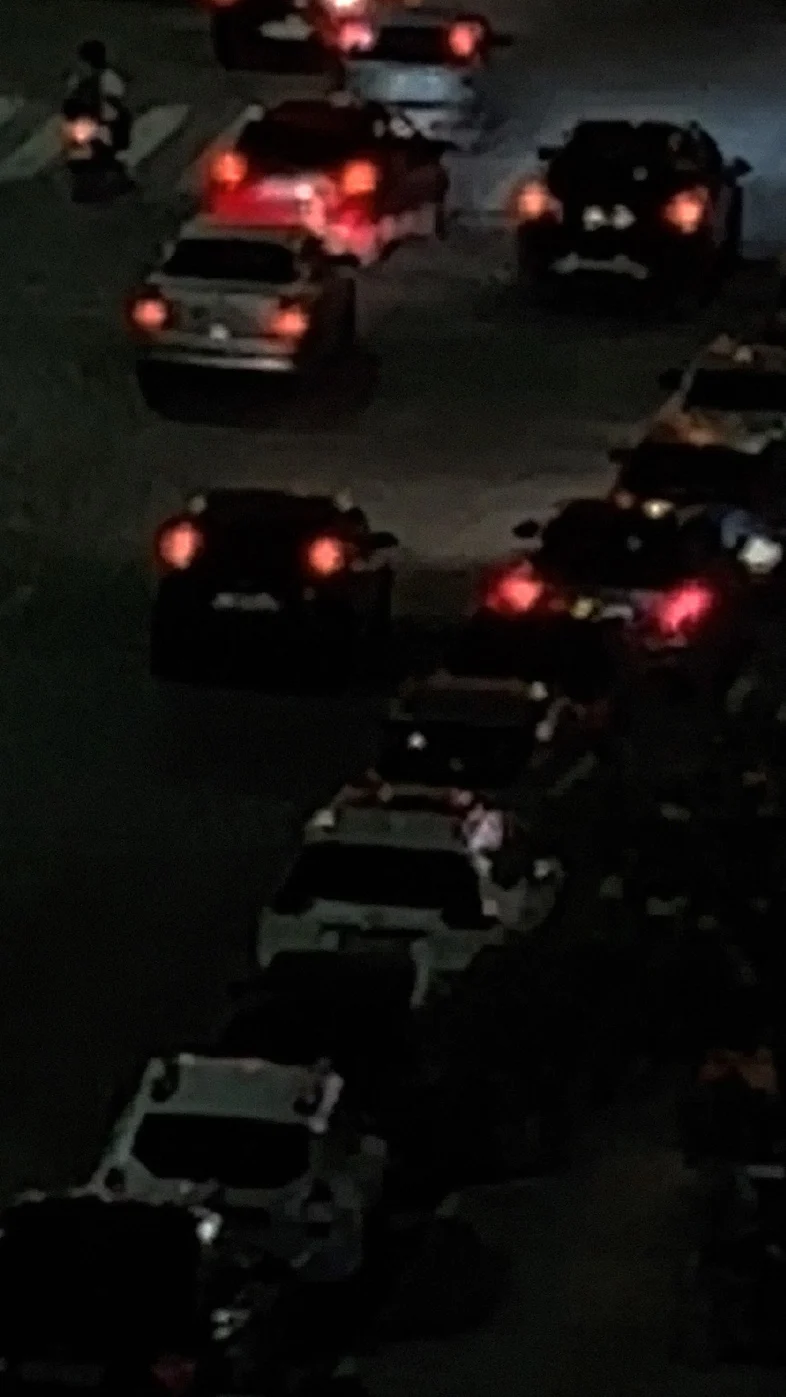
Seeger’s artistic journey into the world of cars is deeply personal yet universally resonant. For over a decade, she has meticulously amassed an extensive iCloud archive of video clips, primarily captured from the passenger seats of cars driven by "past lovers and friends." These short, often fragmented recordings depict scenes familiar to anyone who has spent time on the road: the hypnotic dance of snaking brake lights in a traffic jam, the blur of landscapes rolling by, or the sun gracefully setting behind the robust silhouette of a lorry cab. These seemingly mundane moments, extracted from the flow of everyday life, serve as the raw material for true idle, inviting viewers to re-examine the transient beauty and inherent ambiguities of modern mobility.
The decision to transition these digital archives into a sculptural exhibition format was a deliberate artistic evolution. Seeger had been exploring the intricate relationship between automobiles and Silicon Valley technology for several years, seeking a more tactile and immersive way to present her ideas. The opportunity arose when she applied for a three-month residency at Shipton Gallery, a period spanning January to March 2026. A serendipitous connection emerged during her application process: the gallery’s founder hailed from a family deeply rooted in the black cab industry. This unexpected synergy provided Seeger with unparalleled access to authentic car parts from their workshops, allowing her to realize her vision of embedding her video clips within disconnected automotive components. These "provisional" sculptures, held together with utilitarian workshop equipment like clamps and bungee straps, underscore a sense of impermanence and the makeshift nature of our digital-physical interfaces.
Deconstructing the "Information Superhighway": A Historical and Contemporary Critique
During her residency, Seeger significantly deepened her conceptual framework, meticulously tracing the historical lineage of transport metaphors in the nascent days of the internet. The term "information superhighway," coined in the early 1990s and popularized by figures like U.S. Vice President Al Gore, envisioned a future where digital networks would facilitate rapid, unhindered access to information, mirroring the efficiency and connectivity promised by modern road systems. This powerful metaphor suggested a clear path, a defined destination, and a sense of linear progress. Early marketing campaigns further reinforced this notion; a notable 1984 Apple advertisement, for instance, urged potential customers to "take Macintosh out for a test drive," implicitly equating technological adoption with an exploratory, progressive journey.
Seeger, however, approaches this historical metaphor with a critical eye, almost turning it on its head. "I started to think about that in a literal way, almost turning that metaphor around," she explained in an interview with Dazed, referring to the "navigational gestures" that define our contemporary interaction with the internet. She highlights the pervasive sensation of "going" somewhere or "making progress" as we endlessly scroll through social media feeds or "stream" content. These terms, she argues, inherently imply forward movement, a trajectory towards a goal. Yet, in the current digital landscape, the crucial question arises: where are we really going online?
The answer, as Seeger suggests, is increasingly ambiguous. "It’s not like a few years ago, where the feed was chronological, and you would reach the end," she observes. The advent of sophisticated algorithms has fundamentally reshaped our online experience. Instead of a finite, chronological feed, users are now presented with an infinite, algorithmically curated stream of content, designed to maximize engagement rather than facilitate completion. This creates a perpetual loop, a journey without a discernible endpoint. "The way the feed is organised now, algorithmically, you don’t really reach the end. There’s not a destination," Seeger contends. In 2026, the once-promising "information superhighway" increasingly resembles a road to nowhere, a labyrinthine network where continuous motion supplants meaningful arrival.
Silicon Valley’s Narrative vs. Artistic Interrogation
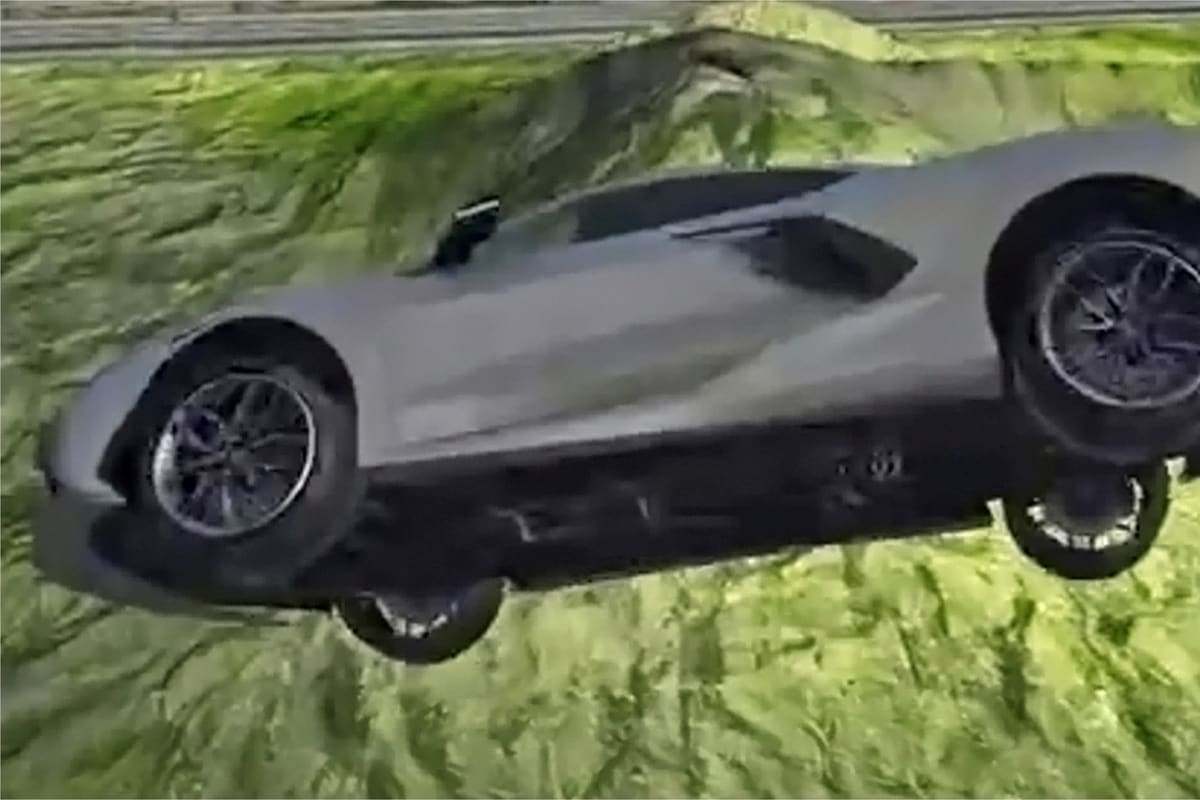
This critique extends to the foundational ideologies underpinning Silicon Valley. Seeger argues that the tech industry is "built on a certain imperial imaginary of progress, and how the future is unlocked through an advancement in territory and technology." This expansionist worldview, she posits, manifests both in our physical realities (IRL) and digital landscapes (URL), as technologists and policymakers stake claims on future narratives and technological advancements. Industry reports consistently highlight the relentless pursuit of innovation, often framed as an inevitable march towards a better, more connected future. However, Seeger is particularly interested in dissecting "this performance of linear progress online, and how that’s kind of a fiction, because you don’t really get anywhere."
The implications of this perceived fiction are profound. If our digital journeys lack true destinations, and our online experiences are largely predetermined by algorithms, how does one cultivate a sense of agency or forge a personal path? "How do you create a future, or how do you create a path for yourself, or feel agency, in these online territories or terrains that [are] predetermined and predesigned?" Seeger queries. This question resonates deeply in an era where individuals spend an average of several hours daily engaging with platforms that prioritize data collection and engagement metrics over genuine user autonomy or meaningful progress. Cultural commentators and digital ethicists have increasingly voiced concerns about the erosion of individual agency within these meticulously engineered digital environments, highlighting issues such as filter bubbles, echo chambers, and the subtle manipulation of user behavior.
Art as Misuse: Reclaiming Narrative in the Age of Algorithms
While Seeger acknowledges the limitations of individual artistic intervention in altering the fundamental operational structures of technology – "As an artist, you cannot necessarily change [the way] technologies are used" – she proposes a powerful alternative: artistic "misuse" and "decontextualization." Her practice is rooted in finding "alternative, poetic forms of using them, of misusing them, and decontextualising them." This approach transforms passive consumption into active interrogation, offering new perspectives on the tools and media that define contemporary life.
In true idle, this philosophy takes tangible form. The act of reworking a car door into a sculptural display, or elevating mundane Instagram story videos to the status of gallery art, exemplifies this "misuse." Many of the looping images in the exhibition originated from Seeger’s personal impulse to post content online, showcasing how everyday digital acts can be recontextualized into critical artistic statements. By presenting familiar imagery in a "twisted" form, Seeger aims to "derail" or "drive off the road" the viewer’s habitual experience, prompting a re-evaluation of the content and its underlying systems. This act of re-framing encourages a deeper engagement with the pervasive visual language of the digital age, challenging viewers to consider the implications of what they consume and how it is presented.
Seeger’s work also contributes to a broader discourse within post-digital art, where artists increasingly engage with digital materials, processes, and themes while critically examining the impact of technology on society. This often involves repurposing digital detritus, questioning data structures, and exploring the boundaries between the physical and virtual. Her use of "faux found footage" from her personal phone archive, for instance, blurs the lines between autobiographical documentation and universal observation. While her decade-long video archive is intensely personal – "Every experience I’ve had in the past 10 to 15 years has been captured on my phone," she shares – the resulting artworks are deliberately depersonalized. They bear no explicit traces of faces or specific geographical identifiers, eschewing the narrative of the "heroic individual who drives off into the sunset." Instead, Seeger shifts the focus to the road itself, the infrastructure, and the systemic forces that shape our journeys, both online and off.
"true idle": A Call to Reflect on Our Digital Journeys
true idle at Shipton Gallery is more than an exhibition of videos and sculptures; it is an invitation to pause and reflect on the very nature of our modern existence. Seeger masterfully ties together the familiar technologies we use daily – from the cars that transport us to the smartphones that mediate our digital lives – and exposes the intricate, often unseen, connections between them. Through her work, viewers are prompted to consider the illusion of progress in an algorithmically driven world, the subtle erosion of agency in predetermined digital spaces, and the potential for artistic intervention to create new pathways of understanding.
The exhibition’s title, true idle, itself carries a dual meaning. "Idle" can refer to a vehicle running but not moving, a state of perpetual readiness without progression. It can also signify inactivity or purposelessness. Seeger’s work suggests that much of our digital engagement, while appearing active, might be akin to a vehicle idling: consuming energy, creating noise, but ultimately going nowhere. By bringing these twists and turns to light, Linn Phyllis Seeger challenges us to look beyond the surface of our digital "superhighways" and ask fundamental questions about where we are truly headed, and what it means to navigate a future that is increasingly designed for perpetual motion rather than meaningful arrival.
true idle runs at Shipton Gallery from March 18 to April 4, 2026.