








The intersection of artificial intelligence and high fashion has long promised a revolution in how consumers interact with their wardrobes, evoking memories of the iconic computerized closet utilized by Cher Horowitz in the 1995 classic film Clueless. For decades, this concept remained largely confined to cinematic fiction, treated as a futuristic novelty that real-world retail technology could not quite capture. Today, that narrative is shifting dramatically. Jenny Wang, founder and chief executive officer of the fashion tech startup Alta, has successfully transformed this silver-screen dream into an enterprise-grade reality.
Following a landmark $11 million funding round last year led by Menlo Ventures, Alta has evolved from a buzzy consumer application into a robust digital avatar and infrastructure platform. As the retail sector increasingly embraces artificial intelligence to solve lingering inefficiencies in online shopping—such as high return rates and poor sizing visualization—Alta is positioning itself at the absolute forefront of agentic commerce. During the recent New York Fashion Week, the company showcased its latest technological leap: a direct e-commerce integration with the storied New York City streetwear label Public School New York, marking a major milestone in how independent designers can leverage artificial intelligence to engage consumers globally.
From Cinematic Inspiration to Market Reality
The journey of Alta began with a simple yet ambitious premise: to give everyday consumers the power to digitize their physical wardrobes, curate outfits using generative artificial intelligence, and visualize clothing on hyper-realistic personal avatars. Since its official public launch in 2023, the platform has achieved rapid consumer adoption. More than 100 million unique outfits have been generated within the app, earning the platform critical acclaim, including nods from Time and Vogue as one of the top technological innovations of recent years.
The platform’s initial traction caught the attention of both the venture capital community and the fashion world. Alta’s $11 million financing round attracted an eclectic group of high-profile backers, blending traditional institutional investors with prominent cultural figures. Alongside Menlo Ventures, participants included the Anthology Fund—the venture capital arm of foundational AI giant Anthropic—alongside fashion industry veterans such as Rent the Runway co-founder Jenny Fleiss and elite supermodels Jasmine Tookes and Karlie Kloss.
This convergence of deep-tech backing and fashion-industry credibility allowed Alta to establish early, high-profile partnerships with heavyweights like Poshmark and the Council of Fashion Designers of America (CFDA). Rather than operating in a closed ecosystem, Alta has steadily positioned its technology as an interoperable layer capable of bridging individual closets with broader retail marketplaces.
The Strategic Re-Debut of Public School New York
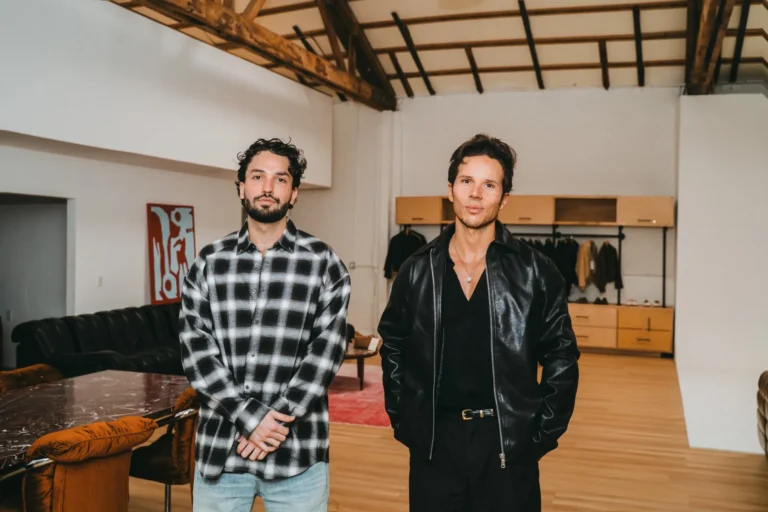
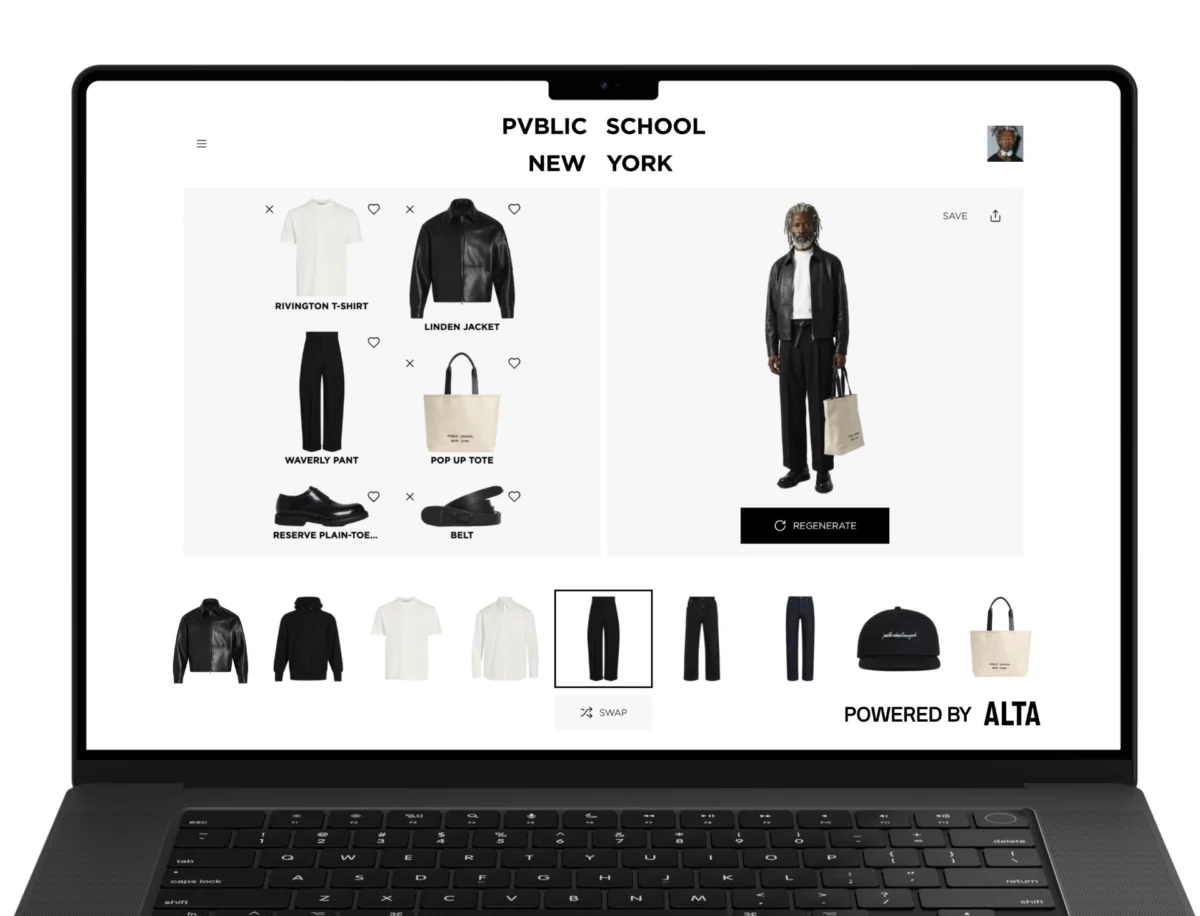
The most vivid demonstration of Alta’s enterprise capabilities unfolded during New York Fashion Week, where the platform unveiled its inaugural direct website integration with Public School New York. Founded by visionary designers Dao-Yi Chow and Maxwell Osborne, Public School had spent several years on hiatus, deliberately stepping away from the relentless calendar of the traditional fashion industry to recalibrate its creative vision.
Their grand re-debut at New York Fashion Week was not just about unveiling a refreshed aesthetic; it signaled a calculated re-engagement with modern retail infrastructure. According to Chow, the decision to integrate Alta’s virtual try-on technology directly into the brand’s e-commerce platform stemmed from a mutual desire to redefine how digital consumers interact with physical collections.
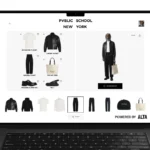
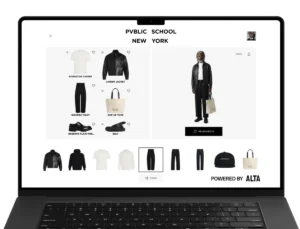
Through the newly introduced "Style with Alta" button featured prominently on product pages—such as the label’s signature outerwear—shoppers are seamlessly directed from the brand’s native storefront into an interactive sizing and styling environment. Here, customers can generate or utilize their pre-existing Alta avatars to test out how garments drape, fit, and coordinate before making a purchasing decision.
Chow and Osborne were introduced to Wang through the founder of Poshmark, who maintains a shared angel investor relationship with both entities. Recognizing the shift in consumer expectations, Chow noted that brands can no longer afford to treat technology as an afterthought. "We have to look at tech as a partner in the business today," Chow stated, emphasizing that the integration is designed to extend brand storytelling rather than serve merely as a sterile design utility. For a brand emerging from a multi-year hiatus, utilizing artificial intelligence to let global audiences virtually experience and style a collection—regardless of physical attendance at a runway show—presents an invaluable engagement tool.
Technical Superiority and the Competitive Landscape

As the digital avatar market matures, several legacy fast-fashion retailers and luxury houses have attempted to introduce their own virtual try-on solutions. Industry giants such as Zara and Balmain have previously experimented with digital supermodels and basic visualization tools to market seasonal campaigns and capsule collections. However, Wang points out significant technical limitations that continue to plague existing solutions within the retail ecosystem.
Traditional virtual try-on tools offered by mass-market retailers are frequently bogged down by processing constraints. For instance, competing systems often restrict users to trying on a maximum of four items simultaneously, with rendering times stretching up to two minutes per styling session. In contrast, Alta’s proprietary AI architecture allows a user’s personalized avatar to layer at least eight distinct garments within a matter of seconds.
This speed and capacity differential is critical for maintaining consumer engagement in an era of declining attention spans. By drastically reducing latency, Alta bridges the gap between static product browsing and dynamic, immersive experimentation. Wang categorizes the company’s dual-pronged business model as both a consumer-facing digital closet and an enterprise infrastructure provider.
"The consumer Alta app is the Clueless closet, while the enterprise Alta experience allows shoppers to style pieces and try the outfits on their pre-existing Alta avatar," Wang explained. This bifurcated approach allows the company to capture organic user growth through its standalone application while monetizing business-to-business integrations with major apparel brands.
Building the Identity Layer for Consumer AI
Looking ahead, Alta’s long-term roadmap extends far beyond simple virtual styling or seasonal marketing campaigns. Wang envisions the company evolving into the foundational "personal identity layer for the future of consumer AI and shopping."
In the rapidly emerging landscape of agentic commerce—where autonomous software agents will increasingly make purchasing decisions, manage personal schedules, and execute transactions on behalf of human users—data fragmentation remains a primary hurdle. For an AI shopping agent to successfully purchase clothing that matches a user’s exact aesthetic preferences, sizing requirements, and fit profile, it requires a secure, comprehensive repository of personal data.
Alta aims to fill this exact infrastructural void. By securely maintaining a digital twin of the user’s body, a comprehensive catalog of their existing physical closet, and a historical log of their stylistic preferences, the platform serves as the connective tissue between human consumers and automated retail agents.
The Implications for the Broader Fashion Economy
The commercial implications of Alta’s strategy extend across multiple facets of the global apparel industry. First, by facilitating accurate virtual try-ons directly on merchant websites, the technology directly addresses one of e-commerce’s most persistent and costly friction points: high return rates driven by sizing discrepancies and poor visualization. Industry analyses consistently show that apparel returns cost retailers billions of dollars annually while contributing significantly to carbon emissions through reverse logistics.
Second, the integration of generative AI into retail websites shifts the e-commerce paradigm from passive browsing to active, personalized co-creation. Consumers are no longer forced to imagine how a runway piece will look on a standardized, idealized model; instead, they can evaluate garments on a digital representation of their own physical dimensions.
As Alta prepares to roll out additional brand partnerships following its successful collaboration with Public School New York, the company is poised to redefine the standards of digital retail infrastructure. By turning a nostalgic cinematic trope into a scalable enterprise reality, Jenny Wang and her team are laying the operational groundwork for how humanity will curate, style, and purchase clothing in the decades to come.