










The global textile industry is currently grappling with an unprecedented waste crisis, as millions of tons of discarded clothing end up in landfills or incinerators annually. In a significant move toward mitigating this environmental challenge, Virginia-based textile technology company Circ and Chinese industrial giant Huafon Group have entered into a strategic partnership to establish a multi-phase, industrial-scale textile-to-textile recycling facility. Announced on October 8, 2026, the collaboration represents a pivotal step in closing the loop on garment production, specifically targeting polycotton waste—a blend that has historically been notoriously difficult to recycle.
The Mechanics of the Partnership and Technical Scope
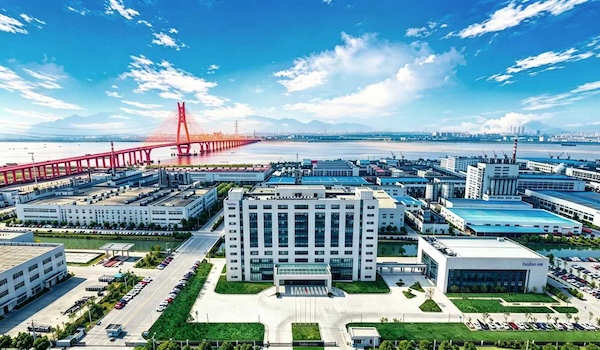
The proposed facility, which will be integrated into Huafon’s extensive existing industrial footprint in China, aims to bridge the gap between laboratory-scale innovation and commercial-scale manufacturing. Circ’s proprietary chemical recycling technology is designed to separate polycotton textile waste into its fundamental building blocks. Through this process, the system recovers recycled purified terephthalic acid (PTA), recycled monoethylene glycol (MEG), and recycled cellulosic pulp. These outputs are not merely downcycled but are high-quality, virgin-equivalent raw materials that can be reintroduced into the global textile supply chain to produce new, high-performance fabrics.
The project is structured in distinct phases to ensure operational stability and scalability. Phase 1 of the development is engineered to handle a throughput of approximately 200 metric tons of textile waste per day. This initial volume is expected to serve as a proof-of-concept for larger, subsequent expansion phases. By leveraging Huafon’s engineering, procurement, and logistical expertise, the partnership aims to circumvent the common bottlenecks that often impede circular technology deployments in the fashion sector.
A Chronology of Strategic Alignment
The road to this partnership was paved by years of individual progress by both organizations. Circ, known for its focus on sustainability through chemical innovation, has spent the last decade perfecting its polycotton recovery system. Their journey has been marked by high-profile collaborations with major global retail brands, securing them a place at the forefront of the circular economy movement.
Huafon Group, meanwhile, has been building its own legacy in chemical and advanced materials for over three decades. The group’s evolution into a global leader in spandex and synthetic materials was punctuated by its acquisition of the former DuPont Biomaterials business, now known as Covation Biomaterials. This strategic acquisition provided Huafon with a foothold in North American manufacturing—specifically in Newark, Delaware, and Kinston, North Carolina—thereby providing them with a sophisticated understanding of both Western and Eastern supply chains. The convergence of Circ’s technology and Huafon’s manufacturing pedigree creates a unique ecosystem where feedstock supply, chemical processing, and end-market demand are aligned under one umbrella.
Market Context and Supporting Data
The textile industry’s transition toward circularity is supported by urgent economic and environmental data. According to industry analysts, global textile production has more than doubled in the last 15 years, while the lifespan of garments has plummeted. The Ellen MacArthur Foundation has previously noted that less than 1% of clothing material is recycled into new clothing. This "linear" model of take-make-dispose results in massive resource depletion, particularly in the production of polyester—a petroleum-based fiber—and cotton, which is water-intensive.
By focusing on polycotton, the Circ-Huafon partnership addresses one of the most common material blends in the industry. Because separating polyester from cotton has historically been expensive and energy-intensive, most polycotton blends are discarded. If successful at scale, this facility could divert tens of thousands of tons of waste annually from landfills, directly lowering the carbon footprint of the apparel sector. Furthermore, the reliance on recovered PTA and MEG reduces the reliance on fossil-fuel-derived feedstocks, aligning with global climate targets and Scope 3 emissions reduction goals for fashion retailers.
Official Perspectives on the Collaboration
The partnership has garnered significant attention from industry stakeholders who view it as a benchmark for future industrial cooperation. Peter Majeranowski, CEO of Circ, emphasized the necessity of geographic placement. "China is at the center of global textile production, making it a critical location for scaling textile-to-textile recycling," Majeranowski stated. "Huafon brings the industrial capabilities, experience, and investment to move quickly and build a platform that can scale well beyond this first site."
From the Chinese industrial perspective, the move is seen as a logical expansion of Huafon’s commitment to sustainable materials. Feifeng You, Vice President of Huafon Group and Chairman of Huafon Microfibre Shanghai Tech Co. Ltd., expressed optimism regarding the synergy between the two entities. "Circ has developed one of the most promising textile-to-textile recycling technologies we have seen, and Huafon is ready to help bring it to market," You noted. "By combining Circ’s innovation with our industrial strength and investment, we can turn textile waste into high-quality materials at a scale the industry needs."
Strategic Alignment with China’s 15th Five-Year Plan
The timing of this project is deeply intertwined with China’s national industrial agenda. The 15th Five-Year Plan has placed a heavy emphasis on the "circular economy," mandating improvements in waste recovery and the adoption of green manufacturing technologies. China is actively seeking to move up the value chain by prioritizing high-performance fibers and bio-based materials, shifting away from a reliance on low-cost, high-pollution manufacturing.
The Circ-Huafon project functions as a flagship initiative under these national guidelines. By fostering an environment where advanced recycling is incentivized, the Chinese government is positioning the domestic textile industry to survive and thrive in a world of tightening environmental regulations, such as the European Union’s Strategy for Sustainable and Circular Textiles. The facility is expected to serve as a model for how heavy industrial sectors can integrate circularity without sacrificing efficiency or output.
Future Implications and Industry Impact
The broader impact of this partnership extends beyond the initial 200-ton daily capacity. As the facility scales, it will likely influence how global brands source their raw materials. The ability to guarantee a steady, high-quality stream of recycled polyester and cellulosic pulp will enable retailers to meet their internal sustainability pledges, which are currently being audited with greater scrutiny by investors and regulators alike.
Furthermore, the project creates a template for "distributed manufacturing" of circular materials. By placing the recycling facility near the site of textile production, the partners are minimizing the logistical emissions associated with shipping massive volumes of textile waste. This proximity reduces the "hidden costs" of recycling, making it more economically competitive with virgin material production.
Looking ahead, industry experts anticipate that this partnership will prompt other chemical giants to explore similar joint ventures. As the technology matures, the focus will likely shift toward optimizing the collection and sorting infrastructure, which remains the final frontier in making textile-to-textile recycling a ubiquitous, cost-effective reality. For Circ and Huafon, the primary objective in the coming years will be to ensure that the quality of the recycled output remains consistent enough to satisfy the requirements of luxury and mass-market fashion brands, thereby cementing circularity as the new standard in textile manufacturing.
In summary, the partnership between Circ and Huafon represents a significant maturation of the textile recycling industry. It moves the conversation from pilot-scale feasibility studies to concrete industrial application. As the world watches the development of this site in China, the success of the project will likely serve as a catalyst for a global shift toward a circular fashion economy, driven by technological innovation and the sheer manufacturing might of established industrial leaders.