




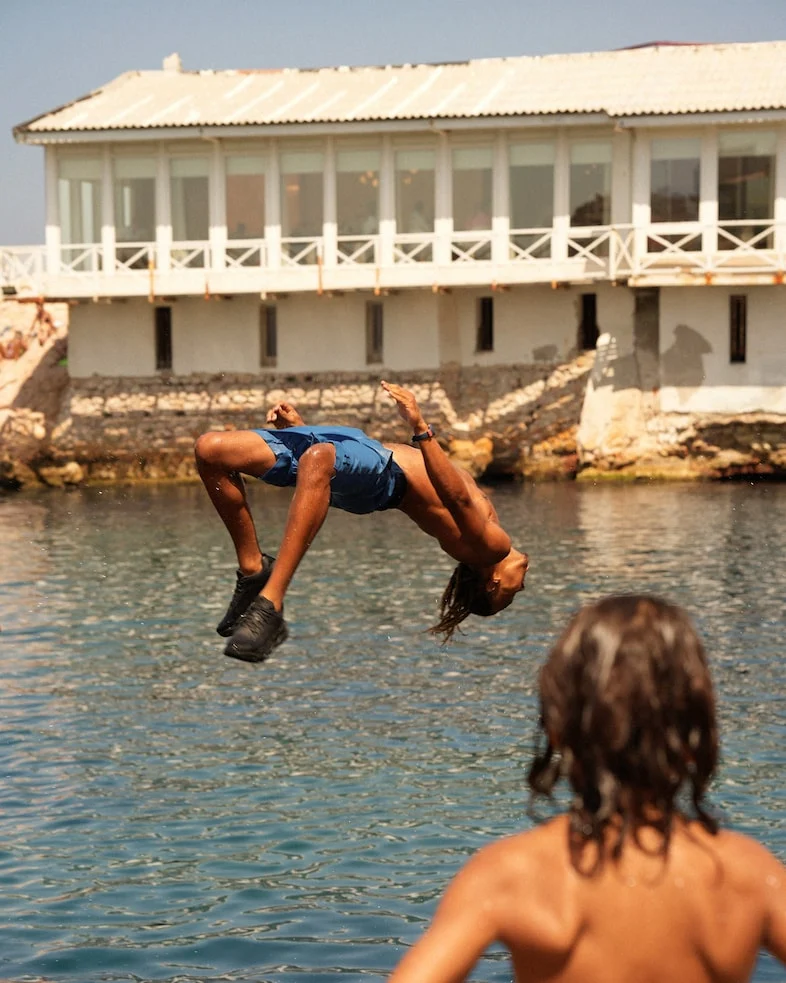
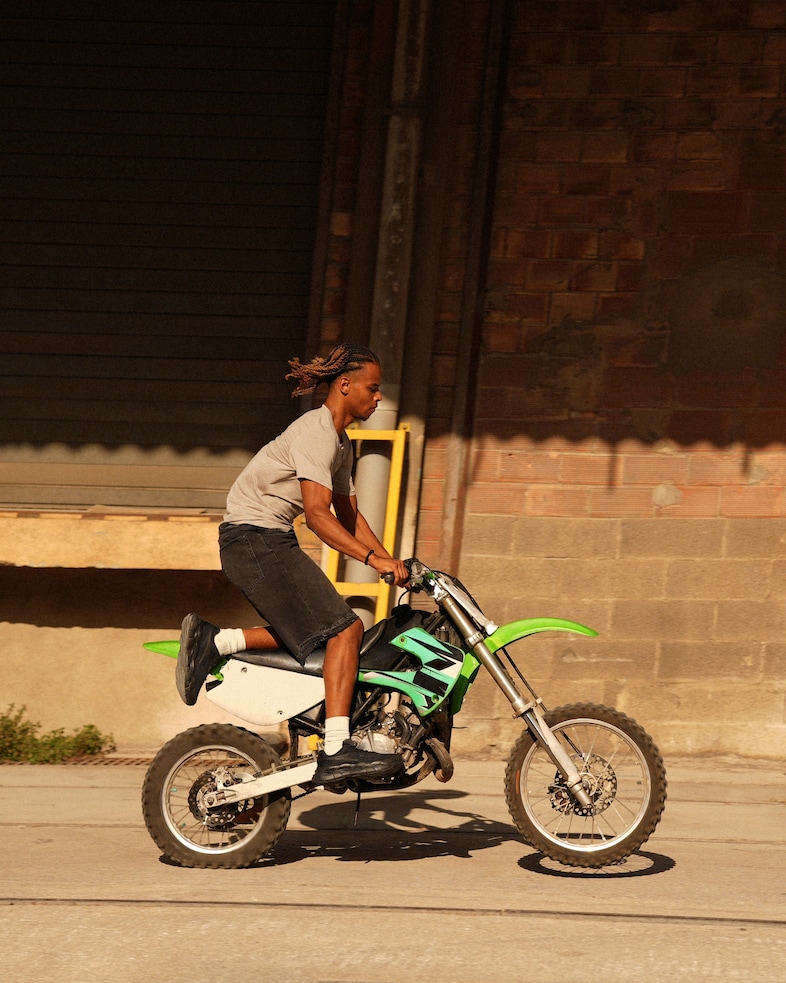
The Mediterranean coastal city of Marseille has long served as a critical geopolitical and cultural crossroads for Southern Europe. As France’s second-largest city and its principal commercial port, Marseille presents a complex socioeconomic landscape characterized by high demographic diversity, significant urban density, and historical waves of immigration. Within this sunbaked metropolis, a profound social phenomenon is unfolding at the grassroots level. A tight-knit collective of young men—comprising Ismael, known as Bako, alongside Fares, Mohamed, and Sheri—has constructed an alternative framework of community that transcends conventional social stratifications. Their daily existence, marked by spontaneous gatherings, urban mobility on green dirt bikes, skateboarding sessions, and plunges into the Mediterranean Sea, stands in stark contrast to the mediated, highly curated realities typically broadcast across social media platforms.
Rather than relying on digital metrics for validation, this cohort has engineered a sustainable, real-world social infrastructure. Their alliance offers a compelling sociological study in contemporary urban resilience, demonstrating how marginalized or disparate youth demographics successfully cultivate structural belonging in an era increasingly defined by social isolation.
Origins and Evolution of the Collective
The formation of the Marseille collective was not engineered by institutional youth programs or civic initiatives, but rather forged through serendipitous encounters in urban public spaces. Over the course of several years, Bako, Fares, Mohamed, and Sheri crossed paths as strangers within municipal infrastructure—specifically navigating local skate parks, public beaches, and neighborhood thoroughfares.
In sociological terms, these initial interactions mirror what urban theorists define as "weak ties"—casual, low-stakes encounters in shared spaces. However, through repeated interactions and mutual recognition of socio-economic precarity, these weak ties systematically matured into strong kinship bonds. Unlike traditional familial structures tethered to biological lineage or professional status, this brotherhood is sustained entirely by shared ethos and mutual accountability.
"What makes our friendship feel like a family is our ability to stay united despite everyone’s personal and collective problems," Bako explains. This unity has been severely tested. Most notably, when Bako experienced a debilitating health crisis, the collective mobilized to provide continuous psychological and physical support. The group’s intervention during this medical emergency underscored a fundamental departure from transactional relationships common in modern youth culture, proving that their commitment functions as a reliable social safety net.

Socioeconomic Context of Marseille
To fully comprehend the significance of the collective’s dynamic, one must examine the broader socioeconomic realities of Marseille. According to data from France’s national statistics institute, INSEE, Marseille exhibits some of the highest poverty rates among major French urban centers, with nearly 25 percent of the population living below the poverty line. Youth unemployment rates in specific arrondissements frequently outpace the national average, creating an environment where systemic economic hurdles can fracture social cohesion.
In response to these structural pressures, youth culture in Marseille has historically gravitated toward localized solidarity networks. Urban spaces such as the Vieux-Port, the Corniche coastal roads, and peripheral housing estates function as egalitarian zones. Within these shared geographies, activities such as skateboarding, motorcycling, and aquatic sports serve as accessible, low-cost recreational outlets that foster physical liberation and psychological decompression. For Bako and his peers, these activities are not merely leisure pursuits; they represent active reclamation of public space in a city experiencing rapid gentrification and spatial segregation.
Bako’s Five Pillars of Community Resilience
Central to the collective’s operational philosophy is a codified set of behavioral standards articulated by Bako. These principles serve as an internal governance model, ensuring longevity and trust within the group:
-
Absolute Transparency: The collective operates under a strict anti-deception policy. As Bako notes, drawing on a local proverb, "A lie takes the elevator, and the truth takes the stairs." Trust is treated as the foundational currency of their brotherhood.
-
Unyielding Solidarity: The group maintains a strict collective continuity clause. Metaphorically described as remaining in the same vehicle regardless of road conditions, members are prohibited from abandoning one another during periods of personal or economic hardship.
-
Spontaneous Emotional Resonance: Recognizing the psychological toll of urban precarity, the collective prioritizes humor and organic joy as vital coping mechanisms against chronic stress.
-
Mutual Uplift and Advancement: Individual success is redefined as a collective enterprise. Members actively facilitate each other’s personal, educational, and professional growth rather than engaging in zero-sum competition.
-
The 5-5 Mentality and Egalitarian Distribution: Perhaps their most radical socioeconomic practice is the principle of shared resources. "If I have something and you don’t, we have it. If you have something and I don’t, we have it. And if neither of us has it, we figure it out," Bako states. This philosophy ensures that resource deficits are absorbed collectively, effectively establishing a micro-socialist economic model within the private sphere of the friendship.
Broader Implications and Corporate Intersection
The lived reality of the Marseille collective has recently attracted the attention of broader cultural observers, intersecting with Under Armour’s "Rest Less" campaign. This initiative seeks to document grassroots collectives that reject digital passivity in favor of physical, tangible agency. By highlighting groups that prioritize community care and kinetic self-expression, the campaign reflects a growing commercial and cultural appetite for authenticity.
However, analysts note that the true significance of the Marseille group lies outside corporate narratives. Their model offers a replicable blueprint for urban youth navigating the alienating effects of modern digital infrastructure. By anchoring their identity in physical proximity, radical transparency, and resource sharing, Bako, Fares, Mohamed, and Sheri have constructed an enduring sanctuary. Their methodology demonstrates that even within economically constrained urban environments, human agency and intentional solidarity can successfully construct resilient networks capable of withstanding systemic pressures. As cities globally grapple with housing crises, economic inequality, and social fragmentation, the Marseille collective stands as a testament to the enduring power of community-first survival.