






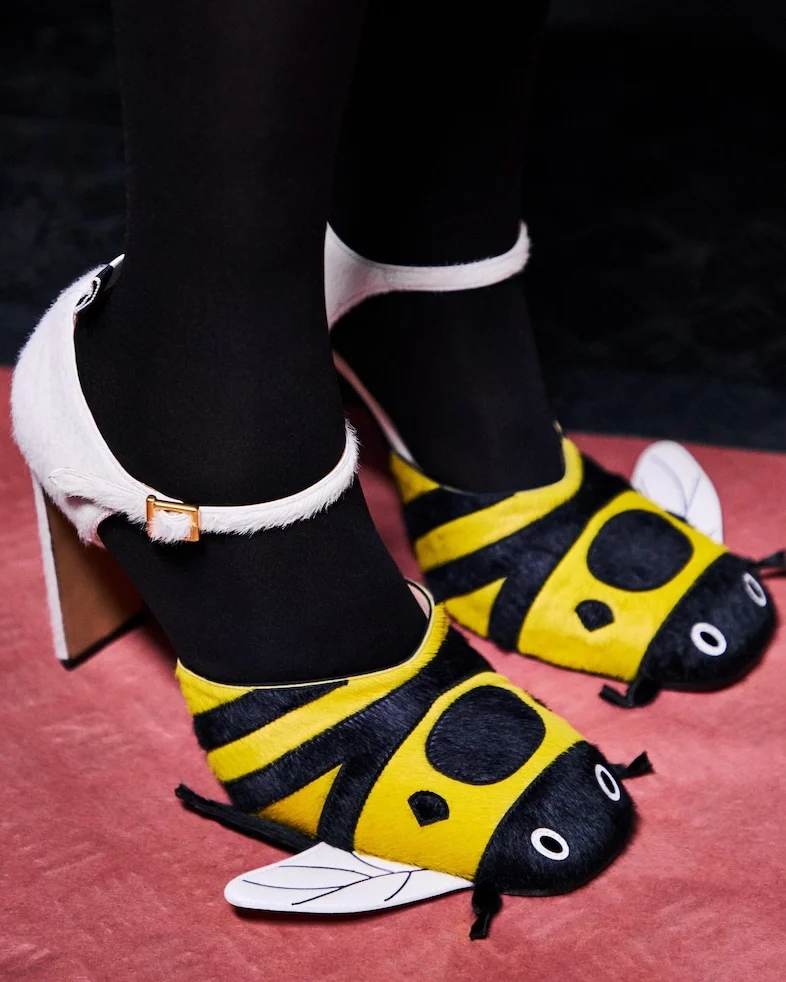
The modern landscape of luxury fashion has long embraced eccentricity, but recent runway seasons have officially crossed into the realm of the animal kingdom, transforming footwear into an accidental menagerie of hooves, paws, and wings. For years, fashion enthusiasts have affectionately referred to Maison Margiela’s split-toe tabi flats and boots as hooves, noting how their distinct cleft resembles the anatomy of a deer or cow. Yet, what was once considered a niche avant-garde statement piece has now snowballed into a pervasive industry-wide obsession. Recent fashion weeks have solidified a broader market demand for fauna-inspired footwear, introducing Thom Browne’s intricate butterfly and bee platform pumps, Sandy Liang’s whimsical bunny-eared wedge heels, Chanel’s mixed animal-print iterations, and Schiaparelli’s viral feline-headed kitten heels. As designers increasingly look to nature for structural inspiration, the current cultural fixation on footwear that mimics living creatures raises pressing questions about modern aesthetics, psychological motivations, and the cyclical nature of runway trends.
A Century-Long History of Avant-Garde and Sculptural Footwear
While the contemporary obsession with animalistic footwear feels startlingly modern, it is merely the latest chapter in a centuries-long tradition of sculptural and decorative shoemaking. According to Elizabeth Semmelhack, director and senior curator of the Bata Shoe Museum, the impulse to alter the perceived silhouette of the foot extends far beyond current viral moments. Depictions of flora and fauna have decorated footwear for centuries, with artisans continuously exploiting the sculptural and decorative potential of shoes. Throughout Western fashion history, shoemakers have regularly manipulated footwear shapes to challenge conventional anatomy.
The trajectory of unconventional footwear gained significant momentum in the 1920s, when designers began shifting their focus heavily toward the architectural possibilities of the heel. This ushered in recurring waves of experimental and unconventional footwear trends across subsequent decades. In the 1980s, visionary designer Tokio Kumagai captured the industry’s imagination with playful shoes adorned with molded cat faces. By the early 2000s, designer Andrea Pfister pushed boundaries further by creating footwear featuring heels intricately sculpted to resemble various fruits and vegetables.
These historical precedents laid the groundwork for the modern "freaky shoe" phenomenon. Over the past two decades, the fashion industry has witnessed a dizzying succession of viral footwear crazes, ranging from the polarizing rise of chunky dad sneakers and Vibram five-finger toe shoes to Margiela’s ubiquitous tabis. The momentum continued into recent seasons, highlighted by barefoot aesthetics such as actress Margaret Qualley wearing Chanel’s minimalist barefoot heel-cap shoes to the premiere of The Dog Stars.
The Psychological Dichotomy of Human and Beast
The psychological impulses driving recent footwear trends reveal a fascinating duality in consumer desires. Over the past few years, the dominance of barefoot-style footwear, including toe shoes and minimalist sandals, centered heavily on the celebration of raw human anatomy, encouraging wearers to proudly showcase their toes and embrace natural form. In stark contrast, the burgeoning creaturewear trend achieves the exact opposite effect. By transforming the human foot into a butterfly, a bunny, or a cat, these designs deliberately obscure and subvert human anatomy, rendering the wearer un-human.
Despite this artificial distancing from the human form, creaturewear simultaneously taps into deeply primal instincts, specifically the human desire to forge a tangible connection with the natural world. Liana Satenstein, a fashion writer and host of the digital series Never Worns, notes the distinct psychological impact of animal motifs when applied to footwear rather than traditional apparel. While wearing a graphic animal t-shirt might convey a casual, mainstream pop-culture reference, wearing a sculptural creature directly on one’s feet carries a significantly different weight. It introduces an element of subversion and calculated playfulness, transforming a simple accessory into a provocative conversation starter.
The Saturation Point and the Predicted Decline of Shock-Value Footwear
Despite the current commercial success and viral visibility of animal-inspired footwear, industry analysts are already beginning to question the long-term sustainability of the trend. Satenstein suggests that the sudden influx of creaturewear may indicate that contemporary designers are rapidly exhausting avenues for shock-value footwear. Given that feet have historically served as focal points for both conversation and eroticism in fashion, the relentless cycle of viral novelty risks reaching a saturation point. With designers having already cycled through barefoot minimalism and literal animal architecture, the creative ceiling for shocking footwear may finally be approaching its limit.
This perspective points toward a potential pendulum swing within the industry. As consumers experience fatigue from digitally driven micro-trends, the market may soon pivot away from abrasive novelty and return toward traditional notions of refined elegance. In this view, the current era of hyper-experimental footwear represents the theoretical ice age or eventual extinction phase of shock-value styling, clearing the path for a resurgence of classic, beautifully crafted shoes.
Environmental Anxiety, Ecological Disconnect, and the Future of Footwear
The timing of the animal footwear trend offers a poignant socio-political irony. The proliferation of fauna-inspired fashion coincides with an era of acute ecological anxiety. While designers send sculptural beasts down the runway, global ecosystems face unprecedented strain. Major political decisions, such as the systematic gutting of the Endangered Species Act by regulatory administrations, alongside the massive environmental footprint and resource strain driven by the rapid expansion of artificial intelligence, highlight a deepening chasm between modern human society and the natural world.
Cultural analysts argue that this widespread ecological disconnect directly fuels the desire to wear creatures on our bodies. By literalizing a connection to fauna through footwear, consumers may be attempting to subconsciously reclaim a lost intimacy with nature. Consequently, this emotional undercurrent may ensure that elements of the trend outlast a standard seasonal lifecycle.
Reflecting on the historical trajectory of controversial fashion items, Semmelhack notes that footwear has consistently served as a primary canvas for radical experimentation. Many designs that were initially dismissed as bizarre or unwearable—such as the invention of the heeled shoe itself—were eventually normalized and integrated into standard wardrobes. As contemporary designers continue to push the boundaries of anatomical form, industry experts suggest that at least a few of today’s most polarizing creature-inspired shoes may ultimately endure as permanent testaments to an era when fashion sought refuge in the animal kingdom.