








The intersection of artificial intelligence and high fashion has officially moved from cinematic fiction to mainstream commercial reality. Remember the iconic scene in the 1995 film Clueless, where protagonist Cher Horowitz browses a computerized carousel of digital garments to curate her daily ensemble? For decades, that automated closet remained a beloved cultural touchstone of futuristic imagination. Today, that exact concept is powering a rapidly expanding enterprise software and consumer platform known as Alta.
Founded by entrepreneur Jenny Wang, Alta has experienced a remarkable evolution since securing an $11 million funding round. Led by Menlo Ventures, that capital injection attracted an elite roster of backers, including supermodels Jasmine Tookes and Karlie Kloss, Anthropic’s venture capital arm Anthology Fund, and Rent the Runway co-founder Jenny Fleiss. What began as a novel consumer application allowing everyday shoppers to digitize their wardrobes has now matured into a robust technological infrastructure. By bridging personal identity layers with generative artificial intelligence, Alta is redefining how consumers interact with digital storefronts, how independent designers debut their collections, and how the broader retail industry approaches agentic commerce.
From Cinematic Inspiration to Digital Reality: The Alta Origin Story
When Alta officially launched in 2023, the fashion and technology sectors were aggressively searching for viable consumer-facing implementations of artificial intelligence. While early conversational AI tools focused heavily on text generation, Wang and her engineering team recognized a distinct gap in the visual commerce space. Consumers routinely struggled with online sizing, styling visualization, and digital inventory management.
By allowing users to upload clothing items and create a comprehensive virtual replica of their physical closets, Alta provided an immediate utility. Users could mix, match, and test outfits using hyper-realistic virtual avatars modeled on their exact body likenesses and personal measurements. This unique value proposition resonated deeply with both tech enthusiasts and mainstream fashion consumers. Within a remarkably short timeframe, the platform accumulated staggering engagement metrics. By late 2024, publications such as Time and Vogue had recognized Alta as one of the definitive technological innovations of the year. Furthermore, platform statistics indicate that users have collectively generated more than 100 million unique outfits since the app’s initial deployment.
Strategic Partnerships and the Push Into Ecosystem Integration
Building upon its initial consumer traction, Alta shifted its strategic focus toward B2B integration, aiming to embed its virtual try-on technology directly into third-party retail websites. Prior to this initiative, consumers utilizing Alta’s standalone application were required to manually add potential retail purchases to an in-app wishlist before viewing them on their digital avatars. Recognizing the friction in this multi-step journey, Wang and her team engineered software development kits that allow apparel brands to natively host the Alta experience.
This strategy achieved a major milestone through high-profile partnerships with digital marketplaces like Poshmark and authoritative industry institutions such as the Council of Fashion Designers of America (CFDA). These alliances laid the groundwork for Alta’s most ambitious collaboration to date: a landmark integration with the storied New York City apparel brand Public School New York.
The Grand Re-Debut of Public School New York
The timing of Alta’s integration rollout coincided harmoniously with New York Fashion Week (NYFW), serving as the backdrop for Public School New York’s highly anticipated return to the industry. After entering a multi-year hiatus following a period of creative reflection, co-founders Dao-Yi Chow and Maxwell Osborne chose NYFW to reintroduce their brand to the global fashion community.
Crucially, the brand’s revival was marked by an intentional embrace of modern enterprise technology. Speaking with industry reporters during the fashion week events, Chow emphasized that contemporary fashion houses can no longer afford to treat digital tools as an afterthought.
"We have to look at tech as a partner in the business today," Chow noted during interviews at New York Fashion Week. "It’s not 2015 anymore."

The collaboration materialized after Chow was introduced to Wang through the founder of Poshmark, who maintains a dual role as an angel investor in both Alta and Public School. As an active daily user of the Alta application, Chow recognized an opportunity to solve a persistent digital retail challenge: providing customers with an immersive, highly personalized try-on experience that mirrors the intimacy of a physical boutique fitting room.
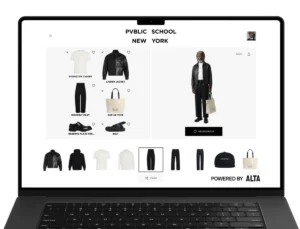
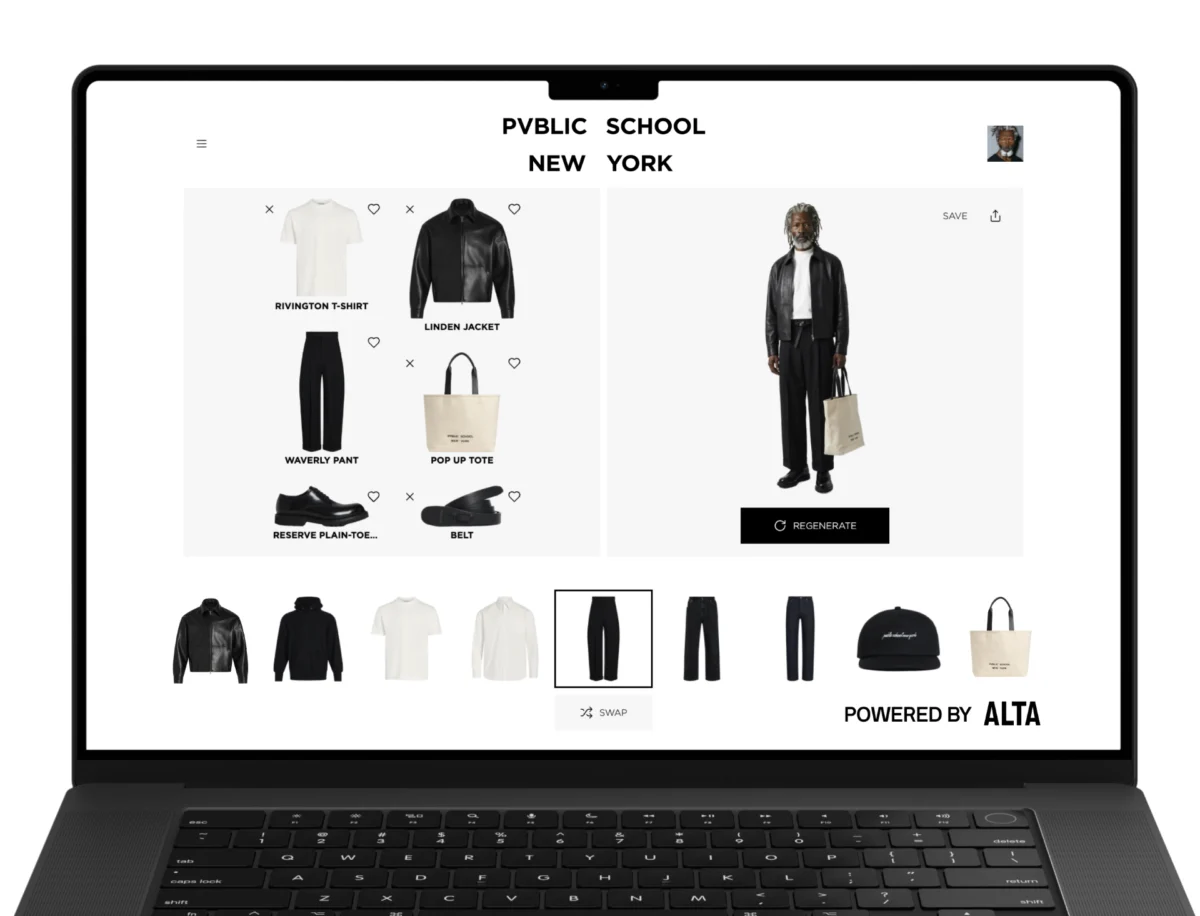
Rather than treating technology merely as a backend design tool, Public School utilized Alta’s API integration to extend its narrative reach. Visitors navigating to specific product pages on the Public School website now encounter a dedicated "Style with Alta" icon. Clicking this prompt seamlessly transports the shopper into a personalized digital environment where they can dress their pre-existing Alta avatar in items from the brand’s latest collection, evaluating fit, drape, and styling combinations prior to executing a purchase.
Comparative Technological Advantages in the Virtual Avatar Market
As the market for digital identity and virtual try-on solutions grows increasingly competitive, legacy fashion houses have similarly experimented with virtual representations. Major global retailers, including Zara and luxury powerhouse Balmain, have previously deployed digital supermodels and rudimentary virtual try-on campaigns to engage digitally native demographics. However, industry analysts and company executives point out distinct technical variances that separate generative AI-native platforms from traditional retail software.
According to Wang, traditional retail avatar implementations—such as those deployed by fast-fashion giant Zara—often suffer from computational latency. In many legacy systems, rendering a digital model wearing a small selection of garments can take upwards of two minutes, with strict limitations capping outfits at roughly four items simultaneously.
In contrast, Alta’s proprietary rendering architecture allows a user’s personalized avatar to don eight or more distinct apparel items within seconds. This technical efficiency is powered by advanced machine learning models capable of mapping complex fabric textures, garment weights, and individual body geometries in real time. By prioritizing low-latency rendering and high-fidelity customization, Alta reduces cart abandonment rates and enhances consumer confidence in online apparel acquisitions.
Building the Personal Identity Layer for Agentic Commerce
Looking toward the horizon, Alta’s leadership envisions a much broader operational scope than simple virtual closet management. Wang categorizes the enterprise’s ultimate trajectory not merely as a fashion tech novelty, but as the foundational identity and data layer for the future of consumer artificial intelligence.
In contemporary digital commerce, the concept of "agentic commerce"—wherein autonomous AI software agents execute shopping tasks, negotiate prices, and make purchases on behalf of human users—is rapidly transitioning from theoretical computer science to commercial deployment. However, industry experts maintain that agentic commerce cannot function efficiently without structured, granular consumer data regarding personal aesthetics, exact sizing, historical purchases, and biological likeness.
"For agentic commerce to truly work, we need a data layer that understands the shopper’s style preferences, such as their closet, past purchases, and their avatar, likeness, and body, which is Alta," Wang explained.
By positioning its platform as the definitive nexus between consumer biometric data, digital closets, and retail inventory APIs, Alta aims to secure an indispensable role in the modern retail stack. As additional retail brands adopt native avatar integrations, the friction between discovering apparel online and visualizing its physical application on a digital twin is expected to dissipate entirely.
Ultimately, what began as a nostalgic nod to cinematic pop culture has matured into a sophisticated technological bridge connecting independent designers, global retail giants, and the next generation of AI-driven consumer experiences. Through continuous platform expansion, strategic industry partnerships, and a clear vision for agentic commerce, Alta is successfully transforming how humanity interacts with the clothes we wear—both in the physical world and across the expanding digital frontier.