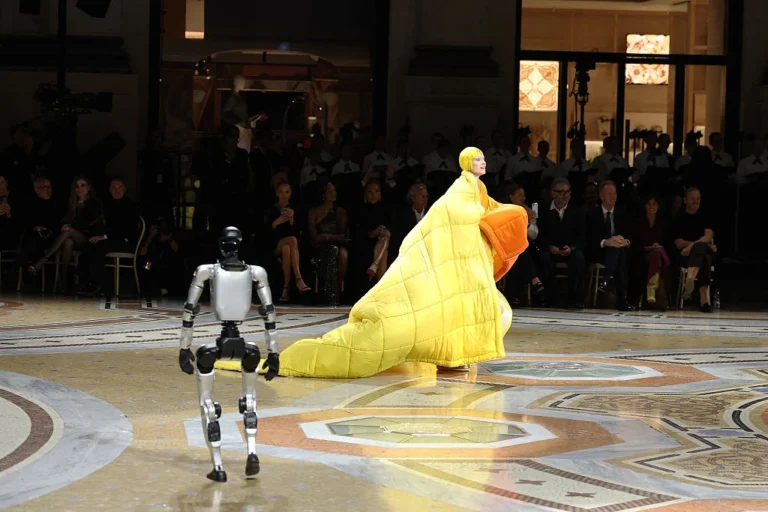











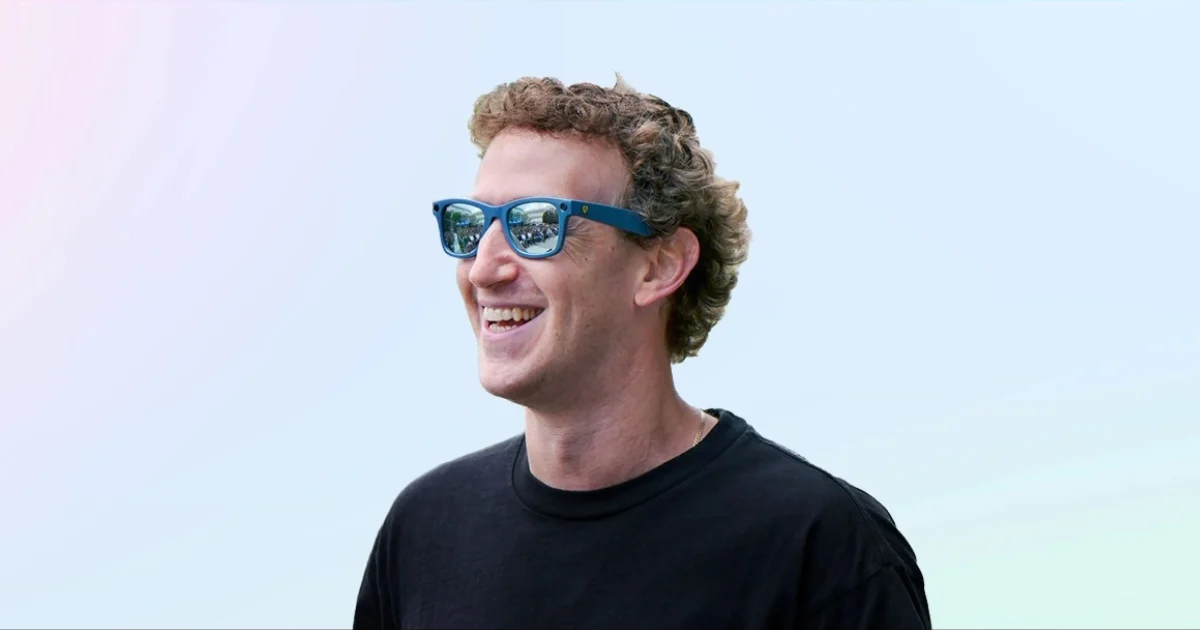
The intersection of high fashion and consumer technology has long been a fertile ground for collaboration, but a recent sighting at Milan Fashion Week has accelerated speculation regarding a potential partnership between social media conglomerate Meta Platforms and Italian luxury fashion house Prada. On a Thursday in Milan, Meta CEO Mark Zuckerberg and his wife, Priscilla Chan, were observed occupying front-row seats at the Prada Fall/Winter 2026 Fashion Week presentation. Throughout the event, Zuckerberg was seen engaged in animated discussions with his seatmate, Lorenzo Bertelli, who serves as Prada’s chief merchandising officer and is the son of head designer Miuccia Prada.
While fashion observers noted Zuckerberg’s evolving personal style and recent wardrobe upgrades—frequently interpreted by pop-culture commentators as part of a multi-year executive rebranding effort—industry analysts suggest that his presence in Milan had less to do with seasonal garment trends and more to do with commercial strategy. Specifically, the high-profile appearance has intensified rumors that Meta is preparing to debut a luxury-branded iteration of its popular Meta AI smart glasses, designed in collaboration with Prada.
Although Meta has not yet issued a formal confirmation regarding a partnership with the fashion label, reports surfaced last summer indicating that Prada-branded AI eyewear was actively under development. The current silence from Meta’s corporate communications division regarding Zuckerberg’s front-row appearance has done little to quell the speculation, leaving technology and fashion markets to anticipate an official product announcement.
The Evolution of Meta’s Smart Glasses Portfolio
Meta’s venture into smart eyewear is not a standalone endeavor; rather, it is anchored by a deeply entrenched strategic partnership with EssilorLuxottica, the French-Italian multinational eyewear giant and parent company of Ray-Ban. The collaboration began years ago with the release of the Ray-Ban Stories collection, which eventually evolved into the far more sophisticated Ray-Ban Meta AI glasses.
The hardware category has experienced exponential commercial growth. According to financial and sales data released by EssilorLuxottica, the company sold more than 7 million AI-enabled smart glasses in 2025 alone. This figure represents a dramatic scale-up from the prior year, during which approximately 2 million units were sold. The sales figures encompass both the flagship Ray-Ban Meta line and the recently introduced Oakley Meta glasses, a sub-brand tailored specifically for athletes and outdoor enthusiasts, which debuted in mid-2025.
Expanding into the high-fashion sector through a partnership with Prada would represent a logical next step for Meta and EssilorLuxottica. The two manufacturing partners recently solidified their long-term relationship when the Prada Group and EssilorLuxottica announced a ten-year renewal of their licensing agreement. Under the renewed terms, the agreement—which was originally slated to expire on December 31, 2025—has been extended through December 31, 2030, with provisions that allow for a further extension through the end of 2035. This long-term industrial stability provides the foundational manufacturing infrastructure required to produce complex, high-end electronics integrated into luxury frames.
Strategic Implications for the Luxury and Tech Markets
Should Meta successfully launch a Prada-branded variant of its AI eyewear, the implications for the company’s hardware division would be significant. Currently, Meta’s smart glasses offerings cater primarily to general consumers via Ray-Ban and lifestyle athletes via Oakley. Entering the high-fashion market would allow Meta to capture a lucrative demographic that prioritizes aesthetic prestige and luxury branding over purely functional or athletic utility.
Positioning smart glasses as an accessory of high fashion could help mitigate the social stigma that early wearable technology frequently encounters. By transforming a computer-equipped camera frame into a coveted designer item, Meta could accelerate mainstream cultural adoption. For Prada, the collaboration offers an opportunity to remain at the technological forefront of the luxury retail sector, appealing to younger, tech-literate consumers who view digital integration as a seamless component of personal style.
However, bridging the gap between Silicon Valley engineering and Milanese haute couture is not without commercial risks. Luxury consumers are notoriously discerning regarding craftsmanship, material quality, and brand heritage. Any perceived compromise on the quality of the frames, or an awkward integration of electronic components, could alienate Prada’s core clientele. Conversely, if executed successfully, the product could set a new benchmark for wearable technology, proving that functional AI hardware can successfully coexist with luxury design.
Privacy Concerns, Surveillance Backlash, and Facial Recognition Controversies
Even as Meta explores high-end aesthetic collaborations, the broader technological ecosystem surrounding smart glasses is facing heightened scrutiny regarding privacy and data collection. The potential expansion of Meta’s eyewear lineup arrives at a time of growing global consumer backlash against ubiquitous surveillance devices.
In recent months, public anxiety over automated monitoring has manifested in tangible ways across Western markets. Incidents involving consumers disconnecting or physically destroying residential surveillance hardware—such as Ring doorbells and automated Flock traffic and security cameras—have highlighted a rising wave of public resistance to pervasive data capture. This cultural shift toward privacy preservation places manufacturers of wearable recording devices under intense regulatory and public pressure.
Complicating matters further, recent reports from outlets including The New York Times indicate that Meta has been planning to integrate facial-recognition technology into its smart glasses. The prospect of consumers walking through public spaces equipped with continuous, AI-powered facial scanning capabilities has drawn sharp rebukes from privacy advocates, civil liberties organizations, and everyday users alike.
The public apprehension has already sparked grassroots countermeasures. Independent software developers have begun creating localized detection tools, such as mobile applications designed to alert individuals when someone wearing AI-enabled smart glasses is operating in their immediate vicinity. These developments underscore the delicate tightrope Meta must walk: while consumer demand for the hardware is undeniably surging—as evidenced by the 7 million units sold in 2025—the social license to operate recording devices in public spaces remains precarious.
Timeline and Future Outlook
The trajectory of Meta’s smart glasses initiative over the past several years reveals a calculated expansion from niche novelty to mainstream commercial success:
- September 2021: Meta and EssilorLuxottica launch the first-generation Ray-Ban Stories, establishing the foundational hardware and software architecture for future iterations.
- Fall 2023: Meta introduces the upgraded Ray-Ban Meta smart glasses, featuring improved audio, integrated cameras, and early-stage AI assistant capabilities.
- June 2025: Industry reports emerge indicating that Meta is actively developing new smart glass variants in partnership with both Oakley and Prada. Later that month, Meta officially unveils the Oakley Meta collection targeting athletes.
- December 2025: The prior eyewear licensing agreement between the Prada Group and EssilorLuxottica officially reaches its scheduled expiration date, immediately transitioning into the newly negotiated ten-year renewal agreement running through 2030.
- February 2026: EssilorLuxottica reports that annual sales of Meta AI glasses surpassed 7 million units for the 2025 calendar year. Later that month, Mark Zuckerberg makes his front-row appearance at Prada’s Fall/Winter 2026 Fashion Week show in Milan alongside Prada executives, reigniting widespread speculation regarding an imminent product collaboration.
As the debate over facial recognition and public surveillance intensifies, Meta faces critical strategic decisions regarding the feature set of its next-generation devices. Whether the rumored Prada collaboration will debut with standard multimedia capture capabilities or incorporate more advanced, contentious biometric tools remains to be seen.
For now, the convergence of high fashion and artificial intelligence in Milan suggests that technology companies are increasingly looking to traditional luxury houses to redefine how wearable computers are perceived by the public. If a Prada-branded Meta glass materializes on retail shelves, it will serve as a definitive test of whether luxury branding can successfully neutralize growing consumer anxieties surrounding privacy in the digital age.