










A New Chapter in Engineering
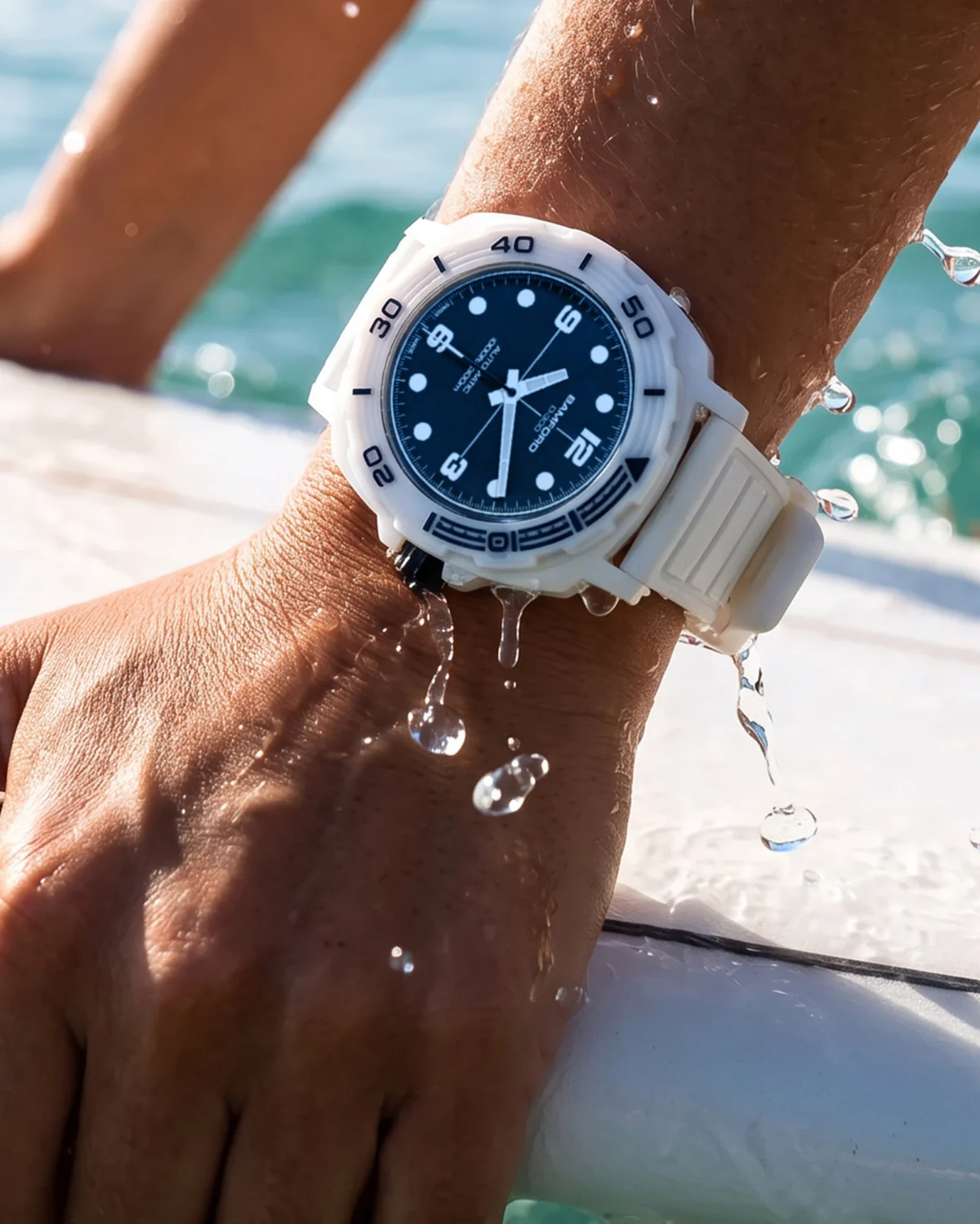
The introduction of the D-300 follows a multi-year development cycle aimed at translating the brand’s signature design language into a functional underwater tool. The watch is built around a 42mm cushion case, a silhouette heavily influenced by the brand’s successful GMT series. However, the D-300 departs from traditional steel construction, utilizing a full gloss-white ceramic housing. This choice of material is deliberate; ceramic is significantly harder than stainless steel, offering a Vickers hardness rating that makes it exceptionally resistant to surface scratches and oxidation—a critical factor for longevity in saltwater environments.
The technical specifications of the D-300 emphasize professional-grade reliability. The watch features a unidirectional, 120-click rotating bezel constructed entirely of ceramic, which avoids the common industry practice of merely inserting a ceramic ring into a steel frame. This design choice ensures that the bezel’s color and texture remain consistent with the case, while the gear-toothed edge provides the necessary tactile feedback for divers operating with neoprene gloves. The inclusion of low-profile, snub-nosed crown guards further protects the black-coated titanium crown, minimizing the risk of impact damage during sub-aquatic activity.

Chronology and Evolution of the Brand
Bamford’s trajectory from a specialized customizer to a fully independent watch manufacturer has been a gradual process. Initially recognized for their aftermarket PVD treatments of established luxury brands, George Bamford pivoted the company toward original watch design over a decade ago.
- 2009: Establishment of the Bamford brand, initially focused on bespoke modifications.
- 2017: Official partnership announcements with LVMH brands, marking a formalization of their design status.
- 2020-2024: Rapid expansion of in-house collections, focusing on the Mayfair and GMT product lines.
- 2026: Launch of the D-300, the brand’s first venture into professional dive-rated equipment.
The development of the D-300 specifically addresses a gap in the company’s portfolio. While their previous offerings focused heavily on GMT and chronograph functions for urban travel, the D-300 is the first to undergo the rigorous pressure-testing required for a ISO-compliant style dive watch. By opting for a 300-meter depth rating, Bamford has positioned the watch well above the standard 100-meter threshold, placing it in direct competition with heritage divers from established Swiss houses.
Movement Architecture and Technical Performance
To ensure long-term reliability and ease of service, Bamford London has opted for two industry-standard workhorses: the ETA 2824-2 or the Sellita SW200-1. These Swiss-made automatic movements are widely considered the gold standard for independent brands due to their proven track record, 38- to 42-hour power reserves, and high-beat frequency of 28,800 vibrations per hour (vph).

The decision to utilize these movements over proprietary in-house calibers reflects a commitment to the consumer’s maintenance experience. Because these movements are modular and universally understood by watchmakers worldwide, the D-300 remains serviceable regardless of the owner’s geographic location. This is a critical component for tool watches, where the intended end-user may reside far from the brand’s London headquarters.
Design Philosophy and Visual Language
The D-300 adheres to the "Bamford aesthetic," which often prioritizes high-contrast colorways and modernist geometry over traditional dive watch tropes. The dial is presented in a deep, matte midnight blue—a deliberate choice to evoke the depths of the ocean. This contrasts sharply with the bright, white ceramic case, creating a visual profile that stands out from the predominantly black-and-silver landscape of professional dive watches.
Visibility, a paramount concern for divers, is addressed through wide, baton-style hands and bold Arabic numerals treated with high-grade Super-LumiNova. A distinctive white crosshair design splits the dial, which, while visually striking, serves a secondary purpose as a quick-reference guide for orientation in low-light, high-pressure environments. The integration of a sculpted rubber strap in a matching optic white serves to lighten the total weight of the watch, ensuring that the 42mm case remains comfortable for extended periods of wear.

Market Implications and Strategic Positioning
The release of the D-300 at a price point of £1,800 GBP places it in the "entry-level luxury" segment. In the current economic climate, this represents a strategic attempt to capture the interest of both seasoned collectors and younger, style-conscious consumers. By offering a high-spec ceramic diver at this price, Bamford is challenging brands that rely on traditional steel-and-aluminum construction.
Industry analysts suggest that the "independent" label is becoming an increasingly powerful marketing tool. Consumers are moving away from mass-produced heritage models toward smaller, more agile brands that offer limited production runs and higher design-to-cost ratios. The D-300, with its specialized, buoy-inspired packaging, emphasizes the "lifestyle" aspect of the watch, turning the act of unboxing into a narrative event—a strategy that has proven successful for brands looking to build loyal, digital-native communities.
Environmental and Practical Durability
Beyond its aesthetic appeal, the D-300 is designed for functional endurance. The choice of a PVD-coated titanium caseback provides a hypoallergenic and lightweight interface with the skin, while the ceramic’s inert nature ensures that it will not corrode when exposed to harsh saltwater or chlorine.

The inclusion of a high-visibility, buoy-inspired orange carrying case is more than a novelty; it reflects the brand’s commitment to the "tool watch" ethos. By providing a container that mirrors the high-visibility safety equipment used by professional divers, Bamford creates a cohesive brand experience that reinforces the watch’s intended utility.
Conclusion
The Bamford London D-300 represents a significant milestone for the brand. It successfully bridges the gap between the company’s history of bold, customized aesthetics and the objective requirements of a professional-grade diving instrument. With its combination of ceramic durability, reliable Swiss mechanics, and a distinct visual identity, the D-300 is positioned to attract a broad demographic of users. Whether as a functional companion for recreational diving or as a statement piece in a luxury collection, the D-300 confirms Bamford London’s transition into a serious player within the independent watchmaking sector. As the brand continues to scale its production, the D-300 will likely serve as the benchmark for future technical releases, proving that high-performance engineering does not have to come at the expense of an iconic, individualistic style.