








When policymakers and defense analysts discuss the pillars of national security, the conversation is almost exclusively dominated by high-profile hardware: semiconductors, hypersonic missiles, rare-earth magnets, and artificial intelligence. These sectors command headlines and legislative action. Yet, tucked beneath the surface of these technological marvels lies a fundamental, often overlooked category: engineered technical textiles. These materials—which comprise the structural webbing, parachutes, load-bearing harnesses, and composite preforms essential to military operations—are the silent sentinels of the modern battlefield. Far from the simplistic imagery of fabric bolts and sewing machines, this industry represents a sophisticated intersection of material science, aerospace engineering, and rigorous defense certification.
The current state of defense readiness hinges on two critical imperatives: the availability of a domestic supply chain and the continuous innovation of material performance. As the global geopolitical landscape shifts, the reliance on high-performance polymers and advanced weaving architectures has become a matter of existential importance. Failure to secure this supply chain is not merely a logistical oversight; it is a direct risk to the safety of the American warfighter and the operational efficacy of the entire armed forces.
A Historical Perspective: From Silk to Synthetics
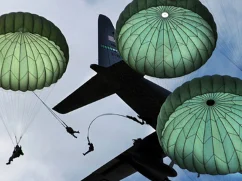
The vulnerability of the domestic textile industry was starkly exposed during the Second World War. In December 1941, the Japanese empire’s control over supply routes severed the United States’ access to silk, which was then the primary material used in military parachute systems. This abrupt loss threatened to ground American airborne operations. The crisis was averted only because the U.S. textile industry possessed the indigenous infrastructure, technical expertise, and existing relationships with military leadership to pivot rapidly to nylon.
This "Nylon Moment" serves as the foundational precedent for the Berry Amendment (10 U.S.C. § 4862), which mandates that the Department of Defense prioritize the procurement of domestically manufactured, fiber-forward textiles. The lesson of 1941 remains clear: when a conflict necessitates a rapid production surge, there is no substitute for established domestic capacity. Today, as the global market sees the closure of numerous domestic mills, the loss of this specialized knowledge base represents a strategic erosion of capability that cannot be recovered in months, or even years.
The Science of Performance: Beyond the Fiber
Technical military textiles are not commodity goods; they are precision-engineered systems. The engineering process begins at the fiber level, utilizing high-performance synthetics such as para-aramids (Kevlar®, Nomex®, and the next-generation Kevlar® EXO), ultra-high-molecular-weight polyethylene (Dyneema® and Spectra®), and liquid crystal polymers like Vectran®.
However, the fiber is only one component of the equation. The "architecture of performance" is dictated by the weaving technique. Engineers must select weave patterns—such as plain, twill, or tubular structures—based on the specific mechanical profile required for the mission. For instance, high-load flat webbing used in cargo airdrops requires the strength-per-interlacement provided by plain weaves, while parachute risers often utilize tubular weaves for their superior pliability, knot-holding capability, and abrasion resistance.
The most advanced frontier in this sector is 3D weaving. Unlike conventional 2D looms that interlace fibers in two dimensions, 3D weaving interlocks yarns through the thickness of the material, creating an integrated, monolithic structure. This eliminates the risk of delamination—a common failure mode in traditional layered composites—and allows for the creation of "net-shape" components that are lighter and stronger than equivalent metal parts. For an aerospace platform, replacing metal components with 3D woven composites can reduce weight by up to 30%, resulting in millions of dollars in fuel savings over the service life of an aircraft.

Data and Performance Metrics
The leap in performance offered by modern material science is measurable. Recent testing of Kevlar® EXO compared to traditional Kevlar® 29 highlights the rapid evolution of these materials. A standard 1 ¾-inch riser webbing, certified to the PIA-T-87130 specification, provides an average tensile strength of 23,000 lbs. at 2.41 oz/yd. By contrast, the Kevlar® EXO variant achieves 29,500 lbs. of tensile strength at a lower weight of 1.77 oz/yd.
This 28% increase in strength combined with a 27% reduction in weight provides tangible operational advantages:
- Payload Expansion: Reduced system weight allows for increased personnel, equipment, or cargo capacity per sortie.
- Logistical Optimization: Lighter, more compact parachute assemblies translate into easier field handling and more efficient storage within aircraft frames.
- Fleet-Wide Sustainability: Cumulative weight reduction across a fleet directly correlates to lower fuel consumption and extended operational range.
The Regulatory and Certification Hurdle
The complexity of military textiles is further compounded by the rigorous certification standards required for deployment. Suppliers in this sector must operate under strict Quality Management Systems (QMS), such as ISO 9001:2015 and the aerospace-specific AS9100D.
For every production lot, manufacturers must provide a comprehensive documentation package that includes yarn affidavits, lot traceability, and detailed test reports on tensile strength, elongation, thickness, and environmental resistance. This "paper trail" is not merely administrative; it is a critical component of the military qualification dossier. Defense contractors cannot finalize the approval of a weapon system or aircraft without these audited records. Consequently, the institutional knowledge required to navigate these certification processes—often developed in partnership with military program offices and standards bodies—is a strategic asset that acts as a significant barrier to entry for potential competitors.
Implications for National Defense Strategy
The decline of the broader U.S. commercial textile industry—marked by the closure of roughly 40 mills in the last two years—has created a divergence between commodity textile production and the highly specialized technical textile sector. While tariffs may eventually impact the domestic textile market, the specialized defense sector faces a different set of risks. If the U.S. loses the capability to manufacture Berry-compliant, aerospace-grade webbing, the military will find itself unable to fulfill basic operational requirements during a crisis.
Industry leaders, including executives from Bally Ribbon Mills (BRM), argue that the current procurement framework must recognize technical textiles as a strategic tier, similar to semiconductors. The "supply chain resilience" framework that has successfully catalyzed domestic investment in high-tech manufacturing must be extended to include these textile-based engineering sectors.
Future Outlook and Strategic Recommendations
The next decade will likely be defined by the integration of "smart" fibers and even more complex 3D weaving geometries. As the military transitions toward smaller, more distributed, and highly mobile units, the demand for lightweight, high-strength soft goods will only increase. To maintain the technological edge, the Department of Defense should consider:
- Sustained R&D Partnerships: Moving beyond transactional procurement to long-term, co-investment models that bridge the gap between fiber developers, weavers, and system integrators.
- Infrastructure Investment: Providing support for the acquisition and maintenance of next-generation, computer-controlled loom technology, which requires massive capital expenditure.
- Workforce Development: Addressing the skill gap in textile engineering and material science, as the specialized knowledge required to operate and program advanced weaving machinery is increasingly scarce.
In conclusion, technical textiles are the "arsenal beneath the arsenal." They represent an essential, high-barrier-to-entry capability that safeguards American assets and personnel. Whether through the development of revolutionary fibers like Kevlar® EXO or the implementation of 3D net-shape weaving, the sector is continuously pushing the boundaries of what is possible. As the nation faces an increasingly uncertain global security environment, the health of this industry—built on decades of iterative development and rigorous adherence to mil-spec standards—is not just a commercial matter, but a cornerstone of long-term national readiness. The capacity to innovate, test, and manufacture these critical components must be protected, fostered, and maintained, ensuring that when the moment of necessity arrives, the domestic supply chain is ready to perform.