










A Chronology of the Manual-Winding Era
The Rolex Oysterdate Precision ref. 6694 was introduced during a period when the horological industry was shifting toward automatic movements. However, Rolex maintained the hand-wound caliber as an accessible entry point into the brand for nearly three decades.

- 1960s Introduction: The model debuted as a foundational element of the Oyster collection, emphasizing the brand’s core tenets: water resistance, durability, and legibility.
- 1967 Milestone: The integration of the Caliber 1225 movement signaled a maturation of the line. This movement featured a frequency of 21,600 vibrations per hour (vph) and a Breguet overcoil hairspring, which offered enhanced isochronism compared to its predecessors.
- 1989 Discontinuation: The 6694 was officially phased out in 1989. This event was significant as it marked the end of an era; it was the last manual-winding Rolex available at retail, predating the final hand-wound Daytona references by only a single year.
Engineering Specifications and Mechanical Simplicity
The Caliber 1225, housed within the 34mm stainless steel Oyster case, is defined by its mechanical pragmatism. Unlike the COSC-certified movements found in the higher-tier Perpetual models of the same era, the 1225 was designed for longevity and ease of service.
Technically, the movement does not feature a quickset date function. This requirement necessitates that the user manually advance the time through a full 24-hour cycle to change the date, a process that reflects the mechanical limitations of the 1960s. While some contemporary collectors view this as a drawback, historical analysts argue that the absence of a quickset mechanism reduces the mechanical complexity of the date-change assembly, thereby contributing to the movement’s reputation for reliability.

The power reserve of the Caliber 1225 is approximately 58 hours. This capacity was notably robust for its time, providing a practical buffer for users who preferred the daily ritual of winding their timepiece. The watch’s 34mm case dimensions, while modest by modern standards, utilized a long-lug profile that allowed the piece to wear larger on the wrist than its specifications suggested, a hallmark of mid-century Rolex case geometry.
Design Language and Market Positioning
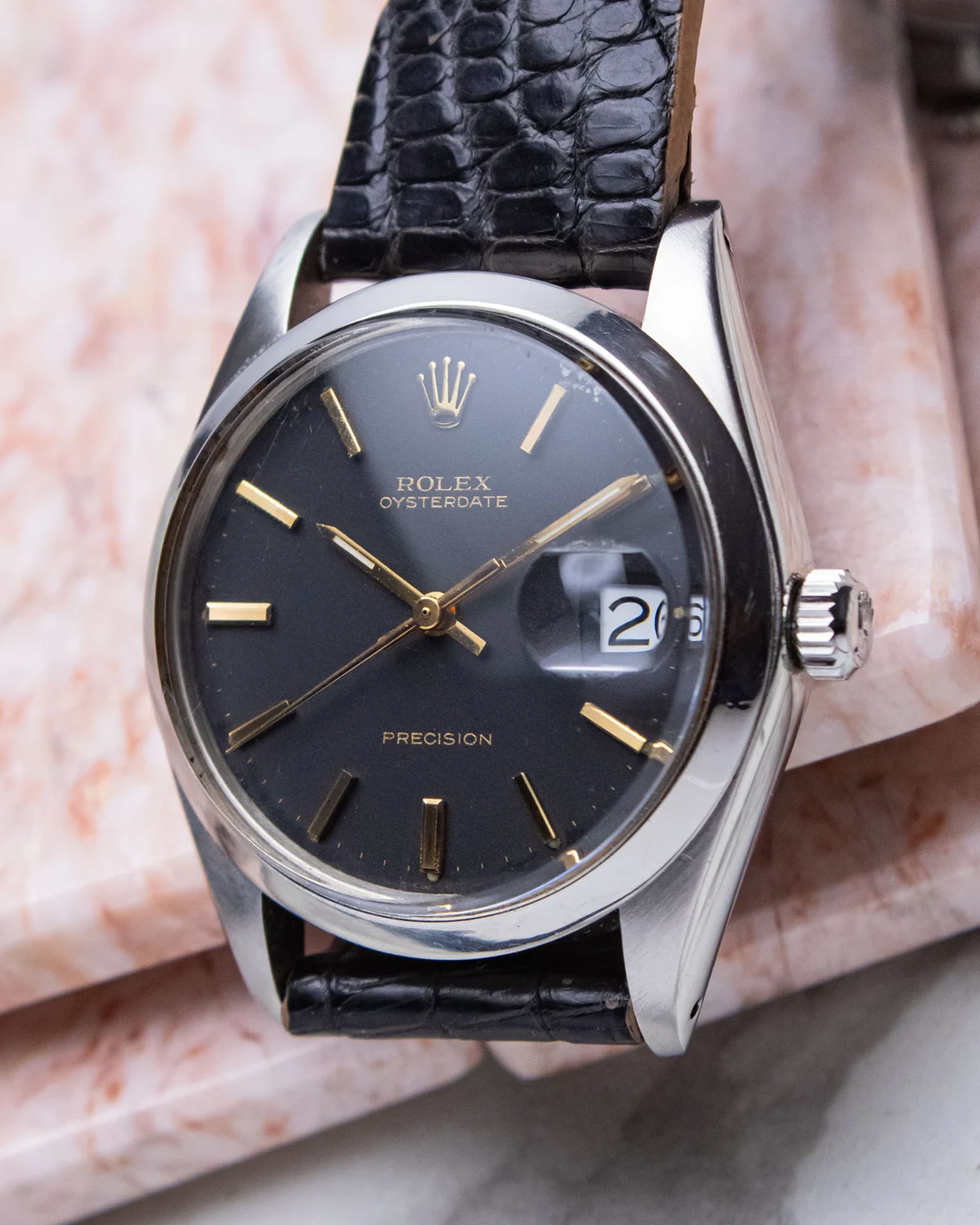
The aesthetic of the ref. 6694 is rooted in minimalist principles. The dial typically features baton indices and slender, polished hands, eschewing the bold, luminescent markers associated with the brand’s professional "tool" watches like the Submariner or GMT-Master. The use of an acrylic crystal and the iconic "cyclops" date magnifier defines the watch’s visual identity.

The color palette of these models often included conservative tones—silver, matte black, or charcoal gray—though later variations saw experiments with different dial textures and gilt accents. The inclusion of the "Precision" designation on the dial was a deliberate branding choice by Rolex to differentiate these manually wound, non-chronometer watches from the "Superlative Chronometer" range that occupied the higher echelons of the brand’s catalog.
Broader Industry Impact
The discontinuation of the 6694 in 1989 served as a symbolic conclusion to Rolex’s role in the traditional manual-winding market. As the quartz crisis reshaped the industry in the 1970s and 1980s, Rolex doubled down on its commitment to high-quality mechanical movements. By phasing out the manual-wind 6694 in favor of an entirely automatic lineup, Rolex successfully positioned its brand as a manufacturer of "perpetual" motion, reinforcing the brand’s identity as a leader in self-winding technology.

Market analysts observe that the 6694 has transitioned from an entry-level "gateway" watch to a sought-after vintage collector’s item. Its relative affordability, compared to the rare sport models of the same era, has allowed it to remain a staple of the secondary market. Dealers and auction houses frequently cite the 6694 as an ideal "first vintage watch" due to its accessible price point, the availability of spare parts, and the quintessential "Oyster" aesthetic that remains largely unchanged in the current Rolex collection.
Institutional Reception and Legacy
In the decades following its production, the ref. 6694 has garnered respect for its utilitarian honesty. Unlike modern luxury timepieces that often emphasize complications or precious metals, the 6694 is viewed by historians as an artifact of a time when Rolex functioned primarily as a provider of high-durability, precision instruments for the everyday professional.

Reaction from the horological community has been largely positive regarding the model’s preservation of the brand’s historical DNA. While the lack of an automatic rotor and the absence of a quickset date are noted as functional limitations in modern professional environments, these features are frequently defended by enthusiasts as essential components of the watch’s "analog" character.
The implication for the wider watch industry is clear: the success of the ref. 6694 proved that a brand could maintain a consistent, conservative design language over several decades without losing market relevance. By focusing on the fundamentals of water resistance and mechanical reliability, Rolex ensured that the 6694 would remain a functional, wearable timepiece long after its manufacturer ceased production.

Today, the 6694 serves as a benchmark for what constitutes a "true" Rolex. It lacks the hype-driven scarcity of modern steel sports models, yet it embodies the manufacturing philosophy that built the brand’s reputation. As the watchmaking industry continues to lean into high-frequency, silicon-component-heavy technology, the simple, manually wound architecture of the 6694 serves as a vital reminder of the mechanical integrity that defined the 20th century’s golden age of horology. The watch remains a significant piece of evidence in the narrative of how a single model can bridge the gap between historical utility and modern-day luxury collecting.