








The contemporary fashion calendar is notoriously unforgiving, often demanding that emerging talent scale steep learning curves under the blinding lights of international media. Industry observers have long grown accustomed to extending a generous margin of error to young designers during their initial seasons. It is commonplace to overlook minor structural imperfections—an unfinished hemline, awkward tailoring, or ill-fitting footwear—as casualties of the chaotic backstage rush. The unrelenting pace of the global fashion cycle, paired with the commercial and creative pressures heaped upon today’s independent creators, can easily crush nascent talent before they find their authentic voice.
Yet, every so often, an exception emerges that completely upends these established expectations. Swedish-born designer Petra Fagerström delivered precisely such a moment, commanding the attention of the international fashion community during her critically acclaimed debut on-schedule runway presentation at London Fashion Week.
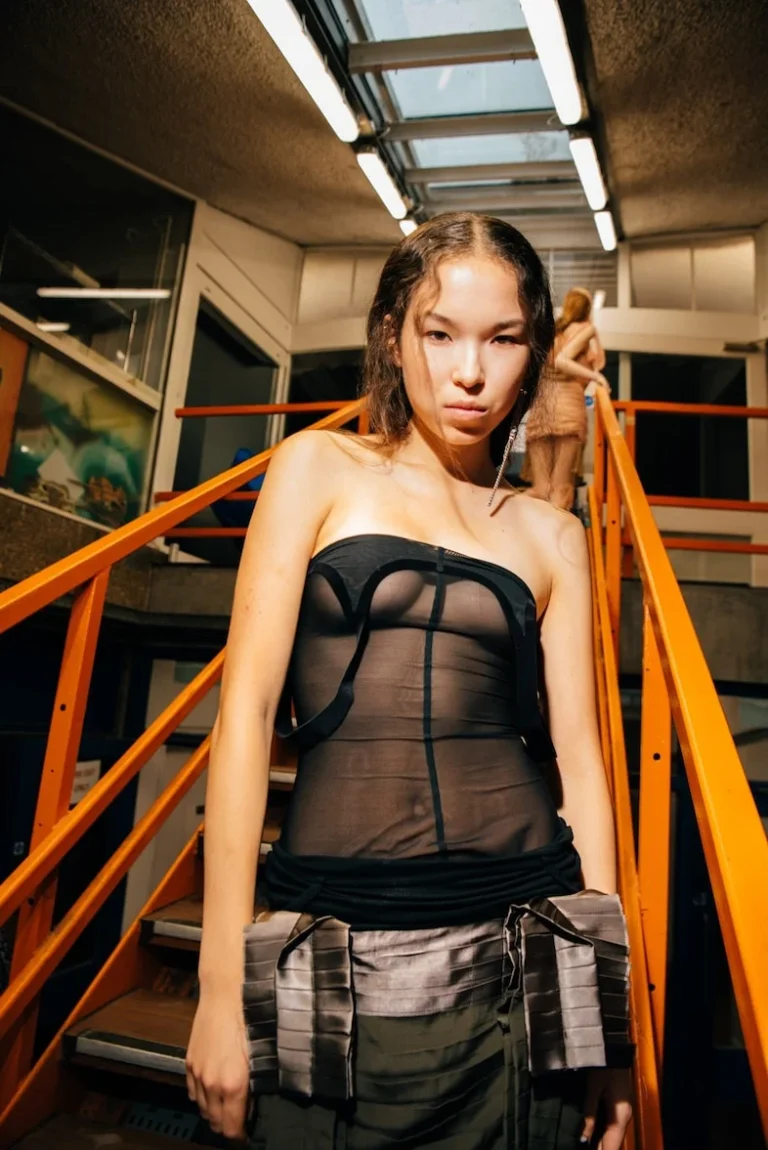
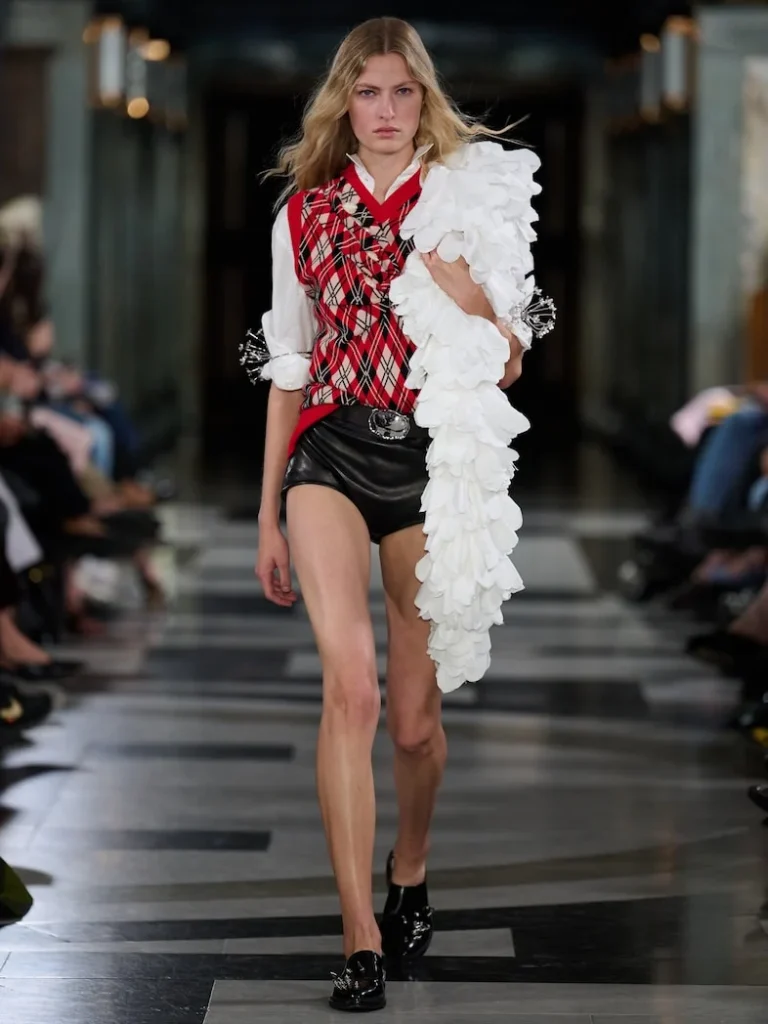
Marking a major milestone in her rapidly accelerating career, Fagerström stepped onto the official schedule on the morning of day two, presenting her latest collection within the high-profile NEWGEN show space at 180 Strand. This high-stakes showcase followed closely on the heels of her successful on-schedule presentation last season, signaling a confident and rapid graduation to a full runway format. Eschewing the typical debut jitters and the occasional structural missteps that plague even the most promising newcomers, Fagerström’s collection was executed with astonishing precision. There was not a loose thread, a misplaced seam, or a faltering silhouette in sight, establishing the designer not merely as a participant in the week’s festivities, but as a masterclass in disciplined execution.
From Ice Dancer to Runway Innovator: The Evolution of a Vision
To understand the intellectual rigor underpinning Fagerström’s work, one must examine the distinct trajectory that brought her to the London Fashion Week stage. Last season’s collection drew heavily from her unexpected personal background as a competitive ice dancer, translating the crisp geometry, disciplined rigidity, and fleeting kinetic energy of the ice rink into winter-ready garments. That debut introduced an audience to a designer who views clothing not merely as a commercial commodity, but as a dynamic medium for physical and psychological narrative.
For her follow-up outing, Fagerström shifted geographical and seasonal focal points, titling her latest lineup Swedish Summer. While the title might evoke pastoral daydreams reminiscent of traditional Scandinavian folklore, the designer deliberately avoided the rustic warmth of cinematic touchstones like Midsommar. Instead, she anchored the collection’s atmospheric tension in the eerie, hyper-stylized psychological suspense of Olivia Wilde’s 1957-inspired thriller, Don’t Worry Darling.
This thematic pivot allowed Fagerström to continue her ongoing, critical interrogation of modern womanhood—a conceptual thread she first began unraveling during her graduate collection at Central Saint Martins. In previous interviews, the designer articulated a clear mission statement regarding her creative output: she seeks to construct garments for a woman who fractures the idealized pillars of purity, passivity, and relentless domestic cleanliness historically tied to the archetype of the traditional wife.
Deconstructing the Tradwife Aesthetic and Mid-Century Silhouettes
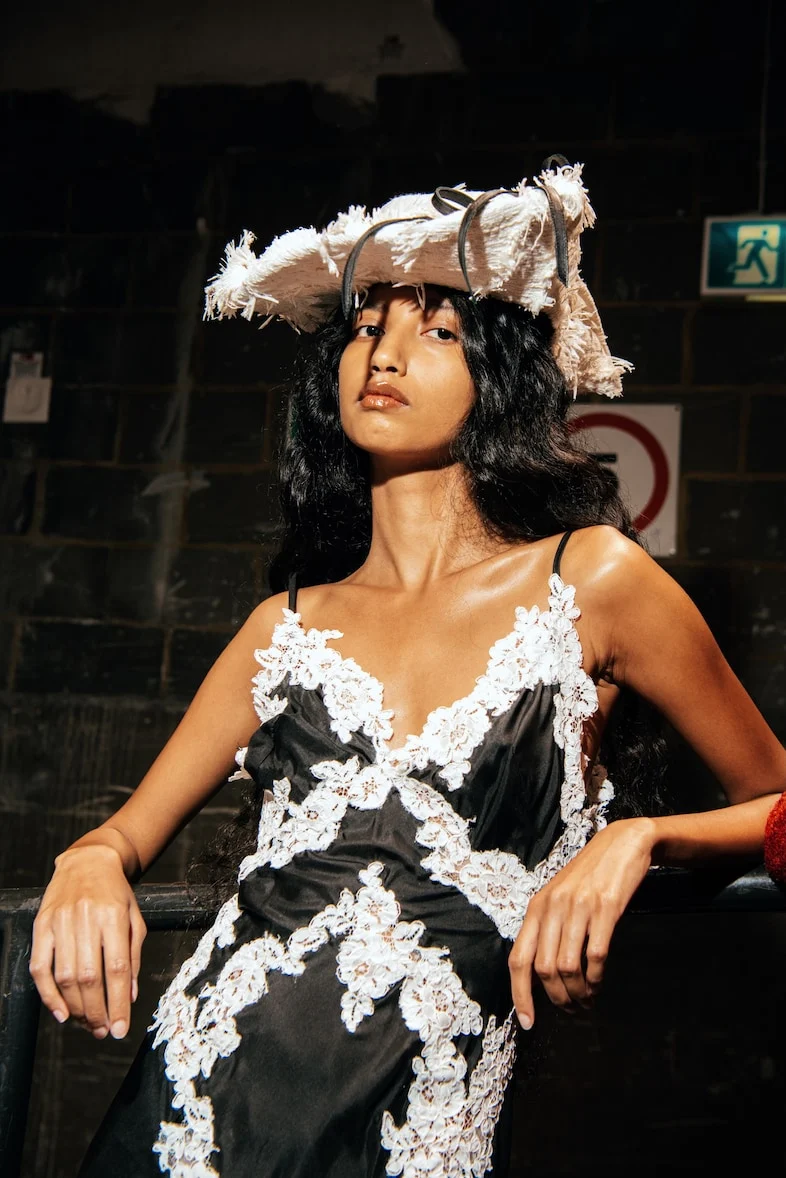
Within the context of yesterday’s runway presentation, this conceptual framework manifested through a sophisticated manipulation of historical silhouettes. Fagerström heavily engaged with the dominant dress codes of the 1940s and 1950s—eras celebrated for their hyper-feminine, full-skirted hourglass shapes, which have experienced an unexpected resurgence among contemporary social media subcultures championing the "tradwife" lifestyle.
Rather than reproducing these vintage silhouettes with nostalgic reverence, the designer systematically dismantled them. Most notably, the collection featured a striking, avant-garde interpretation of Christian Dior’s legendary Bar jacket, a garment universally recognized as the cornerstone of the post-war New Look and a historical symbol of constrained, immaculate bourgeois femininity. Fagerström warped these rigid structures, introducing tension points that forced the viewer to question the comfort and compliance inherent in traditional tailoring.
Furthermore, the designer utilized the global platform of London Fashion Week to launch a trenchant critique of contemporary digital culture, specifically targeting the flat, sterile perfection of artificial intelligence-generated imagery. By incorporating sophisticated trompe l’oeil prints and garments engineered to look unnaturally stuck or fused together, Fagerström drew a direct parallel to the thematic mechanics of Don’t Worry Darling. Just as Florence Pugh’s protagonist gradually realizes that her pristine suburban reality is a manufactured illusion hiding sinister mechanics, the Fagerström woman appears to glitch in real time.
The Aesthetics of Malfunction: A Critique of Societal Expectations
The overarching narrative of the presentation championed the concept of the "malfunction." By subverting traditional expectations of flawlessness, cleanliness, and unbroken grace, Fagerström presented a collection that argued humanity—and femininity in particular—is most authentic, compelling, and powerful when it breaks away from societal molds.
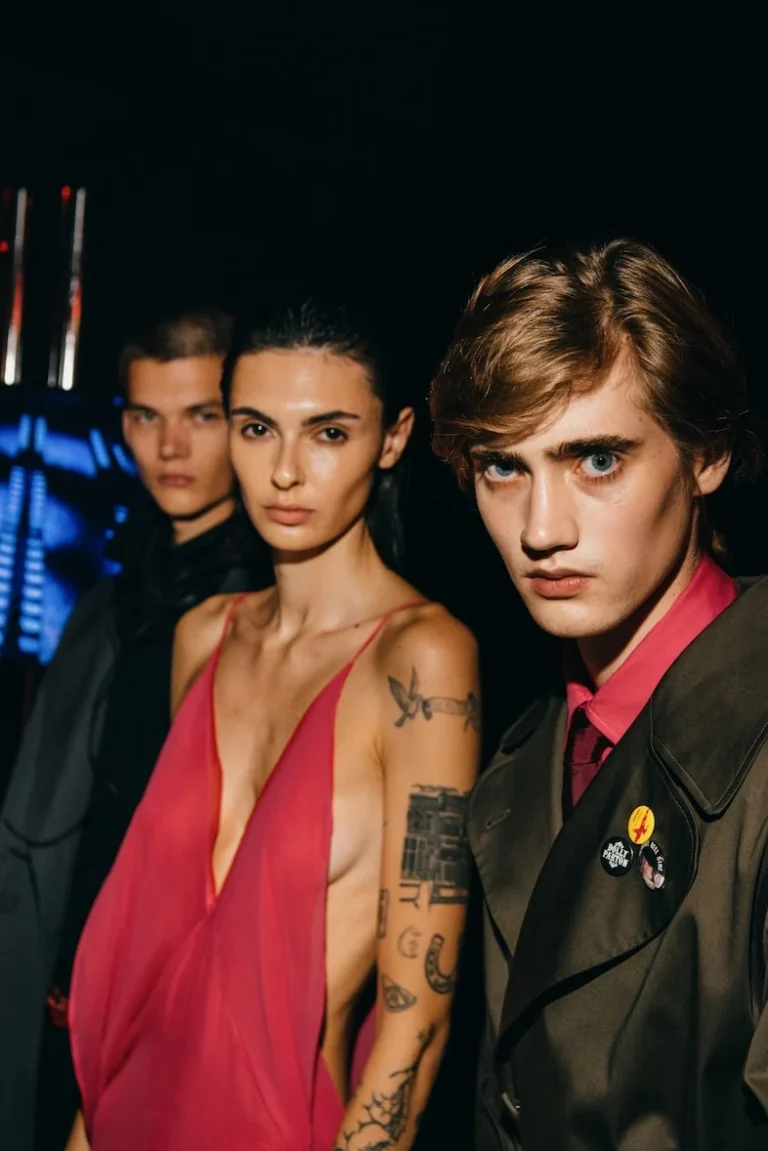
Critics and industry insiders seated along the perimeter of the 180 Strand runway noted the visceral impact of these sartorial subversions. The clothes did not merely hang on the models; they engaged in a dialogue with the audience regarding the burdens of digital-age perfectionism and patriarchal archetype enforcement. The clothes questioned why women are continually expected to maintain an unblemished facade in an increasingly synthetic world.
Broader Implications for the British Fashion Council NEWGEN Program
Fagerström’s triumphant runway debut arrives at a critical juncture for the British Fashion Council’s NEWGEN initiative, which continues to serve as the primary global incubator for emerging design talent. Funded by the BFC and supported by corporate partners, the program provides financial backing, mentorship, and infrastructural support to designers who demonstrate exceptional creative vision and commercial potential.
In recent years, the pressures placed upon NEWGEN recipients have escalated dramatically. Emerging designers are routinely expected to scale their businesses, satisfy the voracious appetite of digital media algorithms, and produce commercially viable collections season after season without burning out. The flawless execution of Fagerström’s runway presentation suggests that the designer possesses not only the creative firepower necessary to capture the industry’s imagination, but also the operational discipline required to navigate the grueling international fashion calendar.
Industry Analysts Predict a Strong Commercial Trajectory
While it remains too early to gauge the full retail impact of the SS27 collection, early retail buyer feedback gathered backstage indicates robust commercial interest. Department stores and high-end specialty boutiques seeking conceptual yet wearable avant-garde tailoring have increasingly gravitated toward labels that offer strong intellectual narratives alongside distinct product offerings. Fagerström’s ability to merge political critique with highly desirable outerwear and shirting positions her brand favorably within the current luxury retail landscape.
Moreover, the designer’s acute awareness of contemporary visual culture—particularly her critique of AI-generated flatness through traditional craftsmanship techniques—resonates deeply with Gen-Z and millennial luxury consumers who prioritize authenticity, storytelling, and ethical depth in their purchasing decisions.
A Lasting Impression at London Fashion Week AW26
As London Fashion Week AW26 continues to unfold across the British capital, Petra Fagerström’s sophomore runway outing has undoubtedly established a high watermark for the season. By refusing to rely on the traditional grace periods usually afforded to debutants, she has signaled a profound readiness to compete on the global stage.
The collection proved definitively that Fagerström is not a fleeting trend, nor a one-season wonder leaning on the novelty of her athletic background. She is an intellectual force in contemporary fashion, willing to grapple with difficult socio-cultural themes, dismantle historical garments, and celebrate the beauty of human imperfection. In an industry increasingly dominated by algorithmic uniformity and manufactured perfection, Petra Fagerström has proven that the future belongs to those brave enough to malfunction.