










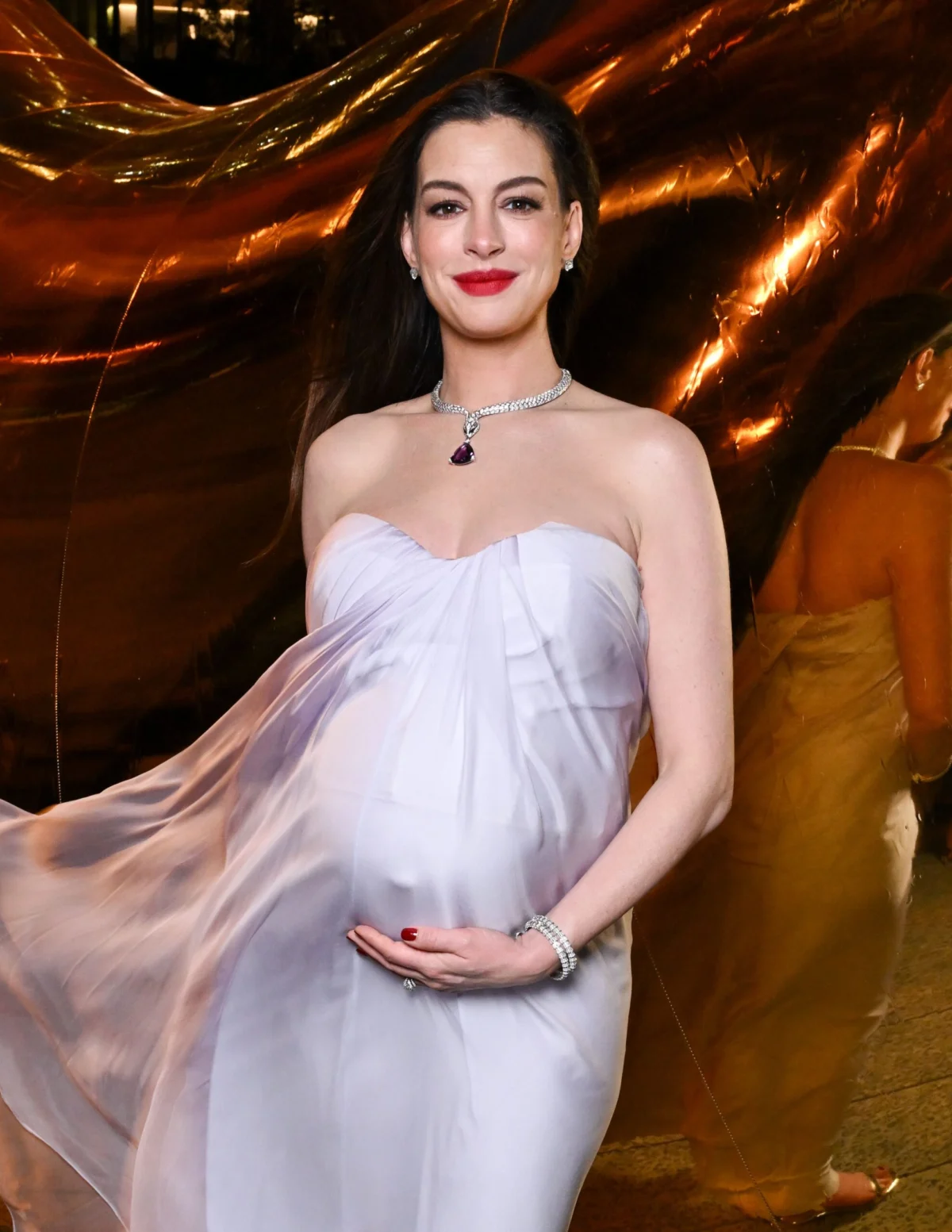
As the seasonal transition from late summer into autumn commences, celebrity style choices serve as a primary indicator for shifting consumer trends in the beauty and fashion industries. During a recent high-profile promotional appearance in New York City for the upcoming film adaptation of Colleen Hoover’s thriller, Verity, actor Anne Hathaway debuted a manicure and pedicure that signals a departure from the vibrant, high-saturation colors characteristic of the warmer months. Her choice of an “almost-black” nail polish—a deep, complex hue bordering on black, purple, and brown—has re-established the popularity of dark, moody palettes as the definitive aesthetic for the fall season.
The Significance of Seasonal Aesthetic Transitions
In the beauty industry, the move toward deep, melancholic tones at the conclusion of August is a well-documented phenomenon. This shift, often described by beauty editors as "lite-goth" or "smoky," aligns with a broader consumer desire to recalibrate personal style for cooler weather. Historically, shades such as Chanel’s iconic Vamp and OPI’s Lincoln Park After Dark have set the standard for this category, which relies on a dark base with subtle undertones of cherry, plum, or chocolate to provide depth and sophistication.
Hathaway’s decision to mirror these shades on both her hands and feet serves as a bellwether for retail movements. Market analysts often observe that when high-profile figures opt for monochromatic or low-contrast beauty looks during major press tours, those specific color profiles experience a measurable uptick in sales within the subsequent fiscal quarter. This trend is further reinforced by the "short nail" aesthetic Hathaway displayed; by keeping the length of her nails flush with her fingertips, she emphasized the richness of the pigment, prioritizing a clean, minimalist silhouette over the elaborate nail art that dominated the previous summer season.
Contextualizing the Promotional Tour
The current press cycle for Verity represents a significant milestone in Hathaway’s professional career, coinciding with her third pregnancy. Such tours are meticulously curated by styling teams to ensure that every visual element, from footwear to nail color, complements the primary theme of the project. Despite the bright, ruffled red dress she wore for the New York press event—a choice that provided a stark contrast to her dark nails—the overall look adhered to the principles of color theory, where deep, neutral-toned nails act as a grounding element for bold, primary-colored fashion choices.
This appearance is part of a larger, ongoing narrative surrounding Hathaway’s sartorial evolution. Earlier in the year, she drew attention for a "matchy-matchy" aesthetic, where she synchronized her bright red lipstick with an identical shade of red on her nails. The transition from that vibrant, cohesive look to this current moody, dark palette highlights a strategic use of color as a tool for personal branding and seasonal relevance.
Data and Trends in the Nail Care Market
The nail care industry, currently valued in the billions globally, relies heavily on these seasonal pivots to maintain consumer engagement. Industry data indicates that the "dark polish" segment experiences a consistent year-over-year growth during the third and fourth quarters. Retailers and manufacturers categorize these shades as "essentials," and they are frequently highlighted in trend reports as the most reliable way for consumers to transition their style without significant financial investment.
According to retail analytics from major beauty supply chains, shades like Essie’s "Wicked" have remained top-tier performers for over a decade. These products represent a "masstige" price point—accessible to the average consumer while maintaining a reputation for quality and trend-setting status. The sustained popularity of these specific formulas suggests that consumers favor reliability and timelessness over rapidly changing, niche trends when it comes to long-term seasonal staples.
Analysis: The Psychology of Seasonal Beauty
From a psychological standpoint, the transition to darker, more muted tones during the autumn months is often linked to the environmental changes of the season. As daylight hours decrease and temperatures drop, the shift in personal aesthetic reflects a desire for comfort, stability, and a "cozy" atmosphere. Beauty experts suggest that the psychological impact of painting one’s nails a dark, opaque color serves as a grounding ritual, signaling the end of the hectic, high-energy summer cycle and the beginning of a more introspective period.

Furthermore, the "lite-goth" trend is a low-barrier entry for consumers who want to participate in seasonal fashion without undergoing a full wardrobe overhaul. Unlike clothing, which requires a significant change in silhouette and material, a dark manicure is a versatile accessory that complements virtually any outfit, making it an efficient way to modernize a look.
Official Perspectives and Industry Reaction
While specific statements from celebrity stylists are often held behind non-disclosure agreements, the industry reaction to Hathaway’s look has been universally positive, with professional nail technicians noting that the dark, short-nail look is currently the most requested style in salons across the United States.
"The move to darker colors is never a surprise, but the specific, high-gloss, short-nail look seen on Hathaway is a testament to the current ‘quiet luxury’ trend," says an industry consultant. "It is understated, it is practical, and it signals a level of confidence that does not require long extensions or intricate embellishments to be noticed."
Broader Implications for the Retail Sector
The influence of high-profile actors on consumer behavior remains a potent force in the beauty market. For the fall of 2026, the retail sector is preparing for a sustained demand for deep berry, midnight blue, and near-black pigments. Brands are already pivoting their digital marketing campaigns to reflect this "moody" aesthetic, utilizing imagery that mimics the lighting and textures associated with the fall season.
This shift also has implications for the supply chain. As manufacturers anticipate the spike in demand for these dark shades, inventory levels are adjusted to ensure that the most popular colors are readily available at the point of sale. The predictability of this trend allows for streamlined production cycles, benefiting both the manufacturers and the retailers who stock these items.
Conclusion: A Consistent Seasonal Staple
Anne Hathaway’s choice to adopt a deep, dark manicure and pedicure during the promotion of Verity is more than just a stylistic whim; it is a calculated alignment with a well-established seasonal transition. By embracing the "almost-black" trend, she has reinforced the cultural status of these colors as the standard-bearer for autumn.
As consumers look to mirror this aesthetic, the availability of classic, high-performance polishes ensures that the look remains accessible to a wide demographic. Whether the goal is to mirror a red-carpet look or simply to acknowledge the arrival of the autumn months, the dark, moody manicure stands as a timeless, reliable, and sophisticated choice. As the year progresses toward the winter holidays, it is likely that this trend will evolve further, perhaps incorporating metallic accents or matte finishes, but the foundation—the deep, near-black base—will undoubtedly remain the cornerstone of fall beauty.
The consistency of this trend is a reminder of the cyclical nature of fashion and beauty. While technology and social media have accelerated the speed at which trends cycle through the public consciousness, some aesthetic choices, rooted in the seasonal rhythms of the year, remain remarkably stable. Hathaway’s look serves as a quintessential example of how celebrity influence, when paired with established seasonal expectations, continues to define the landscape of the beauty industry in the modern era.