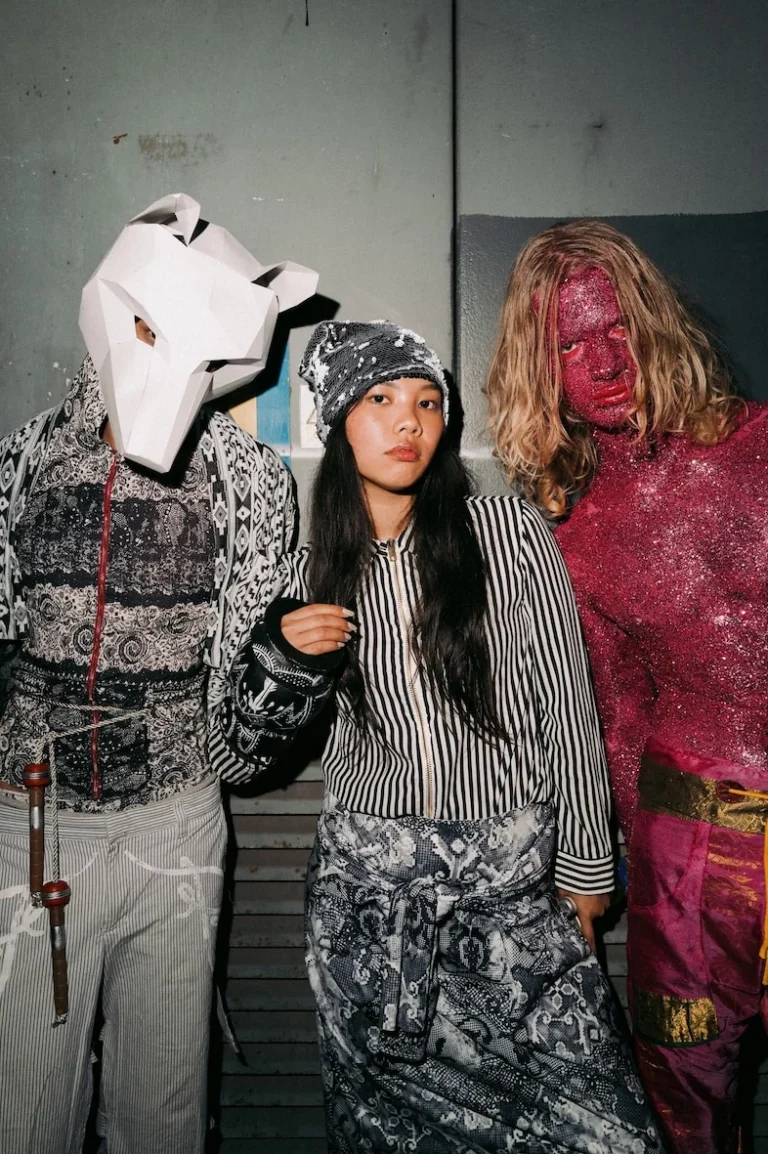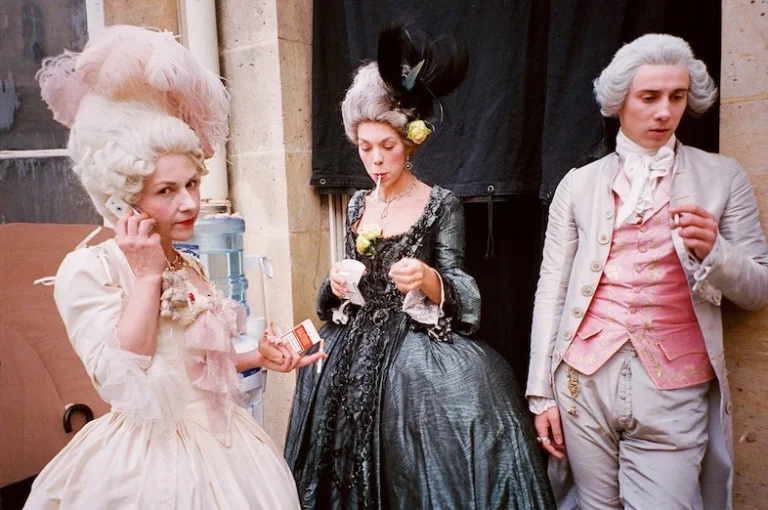





Fashion East returned to Manor Place in south London this week to stage its landmark 25th-anniversary showcase, once again cementing its reputation as the premier launchpad for vanguard design talent in the United Kingdom. The seasonal incubator, which has historically jump-started the careers of household names in contemporary fashion, drew a high-profile audience to the capital’s industrial periphery. Among the notable figures occupying the front row were British rapper Central Cee, models Paloma Elsesser and Sabrina Elba, and television broadcaster Miquita Oliver. The milestone presentation offered a compelling snapshot of contemporary menswear and womenswear, blending avant-garde theatricality with deeply personal socio-cultural narratives.
This season’s roster featured a balanced mix of returning innovators and fresh blood. The incubator welcomed back Jacek Gleba and GOYAGOMA—the latter spearheaded by designer Traiceline Pratt—while introducing Central Saint Martins (CSM) recent graduate Mé Mé as the session’s newest addition.
A Brief History of Fashion East and Its Industry Impact
Founded in 2000 by Lulu Kennedy, Fashion East was established to combat the soaring costs and logistical hurdles facing young designers breaking into the London fashion ecosystem. Operating as a non-profit incubator, the organization provides emerging talents with comprehensive financial backing, infrastructure, production resources, and a coveted slot on the official London Fashion Week schedule. Over the past quarter-century, the platform has cultivated dozens of designers who have gone on to shape the global luxury market, ranging from Jonathan Anderson and Kim Jones to Grace Wales Bonner and Simone Rocha.
The choice of Manor Place in south London for the 25th-anniversary showcase underscores a broader shift among independent British labels seeking expansive, unconventional industrial venues away from traditional West End exhibition spaces. This decentralized approach allows designers to construct immersive, site-specific environments that complement their collections, enhancing both narrative depth and visual impact.
Mé Mé Opens the Showcase with a Nostalgic and Smoky Debut
As the designated newcomer of the lineup, Cantonese designer Mé Mé opened the presentation, building directly upon the critical acclaim garnered by their MA graduate collection earlier in the year. The designer’s aesthetic language proved instantly recognizable, anchored by surreal props and atmospheric motifs that immediately engaged the audience.
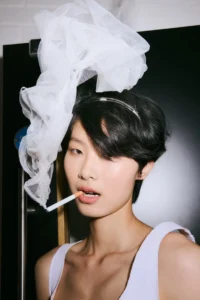
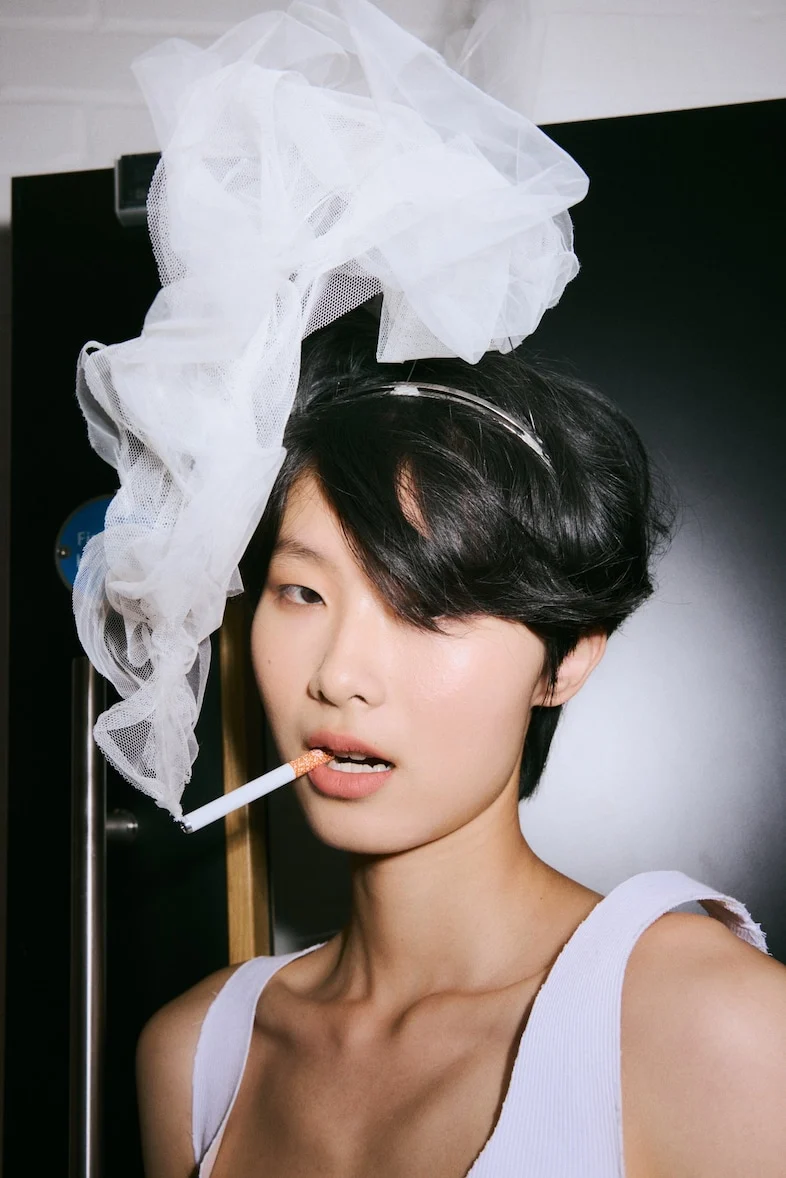
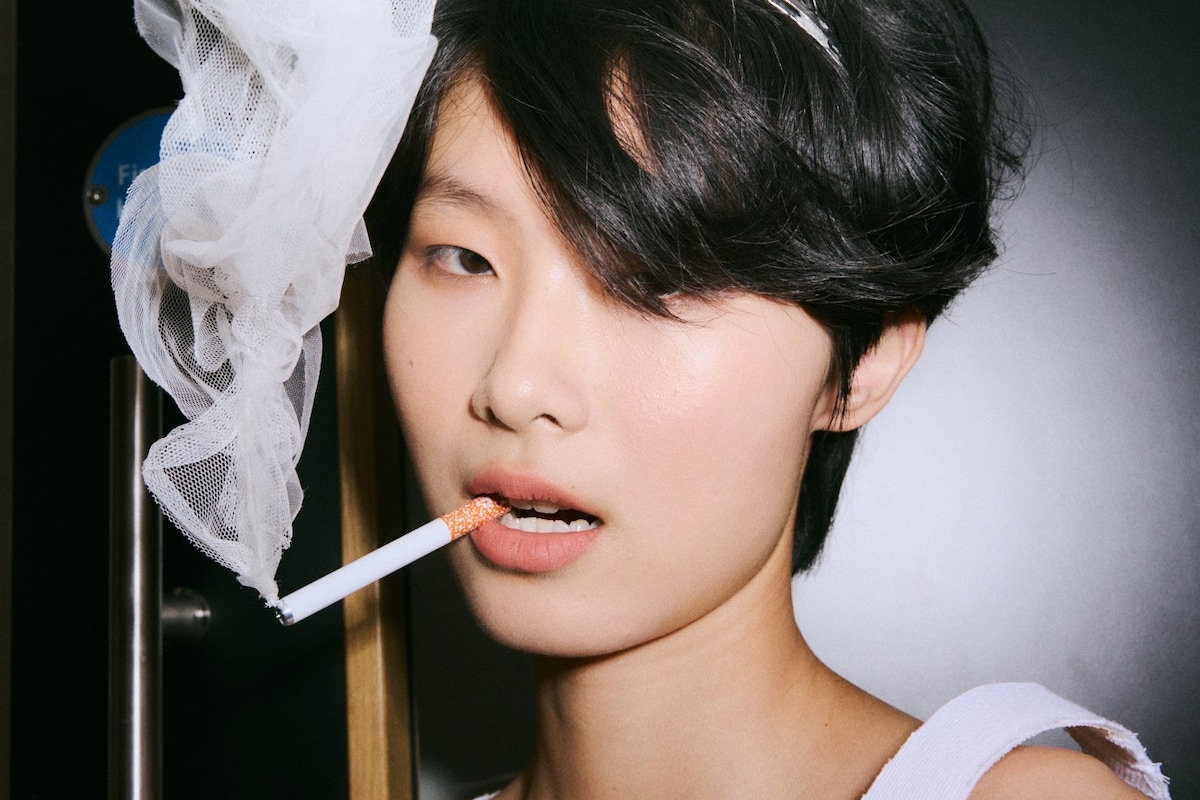
Models navigated the runway sporting birdcage veils drawn tightly over their eyes, balancing inverted ceramic bowls as makeshift millinery, and wearing oversized bubblegum pink bloomers. The most striking signature of the debut, however, was the integration of simulated smoking: models puffed on faux Marlboro cigarettes amidst billowing clouds of real cigarette smoke, reinforced visually by stiff white netting engineered to mimic curling plumes of ash and vapor.
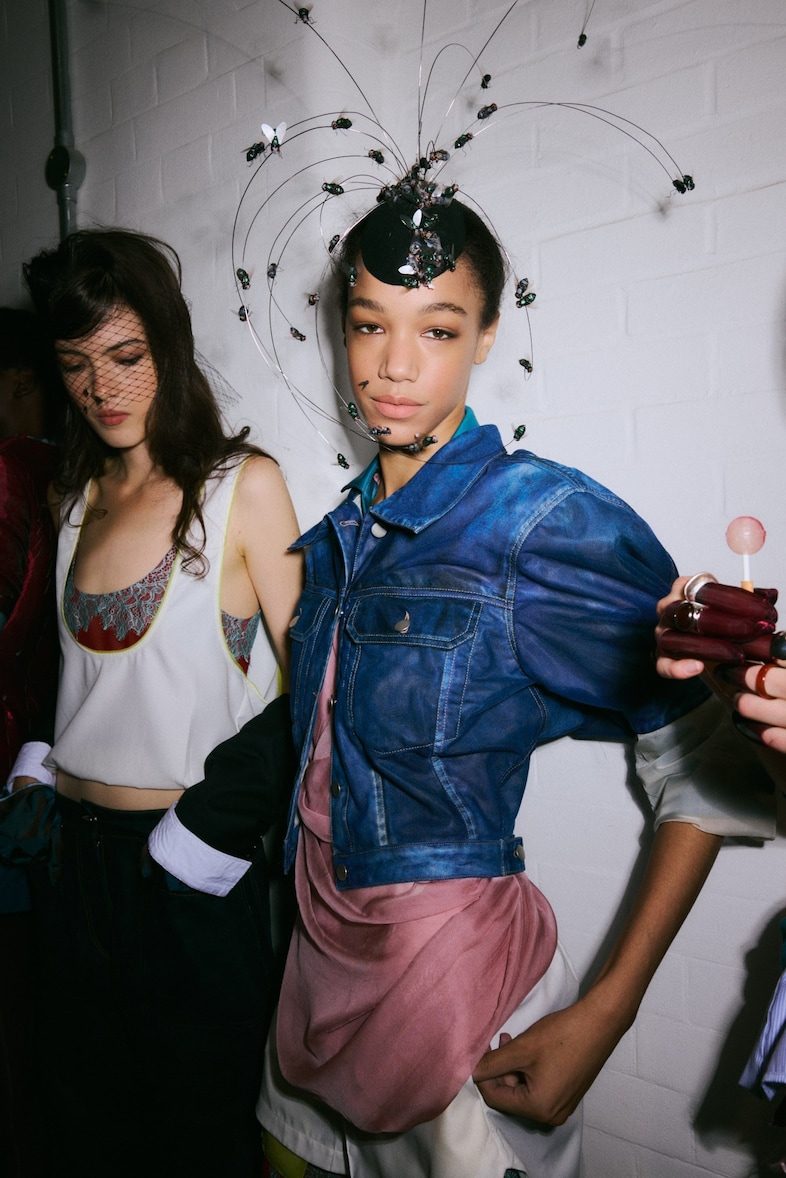
According to behind-the-scenes insights, the collection was conceived as a stylistic cross-section between Ladies Day at Ascot and the dimly lit, chaotic smoking area of a late-night venue. Beneath the jarring surface accessories—including dead flies meticulously glued to models’ faces and decorating custom headpieces—lay a poignant historical homage. The collection served as a deliberate tribute to the hardworking women of 1980s Hong Kong, who navigated the high-pressure, fast-paced urban environment amid domestic and professional obligations. The inclusion of dead insects functioned as a visceral metaphor for the domestic grime of unwashed dishes and restaurant back-alleys, juxtaposing the grit of urban life with the polished pageantry of high-end tailoring.
Jacek Gleba Subverts Traditional Masculinity Through Balletic Grace
Following the smoky realism of Mé Mé’s debut, Jacek Gleba assumed the runway to present his signature synthesis of fashion and classical ballet. Gleba’s autumn collection drew inspiration from two distinct artistic sources: the radical choreographic philosophy of Pina Bausch and Denton Welch’s seminal 1945 bildungsroman, In Youth is Pleasure.
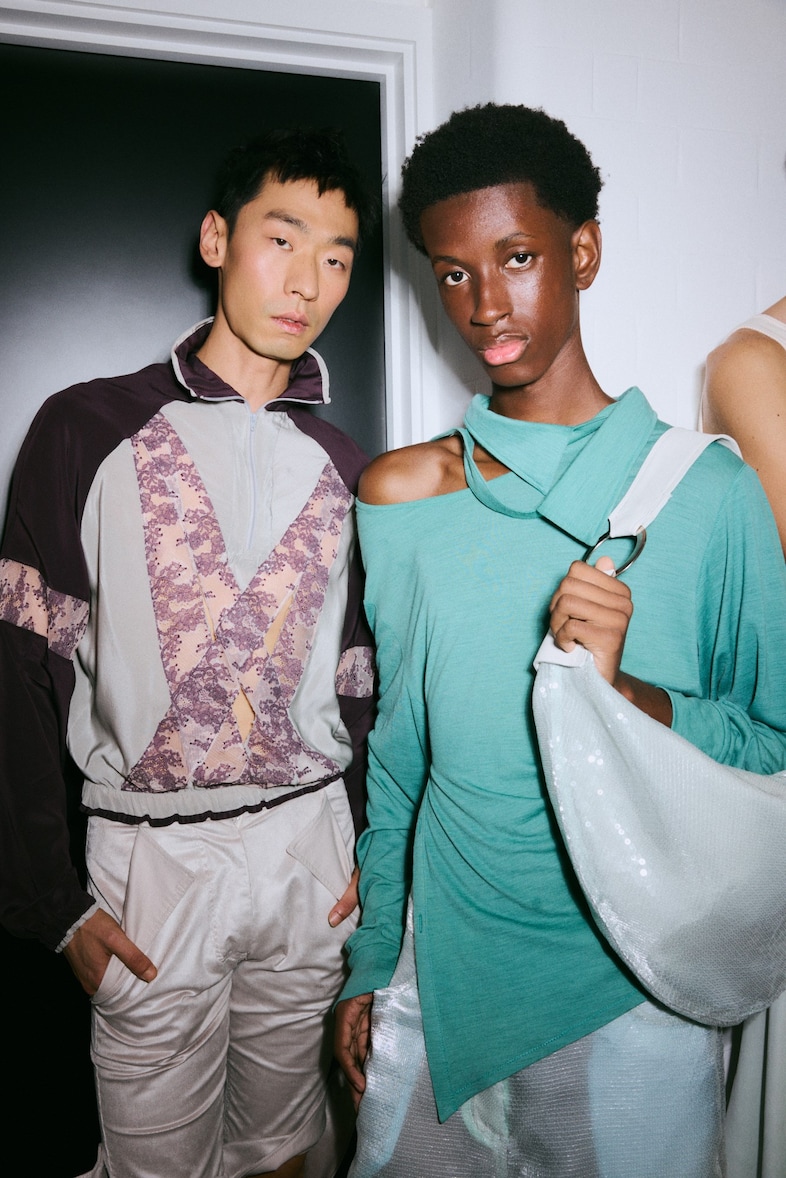
Gleba’s collection systematically dismantled traditional menswear codes through the deployment of delicate chiffon textiles, muted pastel color palettes, and cascading backless silhouettes. Male models glided down the runway in fluid, floating dresses and heeled ballet pumps, their silk shirts elevated by intricate lace appliqués that traced traditional athletic lines while subverting their rigid connotations.
The presentation reflected a broader contemporary movement within European menswear toward gender fluidity and the reclamation of historical romanticism. By marrying the structural discipline of dancewear with the vulnerability of 20th-century literature, Gleba positioned his work at the vanguard of a generational shift in how masculine identity is articulated through textiles.
GOYAGOMA Closes the Show with a Meditation on Workwear and Survival
The anniversary showcase concluded with a poignant and critically well-received presentation by Traiceline Pratt’s label, GOYAGOMA. The Bahamas-born designer, returning to the Fashion East stable for a second season, delivered a collection that captured the undivided attention of the front row—notably prompting Central Cee to capture the performance on his mobile phone.
For this outing, Pratt turned his analytical lens toward the architecture of practical workwear and the personal sartorial archives of his own parents. The collection featured sophisticated reinterpretations of his mother’s daily dressing gowns set against tailored iterations of his father’s corporate office attire.
The standout piece of the presentation, however, was an inflated life jacket. The garment served as a literal and figurative centerpiece, referencing a quote by Luther Collie: "No one’s coming to save you; it’s either you sink or swim." Industry analysts interpreted the piece as both a nod to the precarious economic realities facing independent designers in the current global climate and a personal testament to Pratt’s own navigation of the competitive fashion landscape. Based on the rapturous critical response at Manor Place, Pratt is undeniably swimming.
Economic Context and Industry Implications
The staging of Fashion East’s 25th-anniversary showcase occurs against a challenging macroeconomic backdrop for the British creative industries. Rising production costs, inflationary pressures on raw materials, and the post-Brexit administrative hurdles governing European supply chains and talent mobility have severely strained independent labels.
Despite these structural headwinds, incubators like Fashion East remain vital economic and cultural engines for the UK. According to estimates by the British Fashion Council, the UK fashion industry contributes tens of billions of pounds annually to the national economy and supports nearly a million jobs. Platforms that underwrite the early developmental stages of brands such as Mé Mé, Jacek Gleba, and GOYAGOMA are essential for maintaining London’s global status as a crucible of creative innovation.
Future Outlook for the Class of 2025
As the autumn 2025 season progresses, the designers showcased at Manor Place face the critical challenge of translating critical acclaim into commercial viability. For Mé Mé, the immediate task involves securing stockists for their debut wholesale season while refining the production of their complex, narrative-driven accessories. Jacek Gleba will look to expand his footprint in international markets where demand for avant-garde, gender-fluid menswear remains robust. Meanwhile, GOYAGOMA’s growing cultural cachet—underscored by high-profile endorsements from the music and entertainment sectors—positions Pratt to scale his operations toward standalone commercial collections.
Ultimately, the 25th-anniversary showcase demonstrated that while the operational environment for young designers has grown increasingly difficult, the appetite for disruptive, conceptually rigorous design remains as potent as ever. Fashion East continues to fulfill its foundational mandate: identifying tomorrow’s design leaders and providing them with a platform to command the industry’s attention.