









The contemporary fashion landscape is undergoing a profound structural shift, driven by widespread consumer disillusionment with legacy luxury brands and the environmental fallout of ultra-fast fashion. Amid this shifting retail ecosystem, fashion-tech startup Atorie has announced the successful completion of a $9.5 million seed funding round. The investment was backed by high-profile venture capital entities and industry leaders, including a16z speedrun, Night Capital, and Lightspeed Ventures’ Jeremy Liew.
This fresh capital injection arrives as Atorie experiences explosive financial growth. The company closed out the previous fiscal year with approximately $5 million in gross sales and is currently projecting an annualized run rate exceeding $55 million. With operations already spanning a network of more than 40 manufacturing facilities worldwide, the startup is positioning itself as a formidable, high-quality alternative to traditional fast-fashion conglomerates like Zara, while undercutting legacy luxury houses by orders of magnitude.
Deconstructing the Business Model: Direct-to-Consumer Luxury Craftsmanship
Atorie’s core value proposition addresses a long-standing inefficiency in the global apparel supply chain. Through its e-commerce platform, the startup offers consumers access to high-end garments and leather goods—such as Italian leather handbags—produced in the exact same factories and utilizing the identical materials relied upon by premier luxury houses. However, whereas brands like Prada or Louis Vuitton routinely price such items in the thousands of dollars, Atorie retails comparable pieces for a few hundred dollars.
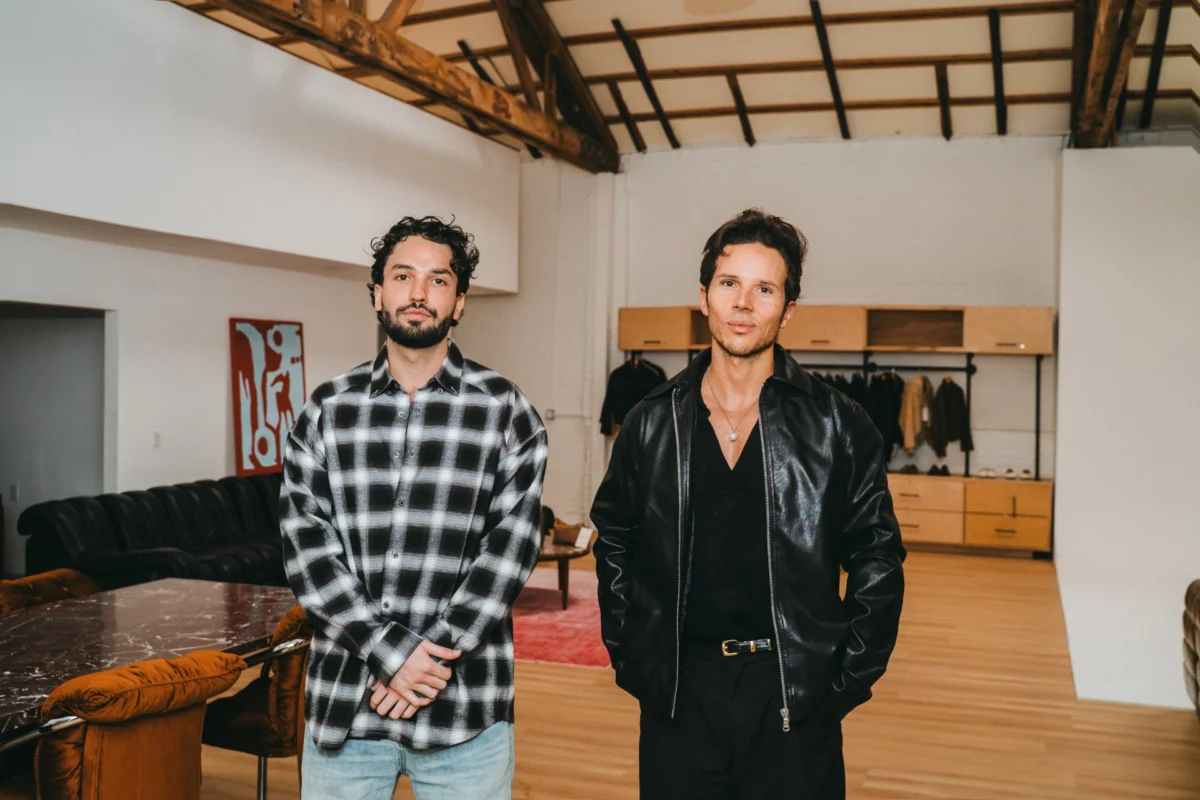
Company co-founder and serial entrepreneur Redouane Ramdani emphasizes that Atorie’s offerings should not be classified as conventional "dupes" or cheap knockoffs.
"It’s the same material, same craftsmanship," Ramdani noted. "It’s coming from the same factories." Furthermore, he explicitly rejects the fast-fashion label, characterizing Atorie’s operational philosophy as inherently measured: "It’s slow."
This model draws functional parallels to successful direct-to-consumer disruptors like Quince, which has similarly capitalized on consumer demand for unbranded, high-grade essentials sold at near-wholesale price points. By eliminating the heavy marketing markups, celebrity endorsement budgets, and retail overhead typical of traditional luxury conglomerates, Atorie passes substantial savings directly to the end buyer.
The Evolution of Luxury Manufacturing: From Passive Production to Independent Design
The genesis of Atorie is deeply rooted in changes within the international manufacturing sector. Ramdani, who grew up in France surrounded by a family deeply embedded in luxury manufacturing, initially harbored a lifelong ambition to enter the space. However, by the time he successfully exited his previous venture, the creator platform Snipfeed—which was acquired by Planoly in 2024—the industrial landscape had transformed entirely.
Historically, traditional luxury houses operated under a rigid paradigm: brands designed garments and sourced materials independently, commissioning independent factories strictly for labor and assembly. This approach forced brands to commit to massive minimum order quantities (MOQs), frequently resulting in systemic overproduction and massive surplus inventories. Simultaneously, these factories bore significant financial exposure, as their economic viability depended on a handful of mega-brand clients who could abruptly pull or alter orders.
In recent years, however, progressive high-end factories have evolved beyond passive assembly lines. The best-performing manufacturing partners have cultivated robust in-house design and product-development capabilities. These facilities can now independently engineer apparel, rapidly prototype new collections, and execute lower-volume production runs.
Atorie leverages this industrial evolution. By acting as a digital bridge, the startup connects these sophisticated, independent manufacturers directly with retail consumers, bypassing traditional gatekeepers entirely.
Artificial Intelligence as a Supply Chain and Retail Catalyst
Atorie’s operational efficiency and predictive capabilities are heavily augmented by proprietary artificial intelligence infrastructure. The company integrates AI across both its back-end supply chain management and its front-end consumer interface.

On the manufacturing and logistics side, the startup utilizes machine learning algorithms to analyze real-time macro-fashion trends, test colorways digitally, and forecast consumer demand with high precision. This data-driven foresight allows factories to mitigate overproduction and anticipate raw material shortages before they occur, ensuring optimal stock levels without generating excess waste.
On the customer-facing side, Atorie’s website features an integrated AI assistant designed to function as a personalized digital stylist. The tool can construct complete outfits based on user-provided inspirations—ranging from specific aesthetics to public figures—and dynamically learns individual shopping preferences to offer tailored purchase recommendations.
Significantly, the company is already observing measurable shifts in consumer discovery paths, noting a steady rise in sales referrals originating from generative AI platforms such as OpenAI’s ChatGPT and Anthropic’s Claude. Ramdani envisions a near-future retail environment where autonomous AI agents handle transactional commerce entirely on behalf of the consumer, a paradigm shift Atorie is actively preparing to capture.
Navigating the Post-Pandemic Luxury Backlash and Dupe Culture
Atorie’s market entry coincides with a turbulent period for the broader fashion industry. In the post-pandemic era, legacy luxury houses implemented aggressive, continuous price hikes designed to preserve profit margins and reinforce exclusivity. However, these steep increases triggered a severe consumer backlash, alienating large segments of the buying public.
This economic friction gave rise to the modern "dupe culture," particularly among Gen Z and millennial consumers. Seeking near-identical replicas of high-end status symbols became a widespread trend, eventually morphing into a cultural badge of honor where frugality and savvy sourcing eclipse brand loyalty.
Simultaneously, heightened awareness regarding the catastrophic environmental footprint of fast-fashion giants has left younger demographics fatigued by disposable, low-quality apparel. Atorie attempts to resolve this dichotomy by offering durable, well-crafted garments that satisfy contemporary aesthetic trends without exacting a heavy toll on the planet or the consumer’s wallet.
Strategic Deployment of Seed Capital
With the infusion of $9.5 million from a16z speedrun, Night Capital, and Lightspeed Ventures’ Jeremy Liew, Atorie leadership has mapped out a clear blueprint for institutional scaling.
The primary allocation of the fresh capital will be directed toward strengthening global logistics, expanding proprietary AI software development, and scaling manufacturing partnerships. Operationally, the company intends to launch its own dedicated in-house product lines—operating on a model akin to Amazon Essentials—to guarantee baseline inventory across core categories.
Additionally, Atorie plans to leverage its infrastructure to collaborate closely with digital creators, social media influencers, and tastemakers. By providing a streamlined manufacturing and distribution backbone, the startup aims to empower external creators to design, produce, and launch their own independent clothing lines with unprecedented speed and minimal financial risk.
Broader Industry Implications and Future Outlook
The rise of AI-enabled, factory-direct retail platforms like Atorie signals potential long-term disruptions for both fast fashion and legacy luxury houses. As independent manufacturers increasingly master design and fulfillment, traditional brands may find it progressively difficult to justify astronomical retail markups based solely on brand prestige.
Furthermore, as generative AI reshapes how consumers discover, evaluate, and purchase goods, startups that successfully integrate these technologies into the supply chain will likely set new benchmarks for efficiency and responsiveness. For Atorie, the challenge moving forward will be scaling its global manufacturing network while preserving the rigorous quality control that differentiates its catalog from traditional high-street alternatives.
As the company works toward its aggressive 2026 financial targets, its trajectory will be closely watched by investors and industry analysts alike as a bellwether for the future of digitally native apparel commerce.