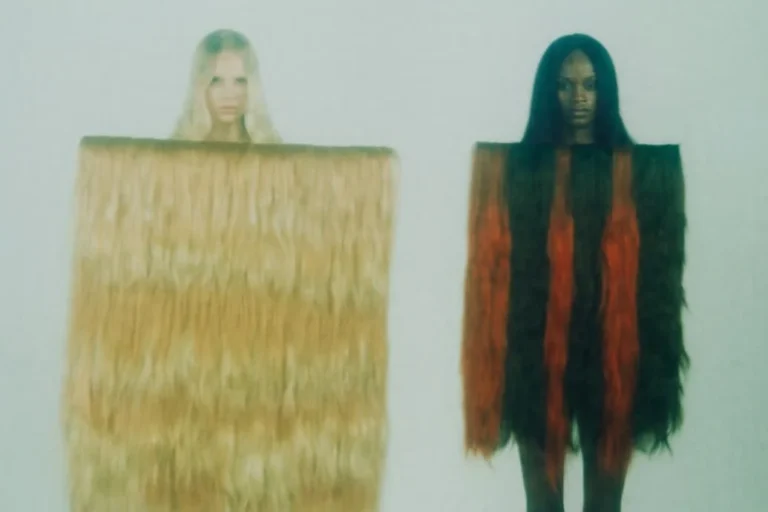












The intersection of Scandinavian electronic music production and contemporary Chinese club culture has birthed one of the most compelling cross-cultural narratives in modern independent music, catalyzed by the artistic evolution of Danish-Chinese singer-producer Helena Gao. Released via After All Records, Gao’s bilingual sophomore EP, Gao Dan Dan, represents a critical juncture in her artistic trajectory, bridging her upbringing in the homogenous Danish city of Aarhus with the kinetic, underground nightlife of Shanghai. The project has not only drawn international critical acclaim for its innovative sonic architecture—merging hyperpop sensibilities with glacial club rhythms—but has also sparked intense social debate across mainland digital platforms, highlighting the complex cultural friction that often accompanies transnational artistic expression.
Main Facts and Artistic Genesis
Helena Gao’s musical identity is deeply rooted in the dichotomy of her heritage. Raised as a minority in Aarhus, Denmark, Gao spent her formative years attempting to assimilate into the predominantly white cultural landscape, actively suppressing her Chinese identity. However, a pivotal relocation to Copenhagen to study at the prestigious Rhythmic Music Conservatory (RMC) fundamentally shifted her perspective. Surrounded by a diverse cohort of mixed-heritage peers and introduced to avant-garde Chinese electronic labels such as Genome and SVBKVLT, Gao embarked on a journey of cultural reclamation.
This journey materialized in late 2023 during research trips to Shanghai, where Gao immersed herself in the city’s underground club circuit. Frequenting the renowned, SVBKVLT-affiliated venue ALL, she utilized her smartphone’s Voice Memos app to record the ambient textures, vocal exchanges, and tactile interactions of the dancefloor. These field recordings laid the structural foundation for Gao Dan Dan. The opening track, "Wo Sao Ni" ("Scan Me"), directly references the ubiquitous urban Chinese social ritual of exchanging contact information via QR codes upon meeting. Musically, the EP synthesizes the ethereal alt-pop lineage of RMC alumni—reminiscent of artists like Erika de Casier and Oklou—with the sharp, abrasive sound design characteristic of the late producer SOPHIE.
Chronology of a Transnational Career
Gao’s ascent within the global pop apparatus runs parallel to her underground explorations, creating a dual narrative of mainstream songwriting success and avant-garde experimentation.
- Pre-2023: Gao studies at the Rhythmic Music Conservatory in Copenhagen, initially producing ethereal alt-pop while grappling with her dual heritage.
- 2023: Gao travels to Shanghai, immersing herself in the local club scene at venues like ALL and conceptualizing the soundscapes for her upcoming bilingual project.
- Late 2023 to 2024: Through collaborations initiated by producer Margo XS, Gao travels to Los Angeles, entering the mainstream pop writing sphere. She co-writes the hit single "Midnight Sun" for Swedish pop star Zara Larsson.
- 2024 (Ongoing): The track "Midnight Sun" achieves sleeper-hit status, eventually going viral globally a year after its initial release. Gao ultimately co-writes nine of the ten tracks on Larsson’s corresponding album and features on the "Saturn’s Return" remix.
- September 10, 2026: Gao releases her bilingual EDM-pop EP, Gao Dan Dan, via After All Records, featuring tracks such as "Lao Wai" ("Foreigner"), "niu bi," and "lao shi" ("Teacher").
- Post-Release: The track "lao shi" gains traction on Chinese short-form video platform Douyin, sparking viral dance challenges alongside intense public controversy regarding its lyrical interpretation, leading to its removal from select streaming platforms.
Supporting Data and Industry Context
The commercial and critical landscape surrounding Gao Dan Dan reflects broader shifts in the global music industry, where geographical boundaries are increasingly porous. The success of "Midnight Sun"—which propelled Gao into the upper echelons of contemporary pop songwriting—demonstrates the viability of Scandinavian-American-Asian songwriting pipelines. According to global recorded music data, cross-border collaborations have risen by over 30% annually since 2021, driven largely by short-form video platforms that democratize music discovery across linguistic divides.
Gao’s experience highlights the operational realities of the modern music economy. While major-label pop production requires immense administrative and logistical coordination—exemplified by Zara Larsson’s hands-on approach to her album campaigns—independent artists like Gao leverage decentralized digital ecosystems to build audiences. However, this decentralized distribution model also exposes niche artistic projects to rapid, often volatile, algorithmic interpretations outside the artist’s immediate control.
The Douyin Controversy and Official Responses
The most significant friction point in the rollout of Gao Dan Dan emerged from the track "lao shi" ("Teacher"). Designed as a bubbly EDM-pop track featuring a playful, TikTok-ready dance routine, the song quickly ascended to the top three challenge trends on Douyin (the Chinese counterpart to TikTok).
The controversy centers on linguistic variance and cultural context. While the term "lao shi" is frequently used as colloquial slang among peers in China’s tier-one cities, the lyrics of Gao’s track deploy the term within a thematic exploration of romance and physical intimacy, featuring lines such as "Yeah teacher can you teach me how to love?" and "Show me how to slide my fingers / Always optimizing pleasure."
Cultural commentators and digital users on Douyin reacted strongly to the juxtaposition of the term "teacher" with themes of sexual awakening. The discourse intensified when online commentators invoked real-world tragedies, specifically referencing a widely publicized Taiwanese memoir concerning a student-teacher relationship, and subsequently flooded Gao’s comment sections with names and associations unintended by the artist. Due to coordinated user reporting, the track was temporarily removed from select domestic streaming platforms.
Industry analysts note that foreign artists operating within mainland China’s highly regulated and sensitive digital sphere frequently encounter cultural translation barriers. While Western pop music often embraces explicit explorations of intimacy, mainland platforms operate under strict content moderation guidelines regarding moral standards and social values, making ambiguous lyrical framing a recurring hazard for expatriate or returning diaspora creators.
Broader Impact and Implications
Despite the challenges faced on digital platforms, the release of Gao Dan Dan has catalyzed a broader conversation regarding diaspora identity, cultural exchange, and artistic autonomy.
From a sociological perspective, Gao’s work addresses the psychological framework of the "third culture kid"—individuals raised in a culture other than their parents’ during their formative years. By actively reconciling her Danish upbringing with her Chinese heritage, Gao has carved out a distinct artistic niche that challenges the homogenized beauty and lifestyle standards frequently projected on Mandarin-language social media platforms. Where standard digital presentation in mainland markets often relies heavily on aesthetic filters and curated conformity, Gao’s deliberate embrace of chaotic, unfiltered self-expression offers an alternative model for cross-cultural artistry.
Furthermore, the ripple effects of her journey have extended directly to her fan base. Gao has reported numerous interactions with fellow mixed-heritage individuals across Scandinavia who have been inspired to explore their own ancestral lineages, including fans initiating the study of languages such as Tagalog following her public disclosures about cultural reclamation.
As Gao Dan Dan continues to circulate through international and underground music networks, its legacy will likely be defined less by the algorithmic controversies of its initial release and more by its structural success as a bridge between disparate musical traditions. By demonstrating that transnational pop can maintain both underground credibility and mainstream pop craftsmanship, Helena Gao has established a blueprint for a new generation of borderless artists navigating the complexities of identity in the digital age.