





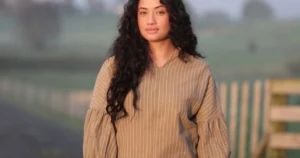


The fashion industry, a sector historically defined by human creativity and physical presence, is currently grappling with a technological shift that threatens to redefine the professional landscape for models, photographers, and stylists alike. When Sarah Murray, a veteran commercial model, first encountered an artificial intelligence (AI) model in 2023, the experience was one of exhaustion rather than awe. The image featured a young woman of color wearing a Levi’s denim overall dress—a visual that appeared flawlessly human but was entirely synthesized by digital code. This encounter marked the beginning of a broader industry-wide debate that has only intensified as major publications and global brands integrate generative AI into their core marketing strategies.
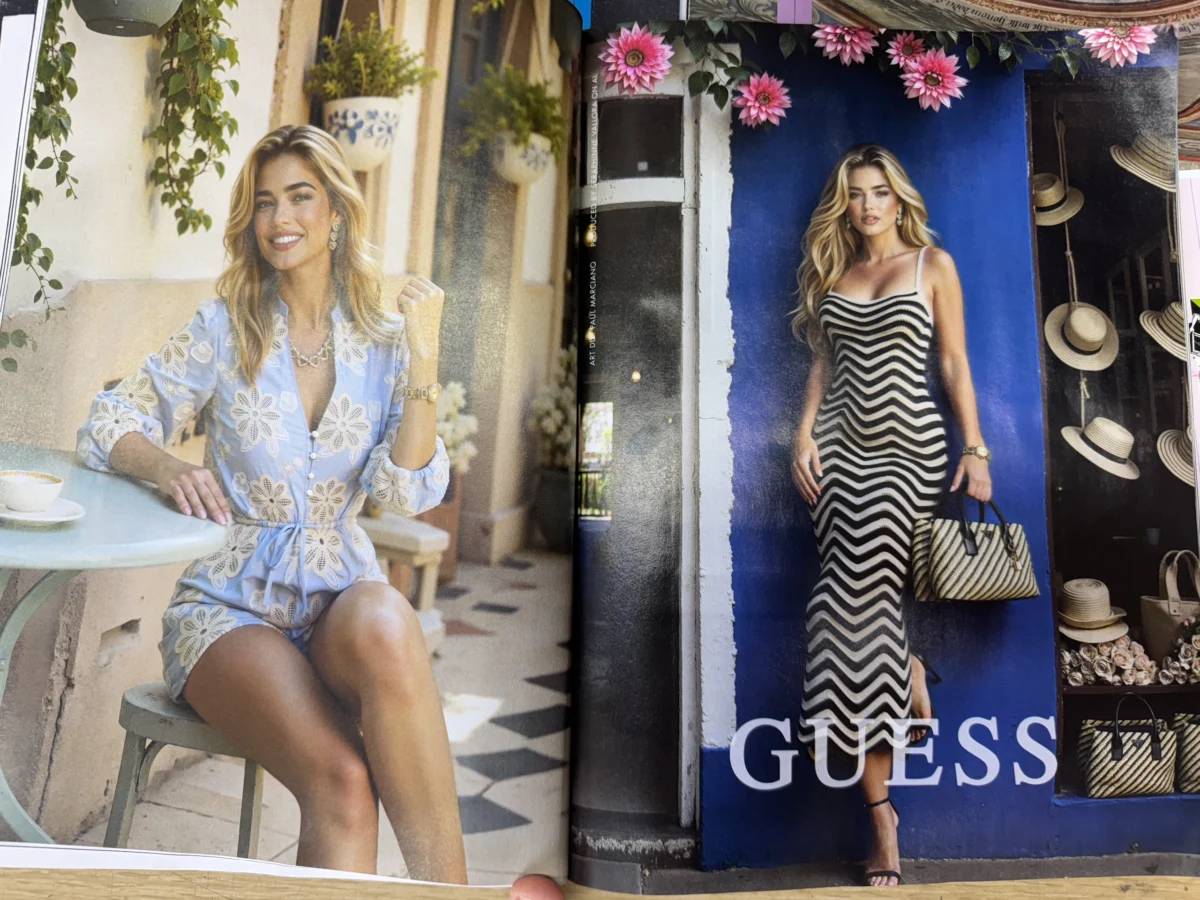
The controversy reached a new peak following the July print edition of Vogue, often considered the "fashion bible." Within its pages sat an advertisement for Guess featuring a model who embodied the brand’s traditional aesthetic: blonde, thin yet voluptuous, and possessing a symmetrical, pouty visage. The realization that this model was AI-generated sparked a digital firestorm. While the image appeared in an advertisement rather than a Vogue editorial spread, the distinction mattered little to critics. For many, Vogue’s acceptance of the ad signaled a tacit endorsement of a technology poised to automate one of the most visible roles in the creative economy.
A Chronology of the Synthetic Shift
The integration of non-human models is not a sudden phenomenon but rather the culmination of a decade-long technological evolution. As early as 2013, French retailer Veepee began utilizing virtual mannequins to showcase apparel, a move driven by the logistical challenges of photographing thousands of individual items. By 2018, virtual influencers like Lil Miquela—a CGI character with millions of followers—demonstrated that digital personas could secure high-profile brand deals and appear in prestigious publications.

However, the nature of this technology changed significantly in 2023 when Levi’s announced a partnership with Lalaland.ai. Unlike previous CGI efforts, which required manual rendering by digital artists, new generative AI tools could produce photorealistic human likenesses in seconds. Levi’s marketed the move as an effort to increase "diversity" in its advertisements, allowing customers to see clothes on models of various body types and ethnicities. The backlash was immediate. Critics, including New York Magazine, labeled the initiative "artificial diversity," arguing that the company was using technology to bypass the actual hiring of diverse human talent.
By 2024, the "experimental phase" transitioned into mainstream adoption. Brands such as H&M, Mango, and Calvin Klein have all explored AI-generated imagery. The Guess advertisement in Vogue represents the latest milestone in this timeline, suggesting that the technology has moved from e-commerce product pages to high-gloss print media.
The Economic Imperative: Scale and Efficiency
The primary driver behind the adoption of AI models is a radical shift in the volume of content required by modern brands. PJ Pereira, co-founder of the AI advertising firm Silverside AI, notes that the traditional marketing system was designed for an era when a brand might produce four major campaigns per year. In the age of TikTok, Instagram, and global e-commerce, that requirement has ballooned. Brands now find themselves needing anywhere from 400 to 400,000 unique pieces of content annually to maintain visibility and keep product listings updated.
The cost of a traditional fashion shoot is substantial. A single day of shooting involves fees for models, photographers, makeup artists, hair stylists, set designers, and catering, alongside travel expenses and studio rentals. For e-commerce specifically, where the goal is to show a garment accurately rather than to create an artistic statement, the overhead of human-led shoots is increasingly viewed as a bottleneck.

AI technologists like Paul Mouginot highlight that generative tools now allow brands to start with a "flat-lay" photo of a garment and digitally drape it over a photorealistic virtual model. These models can be placed in any setting—a Parisian street, a tropical beach, or a minimalist studio—without the brand ever leaving an office. For small to mid-sized brands, this democratization of high-end imagery offers a competitive edge that was previously financially unattainable.
The Threat to the "Bread and Butter" of Modeling
While high-fashion "supermodels" who walk the runways of Milan and Paris may remain insulated by their celebrity status, the vast majority of working models rely on e-commerce for financial stability. Sinead Bovell, a model and founder of the WAYE organization, describes e-commerce as the "bread and butter" of the profession. Unlike editorial work, which offers prestige but often low pay, e-commerce provides the consistent income that allows models to sustain their careers.
The automation of these roles presents a direct threat to the livelihood of thousands of creative professionals. Sarah Murray points out that the industry’s claim that AI is merely "supplementing" human talent feels disingenuous to those standing in casting lines. The concern is that as AI models become the standard for catalogs and online stores, the entry-level and mid-tier opportunities that allow human models to build their portfolios will vanish.
Furthermore, there are growing concerns regarding the "theft" of human likeness. Models have reported seeing new clauses in contracts that grant brands the right to use their physical data—scans of their faces and bodies—to train AI systems. This would essentially allow a brand to pay a model for a single day of work and then use their digital twin for years without further compensation or consent.

Legislative Responses and Ethical Dilemmas
In response to these labor concerns, organizations like the Model Alliance, founded by former model Sara Ziff, are advocating for legal protections. The proposed Fashion Workers Act in New York aims to regulate management agencies and require brands to obtain clear, written consent before using a model’s digital replica. The act also seeks to ensure models are fairly compensated for the use of their likeness in AI-generated content.
Beyond labor rights, the rise of AI models introduces a concept Sinead Bovell calls "robot cultural appropriation." This occurs when brands generate diverse identities—representing various races, sizes, or ages—through algorithms rather than engaging with the communities they are depicting. This "artificial inclusion" allows companies to reap the social capital of diversity without providing economic opportunities to marginalized groups within the industry.
There is also the issue of "digital perfection." AI models often feature symmetrical faces, flawless skin, and proportions that are mathematically optimized but biologically rare. Experts worry that this will exacerbate unrealistic beauty standards, creating a new "uncanny valley" of perfection that human models cannot possibly compete with, further impacting the mental health of both the models and the consumers viewing the advertisements.
The Role of the "AI Artisan"
Not all view the rise of AI as a net negative. Some creative studios are positioning themselves as "AI artisans," using the technology to solve ethical problems within the industry. Sandrine Decorde, CEO of Artcare, notes that her firm uses AI to generate images of babies and children for fashion brands. Given the historical issues of exploitation and the strict labor laws surrounding child models, Decorde argues that AI offers a more ethical way to meet the high market demand for children’s fashion photography.

These artisans argue that AI is a tool that requires human direction to be effective. Current AI outputs often suffer from homogeneity—identical jawlines, overly perfect lips, and a lack of the "charming imperfections" that make human models memorable. Creative directors must still prompt, fine-tune, and edit these images to ensure they align with a brand’s specific identity. The "human touch," they argue, is simply moving from the camera lens to the prompt window.
Broader Implications and the Future of Fashion
The reaction to the Guess ad in Vogue suggests that while the technology is ready, the public remains skeptical. PJ Pereira’s data indicates a complex consumer response: while AI-generated content often receives negative comments, it frequently sees higher engagement and click-through rates than traditional media. This "silent majority" of consumers may be driving sales even as a vocal minority protests the loss of human authenticity.
The history of fashion suggests that once a trend or technology is embraced by the industry’s elite, it quickly becomes normalized. Amy Odell, a prominent fashion biographer, draws a parallel to the industry’s initial resistance to reality stars like Kim Kardashian. Initially dismissed as "unfashionable," Kardashian eventually graced the cover of Vogue, signaling her total acceptance into the high-fashion fold. AI models may follow a similar trajectory; as the technology improves and the cost savings become undeniable, the "shock factor" will likely diminish.
However, the core value of fashion has always been human connection and the "sensual reality" of clothing. For luxury heritage brands, the move toward AI remains a calculated risk. These brands sell an aspirational lifestyle rooted in history and human craftsmanship—qualities that are difficult to replicate with "zeros and ones."

As the industry moves forward, the survival of human talent may depend on differentiation. Models are increasingly encouraged to view themselves as brands and entrepreneurs, leveraging their unique human stories and personal platforms to offer something that an algorithm cannot: a lived experience. While AI can simulate a look, it cannot yet simulate the cultural influence and emotional resonance of a human icon. The digital runway is expanding, but the battle for the soul of the fashion industry is only just beginning.