











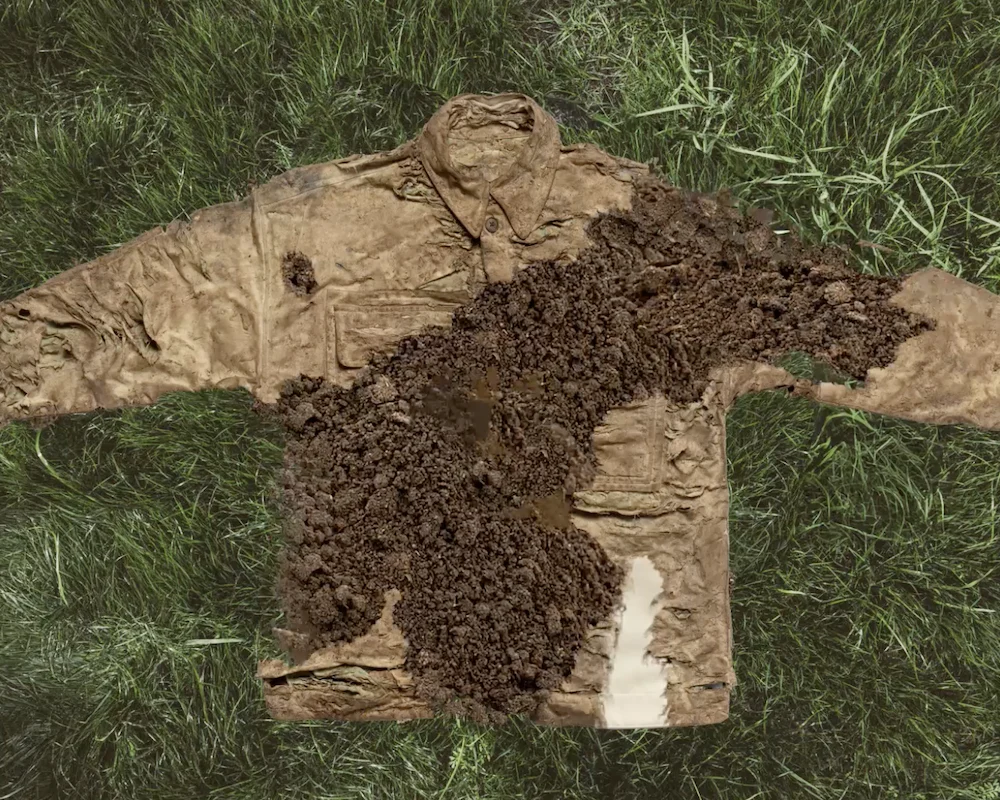
A handful of brands now promise clothes and shoes that return to the earth, with the "soilpunk" vision being undeniably seductive, but between certification gaps, consumer confusion, and the hard limits of home composting, the practical reality of compostable fashion, and where the marketing ends, is a complex landscape, as analyst and researcher Fru Bekefi details in a recent report.
The romantic ideal of a garment completing its lifecycle by enriching the very soil from which its fibers sprang is a powerful antidote to the prevailing images of textile waste overwhelming landfills across the globe. From the vast, sun-scorched plains of Chile’s Atacama Desert, where mountains of discarded fast fashion pile up, to the burgeoning waste sites in Accra, Ghana, the environmental toll of the linear fashion economy is stark. In an era increasingly defined by urgent warnings from scientists about irreversible climate tipping points, the concept of composting—an alchemical process transforming waste into value—resonates deeply, both conceptually and materially. This growing fascination has spurred a niche but significant movement within the fashion industry, with a select group of brands venturing into the realm of "compostable collections."
The Vision: From Wardrobe to Garden
Imagine a scenario where your favorite, well-loved garment, having served you through countless adventures, finally reaches the end of its wearable life. Instead of consigning it to a landfill, you simply cut it into strips and add it to your home compost bin. Over time, it naturally decomposes, transforming into nutrient-rich humus that nourishes your garden, helping flowers blossom and vegetables thrive. This comforting vision offers a tangible sense of circularity and regeneration, directly countering the eco-anxiety associated with textile pollution.
However, while this dream is compelling, the path to widespread compostable fashion is fraught with challenges. The industry remains largely dominated by fossil-fuel-derived synthetic fibers and blends, perpetuated by the relentless cycle of ultra-fast fashion and its disposable mindset. Yet, at the vanguard, a small cohort of innovative designers, material scientists, and brand pioneers are exploring what they term "soilpunk" circularity, rigorously questioning whether this aspirational vision can withstand practical scrutiny.
Understanding "Soilpunk" and Its Cultural Resonance
The term "soilpunk" describes a burgeoning movement in art, design, and culture that prioritizes soil health and regenerative agricultural practices. It reflects a broader societal shift where composting is evolving from a mundane chore into a form of cultural capital. This transformation is partly driven by legislative changes, such as mandatory food waste separation in major urban centers like New York and across France, pushing composting into mainstream consciousness. Publications like Town and Country magazine have even noted the rise of "status composting," signaling its elevated cultural standing. As concerns over biodiversity loss and food insecurity intensify, so too does our collective appreciation for soil’s life-sustaining properties, celebrated through diverse mediums ranging from art exhibitions and specialized tarot decks to unique music tracks that incorporate soil samples.
This cultural momentum provides fertile ground for compostable fashion, offering a compelling narrative of ecological responsibility. The idea that clothing can genuinely return to the earth is profoundly appealing to consumers increasingly aware of the dismal recycling rates for textiles. Design futurist and author Sarah Housley observes, "Compostable fashion is having an extended moment because consumers have become aware of low rates of recycling, particularly for textiles. They’re seeking alternatives that still feel ecologically responsible, and the idea that your clothing can return to the earth is so irresistible. It’s popular with brands for similar reasons. While recycling requires daunting systemic change—which they can influence, but only to a certain extent—compostable designs may feel a little easier to crack."
Early Adopters and Innovative Pilots
Despite slow progress in broader material innovation, some brands are embracing compostable collections to signal their commitment to regenerative practices. These initiatives often serve as "innovation halos," generating positive publicity and exploring new frontiers. For instance, the "regenerative sportswear collection" debuted by Under Armour and Unless Collective during Milan Design Week in April 2025, with its evocative tagline "Make Good Dirt," teased a future where worn-out athletic gear could simply be buried in a backyard.
Another notable example is Stella McCartney’s S-Wave sneaker upgrade, developed in collaboration with material science startup Balena. These trainers incorporate BioCir Flex soles made from cinnamon waste, providing a comforting, earthy fragrance. This multi-year project represents a significant step forward, moving beyond earlier versions that relied on recycled TPU, which hindered full circularity. The S-Wave trainers are designed to be durable and recyclable, with industrial composting via Balena’s global network serving as a last resort in their lifecycle.
Beyond full garments, biodesigners are pioneering soil-compatible solutions by working with living systems. Startup Cell Sense, founded by materials designer Aradhita Parasrampuria, tackles microplastic pollution and toxic dye impacts through compostable biodesigned embellishments. Their jade-like bioluminescent beads, for example, last 15 years but decompose in kitchen compost within four weeks. Such initiatives leverage "incentive aesthetics," a concept developed by designer Oonagh O’Hagan, which uses speculative design to visualize sustainable luxury fashion futures, fostering curiosity and desire—key drivers for behavior change. Cell Sense’s collaboration with personal care company Dulcie (formerly Haeckels) on a durable yet compostable exfoliating face cloth, framed as a limited edition experiment, allowed customers to engage with the product’s biomineral-inspired design process through detailed blog posts and social media, building loyalty and engagement.
The Complexities of Compostability: Beyond the Hype
While these initiatives are promising, the practicalities of compostable fashion are far from simple. Becca Willcox, ratings analyst at Good On You, highlights a critical issue: "The conditions in home composting systems are highly variable, in terms of temperatures, moisture levels, and the microbes that are present. Without the right conditions, textiles may take a lot longer than expected to break down, and perhaps much longer than achieved under the test conditions. The items won’t necessarily break down quickly if they are just left and forgotten about."
Material Science: The Devil in the Details
The core of compostable fashion lies in its material composition. "The most compostable fabrics are commonly known to be organic cotton, linen, kapok, hemp, organic bamboo, jute, wool and some man-made fabrics, like viscose and Lenzing Tencel," Willcox explains. However, even these natural fibers lose their compostable integrity if they are dyed with synthetic or heavy metal-based colorants, treated with chemical finishes (e.g., for water repellency or wrinkle resistance), or blended with synthetic fibers like polyester or elastane. Furthermore, the functional and decorative trims ubiquitous in modern clothing—zippers, buttons, sequins, synthetic threads, and labels—must be entirely removed before composting. This manual, labor-intensive process presents a significant hurdle for consumers and industrial facilities alike.
Distinguishing "Compostable" from "Biodegradable"
A common source of confusion for consumers is the interchangeable use of "compostable" and "biodegradable." These terms are not synonymous. Compostable materials break down into organic matter within a specific timeframe under defined conditions (either home or industrial). Biodegradation, conversely, refers to decomposition over an unspecified period, which can be much longer than expected, even for seemingly natural materials. The EU has recognized this ambiguity, prohibiting the unvalidated use of "biodegradable" in marketing, with member states like France and Belgium implementing outright bans. Research published in iScience, co-authored by Fashion Revolution co-founder Carry Somers, shockingly found that cotton accounted for over 70% of the 150-year fiber record in sediment from a UK lake fed by textile mills, demonstrating that even natural fibers can persist for extended durations in certain environments.
Asha Singhal, director of the Nature of Fashion Initiative at the Biomimicry Institute, emphasizes, "Biodegradation is not just about the material itself. It depends on the ecosystem around it, from temperature and moisture to the presence of the right microbes." This means simply labeling a product "100% cotton" does not guarantee its rapid or beneficial decomposition if tossed into an unsuitable environment.
The Infrastructure and Behavior Gap
Even with truly compostable materials, a significant infrastructure and literacy gap exists. Most consumers lack access to industrial composting facilities that can handle textiles, and home composting conditions are highly variable. The process requires specific temperatures, moisture levels, and a diverse microbial community, which are difficult to maintain consistently for textile breakdown.
Moreover, a fundamental shift in consumer behavior is required. Sarah Housley highlights this challenge: "There’s a huge amount of behaviour change for brands to engineer into place. For example, providing the envelope and label at point-of-purchase and then incentivising customers to return the product to them to dispose of professionally." This runs counter to the convenience-driven culture of modern fashion consumption.
Underwear brand Kent, with its "Compost Club," offers a compelling model for addressing this. The program, relaunching in summer 2026, allows US-based customers to purchase a shipping label and return kit for $5. After cutting up their washed briefs, they can send them to a community composting organization in Southern California, receiving a $10 credit for future purchases. This not only diverts waste but also supports local food ecosystems. Underwear, like socks, is particularly well-suited for composting due to its frequent replenishment, limited lifespan, and lack of resale or recycling value.
Footwear also presents a prime, yet complex, candidate for compostable design. An estimated 90% of the 23.8 billion pairs of shoes produced annually end up in landfill or are incinerated, primarily due to their intricate construction involving glued layers of foam, rubber, mesh, and synthetic leather, making them nearly impossible to recycle. Initiatives like Fashion For Good’s "Closing the Footwear Loop," in partnership with global brands such as Adidas and Zalando, prioritize improving product recycling but also explore bio-based polymers for soles to phase out fossil fuel-derived materials. Stella McCartney’s S-Wave trainers, with their industrial composting option through Balena, represent a significant step in this direction, though clear guidance on consumer disposal remains a challenge on the brand’s website.
Certification and Transparency: Building Trust
For compostable fashion to gain widespread acceptance, robust certification schemes are essential. However, reliable certifications for finished garments that guarantee home composting are rare and not widespread, as Good On You’s Willcox points out. While certifications like OK compost HOME by TÜV AUSTRIA and Cradle to Cradle (C2C) offer some guidance, they have limitations. TÜV’s certification often validates fibers rather than complex finished garments, and C2C, while promoting compostability for some products, acknowledges that textiles are still "most likely" to be recycled rather than composted.
Clear, consistent labeling is paramount. Housley emphasizes, "Explaining the difference between home compostable and industrially compostable is crucial, because people who haven’t gone to the effort of educating themselves will not see any difference between the two, and will think that any compostable item can go in their food waste bin when that’s not the case." Without this clarity, the risk of consumer disillusionment and accusations of greenwashing remains high.
The Future: Niche Complement or Systemic Shift?
Currently, compostable clothing remains a niche, experimental endeavor, primarily embraced by curious and committed early adopters. However, research from the University of Pennsylvania suggests that a "tipping point" of roughly 25% of a population can catalyze significant social change. These early adopters could be the catalyst for compostable fashion, provided that the underlying systems—infrastructure, certifications, and consumer education—evolve to support it.
Compostable propositions are not a universal panacea. They are best deployed strategically and intentionally, complementing, rather than replacing, existing strategies of reduction, reuse, repair, and recycling. Their greatest potential lies in specific apparel categories, such as underwear, socks, and potentially footwear, where reuse and recycling are challenging due to hygiene or material complexity. They also offer a promising avenue for replacing seductive but toxic embellishments and transforming materials that are no longer fit for their original purpose into a valuable resource.
As textile-to-textile recycling advances and becomes more commercially viable, it may divert some of the spotlight from alternative strategies like compostable design. However, the transformative power of compostable design—its ability to metamorphose an object or material through decomposition—holds unique allure. It challenges us to reimagine the end-of-life of our clothing, offering a hopeful glimpse into a regenerative fashion future where our garments could indeed return to nourish our own gardens. The journey from soilpunk dream to widespread reality is long, but the potential for meaningful environmental impact makes it a path worth pursuing.