









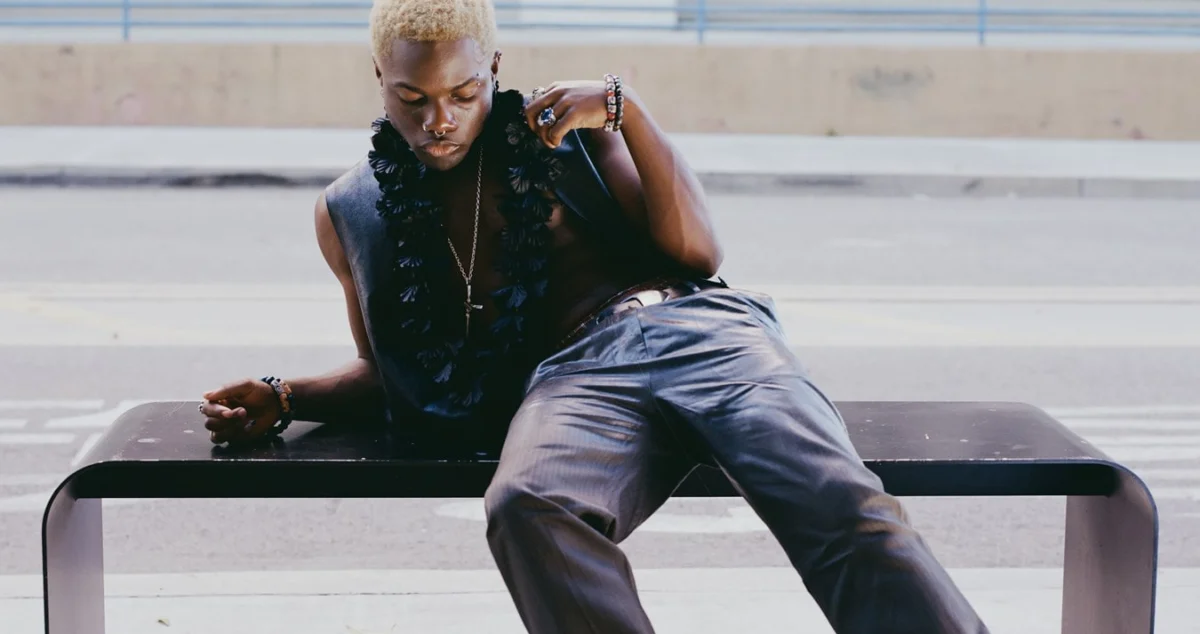
The sweltering London heatwave strained the interview connection, momentarily reducing the conversation to static as Lucy Bedroque, the rising musical force also known as Jeremiah Mark, declared their upcoming album "C" to be the "album of the year." Speaking shyly from their Los Angeles bedroom, the artist confirmed the project’s imminent release, a statement that ripples with significance given their meteoric rise in the contemporary music landscape. Bedroque’s journey from a Bronx bedroom in 2020 to global festival stages by 2026 encapsulates a paradigm shift in artist development, propelled by digital innovation, genre fluidity, and an undeniable artistic vision.
A New Era of Sound: Lucy Bedroque’s Ascent
Lucy Bedroque represents a new vanguard of artists whose careers have been forged in the crucible of internet culture and the transformative era of the early 2020s. Their rapid ascent, marked by a series of high-profile festival appearances, a successful U.S. tour, and collaborations with revered peers, speaks volumes about their unique resonance within an increasingly crowded digital ecosystem. The announcement of "C," the first installment of an ambitious three-part project, signals not just a new chapter for Bedroque but potentially a landmark moment for the genres they inhabit and influence. This trilogy, comprising the initial album "C," followed by an EP, and culminating in a final LP slated for winter, is envisioned as a synthesis of Bedroque’s diverse output, designed to bridge the gap between their burgeoning new fanbase and the "Lucy Bedroque veterans" who have championed their evolution. This strategic release plan suggests a thoughtful approach to career progression, aiming for sustained engagement rather than fleeting viral moments.
From Bedroom Beats to Global Stages: A Rapid Chronology
The foundation of Lucy Bedroque’s artistic identity was laid during a period of unprecedented global disruption. In 2020, as the world grappled with the COVID-19 pandemic, Jeremiah Mark, then an eighth-grader in the Bronx, found an unexpected creative haven in isolation. While classmates navigated the challenges of remote learning, Bedroque dedicated their time to an intense period of musical creation. "I think I was making a beat a day," they recounted, highlighting a prolific output fueled by a singular focus. This period was not merely about beat-making; it was a holistic immersion in creative expression, paralleled by an equally fervent consumption of anime and diligent drawing. This multifaceted engagement with various artistic mediums underscores a deep-seated creative impulse that transcends musical boundaries, feeding into the rich visual and thematic tapestry of their later work.
This nascent period coincided with a broader phenomenon: the rise of the bedroom producer and the democratization of music creation tools. Software like FL Studio, Ableton Live, and Logic Pro became accessible, allowing young artists to bypass traditional studio costs and industry gatekeepers. The pandemic, by confining aspiring musicians to their homes, inadvertently accelerated this trend, fostering a fertile ground for experimentation and self-production. Bedroque’s story is a testament to this shift, demonstrating how raw talent, coupled with digital literacy and relentless dedication, could bypass conventional pathways to industry entry.
Unmusique and the Digital Iceberg: Defining a New Internet Sound
Just a year prior to this interview, Bedroque released Unmusique, an album that served as their definitive statement and propelled them significantly up the "increasingly complex iceberg of internet music culture." The project, anchored by breakout tracks such as "2010 Justin Bieber" and "Yes, You May," introduced a broader audience to Bedroque’s distinctive sonic palette. This sound is a vibrant, often jarring, confluence of "blown-out 808s, emo-rap, and fragmented shards of digicore and rage." These elements, while distinct, converge to form a cohesive, yet challenging, auditory experience that reflects the chaotic and hyper-connected nature of online existence.

Unmusique‘s critical and popular reception exceeded Bedroque’s own expectations. "The project actually aged well in a way I didn’t think it would," they admitted, reflecting on its unexpected longevity. In an era where digital content often has an ephemeral lifespan, the sustained relevance of Unmusique speaks to its inherent quality and the timely capture of a burgeoning cultural zeitgeist. The album’s success is a microcosm of the larger movement of hyperpop, digicore, and rage music—genres that have flourished online, often characterized by their experimental sound design, genre-bending tendencies, and strong ties to internet aesthetics and meme culture. These genres frequently leverage distorted vocals, heavy basslines, and often a melancholic or aggressive lyrical undertone, resonating deeply with a digitally native generation.
Following Unmusique‘s release, Bedroque embarked on an extraordinary period of professional achievements. A comprehensive U.S. tour saw them performing across various cities, while coveted festival slots placed them alongside established and emerging acts. Notably, they opened for artists like Jane Remover, a prominent figure in the rage and hyperpop scene, and Ninajirachi, an acclaimed EDM producer. These collaborations and support slots not only expanded Bedroque’s reach but also solidified their standing within the avant-garde electronic and hip-hop communities. Their appearance at the prestigious Rolling Loud Festival, a premier event for hip-hop and rap, further underscored their rising profile. Dressed in a custom Chrome Hearts fit, Bedroque shared the lineup with heavyweights such as OSAMASON, CHE, and Ken Carson, a clear indication of their crossover appeal and acceptance within the mainstream-adjacent rap circuit. A backstage group shot from the festival, featuring Bedroque alongside other scene luminaries, swiftly went viral across niche meme pages, illustrating the symbiotic relationship between music, fashion, and social media in cultivating modern artistry.
Navigating the Limelight: Fan Engagement and Public Identity
The rapid escalation of Bedroque’s visibility has naturally brought new challenges, particularly concerning fan interaction and the management of a growing public persona. The transition from a smaller, more intimate fan circle to a much larger, more diverse audience has necessitated a re-evaluation of how they engage with their supporters. "I think I now interact with fans very differently from how I used to," Bedroque explained. "There was a lot more grace back then, because it was a much smaller circle of people. I’m trying to gauge what makes sense to respond to and what doesn’t." This introspection is particularly poignant for an artist who recently celebrated their 20th birthday, underscoring the immense pressure and learning curve associated with burgeoning fame at a young age. The digital age, while providing unparalleled access for artists to connect with fans, also presents a relentless demand for constant engagement, blurring the lines between private and public life. Managing this delicate balance is a crucial aspect of sustained career development for any artist emerging from the internet’s depths.
When it comes to classifying their own sound, Bedroque displays a similar sense of cautious humility. Despite a burgeoning career that has already spanned six years since their initial foray into beat-making, they consider this period as "very rookie numbers." This self-assessment reflects a deep commitment to artistic growth and a recognition of the long road ahead in establishing a lasting legacy. "I feel like I’d need at least another five or six to even think about having some kind of label. I feel like I haven’t done enough to give myself a title," they asserted. This resistance to pigeonholing is characteristic of many contemporary artists who thrive on genre fluidity, eschewing rigid definitions in favor of continuous experimentation. However, when pressed for a definitive descriptor, Bedroque ultimately lands on a foundational truth: "At best, I just say it all leads back to hip hop." This statement is not merely a classification but an acknowledgement of hip-hop’s pervasive influence as a cultural and sonic bedrock for countless modern genres, including those that Bedroque masterfully blends.
Genre Agnostic, Hip-Hop Rooted: Deconstructing Bedroque’s Sonic Signature
The statement "it all leads back to hip hop" offers a critical lens through which to understand Bedroque’s eclectic sound. Hip-hop, as a genre, has historically been a crucible for innovation, absorbing and transforming elements from jazz, soul, funk, electronic music, and rock. Bedroque’s work exemplifies this ongoing evolution, using hip-hop’s rhythmic foundation and lyrical directness as a springboard for exploring more experimental territories. The "blown-out 808s" are a direct nod to trap and Southern hip-hop, while "emo-rap" connects to the melodic sensibilities and introspective lyrics popularized by artists like Lil Peep and Juice WRLD. The "fragmented shards of digicore and rage" push these boundaries further, incorporating the glitchy, high-energy aesthetics of digital-native music movements that often fuse electronic, punk, and rap elements.
Digicore, for instance, is a microgenre that emerged from online communities, characterized by its lo-fi production, experimental electronic sounds, and often hyper-personal or abstract lyrics. Rage music, a more aggressive and chaotic offshoot, draws heavily from trap and electronic dance music, emphasizing distorted synths and booming basslines to create an intense, almost cathartic, sonic experience. Bedroque’s ability to weave these disparate threads into a coherent, compelling narrative showcases not only their technical prowess but also a deep understanding of the contemporary youth soundscape. This genre-agnostic approach, while rooted in hip-hop, allows Bedroque to continually innovate and appeal to a broad demographic that values authenticity and artistic boundary-pushing.
Visual Narratives and Collaborative Horizons: Beyond the Music

Beyond their sonic explorations, Lucy Bedroque’s artistic vision is profoundly shaped by their visual influences, tracing back to an early immersion in television and the nascent internet culture. "I wasn’t allowed to watch TV past 9pm," they recounted with a laugh, recalling the formative impact of shows like Pokémon, Digimon, and Dragon Ball Z. These animated series, rich in imaginative worlds, complex narratives, and distinctive aesthetics, undoubtedly contributed to a sensibility that values detailed world-building and vibrant visual storytelling. This early exposure to serialized fiction and fantastical imagery found a new home in "the nerdy side of the internet," where Bedroque "nailed [their] interest and figured out what I like." This suggests a conscious cultivation of a distinct aesthetic, one that blends nostalgic pop culture with contemporary digital sensibilities, creating a visual identity that is as compelling and multifaceted as their music.
Bedroque’s early musical fandom, meanwhile, was shaped by a different set of influences, revealing a surprising breadth of taste. "I was listening to a lot of nu metal and alternative metal when I was in fifth grade," they revealed, citing bands like My Chemical Romance and System of a Down. This foundation in aggressive, emotionally charged rock music provides a crucial context for the raw energy and often melancholic undertones found in their later work. The subsequent "dive…into the SoundCloud scene" marked a pivotal transition, opening up a "whole rabbit hole of artists" and exposing them to the burgeoning world of independent, experimental digital music. This journey from mainstream rock to the avant-garde edges of online music mirrors the trajectory of many Gen Z artists who blend diverse influences into something entirely new.
Despite their quiet demeanor, Bedroque actively embraces collaboration, viewing it as an essential part of their creative process. Their existing collaborations with peers such as Kuru, Jane Remover, and Slayr highlight a willingness to engage with other innovative artists and expand their sonic vocabulary. Looking ahead, Bedroque expresses a clear desire to work with members of the Sad Boys / Drain Gang collective, specifically naming Ecco2k as "one of my favorite artists of this generation." This aspiration is significant; both Sad Boys and Drain Gang are highly influential Swedish collectives known for their ethereal, melancholic cloud rap and experimental electronic sounds, often accompanied by unique fashion aesthetics. A collaboration with such artists would not only further diversify Bedroque’s sound but also solidify their position within a globally recognized vanguard of internet-native music.
The Road Ahead: A Trilogy Unveiled
For an artist who repeatedly emphasizes being "still figuring things out," Lucy Bedroque possesses a remarkable clarity regarding their immediate future. The upcoming trilogy—beginning with "C," followed by an EP, and culminating in a final LP this winter—is a testament to this focused vision. "It’s a trilogy type project," Bedroque stated, outlining a structured and ambitious release schedule. The initial album, "C," is described as a comprehensive blend of Bedroque’s previous work, aiming to serve as a bridge for both new listeners and the established "Lucy Bedroque veterans." This approach suggests a desire to consolidate their artistic identity while simultaneously pushing forward, ensuring that their evolving sound remains accessible and engaging to their entire fanbase.
The strategic release of a trilogy allows Bedroque to explore different facets of their artistry over an extended period, offering listeners a deeper dive into their creative world. This multi-part narrative structure is a bold move, promising a rich and evolving listening experience that can adapt to their ongoing artistic development. In an industry often driven by single-track virality, Bedroque’s commitment to a sustained, conceptual project signals a dedication to album-oriented artistry, a move that could carve out a more enduring legacy.
Broader Implications: The Future of Music and Digital Artistry
Lucy Bedroque’s journey offers profound insights into the broader implications for the music industry and the trajectory of digital artistry. Their rise exemplifies the power of the internet as a democratizing force, enabling artists from anywhere to bypass traditional industry structures and connect directly with a global audience. The pandemic acted as an accelerant, forcing a re-evaluation of how music is created, distributed, and consumed, making bedroom studios and online collaborations the norm rather than the exception. This shift has not only lowered barriers to entry but also fostered an environment where genre boundaries are increasingly fluid, leading to innovative fusions like Bedroque’s unique blend of hip-hop, emo-rap, digicore, and rage.
The challenges Bedroque faces regarding fan interaction and self-classification are also indicative of the contemporary artist’s dilemma. Rapid fame, especially through digital platforms, can be overwhelming, necessitating a constant negotiation of public and private spheres. However, their thoughtful approach to these challenges, combined with an unwavering commitment to artistic evolution, positions them as a compelling figure in the ongoing narrative of music. Lucy Bedroque’s story is not just about an individual artist’s success; it is a vivid illustration of how the future of music is being shaped by digital natives who are unconstrained by convention, driven by boundless creativity, and profoundly connected to the ever-shifting currents of internet culture. As "C" and its subsequent installments prepare to launch, the music world watches with anticipation, ready to witness the next chapter in the unfolding legacy of an artist who truly embodies the spirit of a new musical era.