






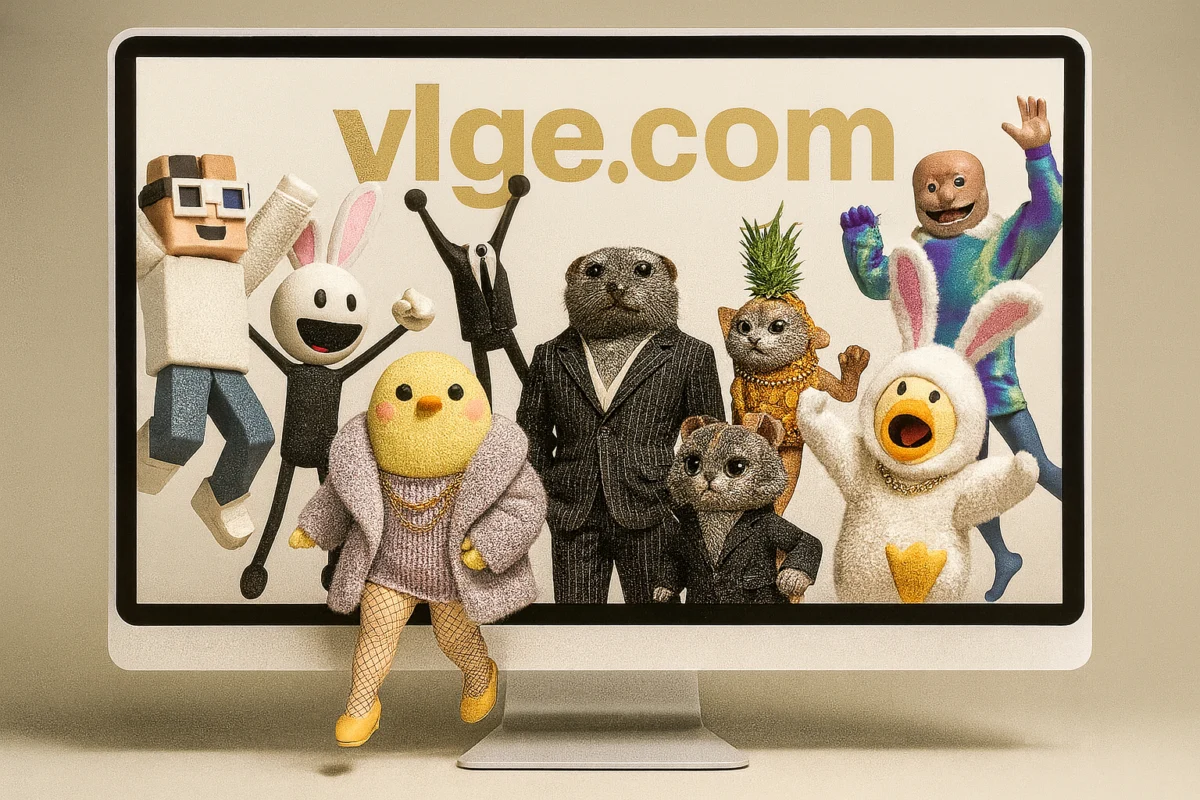
The intersection of high fashion and immersive digital environments has reached a significant milestone with the announcement that VLGE, a gaming and immersive-world-building platform, will power the launch of 50 shoppable brand worlds for the inaugural World Fashion Week. Founded by entrepreneur Evelyn Mora in 2021, VLGE is positioning itself as the primary infrastructure for brands seeking to transition from traditional marketing to interactive, gamified commerce. By providing a no-code solution that allows brands to build and export immersive environments to platforms like Roblox, VLGE is addressing a critical gap in the market: the high technical and financial barriers to entry for the "metaverse" and digital-first retail.
The initiative, World Fashion Week, serves as a large-scale demonstration of VLGE’s capabilities. It acts as a bridge for creators and established fashion houses to launch shoppable games on mainstream platforms, starting with Roblox. This move signals a shift in how the fashion industry perceives consumer engagement, moving away from the ephemeral nature of physical runway shows and towards persistent, interactive digital experiences tailored for Generation Z. With $5 million in capital raised from high-profile investors, including Lammot J. du Pont, the L’Oréal Group, and the British Fashion Council, VLGE is backed by both traditional finance and the core institutions of the global beauty and fashion industries.
The Evolution from Sustainability to Digital Infrastructure
The origins of VLGE are rooted in Evelyn Mora’s early career as a consultant and organizer within the fashion industry. During her tenure, Mora observed a recurring paradox: while many designers expressed a deep commitment to sustainability, the logistics of staging large-scale fashion shows remained inherently environmentally damaging. The carbon footprint associated with international travel, the construction of temporary sets, and the production of physical samples often negated a brand’s sustainability claims.
Mora’s initial foray into solving this issue involved the creation of digital-first initiatives, but she soon realized that the industry lacked the technical infrastructure to make these digital transitions scalable. In 2021, she launched VLGE to provide that missing link. The platform was designed not just as a creative tool, but as a commercial engine that allows brands to build their own "worlds," fill them with interactive content, and, crucially, make them shoppable. This evolution reflects a broader trend in the luxury sector where brands are seeking "always-on" digital presences that offer more longevity than a 15-minute runway show or a seasonal film campaign.
Breaking Technical Barriers: The Roblox Frontier
A central component of VLGE’s value proposition is its focus on Roblox. Despite being one of the most powerful "youth frontiers" in the world, with over 70 million daily active users, Roblox has historically been difficult for fashion brands to navigate. Building a high-quality, custom world on the platform typically requires specialized knowledge of Luau (Roblox’s coding language) and can cost a brand anywhere from $10,000 to over $100,000 when hiring external agencies. Furthermore, the development cycle can span several months, making it difficult for brands to align digital launches with fast-moving fashion cycles.
VLGE addresses these pain points by offering an "instant" and "interoperable" solution. The platform allows users to build across browsers in real-time, requiring no substantive background in technology or coding. Once a world is created on VLGE, it can be exported to Roblox immediately. According to Mora, this democratization of world-building is essential for making digital fashion scalable. By reducing the cost and complexity, VLGE enables not only luxury giants like Lancôme and Charlotte Tilbury—both of whom have already worked with the platform—but also emerging designers to establish a presence in the gaming space.
Beyond Roblox, VLGE is expanding its technical reach. The platform is currently compatible with Unreal Engine, the high-fidelity graphics engine used in AAA gaming and film production, and is actively developing compatibility with Meta’s Horizon Worlds. This interoperability ensures that brands are not locked into a single ecosystem, allowing their digital assets and environments to follow their audience across different virtual spaces.
Economic Data and the Shift Toward Gamified Commerce
The launch of World Fashion Week comes at a time when the economic potential of digital fashion is becoming impossible for the industry to ignore. Market research indicates that the global digital fashion market is projected to grow at a compound annual growth rate (CAGR) of over 25% through 2030. For younger demographics, digital identity is often as significant as physical identity. A recent study by Roblox found that half of Gen Z users prioritize their avatar’s fashion as much as their own real-life style, with many willing to spend real currency on limited-edition digital "skins" and accessories.
VLGE’s business model is designed to capture this market through a four-tiered payment structure:

- Freemium: Allowing independent creators to experiment with basic world-building tools.
- Creator Tier: Targeted at professional digital artists and influencers.
- Small Business Tier: Designed for emerging fashion labels looking to establish a digital footprint.
- Enterprise Tier: A comprehensive solution for global brands requiring high-scale activations and custom integrations.
This tiered approach allows VLGE to act as a funnel for the entire industry, from grassroots creators to multi-billion-dollar conglomerates. The platform’s upcoming "e-tail" store further bridges the gap between the physical and digital. The store will sell physical items from emerging brands alongside 3D assets that can be exported into Roblox, creating a "phygital" retail experience where a consumer can purchase a hoodie for themselves and a matching digital version for their avatar simultaneously.
World Fashion Week: A New Industry Standard
The announcement of 50 brands participating in World Fashion Week represents VLGE’s first large-scale activation. This event is intended to prove the stability and scalability of the platform’s real-time building capabilities. Unlike traditional fashion weeks, which are exclusive and geographically tethered to cities like Paris, Milan, and New York, World Fashion Week is globally accessible and interactive.
The participating brands will utilize VLGE to create "shoppable worlds." These are not merely digital catalogs but gamified environments where users can complete challenges, interact with brand ambassadors (in the form of NPCs or live performers), and purchase items within the flow of the game. This shift from "passive viewing" to "active participation" is the cornerstone of VLGE’s philosophy. Industry analysts suggest that this high-engagement model leads to better brand recall and higher conversion rates compared to traditional e-commerce interfaces.
The involvement of Vogue Scandinavia as a previous partner highlights the editorial and cultural weight being thrown behind these digital transitions. It suggests that the gatekeepers of fashion culture are recognizing that the future of the "front row" may increasingly be found in digital headsets and on mobile screens.
Broader Implications for the Fashion Ecosystem
The rise of platforms like VLGE suggests a fundamental restructuring of the fashion industry’s marketing and distribution pipelines. As the infrastructure for digital world-building becomes more accessible, the "barrier to fame" for new designers may shift from having the capital to stage a physical show to having the creativity to build a compelling digital experience.
Furthermore, the environmental implications are profound. By shifting a portion of consumer engagement to digital worlds, the industry can reduce the need for physical samples and international press travel. While digital infrastructure has its own energy requirements, the efficiency of a single digital asset that can be "worn" by millions of users far exceeds the sustainability profile of mass-produced physical garments.
However, the transition is not without challenges. The concept of "interoperability"—the ability to move a digital item from Roblox to Meta to Unreal Engine seamlessly—remains a technical hurdle for the industry at large. VLGE’s focus on bridging these gaps is a step toward a unified "metaverse" commerce standard, but it requires cooperation between competing tech giants.
Conclusion: The Infrastructure of the Next Generation
Evelyn Mora’s vision for VLGE extends beyond simple gaming. She views the platform as the essential infrastructure for the next generation of commerce. As digital and physical realities continue to blur, the brands that succeed will be those that can navigate both with equal fluency.
The $5 million in funding and the launch of World Fashion Week mark the beginning of a new chapter where fashion is defined not just by fabric and silhouette, but by code and community. By making the tools of world-building instant and affordable, VLGE is moving the industry toward a future where every brand, regardless of size, can own a piece of the digital frontier. The success of the 50 brands participating in this initial activation will likely serve as a bellwether for the rest of the industry, determining how quickly the luxury world fully embraces the gamified future of retail.