

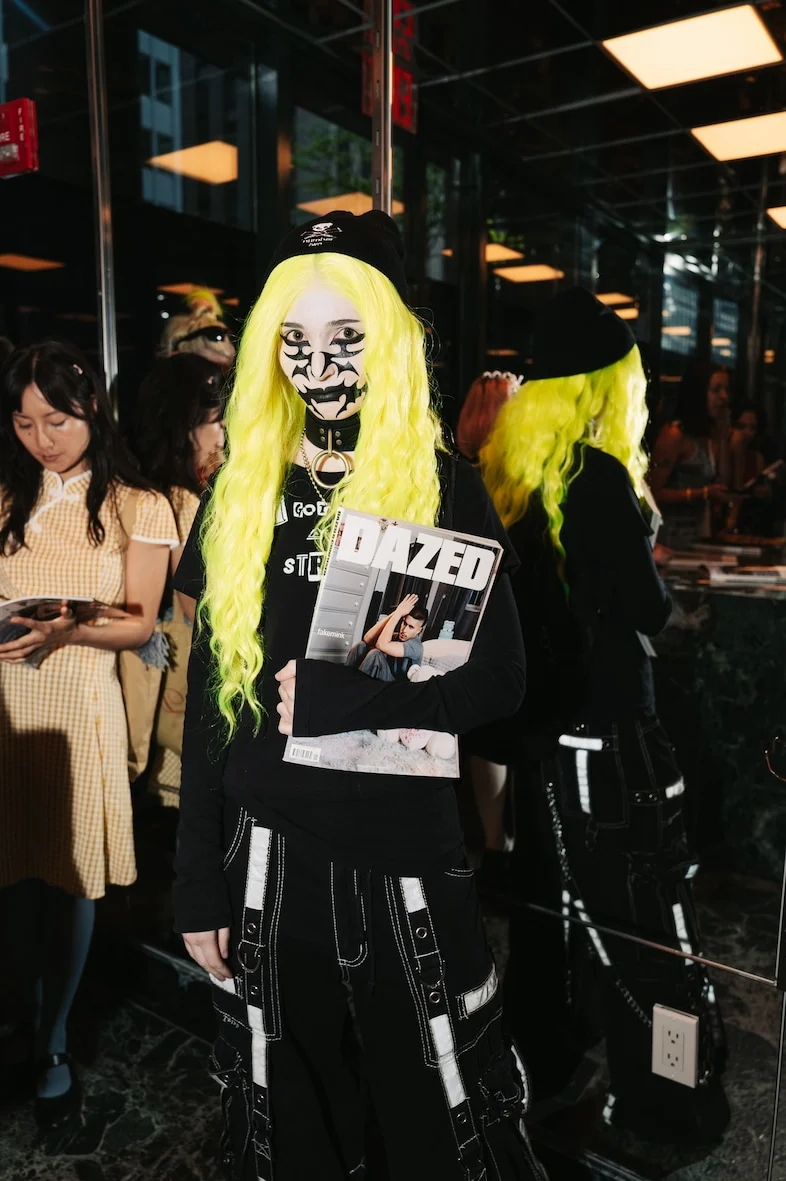
On Tuesday, March 5, amidst the unseasonably mild conditions of a nascent spring evening, dozens of Dazed Club members and their associates converged upon the WSA building in downtown New York, eager to acquire complimentary copies of Dazed’s latest offering, the "Culture Clash" issue. This event marked a significant milestone for the globally recognized publication, representing its inaugural magazine distribution event hosted within New York City. The Dazed community responded with palpable enthusiasm, manifesting in a vibrant turnout of attendees impeccably styled, underscoring the cultural cachet and devoted readership the brand commands, all vying for the opportunity to secure the fresh edition. The rapid depletion of available copies, occurring in less than sixty minutes, underscored the substantial demand and successful execution of this direct-to-reader engagement strategy, highlighting the enduring appeal of physical print in a predominantly digital media landscape.
Dazed Magazine’s Global Footprint and NYC Expansion
Dazed, originally launched in London in 1991 as Dazed & Confused by Jefferson Hack and Rankin, has evolved into a formidable international media entity renowned for its fearless exploration of fashion, music, art, and youth culture. For over three decades, Dazed has consistently pushed boundaries, providing a platform for emerging talent and challenging conventional norms. Its editorial vision is characterized by a commitment to originality, often featuring avant-garde fashion editorials, in-depth interviews with cultural provocateurs, and critical analyses of contemporary societal shifts. The publication’s influence extends beyond print, encompassing a robust digital presence, video content, and a global network of creative collaborators.
The decision to host its first New York City magazine drop signals a strategic reinforcement of Dazed’s presence in the United States, particularly within a metropolis widely recognized as a global capital of fashion, art, and music. While Dazed has long maintained an international readership and digital engagement in the US, a physical event of this nature serves to tangibly connect with its American audience, cultivate a localized community, and reinforce its brand identity within a key market. Industry analysts suggest that such direct engagement initiatives are crucial for legacy publications aiming to maintain relevance and foster loyalty among younger demographics who often prioritize authentic, experiential interactions over traditional media consumption. New York City, with its diverse cultural tapestry and status as a trendsetter, provides an ideal backdrop for Dazed to amplify its distinctive voice and expand its cultural footprint.
Thematic Depth of the "Culture Clash" Issue
The "Culture Clash" issue, central to the evening’s proceedings, lives up to its evocative title by presenting a multifaceted exploration of contemporary cultural intersections and juxtapositions. The editorial content delves into a wide array of artistic genres, geographical influences, and societal dynamics, reflecting a world increasingly defined by fluid boundaries and cross-pollination. This thematic breadth is immediately evident in its selection of cover stars, a curated ensemble designed to embody the very essence of cultural synthesis: fakemink, 2hollis, Lil Uzi Vert, Oklou, and beabadoobee.
Each cover star represents a distinct facet of this "clash" narrative. Lil Uzi Vert, a titan of contemporary hip-hop and trap, personifies genre-bending innovation within mainstream music, constantly evolving his sound and aesthetic. Beabadoobee brings an indie-pop sensibility, blending nostalgic lo-fi aesthetics with a modern emotional resonance, resonating with a global youth audience. Oklou, a French electronic artist, pushes the boundaries of experimental pop, creating ethereal soundscapes that defy easy categorization. Fakemink and 2hollis, often associated with the burgeoning underground and hyperpop scenes, exemplify the rapid evolution of digital-native music, where influences are drawn from myriad sources and genre conventions are fluidly disregarded. Together, these artists illustrate Dazed’s commitment to showcasing the diverse, often unexpected, pathways of modern artistic expression.
Beyond individual artists, the issue’s reporting spans continents and cultural phenomena. It transports readers from the vibrant, pulsating energy of Rio de Janeiro’s baile funk scene – a genre deeply rooted in Brazilian favela culture that has gained international recognition – to the burgeoning landscape of Korea’s underground rap community, highlighting the global reach and localized adaptations of hip-hop culture. These narratives underscore how local cultural expressions can transcend geographical confines and contribute to a broader global dialogue. Expanding beyond music, the "Culture Clash" theme is also explored through the lens of technological advancement and its impact on human existence. A poignant photo story confronts the intricate relationship between humanity and technology, featuring model Angelina Kendall alongside the advanced humanoid robot HMND Alpha. This segment provokes contemplation on the evolving definitions of identity, interaction, and even consciousness in an increasingly technologically mediated world, aligning with Dazed’s consistent engagement with cutting-edge cultural discourse.
Chronology of an Engaging Evening
The event on March 5 unfolded with a well-orchestrated flow, demonstrating Dazed’s meticulous planning for its inaugural New York magazine drop. Preparations began weeks prior, with targeted announcements disseminated across Dazed’s extensive digital platforms, including its website, Instagram, and X (formerly Twitter) accounts, generating significant anticipation among its established readership and the broader cultural community. The call to action was clear: an opportunity for Dazed Club members and friends to secure a complimentary copy of the coveted "Culture Clash" issue and engage directly with the Dazed brand.
By late afternoon on Tuesday, March 5, a queue had already begun to form outside the designated WSA building, a testament to the community’s eagerness. As the evening progressed and the designated distribution time approached, the line swelled significantly, stretching down the block. Attendees, many of whom had curated their outfits to reflect Dazed’s signature aesthetic—a blend of avant-garde fashion, streetwear, and individualistic expression—contributed to a visually stimulating atmosphere. The air buzzed with conversation and excitement, reflecting a shared enthusiasm for alternative culture and fashion.
Upon gaining entry, attendees were promptly directed to the distribution points where copies of the "Culture Clash" issue were being handed out. The demand was so substantial that the entire allocation of magazines—estimated to be several hundred copies—was claimed in under an hour. This rapid distribution underscores the high level of engagement Dazed commands and the enduring value placed on physical media by its dedicated audience, particularly when offered as an exclusive, complimentary item.
Following the magazine acquisition, the event transitioned into a vital networking and community-building phase. Attendees were provided with opportunities to interact with fellow Dazed readers, fostering connections within a like-minded cultural cohort. This social dimension is a cornerstone of Dazed’s community strategy, recognizing that shared interests in fashion, music, and art often lead to valuable personal and professional relationships. Members of the Dazed US team were also present, engaging directly with readers, gathering feedback, and reinforcing the brand’s commitment to its audience. This direct interaction helps humanize the publication and strengthen reader affinity.
A notable presence at the event was Kyle Luu, the esteemed stylist responsible for the creative direction of the "Culture Clash" issue’s cover stories. Luu, celebrated for her innovative approach to fashion and her work with high-profile artists and brands, spent a considerable portion of the evening signing copies of the magazine. Beyond mere autographs, Luu engaged in brief, insightful conversations with attendees, sharing anecdotes and perspectives from her extensive experience in the fashion industry. Her presence provided a unique, behind-the-scenes glimpse into the creative process, offering aspiring stylists, photographers, and creatives invaluable direct access to an industry luminary. Her engagement further enriched the attendee experience, moving beyond a simple handout to a genuine interaction with the creators behind the content.
The Enduring Appeal of Print in a Digital Age
The overwhelming success of Dazed’s New York magazine drop provides compelling evidence for the continued relevance and strategic importance of physical print publications, even in an era dominated by digital content. While the broader print media industry has faced significant challenges, including declining advertising revenues and shifting consumption habits, niche publications like Dazed have demonstrated resilience by cultivating dedicated communities and offering unique value propositions.
For Dazed, a physical magazine serves multiple purposes. It is a tangible artifact that embodies the brand’s aesthetic and editorial vision, offering a curated experience that differs fundamentally from scrolling through digital feeds. The act of holding a Dazed magazine, appreciating its design, photography, and tactile quality, becomes part of a ritualistic engagement for its readership. Furthermore, events like the New York drop leverage the physical product as a powerful tool for experiential marketing. By offering the magazine for free and facilitating direct interaction, Dazed transforms a mere transaction into a memorable brand experience. This strategy not only rewards existing loyal readers but also serves as an effective outreach mechanism to attract new audiences who may be drawn to the community aspect and the perceived exclusivity of the event. The rapid depletion of copies suggests that for specific demographics, especially those invested in fashion and culture, the allure of a physical, collectible item remains potent.
Strategic Impact and Future Outlook
The New York "Culture Clash" issue launch has several significant implications for Dazed and the broader media landscape. For Dazed, it represents a highly successful activation that reinforces its brand presence in a crucial market, demonstrates its capacity for effective community engagement, and validates its strategic investment in experiential marketing. The enthusiastic turnout and swift distribution of magazines underscore a strong and dedicated US readership, providing valuable data points for future expansion and localized content strategies. The event also generated considerable organic social media buzz, amplifying the reach of the "Culture Clash" issue beyond the immediate attendees and contributing to broader brand visibility.
From an industry perspective, the event highlights the enduring power of niche publications that deeply understand and cater to their target audiences. In an era of content overload, authenticity and community building are increasingly valuable currencies. Dazed’s ability to mobilize its "Clubbers" and draw such a significant crowd for a print magazine distribution speaks to its strong brand equity and its role as a cultural arbiter for a specific demographic. This success may encourage other publications to explore similar direct-to-consumer engagement models, leveraging physical products and experiential events to foster deeper connections with their audiences.
Looking forward, the success of this New York event is likely to inform Dazed’s future strategic initiatives in the US. It could pave the way for more localized events, collaborations with New York-based artists and designers, and a deeper integration into the city’s vibrant cultural scene. A spokesperson for Dazed US, speaking on background, indicated that the response has been overwhelmingly positive and validated their approach to community engagement, hinting at potential future activations that build on this momentum. The event not only distributed a magazine but also solidified Dazed’s position as a dynamic, community-driven force in the evolving global media landscape, proving that even in the digital age, a well-crafted physical product and a strong sense of community can generate unparalleled excitement and loyalty. The Dazed Club, as a community-building initiative, is central to this strategy, providing a framework for consistent engagement and fostering a sense of belonging among its members. The energy of the evening was a clear indication that Dazed’s unique blend of high fashion, cutting-edge music, and critical cultural commentary continues to resonate profoundly with a passionate, engaged audience.