







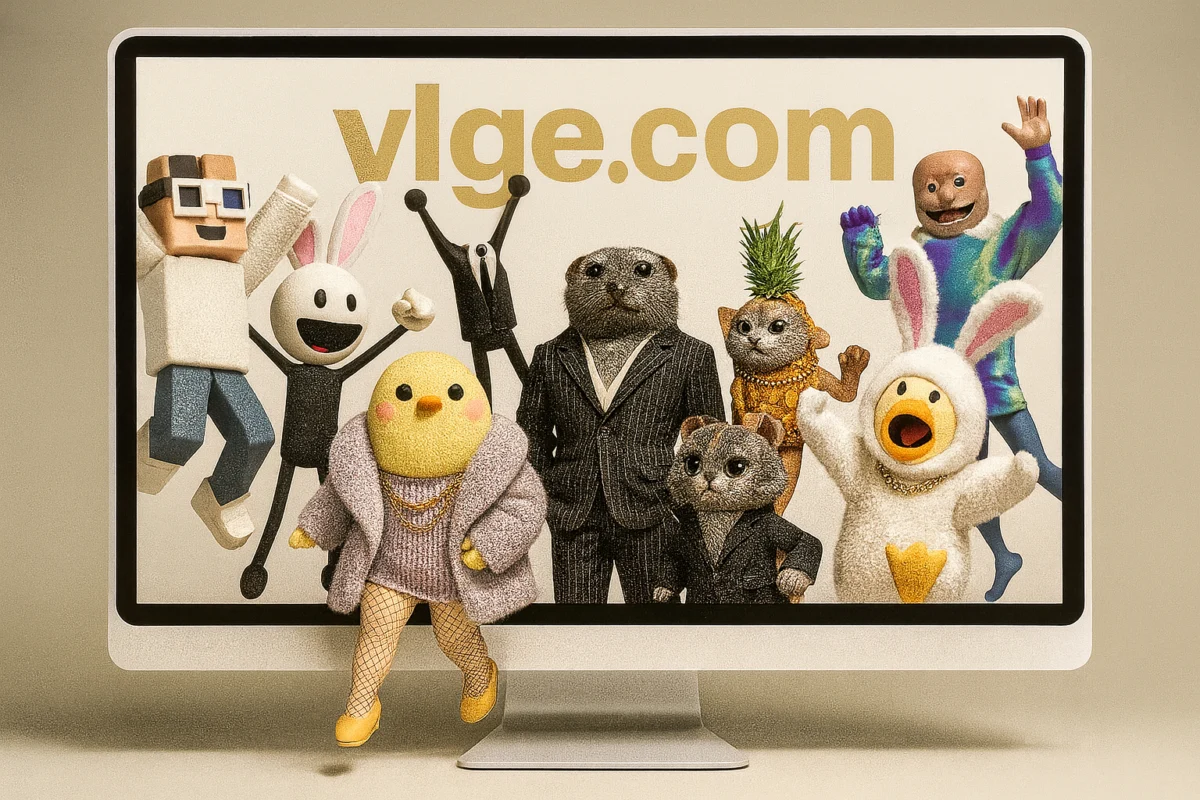
The landscape of global fashion is undergoing a fundamental transformation as the industry pivots from the traditional, resource-intensive spectacle of physical runway shows toward immersive, digital-first experiences. At the center of this shift is VLGE, a pioneering gaming and immersive-world-building platform that has announced a major expansion of its ecosystem. On Thursday, the company revealed that 50 fashion brands are set to launch dedicated, shoppable virtual worlds as part of the upcoming World Fashion Week. This initiative, powered entirely by VLGE’s proprietary technology, serves as a critical bridge for creators and heritage brands alike, allowing them to deploy interactive, gamified storefronts across major gaming platforms, most notably Roblox.
Founded in 2021 by Evelyn Mora, VLGE emerged from a specific frustration within the high-fashion sector. Early in her career, Mora observed a disconnect between the industry’s growing commitment to sustainability and the inherent environmental cost of large-scale fashion events. While designers were increasingly focused on ethical sourcing and eco-friendly textiles, the logistical requirements of international fashion weeks—involving global travel, massive temporary constructions, and short-lived physical installations—remained stubbornly carbon-intensive. VLGE was conceived as the solution to this paradox, offering a platform where brands could build interactive environments that foster deep engagement with younger demographics without the ecological footprint of a traditional campaign.
The Evolution of World Fashion Week and the Digital Runway
The upcoming World Fashion Week represents the first large-scale activation for VLGE, marking a significant milestone in the company’s trajectory. The event is designed to showcase the platform’s real-time building capabilities, allowing users to construct complex environments across web browsers and export them directly to Roblox. This interoperability is a cornerstone of VLGE’s value proposition. By focusing on Roblox, a platform that boasts over 70 million daily active users, Mora is positioning VLGE at the intersection of social gaming and retail.
Historically, entering the Roblox ecosystem has been a prohibitive endeavor for most fashion labels. Building a custom "world" or "experience" on the platform typically requires specialized knowledge of Luau (Roblox’s coding language) and can cost anywhere from $10,000 to over $100,000 when outsourced to technical agencies. Furthermore, the development cycle for such projects often spans several months. VLGE effectively democratizes this access. Its no-code interface allows brands to launch shoppable games instantly and affordably, bypassing the technical and financial barriers that have previously kept mid-sized and emerging designers out of the metaverse.
The 50 brands participating in World Fashion Week will utilize these tools to create "shoppable worlds." Unlike traditional e-commerce sites, which are static and transactional, these virtual environments allow users to interact with the brand’s narrative, participate in mini-games, and view 3D representations of garments before making a purchase. This shift toward "gamified commerce" reflects a broader trend in the retail sector, where the goal is no longer just to sell a product, but to provide a cultural experience that resonates with Gen Z and Gen Alpha consumers.
Strategic Funding and Institutional Support
The momentum behind VLGE is supported by significant financial backing and endorsements from some of the most influential names in both tech and fashion. To date, the company has raised $5 million in capital. The investor pool is a testament to the platform’s cross-industry appeal, featuring Lammot J. du Pont of the legendary du Pont family, the L’Oréal Group, and the British Fashion Council.
The involvement of L’Oréal and the British Fashion Council is particularly telling. It indicates that the traditional gatekeepers of the beauty and fashion industries view immersive gaming environments as a legitimate and necessary component of future retail strategies. VLGE has already successfully executed projects for high-profile clients including Lancôme, Charlotte Tilbury, and Vogue Scandinavia. These early collaborations served as a proof-of-concept, demonstrating that luxury aesthetics can be successfully translated into 3D, gamified formats without losing brand prestige.
By securing $5 million in funding, VLGE has been able to accelerate its technical roadmap. While Roblox is the immediate priority due to its massive youth audience, the platform is also compatible with Unreal Engine—the high-fidelity graphics engine used in many AAA video games—and is currently developing compatibility for Meta’s Horizon Worlds. This multi-platform approach ensures that brands building on VLGE are not "locked in" to a single ecosystem, providing a level of future-proofing in a rapidly evolving digital landscape.
Technical Infrastructure and the No-Code Revolution
The core of VLGE’s disruption lies in its infrastructure. Mora has described the platform as the "next generation of commerce infrastructure," comparing its potential impact to the way Shopify revolutionized the transition from physical stores to web-based e-commerce. The platform offers four distinct payment tiers: a Freemium model for independent creators, and three paid tiers tailored for creators, small businesses, and large enterprises.

This tiered structure is designed to foster a diverse ecosystem. While enterprise brands like Lancôme might use the platform for high-budget, global campaigns, an independent designer can use the freemium or creator tiers to experiment with digital assets. The ability to build in real-time within a browser and see those changes reflected on a platform like Roblox is a significant technical achievement. It removes the "black box" of game development, putting creative control back into the hands of the designers and brand managers.
Furthermore, VLGE is addressing the growing market for "phygital" goods—products that have both a physical and a digital component. The company has announced plans to launch an integrated e-tail store that will sell physical items from emerging brands alongside 3D assets. These 3D assets can be purchased and exported into Roblox, allowing users to dress their digital avatars in the same clothes they wear in the real world. This dual-revenue stream represents a lucrative new frontier for fashion brands, as digital-only garments often carry high profit margins due to the lack of manufacturing and shipping costs.
Market Context: Why Gamified Commerce is Inevitable
The move toward gamified commerce is driven by a fundamental shift in consumer behavior. For Gen Z, gaming is not just a hobby; it is a primary social venue. Platforms like Roblox, Fortnite, and Minecraft have become the "digital malls" of the 21st century—places where young people meet, socialize, and express their identities. In this context, a traditional 2D website feels increasingly archaic.
Data suggests that digital identity is becoming as important to younger consumers as physical identity. A recent study indicated that nearly half of Gen Z users on gaming platforms prioritize their avatar’s appearance as much as their own real-life fashion choices. By providing the tools to create high-quality digital fashion experiences, VLGE is tapping into a market that is expected to grow exponentially over the next decade.
The environmental implications also cannot be overstated. The traditional fashion industry is responsible for approximately 10% of global carbon emissions. By shifting a portion of brand engagement and even product "testing" to virtual environments, the industry can reduce the need for physical samples and the carbon-heavy travel associated with global fashion circuits. Virtual fashion weeks allow a brand in London to reach a consumer in Tokyo or São Paulo without a single flight being booked, offering a scalable model for a more sustainable future.
Implications for the Future of Global Retail
The announcement of 50 brands joining World Fashion Week through VLGE is likely to trigger a ripple effect across the industry. As more brands prove the ROI of gamified commerce, the pressure on traditional retailers to adapt will increase. The bridge that VLGE has built between e-commerce, gaming, and cultural creation suggests a future where shopping is no longer a chore or a simple transaction, but an immersive form of entertainment.
Mora’s vision extends beyond just "fashion in games." She is building the plumbing for a new type of internet economy—one where interoperability is the standard and the barriers between different digital worlds are porous. If a user buys a digital jacket on a VLGE-powered site, the goal is for that jacket to be wearable in Roblox today, and perhaps in Meta’s Horizon Worlds or a high-fidelity Unreal Engine experience tomorrow.
As World Fashion Week approaches, the industry will be watching closely to see how these 50 brands perform. Success will be measured not just in direct sales, but in engagement metrics: how long users spend in these worlds, how many times they interact with brand content, and how effectively the digital experience translates into brand loyalty. For Evelyn Mora and the team at VLGE, this is more than just a product launch; it is a demonstration of a new cultural and economic framework that could define the next twenty years of global commerce.
In a world where the lines between the physical and digital are increasingly blurred, VLGE provides the essential toolkit for brands to navigate this new reality. By making world-building "instant, affordable, scalable, and interoperable," the platform is ensuring that the future of fashion is not just something to be watched on a runway, but something to be lived, played, and experienced by everyone, everywhere.