











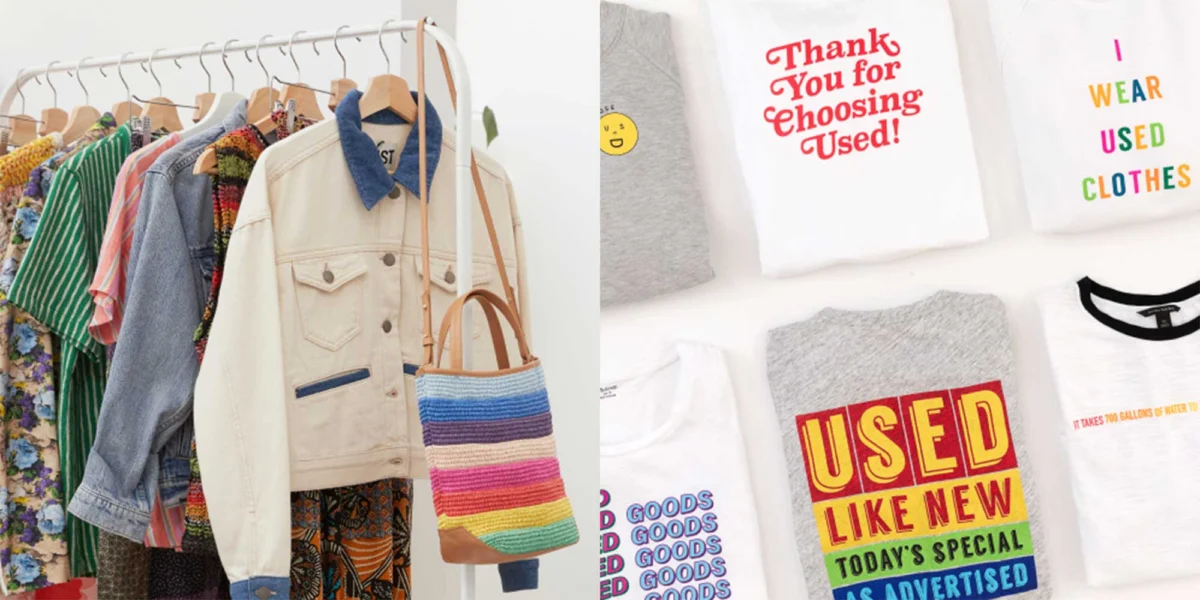
The global market for pre-loved and vintage apparel is undergoing a massive structural transformation, shifting from a niche alternative into a dominant force within the broader retail economy. Driven by escalating consumer awareness regarding the environmental degradation caused by fast fashion, shifting economic conditions, and technological innovations in digital resale platforms, secondhand fashion has evolved from a decentralized treasure hunt into a streamlined, high-tech industry. According to industry analyses, including a 2025 study commissioned by the Circular Fashion Federation, the European fashion resale sector alone is projected to expand from 15.9 billion euros in 2024 to 26 billion euros by 2030. This exponential trajectory is further corroborated by Bain & Company’s recent 2026 CEO’s Guide to Sustainability, which documented a consistent year-on-year rise in mainstream consumer adoption of circular shopping habits. As buyers increasingly reject the linear "take-make-waste" model of traditional retail, the infrastructure supporting pre-loved garments has expanded rapidly across digital and physical marketplaces.
To understand the current renaissance of the secondhand market, it is necessary to examine the historical trajectory of apparel consumption. For decades, the globalized fashion industry operated on ultra-fast cycles, prioritizing low-cost, resource-intensive manufacturing that produced millions of tons of textile waste annually. The primary recourse for unwanted garments was either charitable donation—frequently resulting in overwhelmed local infrastructures or textile dumping in the Global South—or direct disposal into municipal landfills. However, a cultural shift began to take root in the late 2010s and early 2020s, catalyzed by economic fluctuations and a heightened consciousness of the climate crisis. Regulators, investors, and consumers began demanding accountability from apparel corporations, giving rise to the concept of circular fashion. The timeline of this evolution accelerated significantly between 2020 and 2026, transitioning peer-to-peer selling from clunky classified boards into sophisticated, app-based ecosystems equipped with automated listing tools, digital product passports, and professional authentication protocols.
Navigating this expansive marketplace requires an understanding of the various platforms available, categorized by their operational models, geographic reach, and product focus. For shoppers seeking luxury and designer goods, peer-to-peer and authenticated consignment platforms have established rigorous standards of trust. Vestiaire Collective operates as a leading global peer-to-peer platform for luxury items, employing independent authentication and evaluation protocols to verify that the condition of delivered goods matches seller descriptions. Similarly, The RealReal empowers consignors and buyers by offering a heavily curated, authenticated collection of high-end designer pieces, effectively mitigating the market risks associated with counterfeit goods. For broader luxury markets, Farfetch Pre-Owned aggregates a global selection of pre-loved luxury items, connecting international buyers with established boutique inventories.
Beyond the luxury sector, general resale and social commerce marketplaces cater to everyday apparel and diverse demographics. eBay remains a foundational pillar of the digital thrift economy, utilizing its long-standing auction and fixed-price formats to provide competitive pricing on a vast inventory. In Europe, platforms like Vinted have mobilized massive digital communities exceeding 25 million members, facilitating peer-to-peer exchanges across thousands of commercial brands. Meanwhile, Depop functions as a social shopping application heavily favored by younger demographics and fashion curators, blending community engagement with vintage aesthetics. For regional shoppers, Poshmark serves the United States and Canada as a dedicated social commerce marketplace for new and used clothing, shoes, and accessories, while Thrift+ operates in the United Kingdom as a social enterprise that sells donated apparel, splitting profits equally between the donor and a nominated charity.
Geographically targeted platforms have also emerged to streamline regional logistics and reduce the carbon footprint of shipping. Reluv operates as one of Australia’s largest online retailers for second-hand clothing, offering everything from items with original tags attached to gently used garments across inclusive sizing. In Europe, Zalando Pre-Owned integrates second-hand shopping directly into its established logistics network, servicing customers across Spain, Germany, Poland, France, Belgium, and the Netherlands. Technological innovations are further reducing friction for sellers; Australia-based AirRobe tackles textile waste by capturing and storing purchase details at the point of initial online checkout, allowing consumers to resell their garments later with minimal administrative overhead. Furthermore, specialized niches are well-served by platforms such as Retykle, which focuses on pre-loved maternity wear and children’s clothing—addressing the rapid turnover of kids’ wardrobes—and Cerqular Resale, which verifies sellers against strict environmental metrics while prioritizing local business proximity.
While digital platforms have democratized access to thrifting, the traditional brick-and-mortar experience remains an essential avenue for discovery. Locating physical storefronts and charity shops has been simplified through dedicated directories and digital mapping tools. Resources such as the Australian OpShop Listing, Opshops for Australia and New Zealand, and The Thrift Shopper—a comprehensive directory listing exclusively charity-driven thrift stores in the United States—allow consumers to ensure their purchases directly support philanthropic causes. For urban explorers, localized guides like Thrift Stores In London and global roundups by publications such as The Pretty Planeteer provide curated itineraries. Additionally, mainstream tools like Google Maps have become powerful discovery engines; active online communities routinely review local thrift shops, op shops, and vintage boutiques, providing prospective shoppers with vital qualitative insights regarding inventory quality and pricing.
In tandem with third-party marketplaces, original equipment manufacturers are increasingly embracing corporate responsibility by launching their own circularity initiatives. Recognizing that modern consumers expect brands to manage the lifecycle of their products, numerous "Good" and "Great"-rated brands—as evaluated by independent sustainability rating systems such as Good On You—have established dedicated resale and repair programs. Patagonia continues to set industry standards through its Worn Wear program, which offers a robust selection of second-hand, repaired, and recrafted garments under the ethos of reducing consumption to preserve natural resources. In Germany, minimalist fair-fashion label JAN & N JUNE launched its "Newish" secondhand platform to extend the lifecycle of its transparently produced apparel. Similarly, accessories brands like O My Bag utilize their "Second Chances" initiative to sell imperfect and pre-loved leather goods made from lower-impact materials. Canadian outerwear label BEDI operates a "Second Life" program, incentivizing customers to return used items in exchange for purchase discounts while reintroducing durable goods back into commerce. Other notable initiatives include tentree’s "Reshop," which encourages ecosystem-regenerating apparel recycling alongside its large-scale tree-planting commitments; HYER GOODS’ (RE)HYER GOODS program, which upcycles leather waste into accessories; and children’s wear brand Mightly, which features a "Lightly Loved" collection to authenticate and resell pre-owned organic cotton garments.
The broader implications of this structural shift toward second-hand fashion extend far beyond individual consumer savings or wardrobe diversification. Economically, the rapid expansion of the resale market is forcing traditional fast-fashion conglomerates to reconsider their business models, as investors increasingly factor sustainability and circular infrastructure into corporate valuations. Environmentally, every garment kept in circulation displaces the demand for virgin resource extraction, water consumption, chemical dyeing, and carbon-intensive manufacturing processes. However, industry analysts note that the mainstreaming of resale is not without challenges. Critics point to the potential "rebound effect," where savings generated from purchasing secondhand items are funneled into buying more fast-fashion goods overall. Furthermore, logistics emissions associated with shipping heavy packages through peer-to-peer networks require careful optimization by platform operators to ensure net-positive environmental outcomes.
As the regulatory landscape tightens—particularly in Europe, where upcoming legislation on extended producer responsibility and green claims is set to penalize wasteful manufacturing—the integration of resale into the mainstream fashion economy will only accelerate. Whether through sophisticated digital authentication networks, community-driven social shopping applications, charitable thrift directories, or brand-operated take-back schemes, the tools available to modern consumers have never been more comprehensive. By decoupling personal style from resource depletion, the secondhand market is well-positioned to redefine the foundational mechanics of how the world consumes clothing for decades to come.