





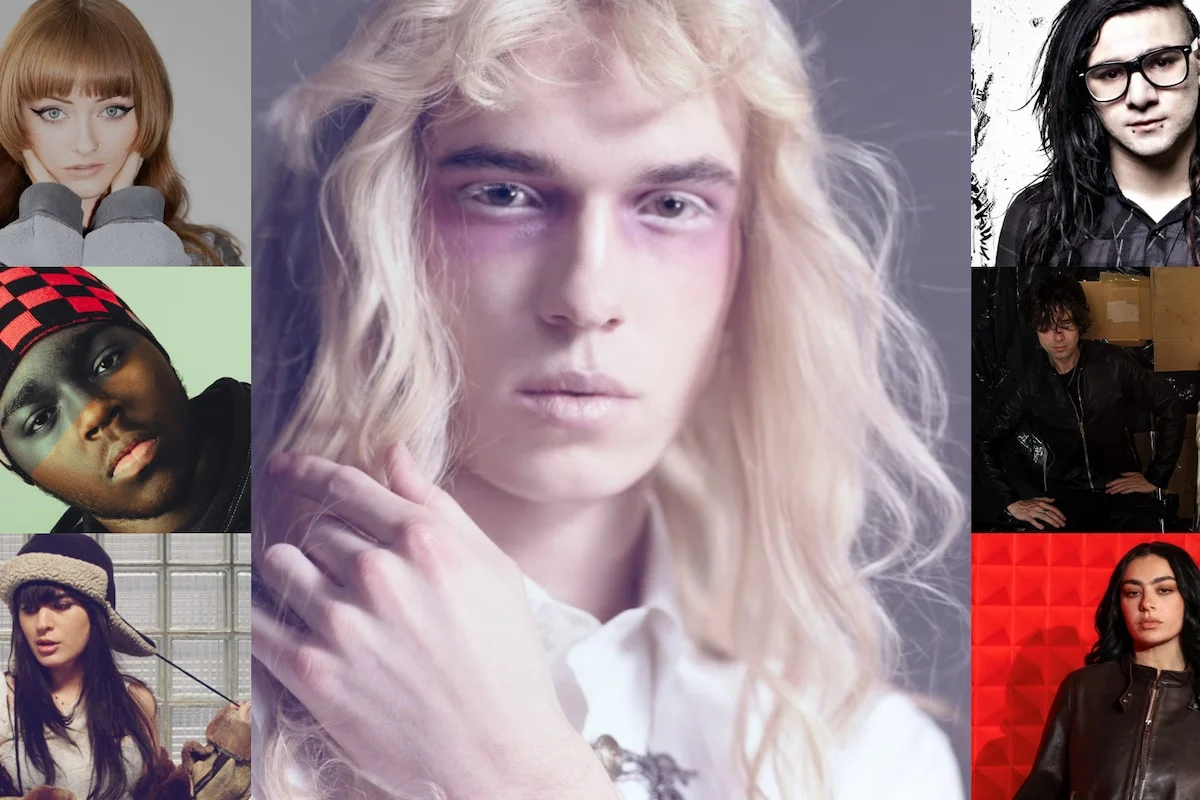
Music in 2026 finds itself at a peculiar crossroads, grappling with a burgeoning wave of electronic artists who defy traditional categorization, prompting a fervent, often contentious, search for a defining genre label. Over the past six months, a new generation of electronic musicians has surged closer to the mainstream, fundamentally reshaping the soundscape. Underscores delivered an early album-of-the-year contender with U, Ninajirachi cemented her status as a breakout sensation at Coachella, and 2hollis has been widely recognized as a pivotal figurehead of a new maximalist movement sweeping across contemporary music. Yet, despite their undeniable impact and growing fanbases, industry observers and listeners alike remain largely at a loss for how to accurately label this eclectic blend of sounds.
The Evolving Sonic Landscape: A Genre in Flux
The challenge of categorization is not new, but the rapid acceleration of digital dissemination and cross-pollination of influences in the 21st century has intensified the problem. For these ascendant artists, the traditional frameworks of genre classification seem inadequate. Online discussions and music commentaries frequently employ a triumvirate of terms: "electroclash," emphasizing a potent collision of rock and electronica elements; "electronic pop," a broad, increasingly ubiquitous catch-all that has, in many instances, supplanted "hyperpop" as a descriptor for digitally-driven, experimental pop; and "rage," a term that highlights the profound influence of Gen Z cultural touchstone Playboi Carti, whose distorted, aggressive sonic palette ignited a wave of innovation within rap music at the turn of the 2020s. This convergence points to a radical new intersection in music. Electronic artists are increasingly occupying the prominent role of rock stars on major festival stages, while simultaneously, the cultural divide between hip-hop and electronic music enthusiasts has narrowed to an unprecedented degree. This strange, yet compelling, convergence is visibly manifest in concert lineups, where emerging rap acts like Slayr and fakemink are increasingly booked alongside electronic artists, many of whom identify as queer and trans, such as Jane Remover and Underscores. This blurring of lines underscores a seismic shift in audience demographics and artistic collaboration.
Historically, the music industry has relied on genre labels to market, organize, and contextualize artists. From the distinct origins of jazz in New Orleans to the birth of hip-hop in the Bronx, genres traditionally emerged from specific geographical locations and cultural movements, fostering a shared sonic identity among their practitioners. However, the internet age has fundamentally altered this paradigm. Influences are global and instantaneous, artistic development occurs primarily in bedrooms rather than local scenes, and the concept of a singular, defining sound for a movement becomes increasingly elusive. This digital environment fosters hybridity, making it difficult for new movements to coalesce around a universally accepted label.
The Genesis of "Sleazepop": A Chronology
For the past year, many of these boundary-pushing artists found themselves collectively categorized under the broad, often vague, umbrella of "underground." This label manifested in various forms, from the diffuse "UK Ug scene" to the rap-centric subreddit /r/Ug_music. However, as the sonic similarities between queer electronic artists and rap acts became undeniable, the latter subreddit began featuring a wider array of electronic music. This informal classification, while functional, lacked specificity. It was against this backdrop that a new Reddit community, /r/Sleazepop, emerged in recent months, making a compelling case for a more precise, if controversial, label.
The term "sleazepop" was originally coined in March 2025 by an anonymous internet user known as Sleaze Pop Daily (SPD) on an Instagram fan page. Recognizing the growing need for a dedicated space, SPD migrated the concept to Reddit a couple of months later, establishing the /r/Sleazepop subreddit. SPD, who is in his early 20s and based in Los Angeles, articulated his motivation: "I’d say sleazepop is electronic music that takes a lot of inspiration from rap and a bit of rock — it’s like rap-inspired-electroclash." He observed that while /r/Ug_music shared considerable overlap with the nascent sleazepop sound, its primary focus remained on a specific, rap-only audience. This perceived gap led him to conclude, "There’s no reason why I shouldn’t start a subreddit for sleazepop." The response was immediate and overwhelming, with a "surge of people posting a ton of stuff," indicating a latent demand for such a classification. The rapid proliferation of content on the subreddit highlighted a collective recognition among fans that a new sonic and aesthetic convergence was indeed taking shape, albeit one that lacked a proper name.
Defining the Sound and Aesthetic
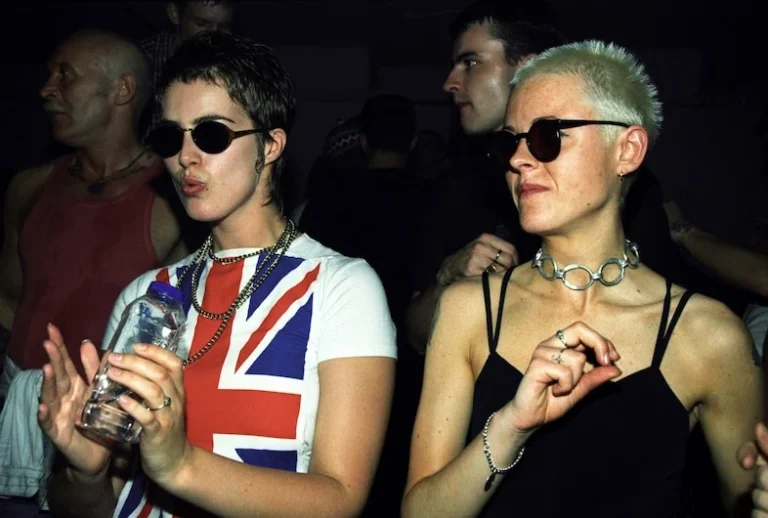
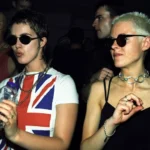
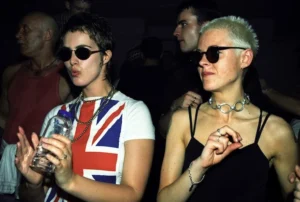
SPD primarily conceives of sleazepop as an LA-centric movement, tracing its lineage from The Hellp’s scuzzy, dance-punk infused indie sleaze sound from a decade prior, to 2hollis’s contemporary blown-out rap production. This geographical anchoring, while perhaps simplifying a broader phenomenon, provides a tangible starting point for understanding its stylistic evolution. Beyond the auditory, sleazepop also encompasses a distinct visual descriptor, rooted in the resurgence of "indie sleaze" aesthetics. This return to a specific cultural moment, characterized by flash-lit party photography, skinny jeans, and a half-ironic rockstar posturing, provides a visual common thread for a disparate group of artists. From LA pop artist Tiffany Day to experimental musicians Feng and fakemink (the latter even featured a picture of The Hellp on the cover of his debut album, London’s Saviour), these artists are united less by identical sound and more by a shared collision of rap, electroclash, and an internet-age reinterpretation of indie sleaze. This indicates that sleazepop, much like many emergent digital genres, might be as much about a vibe and a cultural posture as it is about strict musical parameters.
The narrative of sleazepop, however, extends beyond this localized definition, reflecting broader trends in popular music. In conversations, SPD, also known as /u/Chunky910fan on Reddit, frequently references influential artists like LCD Soundsystem, Skrillex, and Charli XCX’s highly acclaimed 2024 album, Brat Summer. These references are crucial, illustrating key milestones in the evolution of electronic music that is increasingly detached from traditional dancefloors, predominantly crafted by Gen Z artists in their bedrooms, and rapidly infiltrating the mainstream. LCD Soundsystem’s art-punk-disco fusion, Skrillex’s mainstreaming of dubstep, and Charli XCX’s hyper-pop sensibilities all represent crucial steps towards a genre-agnostic approach to electronic music, where experimentation and personal expression supersede strict adherence to stylistic norms. This lineage suggests that sleazepop is not an isolated phenomenon but rather a continuation of a long-standing trend toward genre hybridity and digital innovation.
Sleazepop vs. Hyperpop: A Comparative Analysis
The parallels between sleazepop and the much-debated pseudo-genre of hyperpop are striking and unavoidable. Crucially, neither term was coined by the artists themselves, but rather by fans and commentators seeking to make sense of a rapidly evolving sound. Hyperpop initially gained traction around 2014, associated with the experimental electronic label PC Music and groundbreaking artist SOPHIE. Later in the decade, it was famously appropriated by Spotify to categorize a wide wave of internet-based artists. Hyperpop, in its later form, exhibited many of the same cross-genre tendencies as sleazepop, blending elements of rap, EDM, and pop music.
The critical difference, at least in theory, lies in emphasis and aesthetic. Where hyperpop was often characterized by its glossy, cartoonish digital maximalism, frequently employing highly processed vocals and saccharine melodies juxtaposed with abrasive sound design, sleazepop leans into something inherently messier, grittier, and more physical. This distinction suggests a departure from hyperpop’s often pristine, almost synthetic, sonic landscapes towards a more raw and visceral experience. Hyperpop, despite its initial fervor, was plagued by definitional confusion throughout its lifetime and has since largely shrunk into a descriptor for "terminally online" sonics rather than being recognized as a "real genre." SPD, however, expresses optimism that the more recent injections of "rage" and rock music provide sleazepop with a better chance of enduring as a coherent genre, suggesting that these harder-edged influences might provide the necessary anchor to prevent it from dissipating into a mere adjective.
Controversy and the Digital Landscape
Despite SPD’s enthusiasm and the subreddit’s rapid growth, both the genre term and its progenitor remain subjects of considerable online controversy, even within the /r/Sleazepop community itself. Critics have variously branded /r/Sleazepop as a "label psy-op," dismissive of its perceived lack of coherence, or simply "contrived." One anonymous internet user, speaking via Reddit DM, expressed a common sentiment: "I’m pretty sure it’s a front for Chaotic Good or some record label." This accusation references the digital marketing agency notorious for allegedly manufacturing online buzz around artists like Geese through the creation of fake fan pages and sophisticated algorithmic manipulation tactics. The critic further elaborated, "Notice how Nettspend (who’s only ever done rage and jerk) is somehow considered sleazepop, but his peers Che and Xaviersobased (who have actually done electroclash and cloud rap respectively) aren’t. It just seems to describe more of a demographic of fans than an actual genre, aesthetic or sound." This critique cuts to the heart of the modern genre debate: whether a label truly represents a distinct sonic identity or merely a collection of shared listening habits among a specific demographic.
SPD, in response to these allegations, remains somewhat cryptic about his professional background. He maintains that he has previously worked with an "underground rapper in LA" and achieved success on TikTok, yet insists that "music is definitely not my main job." He is, however, keen to dispel the industry conspiracy theories. "Labels have definitely reached out," he stated, "but I’ve never been paid to post an artist I wouldn’t have posted beforehand." He also indicated a desire to distance himself from the day-to-day management of the subreddit, expressing, "I’ve recently tried to move away from [/r/Sleazepop]. I don’t want to be the guy controlling the narrative once it becomes its own thing." This statement, whether genuine or strategic, reflects the often-uncomfortable position of online tastemakers who find their influence questioned as their creations gain traction.
While the accusation of /r/Sleazepop being a "label psy-op" seems unlikely – if only due to SPD’s often chaotic and seemingly uncoordinated posting style, which hardly suggests the polished execution of a well-funded marketing campaign – this controversy itself reveals a deeper truth about music in the digital age: identifying distinct genres has become more challenging than ever before. Traditional musical movements, such as hip-hop, typically possessed clear origin stories rooted in specific times and places, fostering a sense of shared community and sonic evolution. The internet, however, warps space and time, fostering ever-hybridizing cultural forms. For instance, while 2hollis and fakemink might share a common reference point in The Hellp, it is difficult to argue that their sounds are as inherently similar as those of early hip-hop pioneers like Grandmaster Flash and Kool Moe Dee, who emerged from the same Bronx scene in the 1970s. The internet allows for broader, more disparate influences to converge, creating genres that are more diffuse and less easily defined by singular sonic characteristics.
The Future of Genre in the Algorithmic Age
The core problem persists: music in 2026 continues to struggle with classification. Perhaps an unexpected answer, or at least a useful precedent, can be found in the case of hyperpop. Over the last decade, hyperpop transitioned from a proposed genre to a more generalized adjective, illustrating the inherent pitfalls of attempting to rigidly define music scenes born entirely on the internet. Today, it seems almost impossible to fully delineate a genre when individual artists’ influences shift as rapidly as changing tabs on a web browser. Yet, hyperpop still serves a valuable function as a descriptor for sounds that blend pop songwriting with advanced digital production – or, in Spotify’s algorithmic lexicon, simply a collection of shared listening habits.
As the music world continues to navigate the complexities of digital creation and consumption, the trajectory of "sleazepop" will be closely watched. While it appears unlikely to cement itself as the next universally recognized "big genre" in the vein of rock or hip-hop, it may well follow a similar path to hyperpop, evolving into a useful, if contested, descriptor or cultural signifier. Its existence highlights the ongoing tension between the human desire to categorize and the fluid, boundary-breaking nature of contemporary music. The era of perfectly defined genres may be over, replaced by a landscape of shifting labels that are as much about fan communities and aesthetic sensibilities as they are about concrete sonic parameters. In this algorithmic age, the very act of attempting to label a new sound becomes a commentary on the ever-changing relationship between artists, audiences, and the technology that connects them.