










The penny loafer stands as a singular paradox in the landscape of menswear: a shoe defined by its aristocratic collegiate associations that traces its true lineage to the rugged, damp docks of early 20th-century Norway. While often categorized as the quintessential American staple—an emblem of Ivy League culture and mid-century Americana—the loafer is, in fact, a cross-cultural synthesis of Nordic utility and North American indigenous craftsmanship. This footwear has maintained its relevance for over a century, shifting from a functional necessity for fisherman to a status symbol, ultimately settling into its modern role as a versatile cornerstone of the global wardrobe.

The Origins of the Aurland Shoe
In the early 1900s, the municipality of Aurland, nestled deep within the Sognefjord of Norway, served as the birthplace of this design. The environment was characterized by constant moisture and cold, presenting a specific set of challenges for local laborers. Fishermen required footwear that was easy to slip on and off when transitioning between boat and dock, yet durable enough to withstand harsh coastal conditions. Traditional laced boots proved impractical, as knots would freeze and laces became difficult to manipulate with numb fingers.
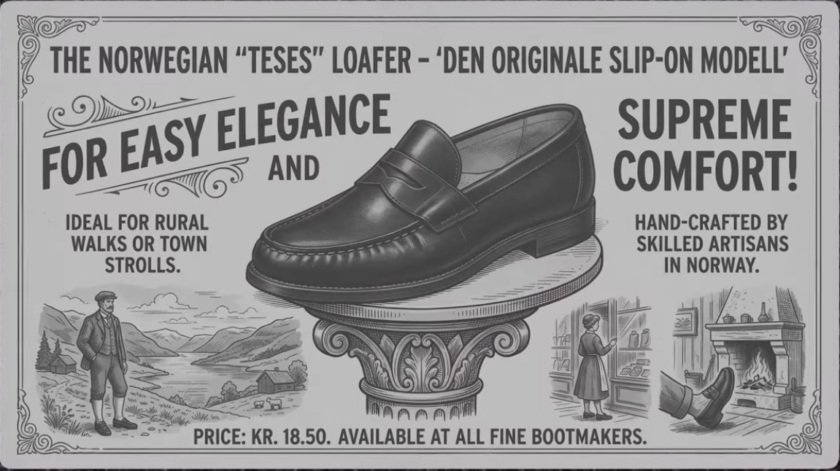
Local artisans developed a slip-on shoe known colloquially as the Tese or Teses. These were hand-sewn from flexible, high-quality leather, designed to mold to the wearer’s foot and provide a level of mobility that rigid, formal boots lacked. This was the nascent form of the modern loafer, defined by a moccasin-style construction that prioritized ergonomic comfort over ornamental rigidity.

The Influence of Nils Gregoriusson Tveranger
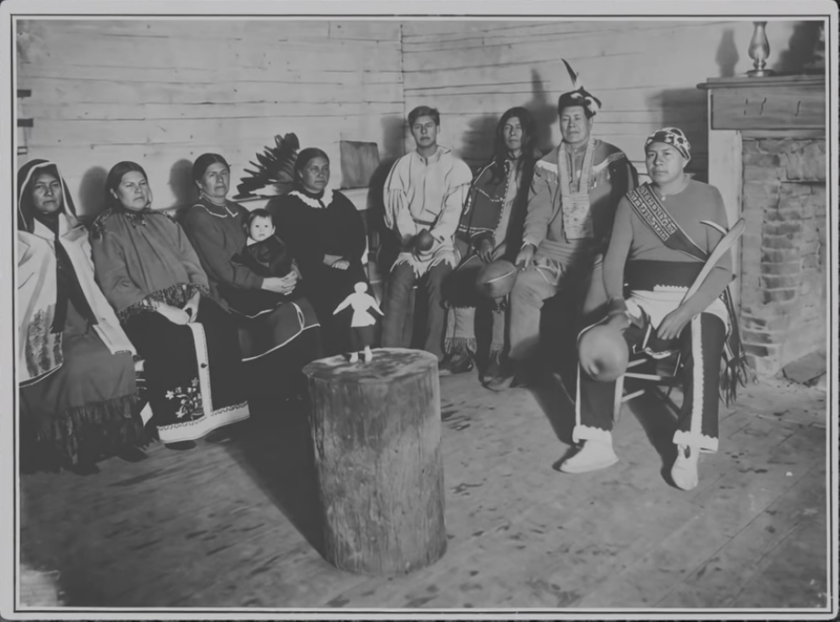
The transition from a regional slip-on to a globally recognized design is attributed to the innovations of Nils Gregoriusson Tveranger. Born in 1874, Tveranger spent his formative teenage years in the United States, where he apprenticed as a shoemaker. During this period, he encountered the footwear of the Haudenosaunee (Iroquois) people. He observed the structural efficacy of the moccasin, which used a single piece of leather wrapped around the foot, offering a degree of comfort and lightness that European formal footwear often sacrificed.
Upon returning to Norway in 1894, Tveranger established his own workshop in Aurland. In 1908, he debuted his first commercial iteration, marketed as the "National" shoe. While this model still incorporated laces and eyelets to provide a more secure fit, it laid the foundational aesthetic for what was to come. It was not until 1930 that Tveranger introduced the "Aurland moccasin," a laceless model that featured a distinctive leather strap across the vamp—the first iteration of the "saddle." This saddle, while purely decorative, served to give the shoe a more polished appearance, effectively bridging the gap between utilitarian gear and casual city wear.
Transatlantic Adoption and the Birth of the Weejun
The shift from a local Norwegian specialty to an international trend occurred in the 1920s and 1930s, driven by British sportsmen who visited the Norwegian fjords for fishing expeditions. Impressed by the comfort and practicality of the local slip-ons, these travelers began importing them to Europe. By the mid-1930s, the shoes had caught the attention of American manufacturers.
G.H. Bass & Co., a Maine-based company already experienced in manufacturing moccasin-style work boots, recognized the potential for this design in the American market. By 1936, the company launched its own version, dubbed the "Weejun." The name was a phonetic play on the word "Norwegian," serving as a clever marketing shorthand that suggested European heritage while remaining accessible to American consumers. Bass refined the design, narrowing the toe profile and utilizing a more formal leather finish, which allowed the shoe to transition seamlessly from country clubs to campus environments.
The Rise of the Penny Loafer Identity
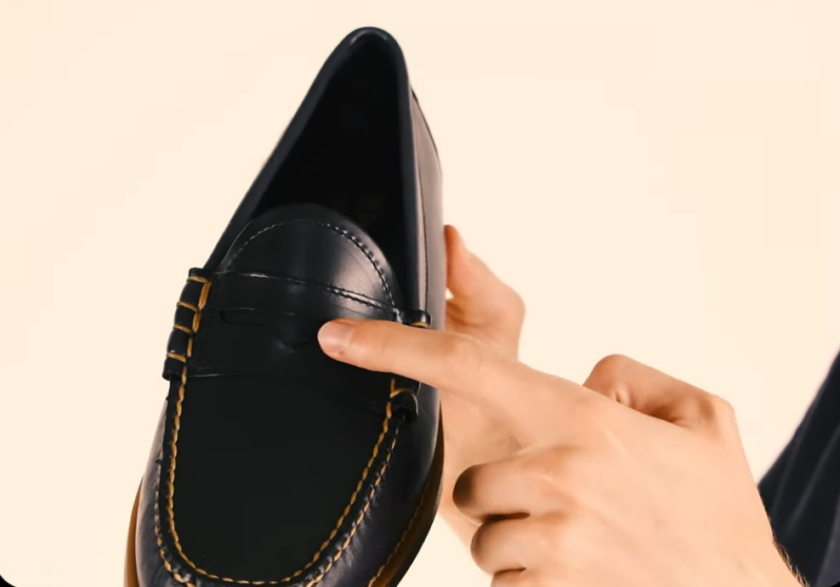
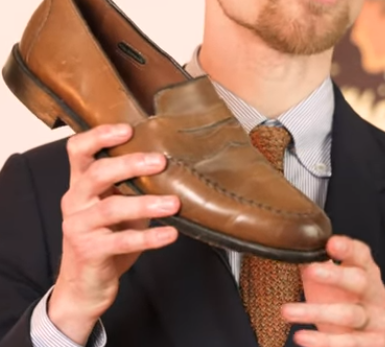
The designation "penny loafer" emerged in the early 1950s, a direct result of a cultural trend among American college students. The diamond-shaped cutout in the leather saddle—a feature inherited from Tveranger’s original design—was adopted by students as a convenient spot to store coins. While historical records often cite the need for "emergency change" for payphones as the primary driver, this narrative is technically disputed; payphone calls in the mid-century frequently required more than two pennies, and standard Bell System equipment of the era did not accept them.
Despite the technical inaccuracy of the folklore, the practice of placing pennies in the slot became a defining aesthetic choice. The flash of copper against dark oxblood or burgundy leather became a hallmark of the "Ivy Style," a look characterized by chinos, navy blazers, and a calculated, understated approach to dressing. This era solidified the penny loafer as the standard-bearer for the "studied-casual" aesthetic—an item worn by those who wished to signal good taste without appearing to have put excessive effort into their attire.
Structural Advantages and Modern Longevity
The enduring success of the penny loafer can be largely attributed to its moccasin construction. Unlike traditional dress shoes, which often rely on a rigid "last" and multiple layers of structural filler, the moccasin-toe loafer is stitched in a way that allows the leather to move with the wearer. This inherent flexibility provides a level of comfort that has made the shoe a permanent fixture in the footwear industry.
In the contemporary market, two distinct styles remain prevalent:
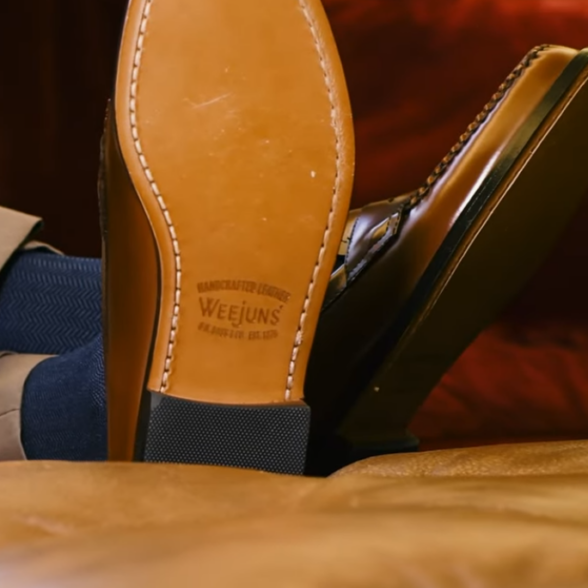
- The Weejun Style: Characterized by a sleek, flat saddle strap, maintaining the traditional, minimalist profile of the original Norwegian-inspired design.
- The Beefroll Style: Introduced by Bass in the 1950s, this version features thick, pinched rolls of leather at the edges of the saddle, resembling the way a butcher ties a roast. This design offers a chunkier, more robust aesthetic suited for more casual environments.
The Formality Spectrum and Market Position
The penny loafer currently occupies a unique position on the formality scale. It serves as a middle ground between the rigid structure of an Oxford and the informality of a sneaker. This versatility has allowed it to transcend generational shifts. In the 1960s, it was the shoe of the establishment; in the 1980s, it was reimagined through a more polished lens; and today, it is worn with everything from high-end tailored trousers to distressed denim.
From a manufacturing perspective, the sector has diversified significantly. High-end makers such as Alden and Rancourt utilize premium materials like Horween shell cordovan, creating products intended to last for decades. Simultaneously, fast-fashion iterations provide the silhouette at accessible price points, ensuring the style remains ubiquitous across different economic demographics.
Economic and Cultural Implications
The evolution of the penny loafer highlights a broader trend in 20th-century fashion: the democratization of utility. What began as a tool for the Norwegian working class was repurposed, branded, and elevated into a symbol of academic and social prestige. This trajectory is not unique to the loafer, but the speed with which it moved from the fjord to the campus is notable.
Furthermore, the longevity of the design suggests that fashion trends, when rooted in superior ergonomic function, possess a resilience that purely aesthetic trends lack. While other footwear styles have seen their popularity wane due to shifts in comfort standards, the penny loafer’s move toward sockless, unlined variations has allowed it to adapt to modern climates and lifestyle preferences.
Conclusion
The penny loafer remains one of the few garments that has successfully resisted the cycle of obsolescence. Its history is a testament to the power of cross-border exchange, blending the indigenous wisdom of Haudenosaunee shoemaking with the functional requirements of the Norwegian fishing industry, and finally, the marketing prowess of American manufacturing. Whether worn by a student, a professional, or a casual observer, the shoe continues to carry the weight of its century-long journey—a simple piece of leather that solved a problem of comfort and ended up defining an era of style. As the market for smart-casual attire continues to expand, the penny loafer’s role as an essential wardrobe staple appears secure for the foreseeable future.