










The global activewear market has experienced exponential growth over the past decade, transforming from specialized athletic gear into an everyday wardrobe staple. However, this surge in demand—accelerated by global health shifts and the normalization of athleisure—has exposed a severe environmental vulnerability. Traditional workout clothes are overwhelmingly dependent on virgin synthetics like polyester, nylon, and elastane. Derived from fossil fuels, these materials not only contribute heavily to carbon emissions during production but also shed microplastics into aquatic ecosystems with every wash. Furthermore, the conventional manufacturing lifecycle of activewear has long been plagued by opaque supply chains, poor working conditions, and suppressed wages in developing nations.
In response to mounting ecological pressure and consumer scrutiny, a paradigm shift is underway across the United States and Canada. Ethical fashion watchdogs, sustainability indexes, and conscious consumers are redefining what it means to gear up for fitness. The criteria for high-performance athletic wear no longer rely solely on moisture-wicking properties, compression, and durability; they now demand absolute transparency regarding labor practices, lower-impact material sourcing, and end-of-life garment management.
The Evolution of Sustainability Metrics in Athletic Apparel
To understand the current landscape of sustainable activewear in North America, one must examine how brands are evaluated. Independent rating organizations, such as Good On You, have spearheaded the movement by assessing thousands of brands across three fundamental pillars: people, the planet, and animals.
Historically, the fashion industry operated under a shroud of secrecy. Supply chains spanned multiple continents, making it difficult to trace where raw fibers were harvested, who spun the yarn, or who stitched the final seams. The chronology of sustainable fashion transparency accelerated significantly following landmark events such as the 2013 Rana Plaza disaster in Bangladesh, which galvanized international consumer demand for supply chain accountability.
By the late 2010s and early 2020s, North American apparel brands began facing direct regulatory and consumer demands to verify their environmental and social claims. Today, a top-tier ethical activewear brand must demonstrate concrete evidence of:
- Fair Labor Standards: Ensuring workers receive a living wage, safe working conditions, the right to unionize, and freedom from exploitation.
- Material Innovation: Replacing virgin plastics with certified organic fibers, recycled polyester (rPET), innovative hemp blends, and responsibly sourced plant-based materials.
- Animal Welfare: Eliminating the use of animal-derived products, such as down or leather, and opting for cruelty-free technical alternatives.
Top-Rated Ethical Activewear Brands in the United States
The United States has emerged as an incubator for innovative eco-friendly apparel companies. Several homegrown brands have successfully merged high-performance functionality with strict ethical standards, proving that athletes do not need to compromise on quality to protect the planet.
Happy Earth Apparel
Headquartered in the United States, Happy Earth Apparel has positioned itself as a mission-driven brand inspired by the preservation of the natural world. Operating on a model that goes beyond mere sustainability into regeneration, the brand partners with established environmental non-profits to plant trees, combat climate change, and fund clean-up initiatives. Their product line, which accommodates a broad size range from XS to 3XL, utilizes organic and lower-impact materials, ensuring that the footprint left behind by production is actively counterbalanced by conservation efforts.
Natasha Tonic
Specializing in eco-friendly swimwear and active water-wear, Natasha Tonic has disrupted the traditional synthetic-heavy swim market. By pioneering the use of natural hemp fibers, the brand offers a material that is naturally antimicrobial, UV-resistant, and significantly more durable than conventional nylon. Furthermore, hemp cultivation requires minimal water and enriches the soil. To minimize waste and production excess, Natasha Tonic prints each piece by hand in the United States, ensuring that no two garments are identical while maintaining availability across sizes XS to XL.
Purusha People
For consumers seeking yoga and movement wear with an artistic touch, Purusha People offers plant-based, organic activewear designed to wick away sweat while maintaining a low environmental impact. Based in the US, the brand focuses on small-batch production and intricate detailing. By utilizing organic fibers that breathe naturally, Purusha People avoids the synthetic chemical treatments often found in conventional moisture-wicking activewear. Their inclusive sizing ranges from XS to 4XL, catering to a diverse demographic of mindful practitioners.
Leading Sustainable Activewear and Outdoor Gear from Canada
Canada’s rugged landscapes and cultural emphasis on outdoor recreation have naturally fostered a robust market for technical gear and activewear rooted in environmental stewardship. Canadian brands frequently emphasize durability, weather resistance, and ecosystem regeneration.
tentree
As one of Canada’s most prominent sustainability success stories, tentree operates on a simple yet impactful premise: for every item purchased, the company plants ten trees. Having already surpassed the milestone of 65 million trees planted globally, tentree integrates environmental restoration directly into its business model. The brand constructs its active and casual wear using an Earth-first approach, relying on certified organic cotton, Tencel, and recycled polyester produced in safe, audited fair-trade facilities. Available in sizes XS to XL, tentree demonstrates that scalable eco-friendly fashion is commercially viable.
Wuxly Movement
Performance outerwear and technical gear are notoriously difficult to make sustainably because they traditionally rely on heavy synthetic waterproofing and animal-derived insulation like goose down. Wuxly Movement, a Canadian technical outerwear innovator, successfully decoupled elite outdoor performance from animal cruelty and virgin material dependency. By leveraging Canada’s manufacturing heritage, Wuxly combines advanced recycled tech-materials to create weather-resistant garments that leave animals entirely out of the equation. Their comprehensive sizing ranges from 2XS to 3XL.
BEDI
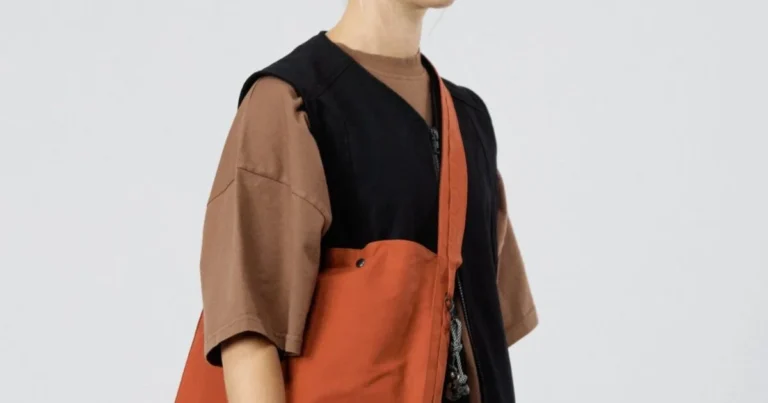
Urban exploration and cold-weather activity require specialized gear, a sector historically dominated by resource-intensive manufacturing. BEDI, a Canadian sustainable studio, addresses this by crafting minimalist winter coats and technical accessories using upcycled and salvaged materials—such as reclaimed automotive seatbelts and recycled nylon. By diverting industrial waste from landfills and transforming it into high-durability gear, BEDI exemplifies the principles of the circular economy. The brand currently offers its range in sizes XS to XL.
Economic and Environmental Implications of the Shift
The pivot toward sustainable activewear carries profound implications for the broader textile and retail industries. According to market analysis from sustainable fashion coalitions, consumer demand for ethically produced apparel is no longer a niche market trend; it is a permanent structural shift. Brands that fail to adapt face severe reputational risks, particularly among millennial and Gen Z demographics who heavily prioritize corporate social responsibility.
However, scaling sustainable activewear presents distinct logistical challenges. Recycled technical synthetics and organic fibers often involve higher initial production costs than cheap virgin petroleum-based materials. Furthermore, verifying labor transparency across complex, multi-tiered global supply chains requires significant financial investment in auditing and certification processes.
Despite these hurdles, industry analysts project that regulatory tightening—such as upcoming European Union directives on green claims and extended producer responsibility (EPR) laws—will soon force mainstream athletic giants to follow the lead of independent eco-labels. As more North American brands adopt circular design principles, take-back schemes, and transparent rating systems, the standard for what we wear to sweat is undergoing a permanent, necessary evolution.