











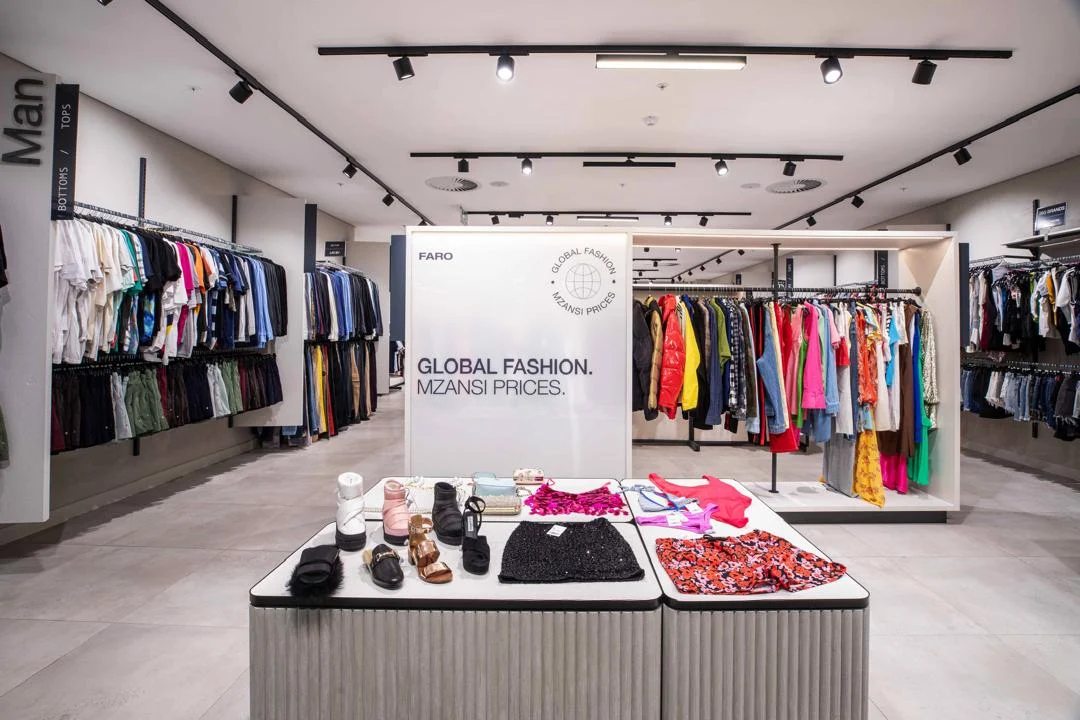
The global fashion industry is currently grappling with an unprecedented crisis of overproduction, with major international brands holding billions of dollars in unsold inventory. This surplus, often the result of shifting consumer trends, over-forecasting, and the rapid cycle of fast fashion, has created a significant logistical and environmental burden. While brands traditionally avoid reselling these items in their primary markets—such as the United Kingdom and the United States—to protect brand equity and prevent market cannibalization, the secondary markets in developing nations have become the default destination for excess stock. However, this flow of goods is fraught with inefficiency; industry data suggests that between 30% and 40% of secondhand clothing imports to Africa arrive in a condition deemed unusable, leading to massive textile landfills and ecological degradation. In response to this systemic failure, FARO, a South African-based recommerce startup, has announced a $6 million funding round to scale a business model that transforms this waste into a sustainable retail opportunity.
The funding round was led by JP Zammitt, President of Bloomberg, with participation from a diverse group of venture capital firms and private investors. Notable participants include Presight Capital, Gharage Ventures, and E4E Africa. Individual backers include prominent figures in the global tech and retail space, such as Mato Perić of MPGI, Leonard Stiegeler of Pulse, Oliver Merkel of Flink, and Vikram Chopra of Cars24, among others. This influx of capital is earmarked for the expansion of FARO’s physical retail presence and the continued development of its proprietary artificial intelligence technology, which aims to streamline the complex logistics of the global off-price clothing market.
The Convergence of Surplus and Sustainability
The rise of FARO occurs against the backdrop of a global recommerce market that is projected to reach approximately $350 billion by 2027. This growth is driven by a dual pressure: consumers in developed markets are increasingly demanding sustainable practices, while consumers in emerging markets remain highly aspirational but price-sensitive. Traditionally, the "off-price" retail sector—exemplified by giants like TJX Companies (the parent of TJ Maxx and Marshalls)—has thrived by purchasing overstock and selling it at a discount. However, these models have largely ignored the African continent, leaving a vacuum filled by unregulated secondhand imports that often lack quality control.
FARO’s approach seeks to bridge this gap by acting as a sophisticated intermediary. The company sources inventory from major global entities, including ASOS, Boohoo, G-Star, Jack & Jones, and Levi’s. This inventory consists of two primary categories: approximately 60% is brand-new overstock, and 40% is comprised of consumer returns. In the traditional retail model, returns with minor defects are often incinerated or discarded because the labor cost of inspecting and repairing them in high-wage economies exceeds the value of the garment. FARO capitalizes on this inefficiency by acquiring these items at extremely low price points—sometimes as little as £1 per piece—and transporting them to South Africa for processing.
Operational Mechanics: Transforming Waste into Value
Central to FARO’s business model is its localized value-addition process. Upon arrival in South Africa, items undergo a rigorous reconditioning phase. The startup has invested in industrial-scale facilities equipped with specialized laundries and steam tunnels. Utilizing a more affordable labor market, FARO is able to repair minor defects, sanitize garments, and restore them to a "like-new" condition. This process not only prevents the items from entering the waste stream but also allows the company to maintain a fixed-margin model.
According to David Torr, co-founder and co-CEO of FARO, the company targets a 45% margin after all operational costs, including processing and rebranding with new swing tags. Torr emphasizes that the company’s strategy is rooted in "customer centricity." Rather than maximizing short-term profits when acquisition costs are particularly low, the company reinvests those gains into lower price points for the consumer. This strategy is designed to build long-term brand loyalty among South African shoppers who desire authentic, high-quality international brands but cannot afford traditional retail prices. Some items are sold at discounts of up to 70% off their original retail value, making brands like Tommy Hilfiger and Zara accessible to a much broader demographic.
Technological Innovation in Inventory Management
One of the primary hurdles in the off-price retail sector is the sheer complexity of inventory management. Unlike traditional retail, where a buyer might order 10,000 units of a single SKU, off-price inventory is often fragmented, consisting of thousands of unique, single-item pieces. Historically, managing this has been a labor-intensive process involving massive spreadsheets and manual data entry.
FARO is attempting to disrupt this legacy system through the deployment of AI-powered agents. These digital tools are designed to automate the "buyer workflow," breaking down complex manifests into micro-tasks. Torr notes that while some major fashion houses employ thousands of people to manipulate data in Excel, FARO’s AI models can perform the same analysis in seconds with superior accuracy. This technological edge allows the startup to scale its purchasing power without a linear increase in administrative overhead.
Furthermore, the company is developing personalized shopping tools. Because off-price inventory is unpredictable, FARO plans to implement a notification system that alerts customers when items matching their specific brand preferences or size requirements arrive at a local store. This integration of digital convenience with physical retail addresses one of the biggest challenges of the sector: the difficulty of listing unique, low-value items on a traditional e-commerce platform.
Strategic Positioning within the South African Retail Landscape
South Africa presents a unique environment for FARO’s expansion. Unlike many other African nations where retail is highly fragmented and dominated by informal markets, South Africa possesses a sophisticated retail infrastructure with over 2,000 shopping centers. This allows FARO to operate within formal retail spaces, urban hubs, and mid-market centers, providing a shopping experience that mirrors high-end retail.
The decision to focus on physical stores rather than a pure e-commerce model is a calculated one. In many emerging markets, the "last-mile" delivery costs associated with e-commerce remain prohibitively high, especially for low-margin clothing items. Additionally, the rise of ultra-cheap Chinese platforms like Temu and Shein has placed immense pressure on local retailers. By offering physical touchpoints where customers can verify the quality and authenticity of branded goods, FARO distinguishes itself from the "disposable" nature of ultra-fast fashion.
Chronology of Growth and Future Projections
FARO’s trajectory since its inception in 2023 has been marked by rapid scaling. The company began with an experimental pop-up store in South Africa, which generated $100,000 in its first month of operation. This initial proof of concept exceeded internal expectations; the leadership team originally estimated that seven stores would be required to reach an annual revenue milestone of $2 million. However, the company achieved $2.3 million in revenue with just four physical locations, representing a 20-fold growth rate in its first year.
Looking ahead, the startup aims for a fivefold increase in revenue within the current fiscal year. The long-term vision is even more ambitious: the establishment of 1,000 stores over the next decade. While South Africa serves as the primary launchpad, FARO is eyeing expansion into other emerging markets across Africa, South America, Asia, and the Middle East.
Leadership and Investment Backing
The founding team of FARO brings a wealth of experience from some of the world’s most prominent retail and logistics companies. Co-founders David Torr, Will McCarren, Chris Makhanya, and Amber Penney-Young have collective backgrounds at Amazon, Jumia, UCOOK, and Superbalist. This depth of expertise was a significant factor in attracting high-profile investors like JP Zammitt.
The diverse investor pool suggests a broad confidence in the "circular economy" as a viable business model. By aligning the interests of global fashion brands (who need to clear stock without devaluing their primary markets) with the needs of emerging market consumers (who seek affordable quality), FARO has positioned itself at the center of a significant shift in global trade.
Broader Implications and Industry Analysis
The success of FARO could signal a turning point for the fashion industry’s approach to waste. For decades, the environmental impact of unsold clothing was treated as an "externality"—a cost not accounted for by the brands themselves. However, as international regulations regarding textile waste tighten, particularly in the European Union, brands are under increasing pressure to find ethical ways to manage their surplus.
FARO provides a "clean" exit for this inventory. By ensuring that goods are reconditioned and sold through formal channels, the startup offers brands a way to mitigate their environmental footprint while still recovering some value from their losses. For the African continent, this model represents a shift away from being a "dumping ground" for the West’s unwanted clothes toward becoming a dynamic market for refurbished, high-value goods.
However, the road to 1,000 stores is not without challenges. Expansion into markets like Kenya, Nigeria, or Brazil will require FARO to adapt to different regulatory environments, logistical hurdles, and varying consumer preferences. The success of the model depends on the company’s ability to maintain its "fixed-margin" discipline while navigating the volatility of global shipping and supply chains. If FARO can successfully replicate its South African success on a global scale, it may well define the future of sustainable retail in the 21st century.