










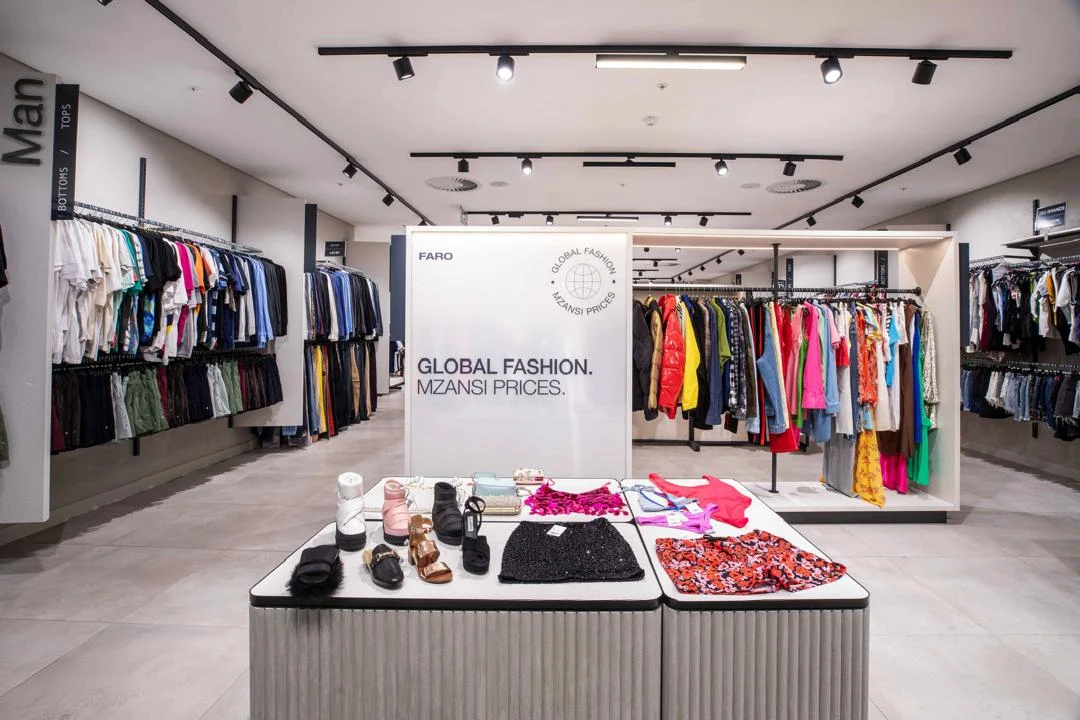
The global fashion industry is currently grappling with an inventory crisis of unprecedented proportions, as major brands face billions of dollars in unsold stock while simultaneously contending with mounting pressure to address environmental sustainability. In a strategic move to bridge the gap between surplus inventory in developed nations and the demand for affordable, high-quality apparel in emerging markets, South African startup FARO has raised $6 million in a seed funding round. The investment, led by Bloomberg President JP Zammitt, signals a growing institutional interest in "recommerce"—a sector projected to reach a global valuation of $350 billion by 2027. FARO’s mission centers on capturing value from the inefficiencies of the traditional fashion supply chain, specifically targeting the millions of items that are returned by consumers or remain unsold at the end of a season.
The fashion industry’s "inventory mountain" is a byproduct of a complex global supply chain designed for speed and volume. According to industry estimates, global fashion brands are currently holding more than $160 billion worth of unsold inventory. To protect brand prestige and prevent market cannibalization—where discounted goods in primary markets like the United States or the United Kingdom undercut full-price sales—many companies historically resorted to incinerating excess stock or discarding it in landfills. However, increasing regulatory scrutiny and a shift in consumer sentiment toward environmental responsibility have forced brands to seek more sustainable alternatives.
The Paradox of Secondhand Clothing in Africa
For decades, the African continent has served as a primary destination for the world’s secondhand clothing. While this trade provides affordable clothing and supports local livelihoods, it has also created a significant ecological crisis. In major hubs like the Kantamanto Market in Ghana or the Gikomba Market in Kenya, nearly 30% to 40% of imported secondhand items are deemed "waste" upon arrival due to poor quality or damage. These discarded textiles often end up in open-air burn piles or polluting waterways, leading to severe environmental degradation.
FARO aims to disrupt this cycle by shifting the focus from unregulated secondhand imports to a structured, quality-controlled "off-price" retail model. Unlike traditional secondhand importers who buy unsorted bales of clothing, FARO partners directly with global brands like ASOS, Boohoo, G-Star, Jack & Jones, and Levi’s. This direct-to-brand relationship allows the startup to source authentic, branded inventory that has either never been sold or was returned with minor defects. By formalizing this pipeline, FARO ensures that the products entering the African market are of high quality, thereby reducing the volume of textile waste generated by unusable imports.
Business Model and the Economics of Reconditioning
The operational core of FARO lies in its ability to transform "distressed" inventory into retail-ready products through a low-cost, high-efficiency processing system. The startup targets consumer returns—items that may have a missing button, a small snag, or have simply been taken out of their original packaging. For many global brands, the labor cost associated with inspecting, cleaning, and repackaging these items in Europe or North America exceeds the item’s value, leading them to discard the stock.
FARO leverages South Africa’s labor market and industrial infrastructure to perform these value-added services at a fraction of the cost. The company operates facilities equipped with industrial laundries and steam tunnels, where items are reconditioned to meet "as-new" standards. Co-founder and co-CEO David Torr revealed that this approach allows FARO to acquire inventory at ultra-low prices—in some instances as low as £1 per piece.
The company operates on a transparent fixed-margin model, targeting a 45% margin after processing, logistics, and retail costs. Rather than maximizing profit on high-demand items, Torr noted that FARO reinvests excess margins into lowering prices for the consumer. This strategy is designed to build long-term customer loyalty among Africa’s growing middle class, who aspire to own premium brands like Calvin Klein and Tommy Hilfiger but are often priced out of traditional retail channels.
Technological Innovation: Moving Beyond the Spreadsheet
While FARO is a physical retail business at its storefronts, its internal operations are driven by advanced data analytics and artificial intelligence. The off-price retail sector has traditionally been a "laggard" in technological adoption. Massive global players like TJX (the parent company of T.J. Maxx) still rely heavily on manual processes, where planners manage thousands of unique SKUs using complex Excel spreadsheets.
FARO is developing AI-powered agents to automate the "buyer workflow," which involves analyzing massive manifests of diverse inventory to determine pricing and distribution strategies. According to Torr, tasks that previously took human planners hours to complete can now be executed by AI in seconds with significantly higher accuracy. This technological edge is critical for managing "single-item" inventory—the unique pieces that characterize the returns and overstock market—which are notoriously difficult and expensive to digitize for traditional e-commerce platforms.
Furthermore, the startup plans to implement personalized shopping tools. Given the unpredictable nature of off-price inventory, FARO intends to use data to notify customers when specific brands or styles that match their preferences arrive at their local store. This "treasure hunt" experience, bolstered by digital notifications, combines the excitement of off-price shopping with modern convenience.
Strategic Growth and the South African Market
FARO’s growth trajectory has outpaced initial expectations. The company began 2023 with an experimental pop-up store in South Africa that generated $100,000 in its first month. While the founders originally estimated they would need seven stores to reach $2 million in annual revenue, they achieved $2.3 million in revenue with just four locations. This 20x growth in a single year has set the stage for a fivefold expansion target for the current fiscal year.
South Africa provides a unique launchpad for FARO’s model. Unlike many other African nations where retail is dominated by informal markets, South Africa possesses a highly developed formal retail sector with over 2,000 shopping centers. This infrastructure allows FARO to place its stores in high-traffic urban hubs and mid-market centers where consumers are already accustomed to a formal shopping experience.
However, the competitive landscape is shifting. The rise of ultra-fast-fashion and budget e-commerce platforms like Shein and Temu has introduced new challenges. These platforms appeal to the same price-sensitive demographic that FARO targets. FARO’s counter-strategy focuses on the "aspiration" factor—offering recognized global heritage brands at prices competitive with unbranded or ultra-fast-fashion goods. By focusing on physical stores, FARO also avoids the logistical "last-mile" delivery hurdles that continue to plague e-commerce across the continent.
Chronology of FARO’s Development
- Early 2023: FARO is founded by David Torr, Will McCarren, Chris Makhanya, and Amber Penney-Young. The team brings together expertise from major tech and retail firms including Amazon, Jumia, and Superbalist.
- Q1 2023: Launch of the first experimental pop-up store in South Africa to test consumer appetite for reconditioned branded apparel.
- Late 2023: The company scales to four permanent retail locations and achieves $2.3 million in annual revenue, significantly exceeding traditional retail benchmarks.
- November 2024: FARO announces a $6 million seed funding round led by JP Zammitt, with participation from a diverse group of venture capital firms including Presight Capital, Gharage Ventures, and E4E Africa.
- 2025–2034: The company sets an ambitious ten-year goal to scale to 1,000 stores across emerging markets in Africa, South America, Asia, and the Middle East.
Broader Implications for the Global Fashion Ecosystem
The success of startups like FARO represents a pivotal shift in how the global fashion industry views "waste." By treating unsold inventory as a resource rather than a liability, FARO is contributing to the development of a circular economy. The environmental benefits are twofold: reducing the volume of clothing sent to incinerators in the Global North and decreasing the amount of low-quality textile waste entering the Global South.
Industry analysts suggest that the "recommerce" model in emerging markets could serve as a blueprint for global brands looking to meet their ESG (Environmental, Social, and Governance) targets. If FARO successfully scales to 1,000 stores, it will not only become one of the largest off-price retailers in the Southern Hemisphere but also a significant partner for global fashion houses seeking to liquidate inventory responsibly.
The investment also highlights the evolving nature of the African consumer market. As disposable incomes rise and urbanization continues, the demand for authentic, branded goods is expected to accelerate. FARO’s ability to localize price profiles and tailor inventory to regional demand will be the ultimate test of its scalability. While the strategy has proven successful in South Africa, the startup’s next challenge will be navigating the diverse regulatory and logistical environments of markets like Nigeria, Kenya, and Brazil.
In a statement regarding the company’s philosophy, David Torr emphasized that customer centricity remains the driving force behind their expansion. "Our fundamental belief is if we can be the most exciting driver of great value for the customer, that is how we create loyalty and stickiness," Torr said. As FARO moves toward its 1,000-store goal, it stands as a testament to the potential of combining technology, sustainability, and retail innovation to solve one of the fashion industry’s most persistent problems.