








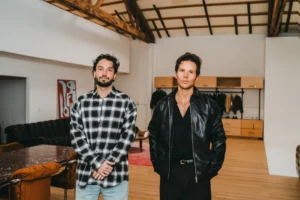

The acclaimed Lahore-born and New York-based contemporary figurative painter Salman Toor is set to present a major upcoming solo exhibition at London’s prestigious Courtauld Gallery. Opening in the autumn of 2026, the exhibition—titled Salman Toor: Someone Like You—will bring together a tightly curated selection of 19 major paintings alongside a dedicated display of works on paper. Toor, whose distinct artistic vernacular has garnered international critical acclaim, is globally recognized for his emotive, narrative-driven portrayals of queer life, identity, and the diasporic experience.
The upcoming showcase offers London audiences a rare and comprehensive look into the artist’s fictional yet deeply autobiographical universes. Centering primarily on young, queer South Asian men navigating the delicate and often turbulent intersections of romance, intimacy, alienation, and modern urban living, Toor’s canvases transport viewers into deeply intimate spaces. From dimly lit bohemian bars and private bedrooms to bustling cultural museums and high-energy dance floors, the exhibition explores the multifaceted nature of human connection. Beyond the realms of nightlife and domesticity, the collection also confronts heavier, more complex socio-political realities, specifically addressing bureaucratic friction, border crossings, and the precariousness of modern immigration.
Detailed Overview of the Exhibition and Featured Works
Running from October 2, 2026, through January 10, 2027, the exhibition occupies a significant space within the Courtauld Gallery’s exhibition calendar, bridging historical collections with cutting-edge contemporary practice. Among the 19 centerpiece paintings scheduled for display are several defining works from Toor’s recent oeuvre.
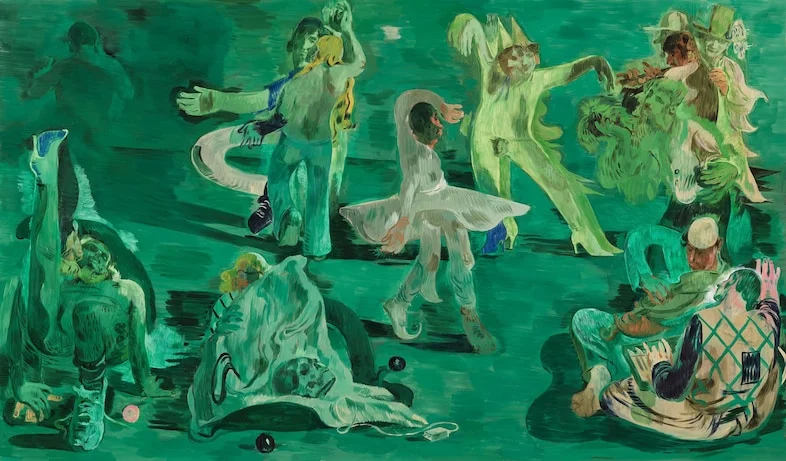
Visitors will encounter Bar Boy (2019), a work that encapsulates the atmospheric tension and hushed camaraderie of nocturnal queer spaces, alongside Man with Face Creams and Phone Plug (2019), which examines the quiet, mundane rituals of urban self-care and digital connectivity. One of the undisputed centerpieces of the exhibition is the monumental Ghost Ball (2023). Serving as one of the largest canvases Toor has ever produced, Ghost Ball draws fascinating art-historical parallels, finding its direct inspiration in the 18th-century Indian painting Dancing Villagers. By bridging historical South Asian visual culture with contemporary Western queer portraiture, Toor positions his work within a broader, transnational lineage of figurative art.
Complementing the main gallery installation is a separate, focused display highlighting Toor’s mastery of works on paper. This ancillary section features notable pieces such as Fag Puddle in Vitrine (2021)—a politically charged and compositionally striking work that was officially acquired by the Courtauld Gallery in 2024, cementing the institution’s commitment to expanding its contemporary holdings.
Chronology and Background Context
The genesis of Salman Toor: Someone Like You represents a logical progression in the artist’s rapid international rise. Over the past decade, Toor has transitioned from an emerging painter to a defining voice in contemporary figurative art. Born in Lahore, Pakistan, in 1983, Toor relocated to the United States to pursue his formal education, earning a Bachelor of Fine Arts from Ohio Wesleyan University in 2006 and a Master of Fine Arts from Pratt Institute in Brooklyn in 2009.
For years, Toor worked steadily, developing his characteristic jewel-toned palette—dominated by rich emerald greens, deep indigos, and glowing ambers—and his signature elongated brushwork. His artistic breakthrough arrived with major institutional solo presentations, most notably Salman Toor: How Will I Know, which originated at the Whitney Museum of American Art in New York in 2020 before traveling to the Baltimore Museum of Art in 2021. This seminal exhibition introduced a broad museum-going public to his poignant depictions of queer diasporic life.
Subsequent milestones include major institutional acquisitions, international gallery shows, and his increasing integration into prominent public collections. The acquisition of Fag Puddle in Vitrine by the Courtauld Gallery in 2024 served as a critical precursor to the current exhibition, signaling a deepening institutional relationship between the artist and the historic London institution known primarily for its monumental collection of Impressionist and Post-Impressionist masterpieces. By embedding Toor’s contemporary narratives into the Courtauld’s historic footprint, the gallery continues its recent trajectory of contextualizing historical European art alongside urgent, contemporary socio-cultural dialogues.
Artistic Technique and Supporting Data on Queer Representation
Toor’s aesthetic is frequently analyzed through the dual lenses of art history and sociological observation. His figurative compositions consciously evoke the stylistic traditions of Old Masters—reminiscent of Anthony van Dyck, Watteau, and Henry Fuseli—yet they subvert these historical frameworks by inserting marginalized modern subjects into the pictorial hierarchy.
According to data compiled across recent contemporary art market reports, the demand for figurative painting centering intersectional narratives has grown exponentially over the past five years. Institutional curators and private collectors alike have increasingly prioritized artists who address themes of diaspora, migration, and queer visibility. Toor’s works routinely command significant attention at international art fairs and auctions, reflecting a broader structural shift within the global art market toward more diverse, inclusive, and narrative-driven storytelling.
The thematic focus of Someone Like You addresses crucial demographic realities. In an era marked by shifting global migration patterns and evolving legal frameworks surrounding LGBTQ+ rights internationally, Toor’s canvases serve as visual archives of the contemporary diaspora. His subjects often exist in a state of suspended belonging—caught between the conservative societal pressures of their countries of origin and the isolating anonymity of Western metropolises like New York or London.
Official Statements and Institutional Perspectives
While formal curatorial statements from the Courtauld Gallery elaborate on the mechanics of bringing Toor’s works into dialogue with the museum’s permanent collection, cultural commentators and art historians have noted the profound significance of staging such an exhibition in London. Representatives for the gallery have emphasized that Toor’s ability to merge intimate psychological portraiture with sweeping socio-political commentary makes him one of the most vital painters working today.
Art critics have frequently pointed out that Toor’s green-toned palette acts as a unifying atmospheric agent, imbuing every scene—whether a moment of tender embrace in a cramped apartment or a tense interrogation at an airport customs desk—with a distinct nocturnal luminescence. This signature color choice has become synonymous with contemporary queer alienation and solidarity.
Furthermore, partnerships surrounding the exhibition reflect a modern approach to audience engagement. In an effort to make contemporary art more accessible to younger demographics, cultural institutions have increasingly collaborated with independent cultural platforms. For the Courtauld exhibition, a strategic ticketing partnership has been established with the Dazed Club, allowing members to purchase exhibition tickets at an exclusive discounted rate directly through the Dazed Club digital application. This initiative underscores the exhibition’s dual mission: to engage serious academic and art-historical circles while actively welcoming the younger, culturally plugged-in communities that Toor’s work so vividly represents.
Broader Impact and Cultural Implications
The presentation of Salman Toor: Someone Like You at the Courtauld Gallery carries notable implications for both the institution and the broader cultural landscape of the United Kingdom. For the Courtauld, hosting a contemporary artist whose work explicitly centers queer South Asian identity demonstrates a continued commitment to diversifying its exhibition programming and attracting new, diverse audiences to Somerset House.
From a broader art-historical perspective, exhibitions of this caliber validate the experiences of the global diaspora within elite Western cultural spaces. By placing Toor’s modern chronicles of displacement, desire, and community inside a bastion of art history, the gallery reinforces the notion that the struggles and joys of queer people of color are central, rather than marginal, to the ongoing evolution of human portraiture.
As the dates approach for Salman Toor: Someone Like You—opening on October 2, 2026, and running through January 10, 2027—anticipation continues to build within the international art community. The exhibition promises not only to showcase the technical brilliance and narrative depth of one of painting’s most compelling contemporary practitioners, but also to foster crucial conversations regarding belonging, identity, and the enduring power of art to bear witness to the human condition.