








The global fashion industry is currently navigating an era of unprecedented acceleration, where the traditional seasonal calendar has been replaced by a continuous cycle of micro-trends and ultra-fast production. In a significant move to capitalize on this shift, Raspberry AI, a New York-based startup, has announced the successful closing of a $24 million Series A funding round. The investment was led by Andreessen Horowitz (a16z), with participation from existing investors including Greycroft, Correlation Ventures, and MVP Ventures. This capital infusion arrives just ten months after the company’s $4.5 million seed round, signaling intense investor confidence in the intersection of generative artificial intelligence and industrial design.
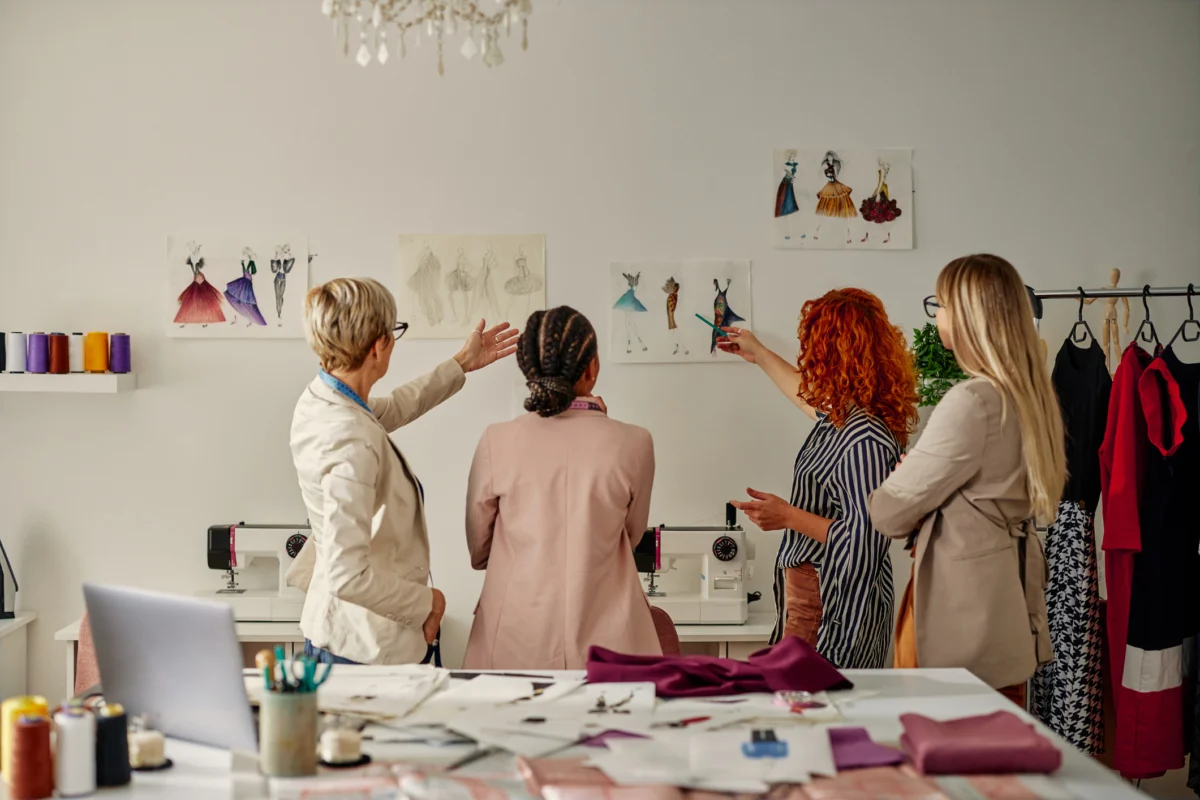
Founded two years ago by Cheryl Liu, Raspberry AI seeks to solve a critical bottleneck in the apparel supply chain: the bridge between creative ideation and physical production. In an industry where giants like Shein, H&M, and Zara update their digital storefronts daily, the traditional method of designing, sampling, and iterating has become a competitive liability. Raspberry AI provides a text-to-image and sketch-to-image platform that allows designers to visualize, refine, and iterate on garment concepts in seconds, effectively replacing a process that historically took weeks of physical prototyping and shipping.
The Genesis of an AI-Driven Fashion Revolution
The inception of Raspberry AI coincides with the broader "Cambrian explosion" of generative AI that began in late 2022. Cheryl Liu, whose professional background includes roles as a private equity analyst at KKR focused on retail and operational experience at Amazon and DoorDash, identified a specific vacuum in the market. While general-purpose models like OpenAI’s DALL-E and Stability AI’s Stable Diffusion were gaining mainstream traction for creative art, they lacked the precision and industry-specific vocabulary required for commercial fashion manufacturing.
Liu observed that while the retail world was moving faster, the design tools remained largely stagnant. Designers were either tethered to legacy computer-aided design (CAD) software like Adobe Photoshop or Browzwear—which require significant manual labor—or were forced to wait for physical samples to be manufactured in overseas factories and shipped back for review. By the time a physical sample arrived, the trend it was meant to capture might have already peaked. Raspberry AI was built to circumvent this latency by allowing designers to create photo-realistic images of products as they would appear on a retail website before a single thread is sewn.
Solving the Iteration Paradox in Global Retail
The core value proposition of Raspberry AI lies in its ability to facilitate "hyper-iteration." In the traditional manufacturing model, a company might order two or three physical samples for a new jacket design, testing different colors or fabrics. Each sample costs money and, more importantly, time. Liu notes that no company can afford to order 50 physical iterations of a single product. However, with Raspberry’s platform, a designer can visualize 50 variations of a foundational piece—experimenting with different prints, materials, and silhouettes—nearly instantly.
This capability is particularly vital as the "fast fashion" model evolves into "ultra-fast fashion." Industry data suggests that market leaders in the space now introduce thousands of new SKUs every week. To maintain this pace without incurring massive waste, brands must be certain of a design’s aesthetic appeal before moving to the production phase. Raspberry AI’s platform serves as a high-fidelity filter, ensuring that only the most promising designs transition from the digital canvas to the factory floor.
Strategic Investment and Market Validation
The $24 million Series A round underscores the strategic importance of AI in the vertical SaaS (Software as a Service) sector. Bryan Kim, a partner at Andreessen Horowitz, highlighted that the firm was specifically looking for a company capable of modernizing the fashion manufacturing pipeline. According to Kim, Raspberry AI stood out not only because of its technological stack but because of Liu’s deep understanding of the retail ecosystem.
The startup’s growth trajectory has been remarkably steep. In the short time since its founding, Raspberry AI has secured 70 enterprise customers. This portfolio includes diverse players across the fashion spectrum:
- Under Armour: The American athletic wear giant, which requires high-performance textiles and specific functional aesthetics.
- Gruppo Teddy: An Italian fashion conglomerate with a massive footprint of over 8,800 stores across nearly 40 countries.
- MCM Worldwide: A luxury fashion house known for its high-end leather goods and apparel.
The diversity of these clients—from performance gear to Italian fast fashion and German-born luxury—demonstrates the platform’s versatility. It suggests that the need for rapid digital visualization is universal across the $1.7 trillion global apparel market.

Technical Differentiation: Why General AI Falls Short
A primary challenge for any vertical AI startup is the competition from horizontal giants like Midjourney or Adobe Firefly. However, Raspberry AI has carved out a niche by focusing on domain-specific intelligence. Liu points out that professional fashion design requires a specialized lexicon that general models often fail to interpret correctly.
For instance, a prompt for a "fuzzy sweater" in a general-purpose AI model might yield a visually pleasing but structurally impossible garment. Raspberry’s models are trained to understand the nuances of knitwear patterns, yarn weights, and textile behavior. The platform also includes a "sketch-to-image" feature, allowing designers to upload their own hand-drawn conceptual sketches and transform them into photorealistic renders that account for light, shadow, and drape. This keeps the creative control in the hands of the designer while leveraging the speed of AI.
Economic and Environmental Implications
Beyond the immediate benefits of speed and cost reduction, the adoption of tools like Raspberry AI has broader implications for the global economy and environmental sustainability. The fashion industry is frequently criticized for its environmental footprint, with overproduction and unsold inventory contributing significantly to global waste.
By enabling brands to "test" designs digitally and gain internal consensus before manufacturing, Raspberry AI helps reduce the volume of physical samples that end up in landfills. Furthermore, it allows for a more "on-demand" approach to design. If a brand can visualize and approve a collection digitally, they can move closer to a model where production is more tightly aligned with real-time consumer demand, thereby reducing the "deadstock" that often plagues the industry.
Chronology of Development and Future Outlook
The timeline of Raspberry AI reflects the rapid maturation of the generative AI sector:
- Late 2022: Image models like DALL-E and Stable Diffusion become publicly available; Cheryl Liu identifies the retail application gap.
- Early 2023: Raspberry AI is founded and begins developing proprietary models tailored for fashion terminology.
- Early 2024: The company closes a $4.5 million seed round to build out its initial product and acquire early adopters.
- Late 2024: The platform scales to 70 major customers, including global brands like Under Armour and MCM.
- January 2025: Raspberry AI announces its $24 million Series A, led by Andreessen Horowitz.
Looking forward, the company intends to use the new capital to significantly expand its workforce, focusing on engineering, sales, and marketing. Perhaps most ambitiously, Raspberry AI plans to move beyond apparel. The company has identified home decor, furniture, and cosmetics as its next frontiers. These industries share many of the same pain points as fashion: a reliance on visual aesthetics, a need for rapid prototyping, and a complex supply chain that rewards speed-to-market.
Analysis of the Competitive Landscape
As Raspberry AI scales, it will enter a more crowded field of AI-assisted design. Adobe has been aggressively integrating Firefly into its Creative Cloud suite, which remains the industry standard for many designers. Meanwhile, specialized startups like Cala and others are also vying for the "AI for fashion" crown.
However, Raspberry’s focus on the enterprise level—targeting manufacturers with thousands of stores and global athletic brands—sets it apart from tools designed for independent creators. The ability to integrate into the workflow of a company like Gruppo Teddy requires more than just a good image generator; it requires enterprise-grade security, collaboration features, and the ability to output data that can eventually be used in the manufacturing process.
The success of this Series A round indicates that the venture capital community views the "AI-to-factory" pipeline as one of the most lucrative applications of generative technology. By turning sketches into reality in seconds, Raspberry AI is not just changing how clothes are designed; it is reshaping the fundamental rhythm of global commerce. As the company expands into furniture and cosmetics, its influence on the visual language of consumer goods is poised to grow, further blurring the line between digital imagination and physical reality.