








Danish auteur Nicolas Winding Refn has long defied conventional filmmaking norms, transitioning from the raw, hyper-realistic grit of his early career to the hallucinatory, neon-soaked abstractions of his contemporary works. With the release of his latest feature, Her Private Hell, hitting UK cinemas on September 25, 2026, Refn presents what is arguably his most esoteric project to date. This surreal cinematic endeavor serves not only as a radical departure from traditional narrative structures but also as a profound creative rebirth, sparked by a life-altering medical emergency that briefly left the filmmaker clinically dead.
The trajectory of Refn’s career highlights a deliberate evolution away from tactile realism. At the outset of his journey, his commitment to capturing raw authenticity was absolute. While directing 1996’s Pusher, the onscreen cocaine utilized by the actors was entirely genuine, and the film’s gritty 2004 sequel, Pusher II, populated its underworld scenes with actual criminals. However, over the subsequent decades, the director swung firmly in the opposite direction. Her Private Hell abandons earthly realism entirely, unfolding within a magical, neon-lit hotel that appears to float among the clouds. The film’s atmosphere is defined by a haze of persistent background smoke, deliberate pacing slower than a judicial filibuster, and self-referential nods to classic literary figures like Hans Christian Andersen.
A Multilayered Narrative and Giallo Influences
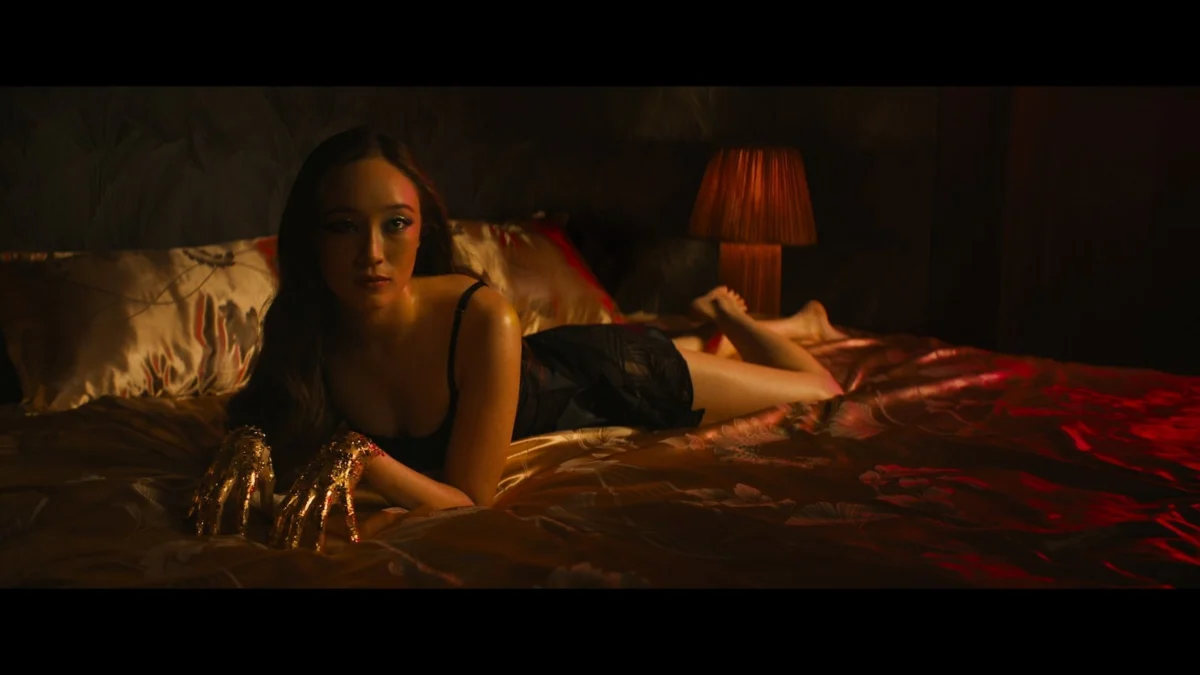
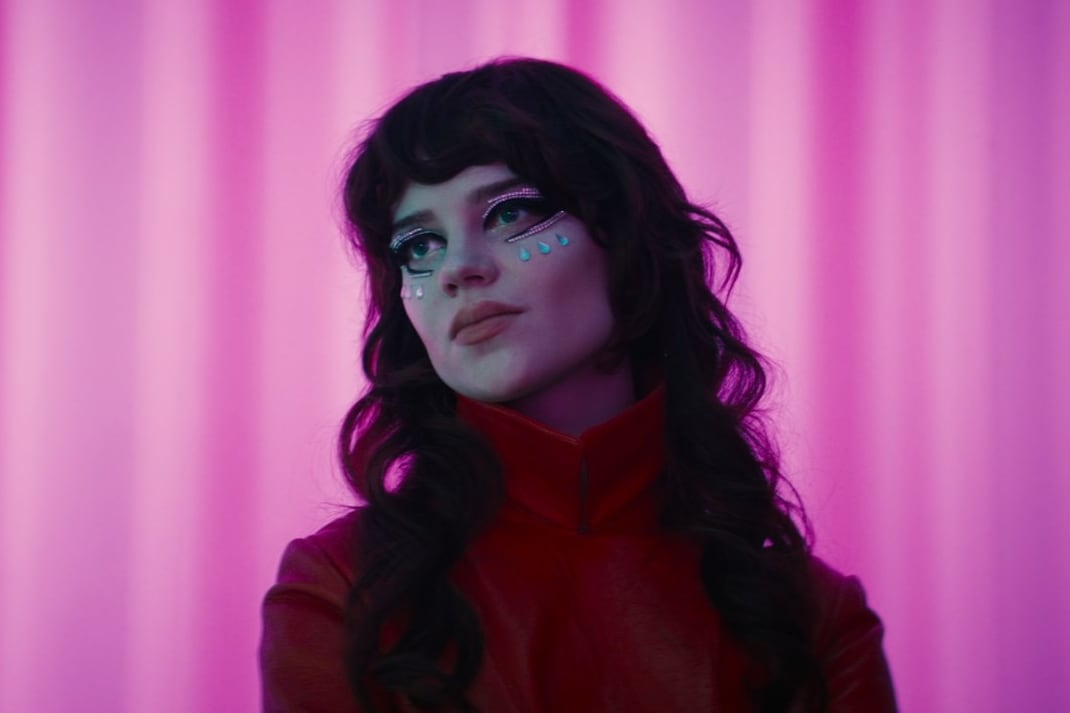
Within the dreamlike confines of the Tower Hotel, Her Private Hell utilizes a framework that echoes the meta-textual casting choices of Pusher II. The narrative centers on Elle, played by Sophie Thatcher; Hunter, portrayed by Kristine Froseth; and Dominique, played by Havana Rose Liu. These characters are the lead actors in Candyfloss, a kitschy fictional sci-fi series. Off-set, the trio lounges in theatrical, outlandish costumes that mirror their spaceship-piloting alter egos, while navigating complex personal dynamics. Dominique is engaged to marry Elle’s father, a pairing complicated by palpable erotic tension between the two women. Meanwhile, Hunter resorts to crawling on all floors to curry favor with Nico, a mercurial filmmaker played by Diego Calva, who bluntly declares his affinity for "freaky shit."
Operating in a parallel storyline, the film introduces a glove-wearing serial killer known as the Leatherman, who slashes through young women with the stylized brutality reminiscent of an Dario Argento giallo slasher. Tasked with hunting down the murderer is Private K, a former American GI portrayed by Charles Melton. Private K’s mission involves avenging his deceased daughter, clashing with the yakuza, and inexplicably intersecting with the sci-fi world of Candyfloss. While Refn previously hinted at his affinity for giallo aesthetics through the lurid, saturated lighting of 2003’s Only God Forgives and 2016’s The Neon Demon, Her Private Hell fully embraces and exaggerates the genre’s inherent absurdities, exemplified by a victim’s dying scream of a single, highly stylized word: "Daddy!"
A Brush with Mortality and Creative Resurrection
The esoteric nature of Her Private Hell is deeply rooted in a profound personal trauma. In 2023, Refn suffered a leaking heart condition that resulted in clinical death for approximately 25 minutes. Reflecting on the incident during a press interview in London, the director revealed that the event fundamentally altered his relationship with his art. Prior to the medical emergency, Refn felt his creative flame had entirely extinguished, leaving him contemplating artistic retirement.
The emergency surgery required to revive him inadvertently revitalized his creative output. Describing the experience, Refn noted that despite the trauma, it provided a renewed sense of purpose and the unfiltered curiosity of youth. Comparing this milestone to the genesis of his career, the director observed that the first time creating something always carries a unique, childish excitement. Because Her Private Hell is his inaugural project following his return from near-death, it replicates that primal creative spark. Without the medical intervention, Refn acknowledges that his career trajectory had effectively concluded, likely leaving him to produce conventional commercial advertisements.
Her Private Hell marks Refn’s first feature film release in a decade, following 2016’s The Neon Demon. In the intervening years, the director shifted his focus to the television medium, helming two high-budget streaming series: Amazon’s Too Old to Die Young in 2019 and Netflix’s Copenhagen Cowboy in 2022. These projects leaned heavily into the divisive stylistic elements that alienated general audiences in Only God Forgives—namely, slow-burn storytelling and sparse dialogue—amplifying them to demanding extremes. While Her Private Hell runs under two hours, its deliberate pacing mirrors his television output, requiring viewers to immerse themselves in prolonged silences and extended visual contemplation.
The Mechanics of Abstraction and Viewer Polarization
Refn’s approach to directing actors within this artificial environment draws direct inspiration from classical performing arts. By instructing the cast to maintain extreme stillness and precision, he constructs an operatic atmosphere where lines are delivered with theatrical formality. Furthermore, the director actively encourages an interactive viewing experience, suggesting that audiences can freely reorder or skip between narrative situations, likening the process to remixing a piece of music or flipping television channels as an eight-year-old child.
This insistence on challenging traditional viewing habits inevitably yields polarized reactions. During press screenings for Her Private Hell, critical reception varied drastically, with some attendees expressing overt frustration at the film’s opaque narrative structure. Refn, however, views polarization as an essential tool for cinematic engagement. Rather than seeking universal acclaim or validation, the filmmaker maintains that generating strong, opposing reactions is the most effective method to penetrate the viewer’s consciousness and plant a lasting conceptual seed.

Career Retrospective and Financial Lessons
Refn’s uncompromising artistic philosophy has consistently defined his career choices, notably when he declined an offer to direct the James Bond film Spectre in favor of maintaining complete creative control over Only God Forgives. This uncompromising stance has occasionally carried heavy financial risks. Discussing his 2003 psychological thriller Fear X, which starred John Turturro, Refn candidly labels the project a complete artistic and financial failure that led to personal bankruptcy. However, he credits that extreme setback with realigning his professional trajectory. The financial ruin forced him to write and direct Pusher II and Pusher III as commercially viable projects, subsequently freeing him to explore unreality in films like 2009’s Bronson and his subsequent stylistic reinventions.
Despite the turbulent history with major studios—notably Amazon’s decision to quietly sideline Too Old to Die Young after realizing the uncompromising nature of the final product—Refn remains steadfast in his refusal to pander to mainstream expectations. Operating strictly within what he terms the "Nic Refn business," the director continues to reject commercial compromise.
As Her Private Hell prepares for its September 25 theatrical release in the UK, its reception will likely test the limits of contemporary cinema audiences. Looking ahead, Refn’s upcoming slate includes a long-delayed comic-book adaptation of Maniac Cop. Whether that project adopts the hyper-stylized abstraction of his latest work or explores a different cinematic avenue remains deliberately ambiguous. True to form, Refn remains unconcerned with audience validation, asserting that absolute adherence to one’s creative vision is the only path to genuine artistic longevity.