










The perennial lament, "I wish I could dress up more often, but it’s just too hot!" echoes globally as temperatures rise. This challenge, often perceived as a dilemma between maintaining sartorial standards and ensuring personal comfort, has spurred significant evolution in menswear. Far from merely shedding layers, contemporary approaches to warm-weather dressing integrate scientific principles with timeless aesthetics, demonstrating that looking polished and staying cool are not mutually exclusive. Indeed, many conventional assumptions about hot-weather attire can inadvertently exacerbate discomfort. A detailed examination of fabric science, garment construction, and historical trends reveals a sophisticated pathway to impeccable style, even in the most oppressive heat.
The Historical Evolution of Summer Menswear
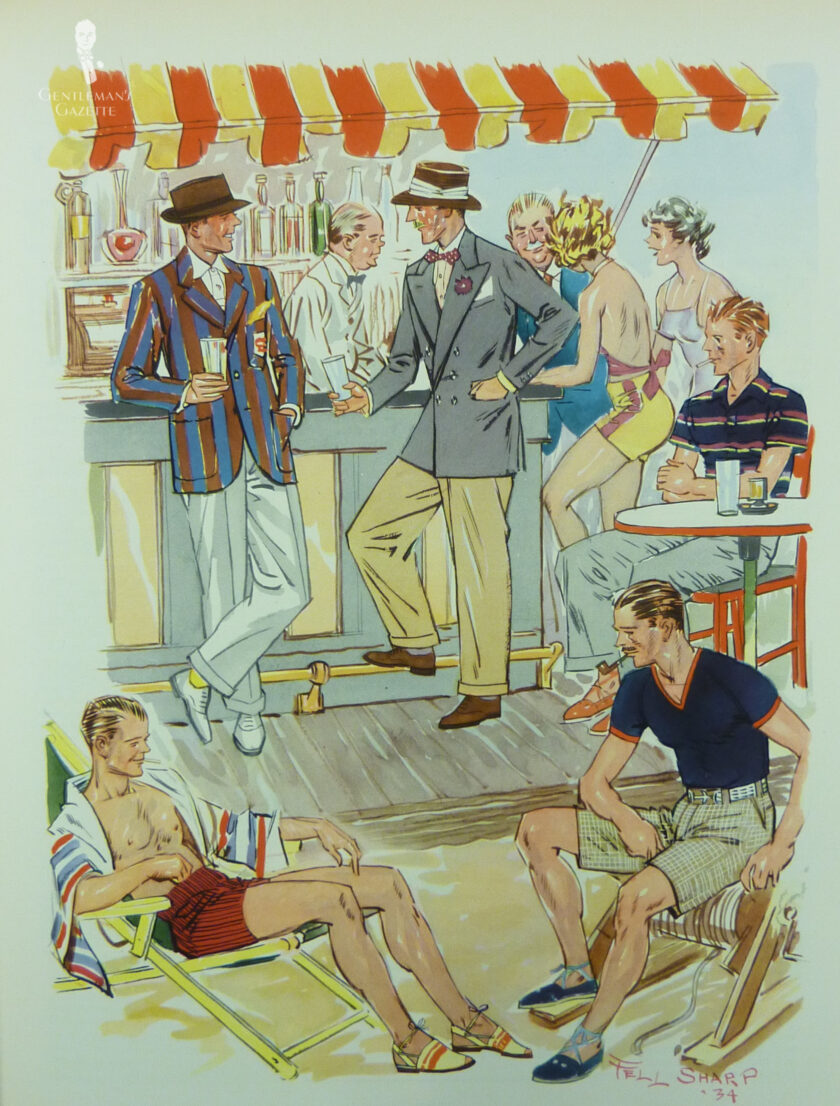
Historically, formal attire offered little concession to heat. The Victorian era, for instance, saw men in heavy wool suits, regardless of the season, relying on natural ventilation in grand homes and slower paces of life. The early 20th century marked a gradual shift, particularly in colonial outposts and southern regions, where practicality began to influence fashion. Lighter fabrics like linen and cotton gained prominence, and the advent of air conditioning in the mid-20th century further shaped dressing habits, sometimes paradoxically leading to heavier indoor clothing worn in contrast to the sweltering outdoors. Today, with global warming trends intensifying and urban heat islands becoming more prevalent, the imperative to dress smartly and comfortably has taken on renewed urgency, driving innovation in textile technology and design.

Strategic Garment Choices for Optimal Comfort and Style
Modern menswear philosophy for hot climates emphasizes a multi-faceted approach, moving beyond simple fabric selection to encompass cut, color, and construction.

1. The Counter-Intuitive Advantage of Long Sleeves
While seemingly paradoxical, long-sleeved shirts often provide superior thermal regulation compared to short-sleeved counterparts in direct sunlight. Exposing bare skin to intense solar radiation can lead to rapid heating, increased perspiration, and sunburn. A lightweight, relaxed-fit long-sleeved shirt acts as a physical barrier, deflecting UV rays and preventing direct skin exposure. Simultaneously, its loose fit allows for continuous air circulation around the arms, creating a convective cooling effect as breezes pass through, evaporating sweat more efficiently. Textile science supports this, with studies showing that certain loose-weave fabrics can maintain a lower skin temperature than exposed skin under intense sun.
2. The Protective and Polished Role of Collars
A fundamental element often overlooked, a collar provides crucial protection for the sensitive back of the neck from direct solar exposure, a common site for sunburn. Beyond its protective function, a collared shirt—be it a polo, a popover, or a lightweight button-down—instantly elevates a man’s appearance, lending an air of professionalism and intentionality that a basic crewneck t-shirt often lacks. This stylistic upgrade, coupled with practical sun protection, makes collared garments an indispensable component of summer wardrobes.

3. The Thermodynamics of Color Palette
The choice of color plays a significant role in thermal comfort. Darker colors, such as navy and charcoal, absorb more solar radiation, converting it into heat that is then transferred to the wearer. Conversely, lighter shades—whites, creams, pastels, and light greys—reflect a greater proportion of sunlight, minimizing heat absorption. Incorporating a lighter color palette into a summer wardrobe not only results in a more airy and refined aesthetic but also actively contributes to feeling cooler. For those reluctant to abandon darker core pieces, such as a navy sport coat, balancing the ensemble with light-colored trousers, bright shirts, and vibrant accessories can effectively mitigate heat absorption while maintaining a sophisticated look.
4. Redefining Summer Footwear Construction
Traditional dress shoes, typically constructed with multiple layers of leather, can become miniature ovens for the feet in hot weather. While leather is inherently breathable, the dense layering and often synthetic linings trap heat and moisture, leading to discomfort. The solution lies in specialized summer footwear designed for enhanced ventilation. Key features include unlined or minimally lined constructions, perforated leathers or suedes, and lighter sole materials. Loafers, espadrilles, and canvas sneakers with breathable uppers exemplify this principle, allowing air to circulate and moisture to escape, keeping feet dry and comfortable. Brands and designers are increasingly focusing on innovations like deconstructed uppers and moisture-wicking footbeds to meet this demand.
5. The Optionality and Alternatives of Neckwear
For immediate relief from overheating, eliminating a necktie is a straightforward strategy. A tightly knotted silk tie effectively seals off the collar, trapping heat around the neck and upper torso. When formal dress codes necessitate neckwear, a bow tie presents a viable alternative. Utilizing significantly less fabric and leaving the entire central portion of the chest exposed to airflow, a bow tie can provide a considerable thermal advantage without compromising on formality. This choice reflects a practical adaptation of classic style to environmental demands.
6. The Critical Importance of Natural Fibers
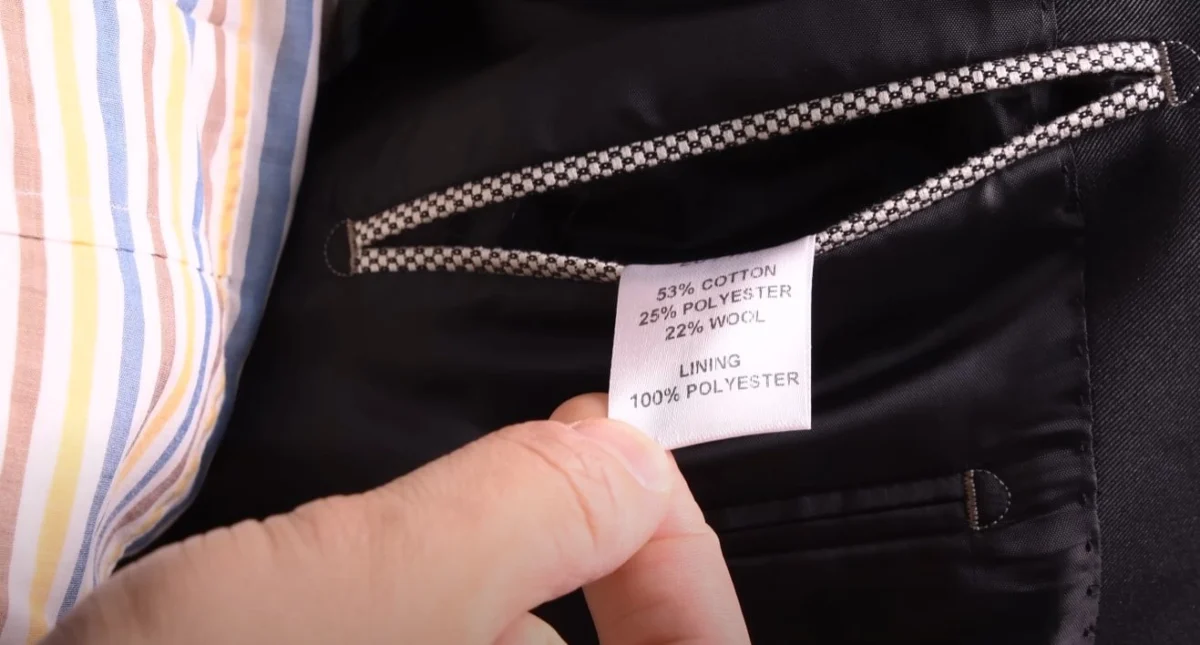
The distinction between natural and synthetic fabrics is paramount in hot climates. Synthetic fibers like polyester, nylon, and acrylic act akin to plastic wrap, trapping body heat and retaining moisture, resulting in a clammy, uncomfortable sensation. Natural fibers—including cotton, linen, silk, and specific wool varieties—excel in breathability and moisture-wicking properties. They allow air to circulate freely and draw sweat away from the skin, facilitating evaporative cooling. This principle extends beyond outer garments to linings; a summer-weight cotton blazer, for instance, can negate its benefits if lined with a full polyester interior, creating a "greenhouse effect." Consumers are advised to meticulously check garment tags for fabric composition, prioritizing natural linings like Bemberg (cupro) or half/unlined constructions.

7. Rethinking Linen: Alternatives and Nuances
While linen is widely celebrated as the quintessential summer fabric, it possesses characteristics that may not suit all preferences. Its deceptive weight, often dense weave, and propensity for immediate wrinkling can be drawbacks. While the "casual charm" of linen wrinkles is embraced by some, others seek alternatives that offer similar breathability with enhanced crispness. Tropical wool, a high-twist wool with an open weave, emerges as an excellent contender. Its lightweight nature and inherent resistance to creasing, coupled with maximum airflow, allow it to drape elegantly and retain its shape throughout the day. Other alternatives include lightweight cotton-linen blends, seersucker with its distinctive puckered texture, and fine cotton weaves like voile or poplin, all designed to maximize airflow and minimize heat retention.
8. The Discreet Comfort of No-Show Socks
Traditional over-the-calf dress socks, while a hallmark of classic style, can contribute to overheating by adding a layer of insulating fabric up to the knees. In hot weather, switching to high-quality, lightweight no-show socks offers a pragmatic solution. These socks protect shoes from perspiration and prevent chafing while leaving the ankles bare, allowing cooling breezes to reach the skin. This small adjustment can significantly enhance overall comfort without sacrificing sartorial integrity.

9. The Imperative of Cooler, Looser Cuts
The prevailing trend towards slim-fit and close-fitting garments, while fashionable, is thermally disadvantageous in summer. When fabric adheres directly to the skin, it obstructs air circulation and traps moisture, impeding the body’s natural cooling mechanisms. Embracing slightly looser, more relaxed cuts in tailored clothing and shirts is crucial for summer comfort. This increased space between fabric and skin allows air to flow freely, promoting sweat evaporation and effectively lowering core body temperature. Fashion houses and bespoke tailors are increasingly advocating for these more generous cuts in their summer collections, blending comfort with a refined, relaxed elegance.
10. Minimizing Lining for Maximum Airflow
The internal construction of blazers and sport coats is a critical factor in their suitability for summer. A fully lined jacket, regardless of its outer fabric, acts as an insulating layer, trapping heat. The ideal summer jacket features minimal lining—preferably unlined or half-lined—and is constructed from an open-weave fabric. Holding such a jacket up to the light should reveal a degree of transparency, indicating a weave designed for maximum ventilation. This architectural approach to garment design prioritizes breathability and thermal regulation, ensuring the jacket remains comfortable even in high humidity.

11. Adjusting Cuffs for Enhanced Cooling
In long-sleeved summer shirts, the choice of cuff style can impact comfort. Heavy double cuffs with metal cufflinks add unnecessary weight and bulk around the wrists. Opting for simple barrel cuffs and leaving them unbuttoned allows air to travel directly up the arms, facilitating cooling at the pulse points. This subtle modification enhances ventilation, contributing to a more comfortable experience without detracting from the shirt’s aesthetic.
12. The Practical Elegance of a Stylish Hat
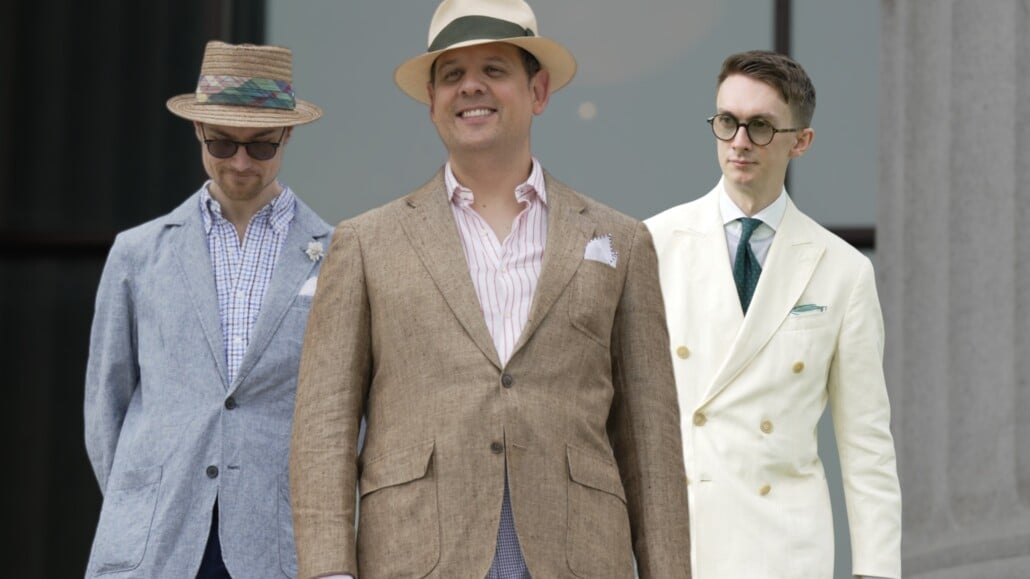
Headwear is essential for sun protection, but not all hats are created equal. The ubiquitous baseball cap, while offering frontal shade, leaves the ears and the back of the neck vulnerable to UV radiation. For a gentleman seeking both protection and style, a classic full-brimmed hat, such as a genuine Panama hat or a straw Fedora, is superior. Its wide brim casts a comprehensive shadow, shielding the face, ears, and neck simultaneously, while also lending an air of sophisticated refinement. The material and weave of such hats are typically designed for breathability, adding to their functional appeal.

Broader Implications and Future Outlook
The evolution of summer menswear reflects a broader societal adaptation to changing environmental conditions and a growing consumer demand for comfort fused with elegance. The textile industry is responding with advanced fabric technologies, including performance-enhanced natural fibers and innovative blends that offer superior moisture management and breathability without compromising on drape or feel. Sustainable practices are also gaining traction, with a focus on ethically sourced materials and production methods that reduce environmental impact.

Fashion experts anticipate a continued emphasis on versatility, with garments designed to transition seamlessly from formal settings to more casual environments. The "slow fashion" movement encourages investment in high-quality, durable pieces that withstand trends and offer lasting comfort. As global temperatures continue to rise, the principles of strategic summer dressing will become not just a matter of style, but of practical necessity for maintaining well-being and productivity. The synthesis of timeless aesthetics with scientific understanding provides a robust framework for gentlemen to navigate the heat with unparalleled poise and comfort.