










Suitsupply’s prominent Vigo Street retail location sits within touching distance of Savile Row, a geographic proximity that subtly underscores the brand’s positioning in the contemporary menswear market. Operating just steps away from London’s historical epicenter of bespoke tailoring, the Dutch-headquartered menswear label has carved out a distinct market niche by offering contemporary, high-end construction that approaches the aesthetic standards of traditional bespoke craftsmanship without demanding the corresponding financial investment or extended lead times. While the establishment does not manufacture bespoke garments—a meticulous craft honed over centuries of generational expertise—it delivers an impressive array of sartorial options through both its customizable and ready-to-wear lines. As the menswear industry navigates evolving consumer preferences toward versatile, comfortable, and structurally distinct tailoring, an examination of Suitsupply’s manufacturing capabilities, fabric sourcing, and design evolution offers insight into whether the brand maintains its reputation as a premier destination for modern suiting.
Background and Market Positioning
Founded in 2000 by Fokke de Jong, Suitsupply emerged with a direct-to-consumer business model designed to disrupt traditional luxury tailoring. By cutting out traditional wholesale markups and controlling the supply chain from fabric sourcing to final retail sale, the company positioned itself to deliver European craftsmanship at an accessible price point. Over the past two decades, the brand has expanded globally, establishing flagship stores in major fashion capitals across Europe, North America, and Asia.

The physical proximity of the Vigo Street store to Savile Row is more than a coincidence; it is a calculated statement of intent. Traditional Savile Row tailoring often requires multiple fittings and can take anywhere from six to twelve weeks, with entry-level bespoke prices frequently exceeding several thousand pounds. Suitsupply, conversely, bridges the gap between mass-market retail and luxury bespoke by offering structured ready-to-wear items and a streamlined custom-made program. This hybrid approach caters to a modern clientele that demands sophisticated proportions—such as broader lapels, higher-rise trousers, and expressive silhouettes—without the logistical friction traditionally associated with high-end menswear.
The Evolution of the Custom-Made Program
For consumers seeking a personalized fit and specific design details, Suitsupply’s Custom Made service has evolved into a cornerstone of the brand’s commercial strategy. Far from the arduous, time-consuming consultations traditionally associated with custom tailoring, the program is engineered for efficiency and accessibility.
Clients can initiate the process either digitally via the brand’s online portal or in-person with the guidance of trained styling experts at physical retail locations. The platform provides access to a vast archive of more than 700 Italian fabrics sourced from renowned mills such as Vitale Barberis Canonico and Ferla. The material selection spans traditional year-round wools and breathable linens to luxurious cashmere, raw silk, and seasonal textures like seersucker.

Once a fabric is selected, customers navigate a granular array of customization choices, including lapel width, button configurations, pocket styles, internal linings, and waistband construction. To streamline repeat purchasing, the brand utilizes a proprietary digital profile system known as a "Size Passport," which securely stores client measurements and preferences. Completed garments are subsequently manufactured and delivered to the customer’s door within a compressed window of two to three weeks, effectively redefining the timeline for custom menswear production.
Ready-to-Wear Excellence and Contemporary Proportions
Beyond bespoke and custom-made options, Suitsupply’s ready-to-wear inventory remains a primary driver of its market presence. The current seasonal collection demonstrates a deliberate departure from the hyper-slim, restrictive silhouettes that dominated menswear throughout the 2010s. Instead, the brand has embraced more relaxed, fluid proportions characterized by wider lapels, natural shoulders, and fuller trouser cuts.
Prominent within the current ready-to-wear lineup is the mid-blue Milano suit, a double-breasted design that exemplifies the brand’s structural philosophy. Featuring a lightly padded shoulder to establish a commanding upper-body silhouette, the garment utilizes a half-canvas construction. This traditional tailoring technique allows the wool fabric to conform naturally to the wearer’s chest over time, improving comfort and drape. Accompanying the jacket are high-rise, straight-leg trousers with a slightly expanded leg opening, engineered to accommodate contemporary footwear choices ranging from structured leather loafers to robust winter boots.
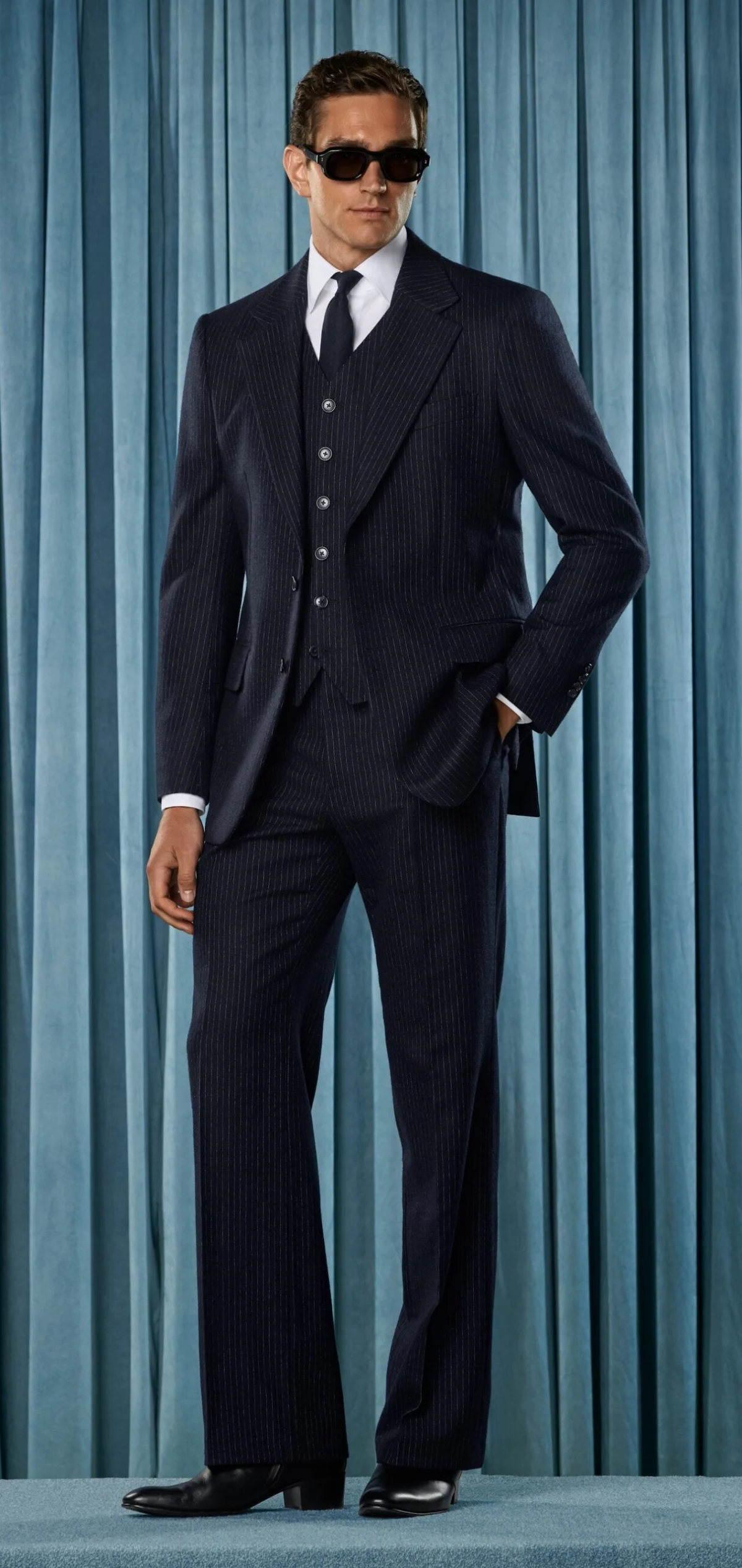
The ready-to-wear portfolio similarly accommodates diverse stylistic preferences, ranging from dark gray checked double-breasted suits to versatile navy iterations cut from all-season pure S110’s wool. By offering varied color palettes and fabric weights, the brand ensures its off-the-rack offerings appeal to both conservative corporate environments and more progressive sartorial settings.
Seasonal Analysis: Three Standout Suits for Fall
As seasonal temperature drops necessitate heavier fabrics and more robust layering, autumn represents a critical commercial period for the menswear and tailoring sectors. Industry trends indicate a sustained shift toward textural depth, earth tones, and relaxed tailoring structures that prioritize comfort during daily commuting and professional engagements. Within this context, three specific offerings from the brand’s seasonal collection illustrate its current design direction.
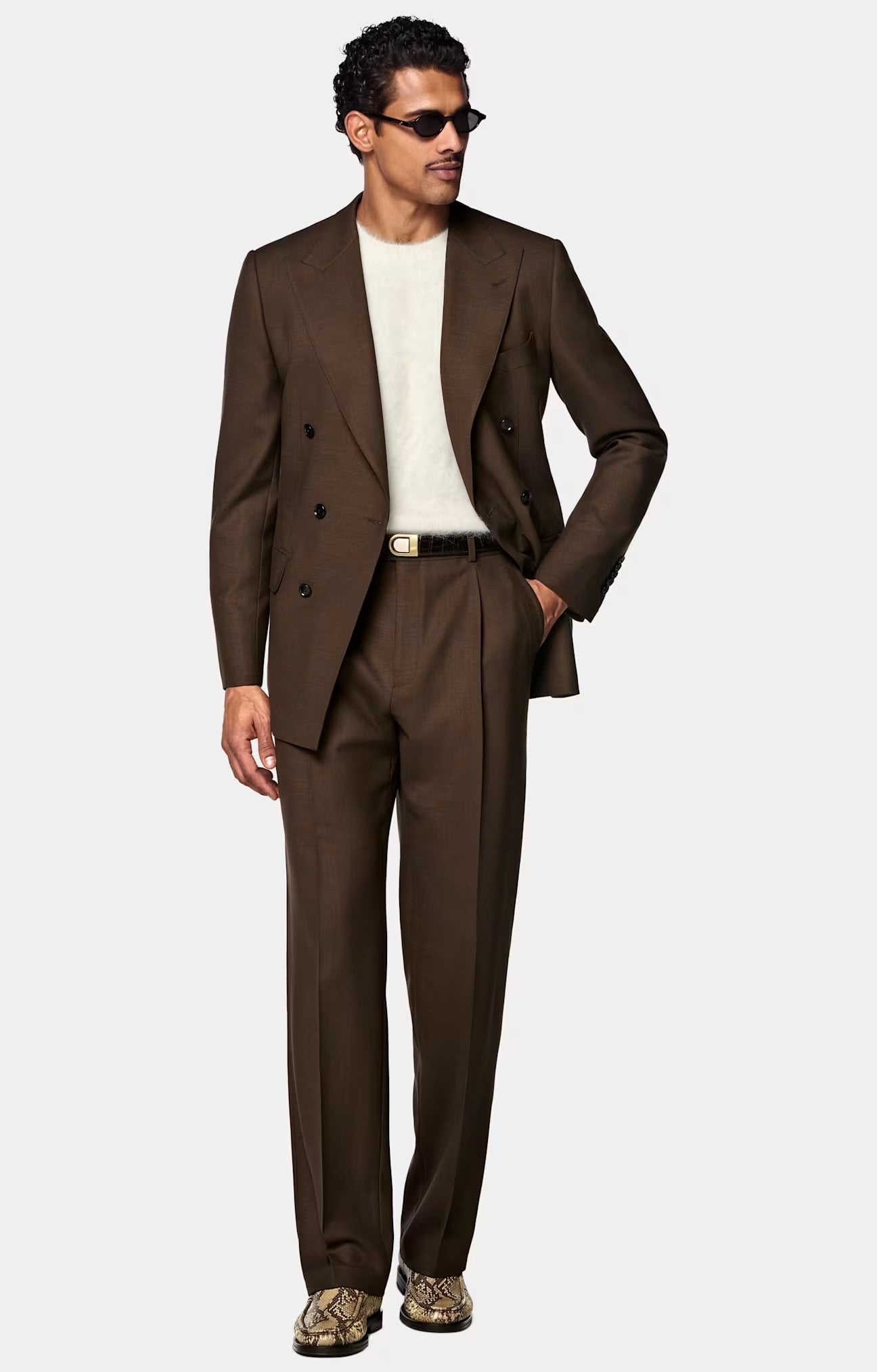
Mid Brown Tailored Fit Milano Suit
Brown tailoring has experienced a significant resurgence within high-end menswear, occupying a middle ground between the austere formality of black and the casual versatility of lighter shades. The Mid Brown Tailored Fit Milano suit utilizes a double-breasted configuration featuring structured shoulders and a tapered waist, balanced intentionally by high-rise, wide-leg trousers. Woven from rich, tactile wool, the garment offers a commanding silhouette while utilizing its warm chromatic hue to soften the overall visual severity, making it adaptable for both formal boardrooms and elevated evening engagements.
Black Relaxed Fit Roma Suit
Reflecting a broader industry movement toward softer, unconstructed silhouettes reminiscent of Giorgio Armani’s influential designs from the 1990s, the Black Relaxed Fit Roma suit prioritizes ease of movement. The jacket features a roomier cut through the chest and shoulders while maintaining sufficient internal structure to retain a sharp, deliberate outline. Paired with straight-leg trousers that incorporate a subtle flare at the hem, this model addresses the modern consumer’s demand for comfort without sacrificing formal elegance, positioning it as a functional staple for frequent commuters and long workdays.
Mid Brown Checked Relaxed Fit Roma Suit
Exemplifying cold-weather tailoring, the Mid Brown Checked Relaxed Fit Roma suit features a complex, multicolored basketweave wool fabric interwoven with cream, black, and green flecks. The material provides substantial weight and thermal retention without appearing cumbersome, while the relaxed fit and natural shoulder construction maintain an effortless drape. With distinct country-wear influences, the suit transitions seamlessly from rural environments to formal urban settings when paired with a traditional dress shirt and silk tie. Furthermore, the two-piece construction lends itself to separate styling, allowing the jacket and trousers to be integrated into diverse wardrobe combinations.
Industry Implications and Market Outlook
The enduring commercial success of brands like Suitsupply points to a broader structural evolution in the global menswear market. As traditional luxury houses face rising operational costs and lengthy production cycles, digitally integrated, vertically integrated brands are capturing market share by offering transparency, speed, and competitive pricing.
Critics of commercial ready-to-wear note that factory-made garments cannot fully replicate the hand-sewn precision and individualized adjustments inherent to true bespoke tailoring from institutions like Savile Row. However, proponents argue that the democratization of high-end Italian fabrics and customizable proportions provides 90% of the aesthetic and functional benefits at a fraction of the cost.
As consumer demand increasingly favors versatile wardrobe investments—such as broken suits, natural shoulders, and breathable, seasonless wools—Suitsupply’s strategic balance of digital innovation, physical retail presence, and adherence to classic tailoring principles secures its position as a dominant force in modern menswear. Whether it represents the single best place to purchase a suit ultimately depends on an individual consumer’s appreciation for bespoke tradition versus efficiency, but its impact on the contemporary tailoring landscape remains undeniable.