






Fleek, a London-based technology startup specializing in the digitization of the secondhand clothing supply chain, has announced a significant capital infusion totaling $20.4 million to scale its business-to-business (B2B) marketplace. The funding comprises a previously unannounced $5.6 million seed round and a more recent $14.8 million Series A. This investment marks a pivotal moment for the secondhand fashion industry, which has historically struggled with fragmentation, lack of transparency, and inefficient, analog procurement processes. By connecting high-volume wholesalers with a global network of retailers and individual resellers, Fleek aims to modernize a sector that is increasingly becoming a cornerstone of the global circular economy.
The Series A round was led by HV Capital, with continued participation from Andreessen Horowitz (a16z), which spearheaded the initial seed funding. The startup also garnered support from Y Combinator, following its participation in the Winter 2022 batch. Beyond institutional venture capital, Fleek has attracted an elite roster of individual angel investors, including Shopify President Harley Finkelstein, former Depop CEO Maria Raga, and Postmates CTO Sean Plaice. This convergence of e-commerce and logistics expertise underscores the industry’s confidence in Fleek’s potential to standardize the "wild west" of vintage wholesale.
The Genesis of a Digital Solution for an Analog Industry
The inspiration for Fleek emerged in 2021, a period defined by significant disruptions in global supply chains due to the COVID-19 pandemic. Founders Abhi Arora and Sanket Agarwal identified a critical bottleneck in the secondhand market through a series of personal and professional observations. Agarwal’s connection to the industry was direct; his partner’s mother, an active reseller on the social commerce platform Poshmark, frequently voiced frustrations regarding the difficulty of sourcing consistent, high-quality inventory during lockdowns.
Simultaneously, Arora, an MBA graduate from the University of Cambridge, was observing the vibrant but antiquated secondhand market near London’s Brick Lane. Through discussions with local vintage shop managers, Arora discovered that the sourcing process was almost entirely offline. Retailers were often required to travel internationally to visit wholesalers in person, spending days manually sorting through mountains of unsorted garments—a process Arora described as "heads down, bums up."
When travel restrictions rendered these trips impossible, a small subset of wholesalers began utilizing social media platforms like Instagram and video calling services to showcase their inventory. However, these ad hoc solutions lacked the security, payment infrastructure, and logistical reliability required for professional commerce. Arora and Agarwal, the latter a former software engineer at Google, recognized an opportunity to build a dedicated marketplace that could formalize these transactions and provide a consistent experience for both buyers and sellers.
Bridging the Gap Between Global Wholesalers and Micro-Entrepreneurs
Fleek’s platform addresses the needs of a diverse ecosystem. To date, the company has facilitated the movement of over 2.5 million items of secondhand clothing, serving 10,000 resellers and retailers across 70 countries. The supply side of the marketplace is powered by approximately 1,000 wholesale suppliers, many of whom operate massive industrial warehouses in regions such as Pakistan, India, and Dubai.
The founders’ cultural background played a significant role in penetrating these markets. Having grown up in India, Arora and Agarwal were able to navigate the linguistic and cultural nuances of the subcontinent, which serves as one of the world’s primary hubs for the import, sorting, and export of used textiles. These wholesalers are the silent engines of the fashion industry, often processing up to 400,000 kilograms of clothing in a single day.
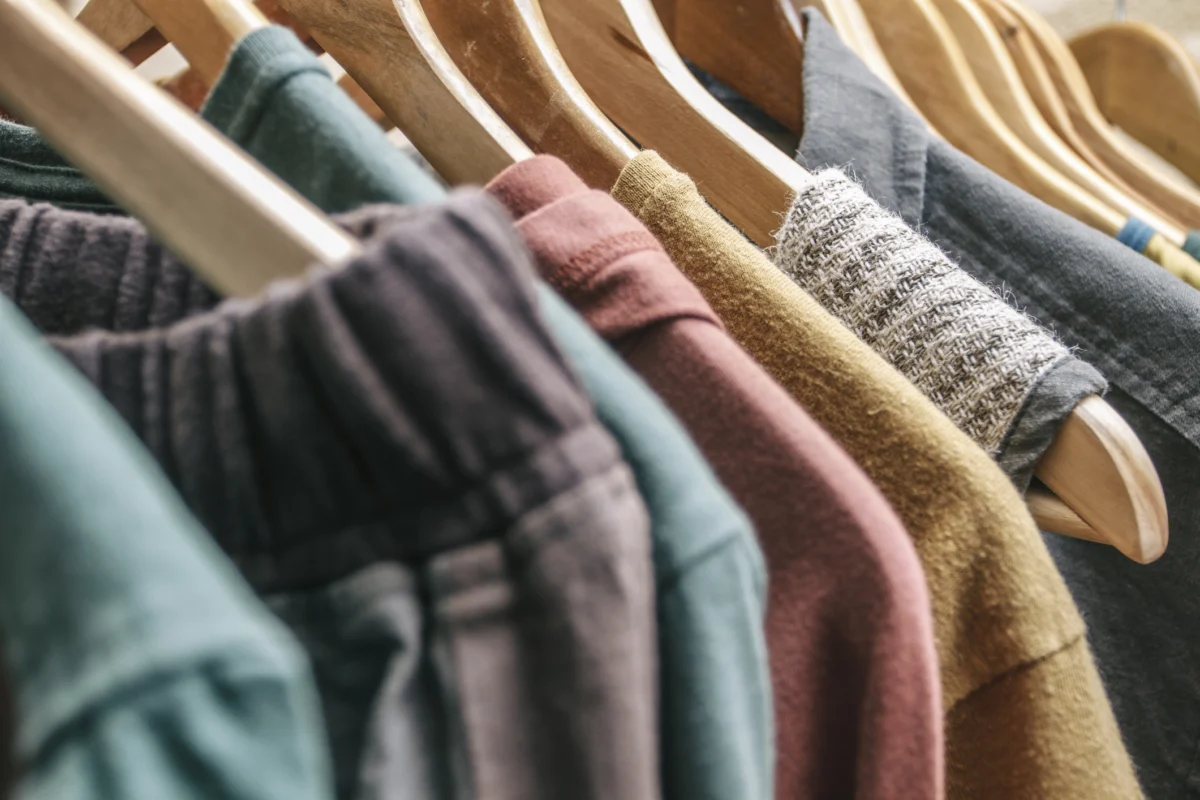
Fleek’s intervention brings extreme organization to this chaotic volume. The platform allows buyers to purchase inventory based on specific metrics, such as weight, brand, style, material, or era. By digitizing the inventories of these massive physical businesses, Fleek enables a boutique owner in London or a Depop seller in Los Angeles to source specific "vintage" items from a warehouse in Karachi with the same ease as ordering new goods from a traditional distributor.
The Macroeconomic Context: The Rise of Resale
The expansion of Fleek comes at a time when the secondhand clothing market is shedding its "charity shop" stigma and evolving into a sophisticated retail category. According to data from GlobalData and ThredUp, used clothing now accounts for approximately 10% of all global clothing sales. This shift is driven by a combination of economic necessity, a desire for unique self-expression, and an increasing commitment to sustainability among younger demographics.
In the United Kingdom, a key market for Fleek, data from analytics firm ECDB indicates that 68% of Gen Z and millennial consumers purchased at least one secondhand item in the past year. This demographic shift has forced traditional retailers to adapt; high-street giants and luxury boutiques alike are increasingly incorporating vintage sections into their offerings to compete with online giants like Vinted, eBay, and The RealReal.
Fleek positions itself as the essential infrastructure supporting this "resale revolution." While consumer-facing platforms like Depop and Poshmark have revolutionized how individuals sell to one another, the B2B side of the industry—where professional resellers acquire their stock—has remained largely untouched by modern technology until now.
Strategic Roadmap and Technological Innovation
The newly secured $20.4 million will be utilized to enhance Fleek’s technological capabilities and expand its market footprint. A primary focus for the company is the development of predictive analytics tools. These tools are designed to help retailers forecast upcoming trends by analyzing historical data and current market demand. By providing data-driven insights into which styles or eras (such as the current surge in 1990s and Y2K fashion) are likely to perform well, Fleek empowers small business owners to make more informed purchasing decisions.
Furthermore, the company is investing in Artificial Intelligence (AI) to address two of the industry’s most persistent challenges: quality control and counterfeiting. In a marketplace dealing with millions of unique, used items, verifying authenticity and condition is a monumental task. Fleek aims to implement AI-driven tooling to automate parts of the inspection process, providing an additional layer of security for buyers who are often purchasing goods from thousands of miles away.
Logistics also remains a core area of development. Agarwal noted that the company plans to streamline the shipping and receiving processes, particularly for wholesalers who have earned high ratings on the platform. By optimizing the international transit of bulk clothing, Fleek can reduce lead times and lower costs, further incentivizing the shift from new "fast fashion" to circular alternatives.
Implications for the Global Circular Economy
The success of Fleek has broader implications for the global fashion industry’s environmental footprint. The textile industry is frequently cited as one of the world’s most polluting sectors, and the promotion of the circular economy—where garments are reused, repaired, and recycled—is seen as a vital strategy for mitigation. By making the wholesale sourcing of secondhand clothes as efficient as the sourcing of new apparel, Fleek lowers the barrier to entry for retailers to participate in the circular market.
The platform also provides economic empowerment to wholesalers in developing nations. By connecting these large-scale sorters directly to high-margin retail markets in the West, Fleek helps ensure a more equitable distribution of value within the supply chain. This direct connection eliminates multiple layers of middlemen, potentially increasing the profitability of the sorting facilities that do the "heavy lifting" of the recycling process.
Conclusion
Fleek’s $20.4 million funding round signifies a maturation of the secondhand clothing market. What began as an informal, analog trade conducted in physical warehouses and via social media calls is being transformed into a data-driven, transparent, and globally accessible marketplace. As the company continues to build out its technology stack and expand its network of suppliers and buyers, it stands to become the foundational platform for the global vintage trade.
The involvement of high-profile investors like HV Capital, Andreessen Horowitz, and the leadership of Shopify and Depop indicates a belief that the future of fashion is not just digital, but circular. For the 10,000 resellers currently using the platform, Fleek represents a shift from the uncertainty of "heads down, bums up" sourcing to a future of predictable, scalable, and professionalized commerce. In the evolving landscape of global retail, Fleek is proving that the most valuable "new" clothes in the world might actually be the ones that have already been worn.