








The modern menswear landscape is populated by a myriad of trends, subcultures, and specialized garment categories, yet few command the level of intense dedication, technical scrutiny, and subcultural fascination as raw denim. Unlike standard retail jeans, which undergo extensive mechanical and chemical processing to simulate years of natural wear before ever hitting the sales floor, raw denim represents an unadulterated approach to textile manufacturing. This comprehensive guide explores the historical context, manufacturing distinctions, physical properties, maintenance protocols, and leading global manufacturers defining the raw denim market today.
Defining Raw Denim and the Manufacturing Process
To understand raw denim, one must first contrast it with mass-market retail jeans. Standard commercial denim is subjected to a battery of post-weaving treatments—including stone washing, chemical bleaching, distressing, enzymatic softening, and mechanical pre-shrinking. These procedures are designed to yield immediate comfort and a pre-worn aesthetic for the consumer.
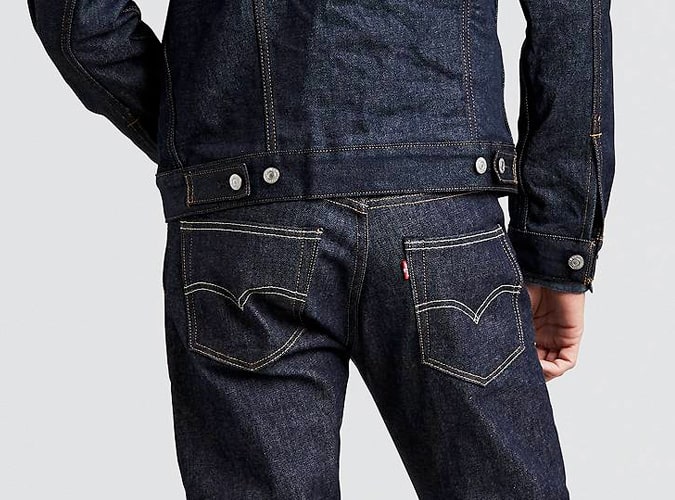
Raw denim, conversely, bypasses nearly all of these cosmetic interventions. Once the cotton yarn is spun and woven on a loom, the resulting fabric is dyed—traditionally with indigo—cut, and sewn directly into garments. It receives no washing, sanding, or chemical distressing prior to retail distribution. Consequently, raw denim is delivered in a rigid, deeply saturated, and unyielding state.
Despite undergoing significantly fewer manufacturing steps than heavily treated denim, raw jeans often command a higher retail price point. This financial premium is a reflection of production scale and labor economics. Raw denim is predominantly manufactured in small, specialized batches by veteran artisans operating in high-cost labor economies, primarily Japan and the United States. Furthermore, these garments utilize high-grade, long-staple cotton and heavy-gauge yarn constructions designed to withstand decades of heavy use, far exceeding the structural integrity of fast-fashion alternatives.

The Mechanics of Fades and Fit Evolution
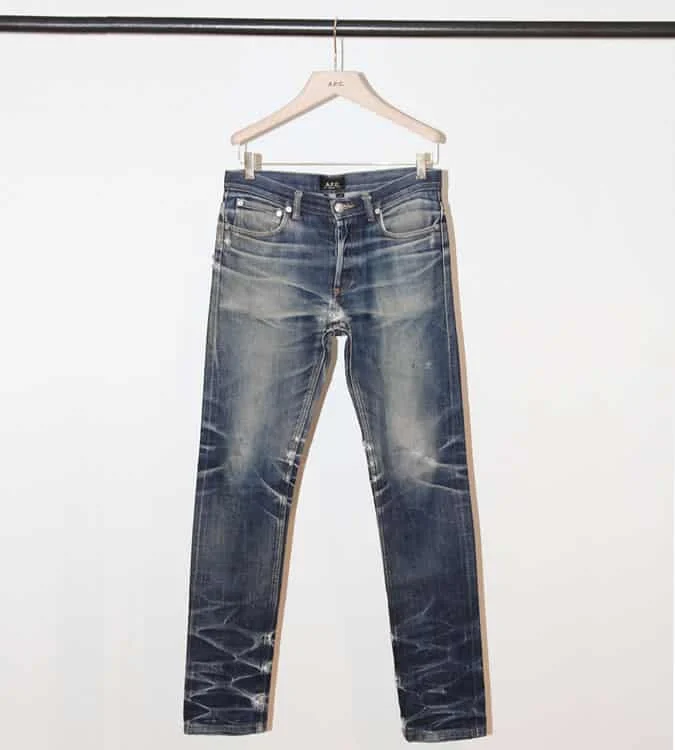
The primary appeal of raw denim for enthusiasts—often referred to as "denimheads"—lies in its dynamic aging process. Because the fabric is saturated with deep indigo dye without being washed or rinsed, it molds directly to the wearer’s anatomy over weeks and months of continuous use.
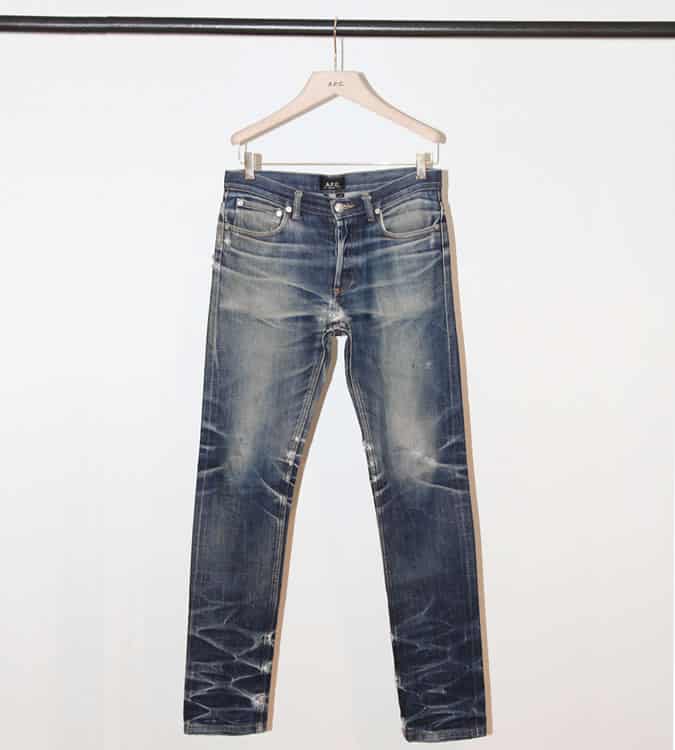
As the stiff fabric bends, stretches, and rubs against the body, microscopic particles of indigo dye flake off in high-friction zones. This gradual loss of dye creates permanent, high-contrast wear patterns unique to the individual’s lifestyle and body shape. Key areas of fade development include:
- Whiskers: Horizontal fading lines that form across the upper thighs and groin.
- Honeycombs: Intricate, web-like crease fades that develop behind the knees.
- Stacking Fades: Concentrated creases that form where extra-long inseams pool around the ankles.
- Pocket Impressions: Distinct outlines of everyday carry items, such as smartphones and wallets, etched into the fabric.
According to David Giusti of London-based manufacturer Blackhorse Lane Ateliers, the pursuit of high-contrast fading requires deliberate restraint regarding maintenance. "Raw denim enthusiasts appreciate high-contrast fading that is achieved by rarely washing their denim," Giusti notes. "This is to keep as much indigo on the garment as possible in low-wear areas, while also trying to wear as much indigo off of the garment in high-wear areas."

Raw Denim Versus Selvedge Denim
Newcomers to the denim market frequently conflate raw denim with selvedge denim, treating the terms as interchangeable synonyms. While the two categories frequently overlap, they denote entirely different characteristics of the garment.
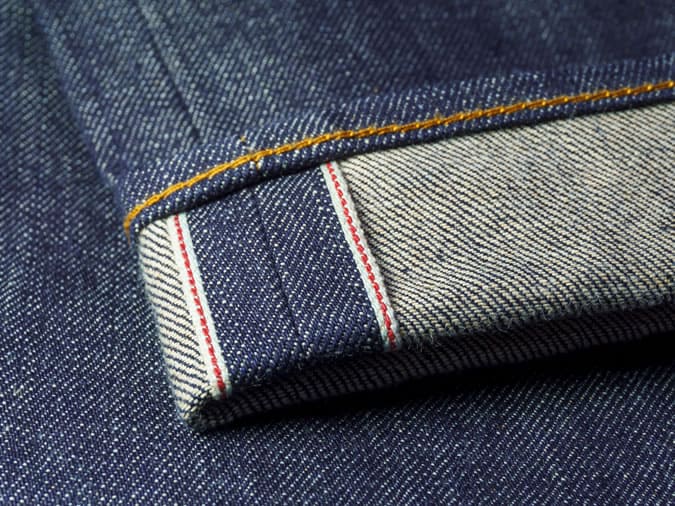
Raw denim refers strictly to the absence of washing and chemical distressing after the weaving process. Selvedge denim, meanwhile, refers to the self-finished, tightly woven edge of the fabric. Selvedge fabric is produced on traditional shuttle looms rather than modern, high-speed projectile looms. The shuttle loom creates a clean, tightly bound edge—typically identified by a colored ID thread, such as red or white—that prevents the fabric from fraying.
Because shuttle looms operate at a significantly slower pace than modern machinery and yield narrower rolls of fabric, selvedge denim is more expensive to produce. While the vast majority of raw denim is woven with a selvedge edge to signify premium quality, unwashed denim can be produced on non-selvedge looms, and conversely, pre-washed jeans can feature selvedge construction.
Sanforized Versus Unsanforized Denim
Another critical distinction within the raw denim market involves the pre-shrinkage treatment known as sanforization.

Traditional raw denim, often sold in "loom state," is completely unsanforized. When exposed to water for the first time, unsanforized denim will naturally shrink by approximately 10 percent. To mitigate sizing discrepancies, manufacturers developed sanforization—a mechanical process involving steam, heat, and stretching that stabilizes the cotton fibers and eliminates the vast majority of future shrinkage before the fabric is sewn.
- Sanforized Denim: Stabilized against major shrinkage. These jeans will stretch slightly in the waist and thighs during the initial weeks of wear, meaning buyers should typically select their true size or size down slightly for a snug fit.
- Unsanforized (Shrink-to-Fit) Denim: Completely untreated loom-state fabric. Buyers must generally purchase one size up to accommodate the inevitable 10 percent reduction in volume. Prior to regular wear, unsanforized jeans require an initial soak—often performed in a lukewarm bathtub for 30 minutes—to force the shrinkage, followed by air drying in the sun to lock in the permanent sizing.
Breaking In Raw Denim: The Physical Investment
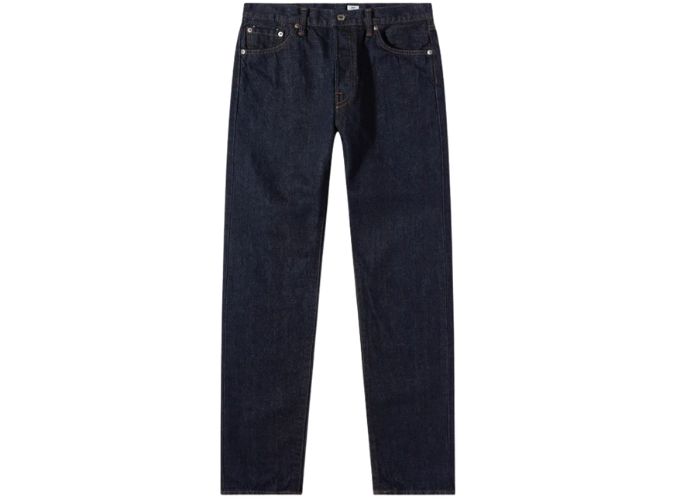
The process of breaking in a fresh pair of raw denim jeans is notoriously rigorous. Due to the high density of the cotton weave and the absence of softening agents, new raw jeans feel rigid, heavy, and restrictive—often compared by enthusiasts to wearing cardboard.
Danny Hodgson, owner of London-based luxury denim retailer Rivet and Hide, emphasizes that patience is mandatory. While initial movements may be constrained and simple tasks like climbing stairs can present a challenge, the fabric gradually softens as the cotton fibers break down and conform to the wearer’s physical contours. Within several months of consistent wear, raw denim transforms into what many consider the most comfortable legwear in existence.
To accelerate the break-in process, denim experts recommend wearing the jeans frequently during daily low-impact activities, such as walking or working around the house, while avoiding extreme movements like deep squats that risk structural failure before the fabric has relaxed.
Managing Blowouts and Structural Maintenance

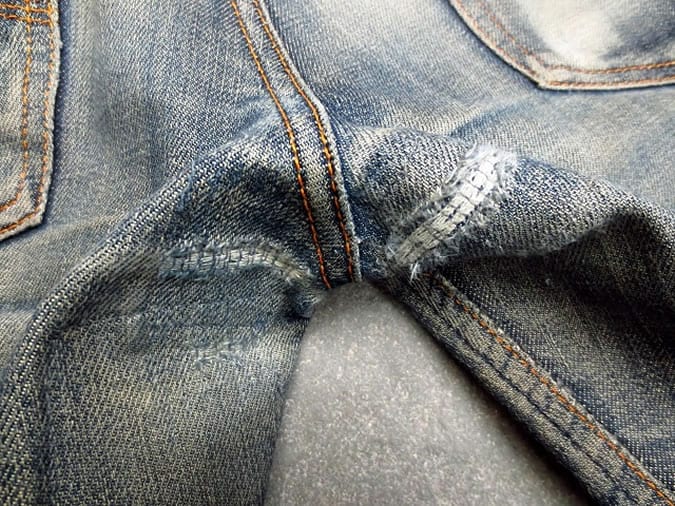
A frequent consequence of wearing heavy, unwashed raw denim daily is the development of a "blowout"—a localized tear or hole that forms in the crotch area due to continuous fabric-on-fabric friction during walking.
Because raw denim is rarely washed in its early stages, accumulated sweat, oils, and particulate matter act as an abrasive agent, weakening the cotton over time. Furthermore, high-friction activities like cycling drastically accelerate wear. Industry experts advise against cycling in heavy raw denim if longevity is a primary concern.
When minor fraying begins, rather than discarding the garment, veteran denim enthusiasts view structural repairs as an opportunity for personalized customization. Reinforcing the fabric with interior cotton patches or utilizing traditional Japanese visible mending techniques (sashiko) extends the operational lifespan of the jeans while adding unique aesthetic character.
Washing Protocols: Hygiene Versus Aesthetics

The maintenance of raw denim remains one of the most debated topics in contemporary menswear. Balancing hygiene with the preservation of high-contrast fade patterns requires a strategic approach.
Purists historically advocated for avoiding water immersion entirely for the first six to twelve months of wear to maximize dye loss in high-friction areas. However, modern tailors caution that neglecting cleanliness indefinitely compromises the structural integrity of the cotton. Accumulated bodily oils and microscopic dirt particles function similarly to fine-grit sandpaper, wearing down the warp and weft yarns from the inside out.

When washing becomes necessary to eliminate odors or excessive dirt, several specialized methods are employed:
- The Bathtub Soak: Submerging the jeans in lukewarm water with a minimal amount of mild detergent (such as Woolite Black) for 30 minutes, followed by gentle agitation and line drying.
- Machine Washing (Delicate): Turning the jeans inside out and running them through a front-loading washing machine on a cold, delicate cycle using specialized dark-fabric detergent. Spin cycles should be minimized or skipped entirely to prevent unwanted crease lines or "marbling" in the indigo dye.
- Spot Cleaning: Using a damp cloth to dab away localized stains without submerging the entire garment, thereby protecting the overall dye saturation.
- Alternative Methods: Unconventional practices, such as freezing the jeans to kill odor-causing bacteria or swimming in the ocean and rubbing the fabric with sand, remain popular subjects of subcultural folklore, though their practical efficacy is frequently debated by textile scientists.
Leading Global Raw Denim Brands

For consumers prepared to invest the necessary time and care into raw denim, several legacy manufacturers and contemporary ateliers dominate the global market:
- Edwin: Operating long before Japan’s post-war denim boom, Edwin remains a cornerstone of Nippon denim heritage, celebrated for authentic selvedge fabrics and traditional dyeing techniques.
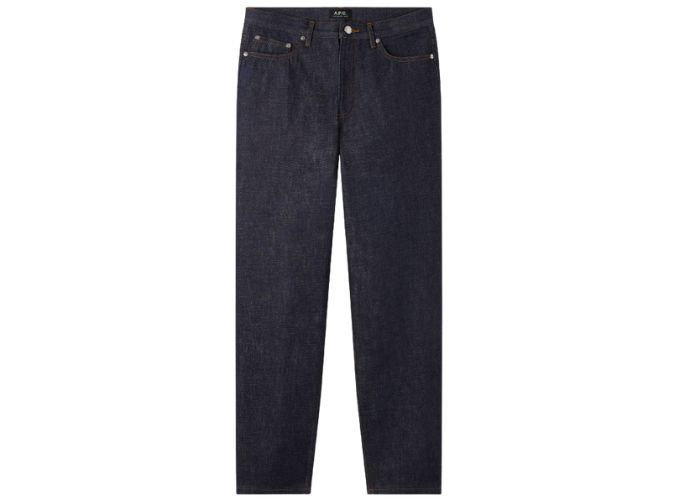
- A.P.C.: The Parisian label’s "Petit New Standard" has achieved iconic status as the definitive entry-level slim-fit raw selvedge jean, balancing minimalist French aesthetics with robust Japanese denim cloth.
- Levi’s: As the historical inventor of riveted waist overalls, Levi’s offers authentic "Rigid" and shrink-to-fit 501 variations that anchor the heritage menswear market.
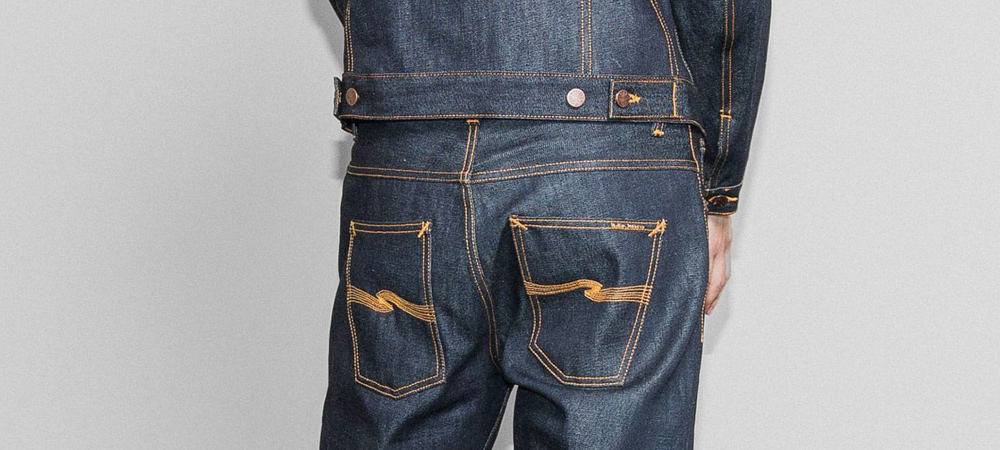
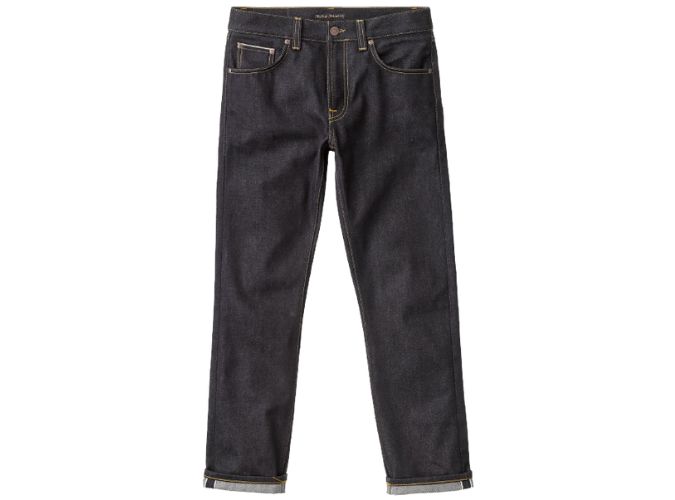
- Nudie Jeans: Founded in Gothenburg, Sweden, Nudie emphasizes sustainability and organic cotton construction, offering transparent repair programs alongside classic dry selvedge cuts.
- Samurai Jeans: Established in 1998, this Osaka-based brand produces some of the heaviest and most coveted raw denim globally, incorporating unique details such as silver metallic threads woven into the selvedge ID to symbolize a samurai sword blade.
- The Unbranded Brand: Operating as a subsidiary of Naked & Famous, Unbranded strips away marketing, packaging, and branding to deliver high-quality Japanese selvedge denim at an accessible entry-level price point.
- Naked & Famous: Based in Canada, this brand sources exclusively heavy Japanese selvedge fabrics while maintaining a playful critique of celebrity endorsement culture in the fashion industry.
- Rag & Bone: New York-born Rag & Bone merges American heritage with clean, contemporary silhouettes, offering durable raw options tailored for modern urban wardrobes.
- Evisu: Renowned for its bold, hand-painted seagull branding, this Osaka manufacturer has been a favorite of the global hip-hop community since 1991, producing high-impact raw denim.
- Iron Heart: Engineered specifically for motorcyclists in Japan, Iron Heart is famous for producing ultra-heavyweight raw selvedge denim (often exceeding 21 ounces) that demands exceptional endurance during the break-in phase.
- Tellason: Weaving garments in San Francisco using premium North Carolina Cone Mills denim and Oregon-crafted leather patches, Tellason represents the pinnacle of contemporary all-American raw denim manufacturing.
- Blackhorse Lane Ateliers: Located in East London, this modern workshop blends traditional craftsmanship with local production, even offering public workshops for consumers seeking to construct their own customized raw denim garments.
Conclusion

Raw denim occupies a unique intersection of utilitarian history, textile science, and personal expression. While the initial investment—measured in both financial cost and physical discomfort—can deter casual consumers, the resulting garment offers an unmatched level of durability, personalization, and timeless style. By understanding the foundational differences between raw and treated fabrics, selecting the appropriate fit and sizing methodology, and adhering to measured maintenance routines, enthusiasts can transform a rigid pair of unwashed trousers into a bespoke piece of wearable history.