









Madonna’s latest album, Confessions II, marks a pivotal moment in her illustrious career, delivering a profound and deeply personal narrative that transcends the typical expectations of a dance record. While superficial readings of guest production from Dutch big room DJ Martin Garrix and lyrics like “The dancefloor isn’t just a place, it’s a threshold” or “Everybody get up and dance” might initially suggest familiar pop platitudes, closer examination reveals a remarkable depth. Situated within a broader artistic project that offers an unflinching retrospective on her four-decade-plus journey—from the hedonistic dawn of 1980s dance music to her continuous scrutiny by the mainstream press—these lines gradually emerge as both intimately personal and universally profound. For Madonna, perhaps more than any other artist on Earth, the dancefloor is undeniably sacred.
This sacred connection is immediately evident. The lyric “Everybody get up and dance,” for instance, serves as a subtle yet powerful allusion to Madonna’s debut 1982 single, “Everybody.” This foundational track was not only shaped by but also first performed at the pioneering New York gay club Danceteria, a crucible of early 80s nightlife that forms a key thematic focus of Confessions II. Madonna has recently revealed that this album is the creative outcome of her long-awaited biopic being trapped in “developmental purgatory,” infusing the project with an urgent, almost therapeutic quality. This context transforms what might otherwise be clichés into genuine reflections on her past. The lyric “Travelling through space and time / Interstellar helix unwind” from the track “Good for the Soul” offers a fitting metaphor for the album’s ambition, with Madonna utilizing the transcendental textures of house, trance, and trip-hop to navigate various moments and places across her extensive career.
As a direct follow-up to the 2005 masterpiece Confessions on a Dance Floor, this new album faced immense expectations. However, by reuniting with acclaimed electronic producer Stuart Price for the first time since that landmark project and, quite literally, penning her most raw and revealing lyrics to date, Confessions II deftly sidesteps this formidable burden. Rather than attempting to surpass her countless hits from the last 40 years, today’s release achieves something Madonna could only have accomplished right here and right now: it tells her story with unprecedented honesty and artistic clarity. The album is not merely a collection of songs; it is an auditory memoir, a journey through memory and emotion, offering listeners unparalleled access to the woman behind the icon.
Below, we delve into seven of the most confessional and illuminating lyrical moments on Confessions II, exploring their intricate layers of meaning and the profound personal histories they reveal.
"New Personas": The Sanctuary of Anonymity
Kicking off her career time-traveling from the album’s very inception, Madonna’s opening monologue on Confessions II sets a deeply intimate tone. The lines, “Thanks for coming / Sometimes I just like to hide in the shadows / Create a new persona / A different identity / I can be whoever I want to be,” are almost verbatim lifted from a 2022 promotional video with V Magazine. This video, which captures Madonna calling down to a guest from a hotel suite, also features additional lines that add crucial context to the album’s narrative: “I like the anonymity of a hotel room […] I don’t allow myself to have too much fun – that’s part of the problem […] I’m too untrained to be a professional.”
These omitted lines are vital in understanding the album’s central theme of finding solace in the dancefloor. Madonna, a figure endlessly scrutinized by the global media, constantly photographed, and subjected to public judgment for every facet of her life, rarely experiences true anonymity. Her proclamation, “On the dancefloor, I feel so free […] safety in numbers,” therefore transcends mere celebratory sentiment. It reveals how clubbing, far from being a superficial escape, holds singular importance for someone of her unparalleled fame. The concept of "new personas" has been a hallmark of Madonna’s career, a testament to her constant reinvention and refusal to be pigeonholed. Yet, here, it’s framed not as a performance for the world, but as a personal shield, a means to reclaim a sense of self away from the relentless public gaze. The global resonance of Confessions II’s sonics belies its deeply personal core, presenting the dancefloor as a unique sanctuary where Madonna can shed the weight of her celebrity and simply be. This track serves as a powerful reminder that even the most iconic figures crave moments of unburdened self-expression and anonymity.
"Danceteria": A Vibrant Tapestry of Early New York
Prepare for a profound dive into Madonna’s formative years, as the track "Danceteria" is a veritable treasure trove of references to 1980s New York City. The title itself immediately transports listeners to the legendary nightclub Danceteria, the very crucible where Madonna’s global phenomenon began. As she vividly recounts on the track, it was within the hallowed walls of Danceteria that DJ Mark Kamins first played her debut single, “Everybody,” marking a pivotal moment in music history. It was also at this venue, famously, that she performed for the very first time, a raw and electrifying introduction to the world.
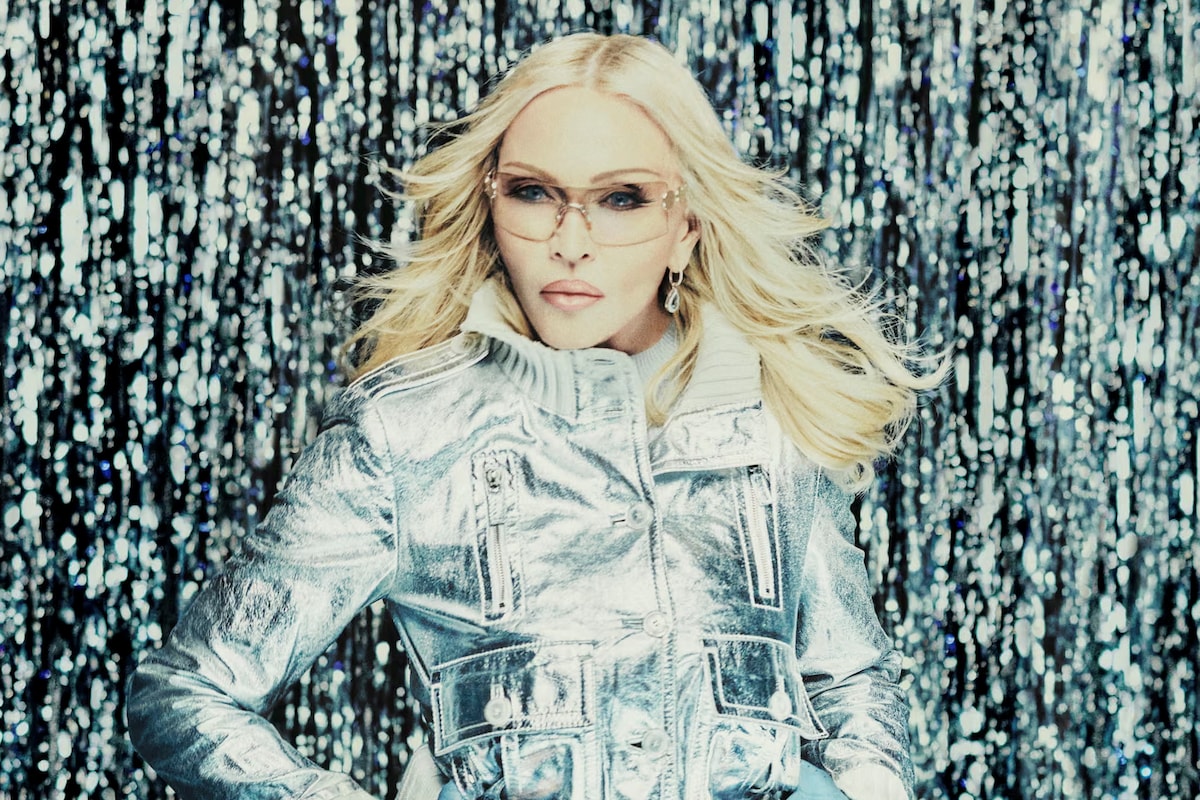
Danceteria was more than just a club; it was a cultural nexus, a multi-level haven for artists, musicians, fashionistas, and the LGBTQ+ community. Situated at 30 West 21st Street, it became a symbol of New York’s burgeoning underground scene, a place where disco was evolving into new forms of dance music, punk was colliding with hip-hop, and art was spilling from galleries onto the streets. It was an era of boundless creative energy, fueled by grit and ambition, and Danceteria was its pulsating heart, fostering a sense of community and experimentation that deeply influenced Madonna.
The lyrics of “Danceteria” meticulously recreate this vibrant atmosphere. Madonna name-drops the late Haoui Montaug, Danceteria’s iconic doorman and promoter, known for his discerning eye and his influential club night "No Entiendes." Montaug was a gatekeeper of cool, a crucial figure in shaping the club’s eclectic clientele. Also referenced is Debi Mazar, Danceteria’s elevator girl and Madonna’s soon-to-be lifelong friend and collaborator, whom Madonna first met there and later recruited as a make-up artist for her early music videos. Mazar’s presence underscores the network of creative individuals Madonna cultivated during this period, friendships that would prove instrumental in her rise.
Venturing deeper into this rabbit hole of references, Madonna’s lyrics also immortalize various socialites, artists, and landmarks that defined this early, hedonistic, pre-fame chapter of her life—many of whom are now tragically gone, victims of the AIDS epidemic that ravaged the community. There’s Martin Burgoyne, whom Madonna met while partying on the Lower East Side. Burgoyne was not only her roommate but also a backing dancer and tour manager, a testament to the fluid and intertwined lives of these young artists. The track also celebrates figures like Fab Five Freddy, a pivotal artist in the early hip-hop and graffiti scenes, alongside iconic contemporary artists Jean-Michel Basquiat, Keith Haring, and Kenny Scharf. These individuals were all central members of Madonna’s wider social circle at the time, converging at spaces like the influential Shafrazi Gallery, which Madonna describes them as “coming from Shafrazi.” The gallery was a key player in New York’s 80s art scene, further highlighting the cross-pollination of art, music, and fashion that characterized the era.
Completing this vivid fresco of 80s New York nightlife, Madonna includes references to the city’s then-emerging hip-hop scene. Lyrics name-check the legendary breakdancing group Rock Steady Crew and influential b-boy Crazy Legs, along with generic descriptions of “these guys spinning on their heads.” This inclusion further emphasizes the melting pot of cultures and artistic expressions thriving in the city, showcasing Madonna’s immersion in and appreciation for all facets of the urban underground. The track also includes a slightly more unfortunate reference to her penchant for “young Puerto Rican boys,” a lyric that has prompted discussion about the hedonistic and sometimes ethically ambiguous aspects of that era’s free-spirited environment. While not dwelled upon excessively, its inclusion speaks to the raw, unfiltered nature of this confessional retrospective.
"Bizarre": Sean Penn and the Indelible Mark of Love
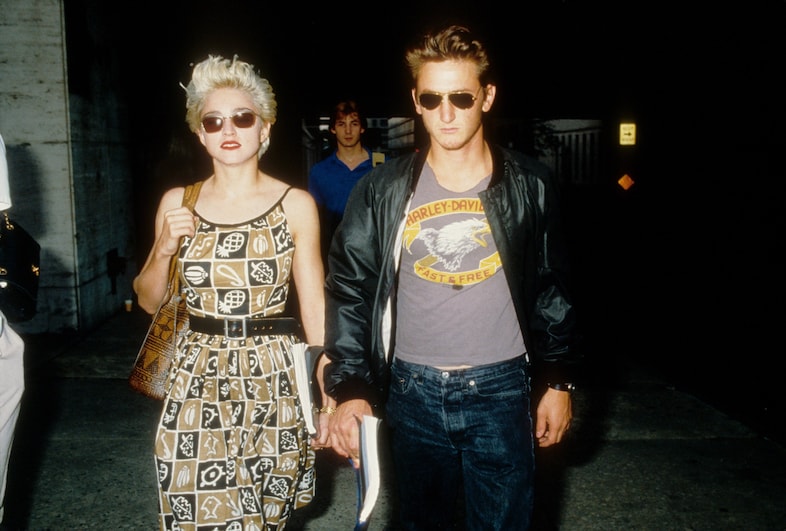
The euphoric, Martin Garrix-produced trance-house track “Bizarre” offers a striking and emotionally charged glimpse into one of Madonna’s most intense and publicly scrutinized relationships: her marriage to actor Sean Penn. The repeated lyrics, “Movie star, deep blue eyes / In Hollywood we’re a perfect prize / He drove way too fast / Shelby Cobra wasn’t meant to last,” are undeniably a direct reference to Penn. Their whirlwind romance culminated in marriage in 1985, an event that instantly captivated the world’s attention, marrying two of the era’s most volatile and charismatic stars. Madonna reportedly gifted Penn a Shelby Cobra retro sports car as a wedding present, a detail that adds a poignant layer of specificity to the lyrics, hinting at the passion and recklessness that characterized their union.
Their marriage, which lasted from 1985 to 1989, was famously tempestuous, marked by intense passion, public outbursts, and a relentless media circus. Despite their separation almost four decades ago, Madonna’s lyrics on “Bizarre” strongly suggest that deep-seated emotions and a complex connection continue to linger. While she acknowledges the insurmountable obstacles with the line, “a thousand reasons you couldn’t be with me,” she simultaneously admits to still being tempted by Penn. This internal conflict underscores the enduring power of their bond, illustrating how certain loves, no matter how distant in time, retain a profound hold.
Her lament that love is “bizarre” and “impossible to control” speaks to the chaotic and unpredictable nature of their relationship, a sentiment likely shared by many who observed their highly publicized drama. The raw honesty in these lines offers a rare vulnerability from an artist often perceived as being in complete control. The fact that the pair were spotted holding hands at a Haiti charity gala in 2016 further fuels speculation about an enduring, if complicated, affection, suggesting that their connection extends beyond mere nostalgia, into a realm of deep, unresolved human emotion. “Bizarre” is a testament to the lasting impact of a love that, for better or worse, profoundly shaped a significant chapter of Madonna’s life.
"Fragile": A Brother’s Eulogy and the Promise of Reunion
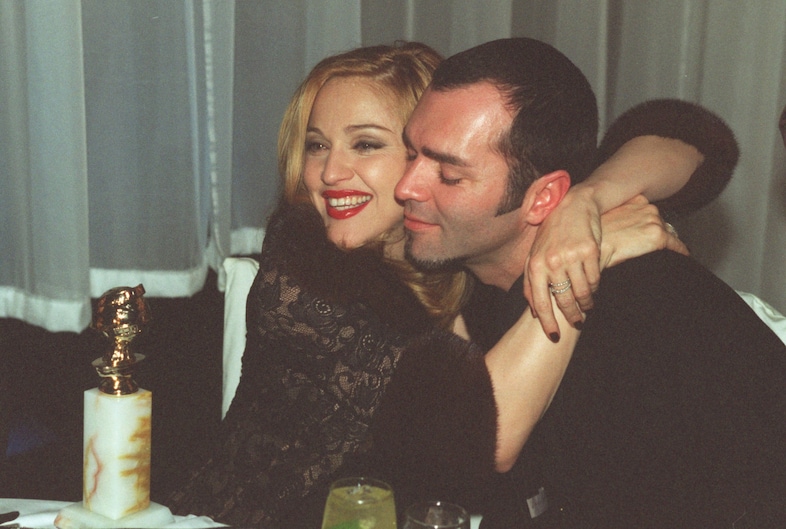
More cryptic and emotionally resonant than “Bizarre” is the subsequent ethereal, drum ‘n’ bass-tinged track “Fragile,” which serves as a deeply moving ode to Madonna’s late younger brother, Christopher Ciccone. Christopher’s passing in 2024 (as per the article’s provided context) lends an immediate and profound weight to the song. The siblings had a famously tumultuous relationship, which reached its nadir with the publication of Christopher’s explosive 2008 memoir, Life With My Sister Madonna. He notoriously described the writing process as “a giant fucking orgasm,” a phrase that encapsulated the raw, unvarnished, and often critical nature of his account of life alongside his superstar sister. The book led to a highly publicized falling out that fractured their relationship for years.
However, the passage of time and the profound shift in their circumstances appear to have led to a reconciliation later in life, particularly as Christopher grappled with pancreatic cancer. Madonna’s recent statements to Graham Norton shed crucial light on the track’s genesis and its deep emotional core. She revealed, “He was in a lot of pain on the phone, and he was not in a good place. I knew it was close to the end. And then I went upstairs and wrote a song.” This immediate, visceral response to her brother’s suffering speaks volumes about the enduring bond beneath their public disagreements.
Later, Madonna described “Fragile” as a poignant promise “to find each other on the other side.” This statement elevates the track from a simple eulogy to a testament of eternal connection and hope for reunion beyond the physical realm. The ethereal production further enhances this sense of transcendence, creating a soundscape that mirrors the journey from pain to spiritual peace. “Fragile” is a raw, honest expression of grief, regret, and enduring love, offering a rare glimpse into Madonna’s deeply human experience of family loss and reconciliation, cementing its place as one of the album’s most heart-wrenching and authentic confessions.
"Betrayal": Confronting the Stepmother’s Shadow
The spectacular trip-hop track “Betrayal” plunges into another complex and deeply personal facet of Madonna’s life, featuring coded references to her relationship with her late stepmother, Joan Ciccone, who also passed away in 2024. While not explicitly confirmed by the Queen of Pop herself, the incendiary track is strongly suggested to be addressed to Joan, given the unmistakable line, “You’ll never take my mother’s place.” This single declaration cuts to the heart of a conflict that has shaped Madonna since childhood.
Madonna’s biological mother died when the singer was just nine years old, a traumatic event that profoundly impacted her emotional landscape and future relationships. Her father subsequently married Joan Ciccone, introducing a stepmother figure into a household still reeling from loss. Madonna has previously opened up about her deep-seated conflicts with Joan, admitting that she resented her and actively resisted her attempts to nurture a relationship while growing up. This resentment, born from the pain of an irreplaceable loss and the perceived intrusion of a new maternal figure, has been a recurring theme in discussions of her early life.
Despite the palpable rage and historical animosity conveyed in the track, “Betrayal” seems to describe a more nuanced and complex story between the two women. The song artfully inverts the line “It’s just because you lost your faith” into “It’s just because I lost my faith” throughout the track. This lyrical shift suggests a profound self-reflection, acknowledging that perhaps Madonna’s own inability to trust or accept played a role in the fractured relationship. It implies a shared burden of hurt and abandonment, rather than a one-sided blame. Furthermore, elsewhere in the track, she sings, “We’re dancing, we’re together, forever.” This unexpected sentiment, juxtaposed with the initial anger, hints at a deeper, perhaps subconscious, desire for connection and peace. On some level, “Betrayal” seems to acknowledge a relationship shaped by mutual pain, unresolved emotions, and the enduring, albeit complicated, ties of family, offering a surprisingly empathetic, albeit still raw, perspective on a difficult past.
"The Test": A Daughter’s Healing Duet
“The Test” stands out as one of Confessions II’s most moving and unique tracks, structured as a poignant duet between Madonna and her eldest daughter, Lourdes Leon. This collaboration is particularly significant given the widely publicized feuds and periods of estrangement that have characterized their mother-daughter relationship over the years. Madonna herself has admitted that the song was, in fact, Lourdes’ idea, marking a remarkable initiative from her daughter. “She approached me about writing a song together as a way to heal our relationship,” Madonna told Interview earlier this year. She further emphasized the importance of this moment, stating, “It was a really important moment, and it solidified the idea that now is the time to make this record.”
The track itself is strikingly confessional, offering an unprecedented level of vulnerability from both mother and daughter. Madonna admits her own missteps and the unforeseen consequences of her monumental fame, singing that she “didn’t consider how all the flashing [camera] lights would disturb” her daughter. This powerful admission reveals a mother’s regret for the collateral damage of her career, acknowledging the immense pressure and lack of privacy Lourdes experienced growing up as the child of the Queen of Pop. For her part, Lourdes offers a deeply emotional counterpoint, describing her mother as her “reason to be,” a testament to the profound and unbreakable bond that underlies their past conflicts.
Perhaps the biggest full-circle moment on the track, however, arrives with Madonna’s opening words to Lourdes: “Little star.” This is a direct and tender reference to her 1998 Ray of Light album, specifically the song of the same name, which was initially written as a lullaby for a newborn Lourdes. The repetition of this intimate endearment nearly three decades later, now within a song about healing and understanding, beautifully encapsulates the enduring love and cyclical nature of their relationship. “The Test” is not just a song; it’s a public act of reconciliation, a testament to the power of communication, and a deeply affecting portrait of a mother and daughter navigating the complexities of their unique lives with honesty and love.
"L.E.S. Girl": The Enigmatic Lover of the Lower East Side
The album concludes by circling back to Madonna’s infamous Lower East Side era with the final track, “L.E.S. Girl.” This song is replete with frequent, cryptic references to a boyfriend from that formative period, leaving fans to speculate for months, if not years, about his true identity. In the track, Madonna describes him as having “a Marlon Brando face” and playing “guitar at St. Mark’s Place.” These evocative clues paint a vivid picture of a brooding, artistic figure, deeply embedded in the gritty, creative landscape of early 80s downtown Manhattan. St. Mark’s Place, a legendary street in the East Village, was then a hotbed of punk, new wave, and bohemian culture, a perfect backdrop for Madonna’s burgeoning artistic aspirations.
In her recent cover story with Interview, Madonna deliberately refused to elaborate on the artist’s identity, further fueling the mystique. She stated, cryptically, “This guy I was dating who was a musician and I was in love with. He was really an archetype. […] But I’m not going to say [his name]. If he had a Marlon Brando face, he’s hot. Who’s hotter than Marlon Brando?” Her coy refusal to name him only enhances the legend, positioning him not just as a past lover but as a symbolic figure representing the raw, untamed energy of her youth and the independent spirit of that era.
The "Marlon Brando face" suggests a rugged, unconventional handsomeness, perhaps with an air of rebellion and intensity—qualities that Madonna herself has often embodied. The image of him playing guitar at St. Mark’s Place evokes the vibrant, spontaneous music scene of the time, where artists honed their craft in intimate venues and on street corners. This unnamed figure serves as a final, tantalizing confession, a nostalgic glance back at a pivotal romance that helped shape the young woman who would become the undisputed Queen of Pop. The track, and Madonna’s playful refusal to reveal his identity, ensures that the spirit of mystery and artistic freedom that defined her early days continues to resonate, leaving listeners with a lingering question and a deeper appreciation for the personal narratives woven throughout Confessions II.
Broader Implications and Legacy
Confessions II is far more than a mere sequel; it is a profound re-evaluation and consolidation of Madonna’s artistic legacy. By choosing to tell her story through the lens of the dancefloor, she reaffirms its enduring significance not just as a space for celebration, but as a threshold for personal and spiritual transformation. The album redefines Madonna not merely as a pop icon or a master of reinvention, but as a complex individual who has navigated immense fame, profound personal losses, and challenging relationships with remarkable resilience.
The album’s production, blending contemporary electronic sounds with classic house and trance elements, serves as a sonic bridge between her past and present, demonstrating her continued relevance and mastery of musical trends while anchoring them in her personal history. The collaboration with Stuart Price brings a continuity that links this album directly to its predecessor, but the raw lyrical vulnerability sets it apart, revealing a Madonna unafraid to expose the scars and triumphs of her journey.
In an industry often obsessed with youth and fleeting trends, Confessions II is a powerful statement about the enduring value of experience and the artist’s willingness to look inward. It is an album that demands engagement, rewarding listeners with layers of meaning and historical context. It solidifies Madonna’s position not just as a musical innovator, but as a cultural archivist of her own extraordinary life. By openly confessing her experiences—from the exhilarating anonymity of early club nights to the poignant complexities of family relationships and past loves—Madonna reinforces her status as an artist whose work is inextricably linked to her authentic self, proving that even after four decades, the Queen of Pop still has profound stories left to tell.