








Collective bargaining is paramount for safeguarding the rights, safety, and overall wellbeing of workers, a principle that holds particular significance within the complex and often opaque global garment supply chain. This process, often misunderstood or underestimated, is a fundamental mechanism for establishing equitable working relationships and preventing exploitation.
Understanding Collective Bargaining: Definitions and Mechanisms
At its core, collective bargaining represents a structured negotiation process between organized workers and their employer. This dialogue aims to forge agreements that define crucial aspects of employment, including but not limited to working conditions, safety protocols, wage structures, overtime compensation, and various benefits. The ability for workers to collectively negotiate these terms is not merely a privilege but a fundamental pillar for fostering an equitable and just employment relationship. Without this collective voice, individual employees can find themselves in highly vulnerable positions, susceptible to exploitative practices and trapped in cycles of poverty and precarious working conditions.
Negotiations on behalf of workers are typically spearheaded by a labor union or a trade union. These organizations are formed by workers themselves, often electing or nominating representatives to articulate their collective concerns and demands. Unions serve as a counterbalance to the inherent power imbalance between a single employer and numerous individual employees, providing a unified platform for advocacy and negotiation. The historical trajectory of industrial development across the globe vividly illustrates the rise of such unions as essential bulwarks against unchecked corporate power and rampant worker exploitation.
Central to the efficacy of collective bargaining is the principle of freedom of association. This internationally recognized human right guarantees individuals the liberty to voluntarily establish, join, and withdraw from groups dedicated to advocating for or defending specific interests or rights. In the context of the garment industry, freedom of association empowers workers to unite, organize, and subsequently engage in collective bargaining to demand and secure improved working conditions, fair wages, and a host of other critical rights. The International Labour Organization (ILO) Conventions 87 (Freedom of Association and Protection of the Right to Organise Convention) and 98 (Right to Organise and Collective Bargaining Convention) enshrine these rights, establishing global standards that member states are expected to uphold.
The Garment Industry: A Crucible for Labor Rights
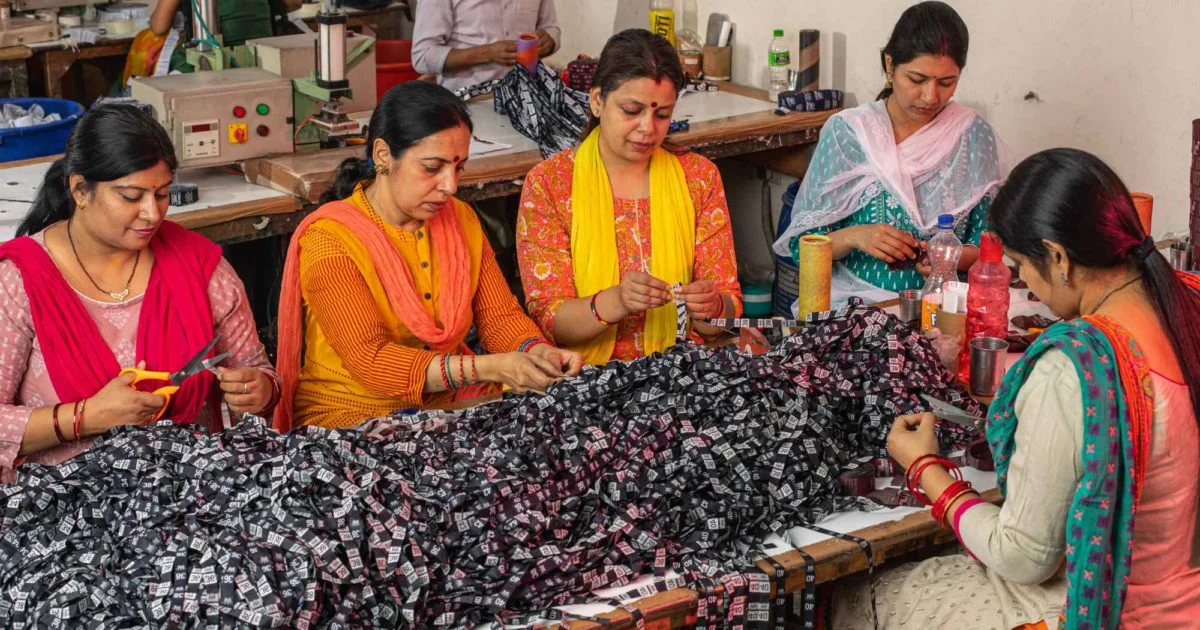
The garment industry, a sprawling global enterprise generating hundreds of billions of dollars annually and employing tens of millions worldwide, often serves as a stark illustration of both the potential and the perilous absence of robust labor rights. Its deeply globalized supply chains, characterized by intense cost pressures, rapid production cycles driven by fast fashion demands, and a reliance on a largely low-skilled, predominantly female workforce in developing economies, render it uniquely susceptible to labor abuses.
When garment workers are systematically denied the right to organize, voice their concerns, or collectively defend their rights, factory employers can operate with impunity. This often translates into offering wages significantly below a living wage, compelling workers to endure unsafe and hazardous working conditions, and refusing to compensate for mandatory overtime. Such detrimental practices are frequently driven by the relentless pressure from international clients, particularly fast fashion brands, to minimize production costs and maximize profit margins, thereby initiating a "race to the bottom" where worker welfare is sacrificed for economic advantage.
The Rana Plaza Disaster: A Tragic Catalyst
The catastrophic collapse of the Rana Plaza building in Savar, Bangladesh, on April 24, 2013, stands as a chilling testament to the devastating consequences of suppressed worker voice and the systemic neglect of safety standards. This incident, which claimed the lives of 1,134 garment workers and injured over 2,500, remains one of the deadliest industrial accidents in history. Investigations revealed severe structural flaws in the building, which had been illegally expanded, and that workers were forced to enter the building despite visible cracks and warnings from engineers. The imperative to meet production deadlines for major international brands superseded all concerns for worker safety.
Kalpona Akter, a prominent labor activist and founder of the Bangladesh Center for Workers Solidarity, powerfully articulated the underlying systemic failures in an interview with UN Women: "In Bangladesh the garment industry has never allowed workers to raise their voices, the political focus has always been on the growth of the industry and keeping the international corporations happy. It is this kind of power over workers’ rights that created the environment in which [the Rana Plaza] disaster was allowed to happen." The disaster served as a global wake-up call, galvanizing international efforts to improve safety and labor conditions in the garment sector, most notably leading to the creation of the International Accord for Health and Safety in the Textile and Garment Industry.
Challenges and Obstacles to Unionization
Despite international conventions and the glaring lessons from tragedies like Rana Plaza, significant barriers continue to impede the effective exercise of freedom of association and collective bargaining in many key garment-producing nations. Several of the world’s largest garment manufacturing hubs have ironically achieved their prominent status partly due to limitations placed on these fundamental labor rights, creating environments ripe for worker exploitation.
Union-Busting Tactics: Employers frequently resort to aggressive union-busting tactics to prevent or dismantle worker organizations. These can range from subtle intimidation, threats of job loss, and blacklisting of union activists to outright illegal dismissals, physical violence, and even murder. The tragic death of Bangladeshi labor leader Shahidul Islam in 2023, reportedly beaten to death amid a wages dispute, underscores the extreme dangers faced by those advocating for worker rights.
Another pervasive tactic involves the creation of "yellow unions" or company-controlled unions. These entities, often established or heavily influenced by employers, are designed to give the appearance of worker representation without genuinely empowering employees. Their primary purpose is frequently to satisfy client codes of conduct or present a facade of compliance, rather than to engage in authentic collective bargaining. As recently as December 2023, workers at a Levi’s supplier in Turkey reportedly faced threats and abuse after withdrawing from a company union to form their own, highlighting the persistent challenges in achieving genuine worker-led representation.
Legal and Regulatory Barriers: In many regions, legislative frameworks themselves pose substantial hurdles. Regulations in countries like Bangladesh, for instance, have historically prohibited workers from unionizing in export processing zones (EPZs) where a significant concentration of garment factories operates. Elsewhere, cumbersome registration processes, bureaucratic delays, and direct government interference can effectively stifle union formation.
Global Rights Index Insights: The International Trade Union Confederation’s (ITUC) Global Rights Index provides an annual assessment of the state of workers’ rights globally. Alarmingly, several vital garment-producing countries consistently rank among the worst performers. In the 2025 Global Rights Index, Bangladesh, Myanmar, and Turkey – all major players in the global garment market – were listed among the top 10 worst countries for working people. These rankings are not arbitrary; they reflect systemic violations of the right to organize, suppression of collective bargaining, and often violent crackdowns on labor activism.
It is crucial to interpret these statistics with nuance. While such rankings expose severe rights abuses, they do not necessarily advocate for a blanket boycott of these countries. Given the immense scale of the garment industry in nations like Bangladesh, which accounts for approximately 8% of the global garment market according to the ITUC, a mass exodus of brands could lead to widespread job losses, plunging thousands of workers further into poverty. Instead, the focus should be on targeted engagement, pressuring brands to enforce stricter labor standards, support genuine worker empowerment, and selectively support companies that demonstrate a commitment to ethical practices and respect for labor rights.
Impact and Success Stories
Despite the formidable challenges, there is compelling evidence of the transformative power of collective bargaining where it is allowed to flourish. Accurate, up-to-date data on unionization rates within the garment sector remains elusive, often due to the informal nature of employment and employer resistance to transparency. However, even older data points to the uphill battle: Human Rights Watch reported in 2016 that a mere 10% of Bangladesh’s 4,500 garment factories had registered unions. Furthermore, as noted, the presence of a registered union does not automatically equate to genuine collective bargaining power or true freedom of association, especially in the case of yellow unions.
Nevertheless, the tangible benefits of effective unionization are clear. Where workers have successfully organized and negotiated, improvements in wages, safer working environments, and reasonable working hours have been observed. The establishment of formal grievance mechanisms and anti-harassment committees, particularly crucial in a female-dominated industry, offers vital avenues for redress.
Nazma Akter, a respected trade unionist and founder of the Awaj Foundation, highlighted such progress to Forbes: "We have succeeded in setting up unions in some of the factories [in Bangladesh], and things are better there… For example, we have sexual harassment committees with representation by women workers. These new kinds of unions are run by the women and are not involved in politics like in the old days." Her Awaj Foundation has also been instrumental in facilitating collective bargaining agreements between factories and women-led unions, leading to significant advancements such as improved rights for pregnant workers and enhanced maternity leave provisions. These are critical gains in an industry where women workers overwhelmingly occupy low-level production roles but are severely underrepresented in leadership positions. These successes demonstrate that genuine collective bargaining not only improves economic conditions but also fosters dignity, respect, and greater gender equity in the workplace.
Driving Change: The Path Forward
Addressing the systemic issues within the garment supply chain requires a concerted and multi-faceted approach involving consumers, industry organizations, governments, and unions alike. The most significant driver of exploitation often stems from the intense pressure brands exert on their suppliers to continually lower costs and accelerate production schedules. Therefore, publicly holding brands accountable for worker rights and wellbeing throughout their entire supply chains is paramount.
The Clean Clothes Campaign has documented numerous instances where brands initially resisted addressing issues of union busting at their suppliers. However, when faced with the threat of public campaigns exposing their inaction, many were compelled to intervene and rectify the situation. This underscores the potent influence of public awareness and consumer pressure in driving corporate responsibility.
Consumers possess significant power, both through their purchasing choices and their collective voice. Several concrete actions can be taken:
- Demand Brand Accountability: Contact favorite brands directly and urge them to sign legally binding agreements such as the International Accord for Health and Safety in the Textile and Garment Industry. Established in the aftermath of the Rana Plaza tragedy, the Accord mandates independent safety inspections and enforces a robust complaints mechanism for workers, offering a crucial layer of protection beyond voluntary corporate codes of conduct. Tools like the Good On You app facilitate direct communication with brands, enabling consumers to provide feedback and exert pressure.
- Make Informed Purchasing Choices: Actively boycott brands known to be associated with questionable suppliers or those that consistently receive poor "people ratings" in ethical directories like Good On You. Conversely, support brands that demonstrate genuine commitment to ethical labor practices and transparent supply chains.
- Stay Educated and Advocate: Continuously inform oneself about the ongoing challenges and developments in labor rights. Reference credible sources such as Human Rights Watch, Labour Behind the Label, the Clean Clothes Campaign, and the ITUC Global Rights Index. Share this knowledge with friends and family, fostering a broader understanding and commitment to ethical consumption. Staying abreast of monthly news roundups from reputable sources can also keep individuals informed of key industry stories.
It is easy for consumers to feel overwhelmed or powerless in the face of complex global supply chains dominated by powerful corporations. However, history demonstrates that collective action, even starting with seemingly small individual pushes, can contribute significantly to the broader cause of garment workers’ rights. By demanding transparency, supporting ethical brands, and advocating for stronger protections, consumers play a vital role in ensuring that the clothes they wear are not made at the expense of human dignity and safety. The struggle for collective bargaining power in the garment industry is an ongoing testament to the universal human right to decent work and a fair livelihood.
Editor’s note
Good On You publishes the world’s most comprehensive ratings of fashion brands’ impact on people, the planet, and animals. Use our directory to search thousands of rated brands.
We updated this article on 5 March 2026. Our editors frequently make updates to articles to ensure they’re up to date. We checked and updated the sources in this story.