







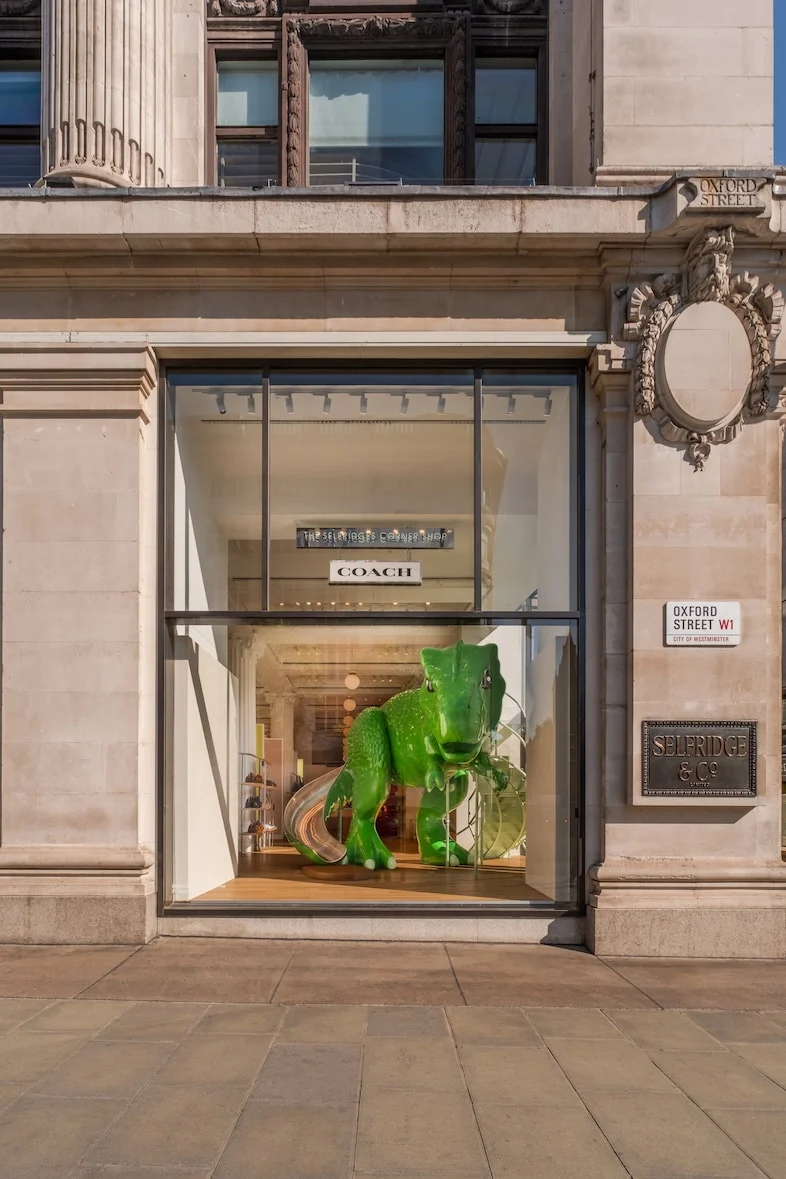
As 2025 approaches, Selfridges, the iconic London department store, will mark a significant milestone: a decade since the inauguration of its highly acclaimed Corner Shop. This ground-floor pop-up space, strategically positioned amidst the world’s most coveted luxury accessories, has transcended its initial concept to become a dynamic crucible for retail innovation and brand storytelling. Its evolution over the past nine years has been nothing short of transformative, consistently offering an exclusive platform for both established global powerhouses and burgeoning independent labels to engage with consumers in novel and immersive ways. The latest chapter in this illustrious history unfolded earlier this week with American luxury leather goods brand Coach, which unveiled "The Charm Playground," an installation that not only reimagined the physical space but also transported visitors into an unexpected, playful dimension.
The Corner Shop: A Decade of Curated Excellence and Retail Reinvention
Since its inception, the Corner Shop has cemented its reputation as a premier destination for curated experiences, making it a coveted "badge of honour" for any brand selected to grace its floor. The list of previous occupants reads like a who’s who of global luxury and avant-garde fashion: Dior, Burberry, Louis Vuitton, Prada, Versace, and Loewe have all leveraged the space to launch collections or present brand narratives. Beyond the giants, the Corner Shop has also championed independent labels such as Machine-A and Martine Rose, showcasing Selfridges’ commitment to diverse and innovative fashion. This strategic curation has allowed Selfridges to maintain its position at the vanguard of luxury retail, offering a constantly refreshed allure that transcends traditional seasonal collections.
The concept behind the Corner Shop was born from a recognition that modern consumers seek more than just transactions; they crave experiences, novelty, and a sense of discovery. In an increasingly digital world, physical retail spaces must offer compelling reasons for customers to visit. The rotating door of designers and themes ensures that no two visits are ever the same, cultivating a sense of urgency and exclusivity that drives footfall and engagement. This model has been instrumental in distinguishing Selfridges within a competitive luxury market, turning a retail space into a cultural hub where fashion, art, and entertainment converge.
Coach’s ‘Charm Playground’: A Cretaceous Comeback in Knightsbridge
Coach’s takeover of the Corner Shop with "The Charm Playground" exemplifies the space’s potential for imaginative brand activation. Far from a conventional display, Coach transformed the elegant ground-floor area into a vibrant, prehistoric landscape, headlined by a colossal, vibrant green Tyrannosaurus Rex. This monumental dino, affectionately named Rexy – a long-standing mascot in Coach’s brand iconography – was not merely a static display but an interactive slide, inviting customers to physically engage with the installation. The whimsical "Cretaceous period" theme provided a playful juxtaposition to the sophistication of the surrounding luxury boutiques, instantly drawing attention and sparking curiosity.
The installation’s name, "The Charm Playground," serves as a dual entendre, referring both to the delightful, interactive nature of the space and to Coach’s strategic embrace of the burgeoning bag charm trend. Stuart Vevers, Coach’s creative director, has been a pivotal figure in revitalizing the brand, steering it towards a contemporary relevance that blends heritage with playful modernity. His vision has consistently integrated elements of American pop culture and a sense of optimistic irreverence, and "The Charm Playground" is a vivid manifestation of this philosophy. By inviting customers to "slide" down Rexy, Coach actively encourages a sense of fun and participation, fostering a memorable brand interaction that extends far beyond a typical shopping experience.
The Resurgence of Bag Charms: A Micro-Trend with Macro Impact
The timing of "The Charm Playground" could not be more pertinent, coinciding with the remarkable resurgence of bag charms as a significant accessory trend. What might seem like a minor embellishment has evolved into a powerful tool for personalization and self-expression. From elaborate silk neck ties intricately wrapped around handbag handles to the recent global phenomenon of collectible figurines like Labubu, consumers are increasingly adorning their luxury bags with trinkets that reflect their personality and passions. This trend taps into a deeper psychological desire for individuality in an era of mass-produced luxury.
Historically, charms have held cultural significance across various societies, often serving as talismans, symbols of status, or personal mementos. In modern fashion, their evolution has seen them move from simple keychains to elaborate, high-end accessories. The current wave, however, emphasizes curation and narrative. As the article notes, the fleeting popularity of certain charms, like the Labubu, underscores the dynamic and often trend-driven nature of this segment, where novelty and collectibility play crucial roles.
Stuart Vevers has strategically leaned into this trend, designing his own comprehensive range of charms that enable customers to personalize their Coach handbags. This move aligns with a broader industry shift towards customization and bespoke offerings, allowing consumers to feel a deeper connection to their purchases. At Selfridges, Coach took this concept to an unprecedented scale. Giant, fantastical versions of these charms – oversized apples, pretzels, and iconic New York taxi cabs – dotted the space. These colossal representations transformed the Corner Shop into a scene reminiscent of a fantastical urban landscape, evoking the playful chaos of a "King Kong" movie, albeit without the eponymous ape. This larger-than-life presentation not only celebrated the charm trend but also served as a bold visual metaphor for the impact these small accessories can have on personal style and brand identity.
Experiential Retail: The New Frontier of Luxury Engagement
"The Charm Playground" is more than just a pop-up; it is a masterclass in experiential retail, a strategy that has become indispensable for luxury brands navigating the complexities of the 21st-century market. Experiential retail focuses on creating immersive, memorable experiences for consumers, moving beyond mere product display to foster emotional connections with the brand. Industry reports consistently highlight the growing consumer preference for experiences over possessions, particularly among younger demographics. A 2023 market analysis, for instance, indicated that nearly 70% of Gen Z consumers prioritize experiences that align with their values and offer opportunities for social sharing.
Selfridges, through initiatives like the Corner Shop, has been a pioneer in this domain. By providing a platform for brands to execute such ambitious and interactive installations, it positions itself not just as a retailer but as a curator of culture and a destination for discovery. These experiences generate significant buzz, both in traditional media and, crucially, across social media platforms. The shareability of "The Charm Playground" – the vibrant T-rex slide, the enormous charms – ensures organic reach and virality, extending the campaign’s impact far beyond the physical confines of the department store.
From a strategic perspective, experiential installations serve multiple purposes. They drive footfall, particularly from younger consumers seeking unique content for their digital channels. They enhance brand perception, associating the brand with innovation, creativity, and customer engagement. Furthermore, these immersive environments provide opportunities for customers to interact with products in a non-pressured, playful setting, subtly influencing purchasing decisions by building brand affinity.
Industry Perspectives and Broader Implications
The success of the Corner Shop and installations like "The Charm Playground" reflects a deeper understanding of the evolving luxury consumer. Retail analysts often cite Selfridges as a benchmark for how traditional department stores can reinvent themselves to remain relevant in an era dominated by e-commerce and direct-to-consumer models. "The Corner Shop is not just a retail space; it’s a statement," remarked a leading retail strategist. "It demonstrates Selfridges’ agility and foresight in creating dynamic retail theatre that keeps consumers coming back, not just for products, but for the narrative and the spectacle."
For Coach, this initiative represents a continuation of its strategic repositioning under Stuart Vevers, who has consistently infused the brand with youthful energy and a sense of accessible luxury. "Our goal at Coach is to inspire self-expression and joy, and ‘The Charm Playground’ at Selfridges is a perfect embodiment of that," Vevers might articulate. "It allows us to engage with our community in a truly unique way, celebrating the power of personalization and play, and showcasing our charms in an unforgettable context." This playful approach helps Coach appeal to a broader demographic, including younger luxury consumers who are drawn to brands that offer both quality and a distinct personality.
The broader implication for the luxury sector is clear: static displays and conventional merchandising are no longer sufficient. Brands must invest in creating compelling narratives and interactive environments that resonate with the desire for authentic and shareable experiences. The return on investment for such installations, while sometimes difficult to quantify purely in sales figures, is invaluable in terms of brand equity, customer loyalty, and media visibility. These activations reinforce a brand’s identity and provide a tangible touchpoint in an increasingly digital world.
The Future of Luxury Retail: Innovation and Immersion
"The Charm Playground" is open to the public from its launch until May 22, offering a limited window for visitors to experience its unique blend of prehistoric fun and luxury fashion. The ephemeral nature of such pop-ups further enhances their appeal, creating a sense of urgency and exclusivity that drives engagement. This model, perfected by the Corner Shop, ensures a continuous cycle of fresh content and brand collaborations, keeping Selfridges at the forefront of retail innovation.
As Selfridges prepares to celebrate a decade of the Corner Shop next year, its journey underscores a critical lesson for the entire retail industry: the future of physical retail lies in its ability to adapt, innovate, and provide unparalleled experiences. The department store, once seen by some as an antiquated model, is being reinvented as a vibrant cultural institution, a hub for discovery, and a stage for brands to tell their stories in the most imaginative ways possible. The collaboration with Coach, a brand that has successfully navigated its own evolution, serves as a testament to the power of creative partnership and the enduring appeal of experiential luxury. In an ever-evolving market, the ability to transport customers, even if just for a moment, to a fantastical "Charm Playground" with a giant T-rex, remains a powerful testament to the magic of retail done right.